
Bornholms Kunstmuseum, Bornholm Travel Guide
Modern Danish architecture meets Bornholm’s coastal light at this clifftop museum, where island art, crafts and dramatic Baltic Sea landscapes come together.
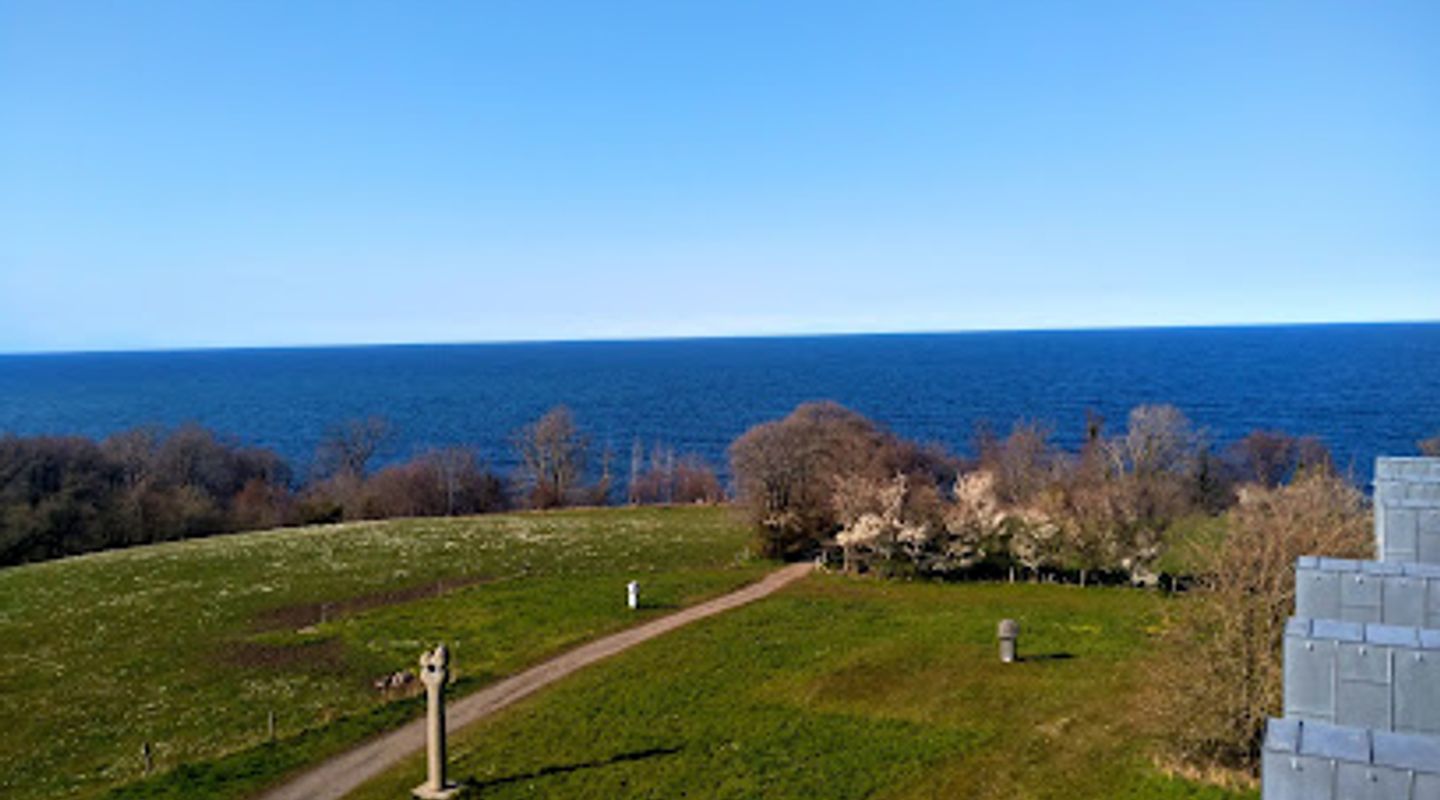
Bornholms Kunstmuseum, perched above the dramatic Helligdomsklipperne cliffs near Gudhjem, is a striking modern art museum dedicated to Bornholm-related art and craft. Light-filled galleries step down the hillside toward the Baltic Sea, framing views of fields, rocky coastline and, on clear days, the distant island of Christiansø. Inside, works from the 19th century to today trace the island’s artistic story, with a strong focus on the Bornholm School painters, while outdoor paths lead toward the photogenic coastal landscape.
A brief summary to Bornholms Kunstmuseum
- Otto Bruuns Pl. 1, Gudhjem, 3760, DK
- Click to display
- Click to display
- Duration: 1.5 to 3 hours
- Mid ranged
-
 Mixed
Mixed
- Mobile reception: 4 out of 5
- Tuesday 10 am-5 pm
- Wednesday 10 am-5 pm
- Thursday 10 am-5 pm
- Friday 10 am-5 pm
- Saturday 10 am-5 pm
- Sunday 10 am-5 pm

Know before you go
Hi, I'm Eve. Here are a few practical things to know before exploring Bornholms Kunstmuseum.
- Allow extra time to explore the paths from the museum down toward Helligdomsklipperne; sturdy shoes make the rocky viewpoints far more enjoyable.
- Start your visit early in the day for softer light in the galleries and quieter moments in the café overlooking the Baltic Sea.
- If travelling with limited mobility, request a wheelchair or folding chair at the ticket desk and use the lifts rather than the tower stairs.
- Combine your museum visit with the clifftop walking path toward Gudhjem in summer, but bring layers as coastal winds can be brisk even in warm weather.
- Check in advance for temporary exhibitions focused on glass and ceramics if you have a special interest in contemporary crafts.
Do you manage this location?
Take control to get all the benefits, like improved information, better appearance, and stronger visibility across AI-powered discovery. Learn more about listing your business on Evendo
Activate your presenceOther nearby places you may find interesting
The closest places of the same kind, if this one is not quite what you had in mind.
Explore Bornholms Kunstmuseum on the Map
A handpicked selection of must-see spots near Bornholms Kunstmuseum, mapped for you.
Unlock the Best of Bornholms Kunstmuseum
Buy tickets
-
No tickets available
Book tours with entry

Book tours without entry
-
No tours available
Getting There
-
Car from Gudhjem
Driving from Gudhjem town centre to Bornholms Kunstmuseum takes around 10–15 minutes along the coastal road toward Tejn. The route is straightforward but can be busy in peak summer. Free parking, including disabled spaces, is available directly by the museum entrance. No tolls apply, and fuel costs for the short drive are minimal.
-
Bus from Gudhjem and Allinge
Regional buses serve the stop “Helligdommen / Bornholms Kunstmuseum” right by the museum, with journeys from Gudhjem typically taking about 10–15 minutes and from Allinge around 20–30 minutes. Services run several times a day, more frequently in summer. A single adult ticket on Bornholm buses usually costs the equivalent of about 3–6 EUR, and low-floor vehicles make boarding easier for most passengers.
-
Car or Bus from Rønne
From Rønne, the main town and ferry port, the drive to the museum takes roughly 35–45 minutes across the island on well-maintained roads. Alternatively, a direct bus route operates in most seasons, with a travel time of about 45–55 minutes and fares typically in the 5–10 EUR range one way. Services are less frequent outside summer, so checking the timetable in advance is important.
-
Cycling the Coastal Route
Experienced cyclists can reach the museum via scenic coastal cycle paths from Gudhjem or Tejn in roughly 25–40 minutes, depending on pace. The route includes some hills and exposed stretches where wind can be strong. There is ample space to secure bicycles at the museum. This option is best in dry, mild weather and may be challenging for young children or less confident riders.
For the on-the-go comforts that matter to you
-
 Restrooms
-
 Drink Options
-
 Drinking Water
-
 Food Options
-
 Seating Areas
-
 Sheltered Areas
-
 Trash Bins
-
 Information Boards
-
 Visitor Center
Discover more about Bornholms Kunstmuseum
Art on the Edge of the Baltic
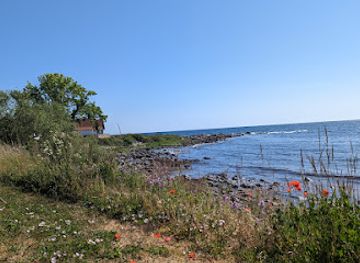
Bornholms Kunstmuseum occupies a spectacular position above the Sanctuary Rocks, a stretch of jagged granite cliffs known locally as Helligdomsklipperne. Here the land falls away steeply toward the Baltic Sea, and the museum seems to hover between cultivated fields and wild coastline. Large windows pull the landscape into the building, so wherever you stand you are aware of the sea, sky and changing light that have inspired generations of artists on Bornholm.The surroundings invite you to linger before or after your visit. Paths lead out across grassy slopes where you might spot grazing cattle and wind-twisted trees clinging to the cliff edge. A short walk brings you to viewpoints over rock formations carved by waves and weather. It is this constant dialogue between art inside and nature outside that gives the museum its particular atmosphere.A Modern Danish Architectural Landmark
Completed in 1993 and later expanded, the museum’s white, minimalist building is considered one of the most successful works of modern Danish architecture. Rather than dominating the hill, it steps down in three main levels that follow the natural slope of the terrain. From above, the structure reads as a cluster of clean-lined volumes; from within, it feels like a small village of galleries, linked by a central internal “street”.A notable feature of this interior spine is the narrow watercourse that runs along it, evoking the historic Helligdomskilde healing spring that once drew pilgrims to this site. As you move between exhibition spaces, the gentle sound of running water accompanies your visit. Skylights and carefully placed openings bring in soft northern light, ideal for viewing paintings and sculptures while maintaining a calm, contemplative mood.The Bornholm School and Island Narratives
The core of the collection is dedicated to the so-called Bornholm School, a loose circle of artists who settled on the island in the early 20th century. Painters such as Olaf Rude, Oluf Høst and Edvard Weie were drawn here by the intense coastal light, rugged rock formations and colourful coastal towns. Their canvases often depict fields bordered by granite walls, red-roofed fishing villages and dramatic seascapes under fast-moving clouds.Alongside these works, earlier pieces from the 19th century show how Bornholm gradually emerged as a subject in Danish art, while more recent acquisitions bring the story up to the present. Contemporary painters, sculptors and photographers continue to respond to the same cliffs, harbours and forests, but with new materials and ideas. The result is a layered portrait of place, where you can trace shifts in style from romantic realism to modernism and beyond.Craft, Glass and Ceramic Innovation
Bornholm has long been known for its craft traditions, and the museum devotes significant space to glass and ceramics. Displays range from robust stoneware inspired by the island’s geology to delicate contemporary glass that plays with colour and transparency. Many pieces are linked to the nearby glass and ceramic school, whose graduates regularly exhibit here, keeping the connection between training and professional practice visible.In certain years, the museum also hosts international events dedicated to European glass and ceramics, turning Bornholm into a meeting point for makers from across the continent. Even outside these special occasions, the permanent craft collection illustrates how local materials and techniques have been reinterpreted over time, from utilitarian wares to experimental sculptural forms.Visiting Experience and Practical Comforts
Inside, the route is intuitive: you can follow a chronological circuit or dip in and out of side galleries according to your interests. Quiet seating areas allow you to pause with a view over fields or sea. A tower space offers an elevated perspective over the coast, though this part of the building is only accessible by stairs. The rest of the museum is equipped with lifts and ramps, and wheelchairs can be borrowed on request, making most areas accessible.On the entrance level you will find a café where large windows frame the coastline, perfect for a coffee or light meal between exhibitions. Free parking is available close by, including designated spaces for disabled visitors. A shop offers books, postcards and design items connected to Bornholm and its artists, extending the museum experience beyond the galleries.Clifftop Paths and Seasonal Character
One of the pleasures of coming here is combining art with a short walk in the surrounding landscape. From the museum grounds, trails lead toward cliff viewpoints and down toward the rocky shore. In summer, the route along the top of the cliffs toward Gudhjem becomes a scenic outing in itself, with wildflowers, sea birds and broad views across the Baltic. Boat services sometimes link the harbour and the foot of the cliffs, adding another way to approach or leave the area.The atmosphere shifts with the seasons. On clear days in late spring and early autumn the low sun floods the galleries with golden light, while winter visits highlight the stark forms of the architecture against a steel-grey sea. Whatever the weather, Bornholms Kunstmuseum offers a thoughtful blend of art, design and landscape that captures the essence of this distinctive island.












Your all‑in‑one travel companion app
Explore expert travel guides, compare and book tours, experiences, hotels, and more—all from the palm of your hand. Download now for seamless trip planning wherever your wanderlust takes you.


Explore More of Bornholm

Looking beyond Bornholms Kunstmuseum? Discover Bornholm for broader travel guides, local hot-spots, and regional highlights.
Explore Bornholm
A dramatic granite gorge on Bornholm’s east coast, where a deep cleft in the cliffs frames raw Baltic seascapes, rugged trails and quietly powerful coastal nature.

Dramatic granite sea cliffs, myth-tinged caves and coastal paths above the Baltic, making Helligdomsklipperne one of Bornholm’s most unforgettable natural landmarks.
