

Døndalen Travel Guide
Free Guide: Wild rift valley, towering trees and Denmark’s highest waterfall come together in this quietly dramatic forest walk on Bornholm’s rugged north coast.


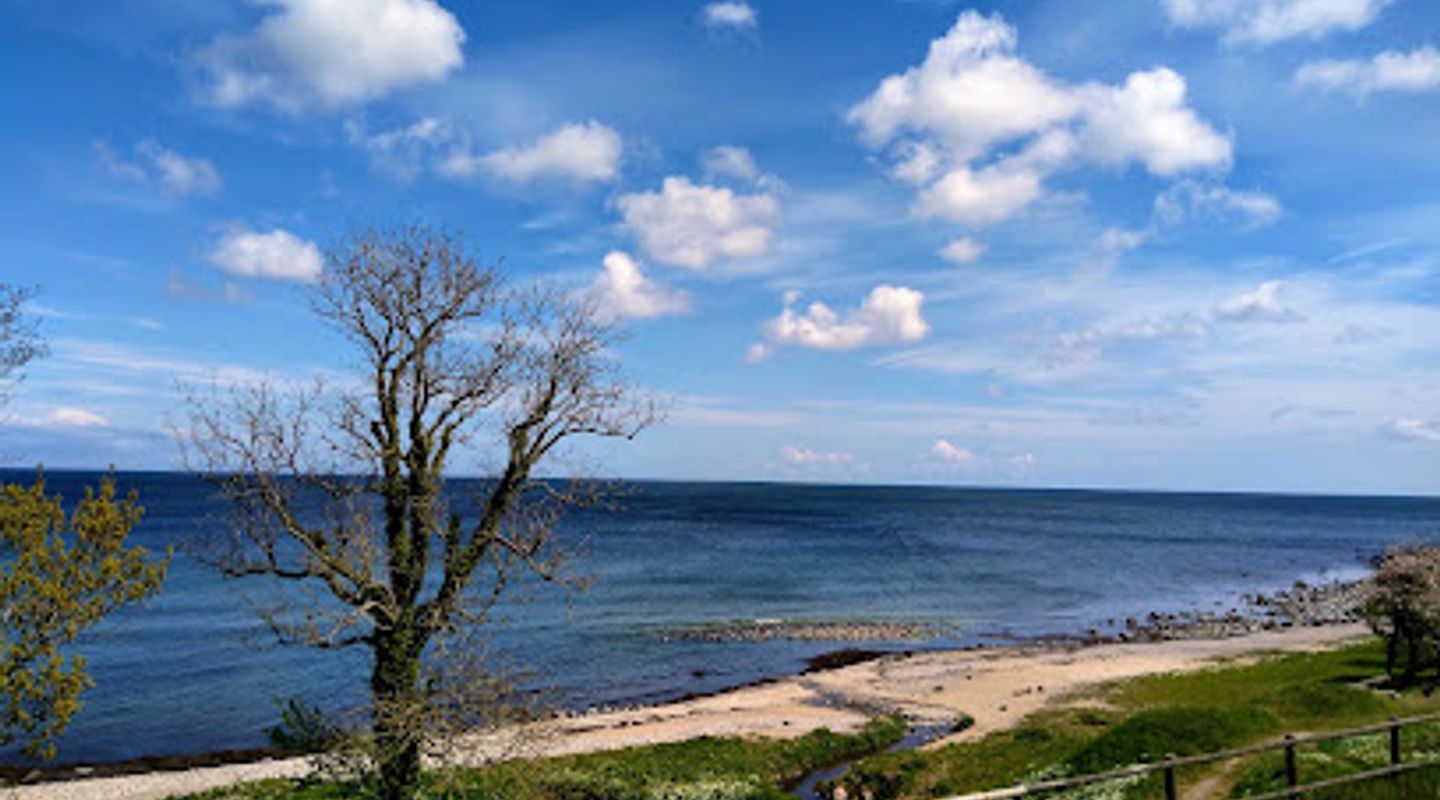
A brief summary of Døndalen
Wild rift valley, towering trees and Denmark’s highest waterfall come together in this quietly dramatic forest walk on Bornholm’s rugged north coast.
Døndalen, or Døn Valley, is one of Bornholm’s most atmospheric nature reserves: a broad rift valley cloaked in wild forest, cut by a clear stream and home to Denmark’s highest waterfall at around 20 metres. Easy, mostly level forest paths make this an accessible escape for gentle walks, while side trails, rustic bridges and the lofty Amtmandsstenen viewpoint reward more energetic visitors with sweeping views towards the Baltic Sea and the island of Christiansø.
On-site amenities
 Seating areas
 Trash bins
 Information boards
Opening hours
- Every dayOpen 24 hours
Opening hours as listed on the venue’s Google Business Profile. Hours can change for services and special events, so check with the venue before you go.
- Address
- Søndre Strandvej 144A, 3760 Gudhjem
- Website
Getting there
Car from Gudhjem town centre
Local bus along the north coast
Cycling the coastal road
Walking from nearby coastal accommodations
Discover more about Døndalen
A hidden rift valley on Bornholm’s wild north coast
Døndalen, also known as Døn Valley, slices inland from Bornholm’s rocky northeast coast just outside Gudhjem. At first glance it feels almost modest: a broad, green notch in the landscape where a clear stream winds between steep slopes. Step beneath the canopy, though, and the valley quickly closes around you, replacing coastal light with cool shade, birdsong and the sound of running water.This is not manicured parkland but a largely untouched forested reserve. Old deciduous trees tower overhead, fallen trunks are left to lie where they land, and the undergrowth is dense with ferns, moss and seasonal wildflowers. In places the valley sides rise to cliffs nearly 20 metres high, creating a sense of being wrapped inside a natural amphitheatre cut deep into Bornholm’s underlying rock.
Denmark’s highest waterfall at the valley’s heart
Follow the main forest track and you are led gently, almost without noticing, towards the valley’s star feature: a waterfall where Døndal stream plunges about 20 metres over a series of rocky steps. In winter and spring, snowmelt and rain turn it into a thundering cascade that easily lives up to the name “Thunder Valley”; in drier months it becomes a more delicate curtain of water sliding over algae‑green rock.The approach is part of the charm. Bridges cross the stream, small side paths offer changing perspectives, and the forest gradually tightens around the gorge. Even when the flow is modest, the setting — sheer rock walls, dripping moss, and the cool spray in the air — gives the falls a surprisingly dramatic feel for a relatively low‑lying Danish island.
Seasonal transformations and rich plant life
Døndalen rewards repeat visits because it changes so vividly with the seasons. In early spring, before the trees leaf out, the forest floor is carpeted with wood anemones and great swathes of wild garlic, perfuming the air and adding soft white and green tones beneath the bare branches. Later in spring and summer the canopy closes, creating dappled light and deep, cool shade even on hot days.Autumn shifts the palette again, with golden leaves glowing against the dark cliffs and the ever‑present green of moss and fern. In winter, when the trees stand bare and the water level is high, the structure of the valley is at its most visible: layers of bedrock, ice‑rimmed pools and, in cold snaps, icicles forming along the waterfall’s ledges.
Gentle forest walk or more challenging exploration
One of Døndalen’s strengths is how easily you can tailor the experience. The broad main path from the coastal side of the valley to the waterfall is roughly a kilometre each way, on a mostly firm surface suitable for most walkers and, with some care, for pushchairs or robust wheelchairs. This out‑and‑back stroll gives a satisfying taste of the valley’s atmosphere without demanding fitness or special gear.Beyond the falls, the character changes. Paths become narrower and rougher, weaving between roots and over rocks where fallen trunks are left in place as natural obstacles. Side routes climb the valley sides, including stairways up to the cliff‑edge viewpoint of Amtmandsstenen. Here, a short, steeper effort is rewarded with a striking panorama over the treetops, the Baltic Sea and, on clear days, the silhouette of Christiansø offshore.
Protected nature and a sense of quiet seclusion
Døndalen has protected status, and much of its 37‑hectare area is allowed to develop as near‑natural forest. This policy gives the valley a subtly different feel to more heavily managed woodlands on the island. Dead wood is left for fungi and insects, undergrowth is dense in places, and birds and small animals find plenty of cover.Despite its proximity to main roads and nearby cultural attractions, the valley feels surprisingly secluded once you are a short distance from the entrance. The main sounds are the stream, wind in the leaves and the calls of woodland birds. It is a place well suited to unhurried wandering, quiet photography, or simply pausing on a riverside rock to listen to the water.
Planning a relaxed visit in all weathers
Døndalen is open at all hours and, with no entrance fee, lends itself to spontaneous visits. The easiest circuit to the waterfall and back typically takes around an hour at a relaxed pace, but you can linger longer on side paths, extend your walk deeper into the valley, or combine a visit with other nearby coastal viewpoints and cultural sites.The valley can be muddy, especially in winter and early spring when the water level is highest, so sturdy footwear is recommended and rubber boots are useful in the wettest months. On warm days, the forest provides welcome shade, while in colder seasons it offers a sheltered, atmospheric landscape where the drama of Denmark’s highest waterfall is at its peak.
Evendo Review Centre
 Google
Guest reviews
Best time to go
Quietest: Jan, Feb & Mar · before 6am or from 9pm
Busy times are Evendo estimates for a typical year, to help you plan. Actual crowds vary with events, school holidays and the weather.
Explore Døndalen on the map
A handpicked selection of must-see spots near Døndalen, mapped for you.
Get your free copy of our complete guide to Døndalen, delivered straight to you.
Everything on this page, from opening hours and how to get there to Eve’s tips and the best time to go, in one PDF you can read offline, print or share.
Already have an account? Sign in
Your Døndalen guide is ready.
We'll send it to · Not you? Sign out

Getting your guide ready…
We are putting together a fresh copy of the Døndalen guide. This can take up to a minute.
This can take a few moments. If your browser asks, choose Allow so the download can start. You'll find the guide in your Downloads folder.
Nothing happened? Download it again
Sorry, the guide is taking longer than usual. Please try again in a minute, or get it by email instead.
Other nearby places you may find interesting
The closest places of the same kind, if this one is not quite what you had in mind.
-
Hammershus Castle Ruins Bornholm’s great clifftop fortress, where vast medieval ruins, Baltic Sea panoramas and a striking modern visitor centre bring 800 years of history to life.
-
Opal Lake A flooded granite quarry turned emerald lake, Opal Lake on Bornholm blends raw cliffs, deep clear water and coastal views with swimming, cliff jumps and rugged trails.
-
Bornholms Rovfugleshow Immersive birds-of-prey shows and evolution-themed encounters on Bornholm, where owls, falcons, reptiles and farm animals turn science into a full, family-friendly day out.
-
Bornholmertarnet Former top-secret NATO listening post turned Cold War museum, crowned by a 70 m viewing tower with sweeping panoramas over Dueodde and eastern Bornholm.
-
Hammeren Lighthouse Compact granite lighthouse on Bornholm’s highest headland, offering free summer access, sweeping Baltic views and heather-clad coastal walking trails.
Swipe for more places
More to explore near Døndalen

 Best experiences near Døndalen
 Best hotels near Døndalen
 Best landmarks near Døndalen
 Best attractions near Døndalen
 Best shops near Døndalen
 Best restaurants near Døndalen
 Best bars near Døndalen
Do you manage this location?
Take control to get all the benefits, like improved information, better appearance, and stronger visibility across AI-powered discovery.
Explore more

Explore more of Bornholm
Explore Bornholm: Denmark's Baltic gem, offering stunning nature, rich history, and vibrant local culture. Perfect for nature lovers, history buffs, and food enthusiasts.
Explore Bornholm
Explore more of Denmark
Discover Denmark: A perfect blend of history, modern design, and the cozy concept of hygge. Explore vibrant cities, serene landscapes, and world-class cuisine.
Explore Denmark
