

Spellinge Mose Travel Guide
Free Guide: Quiet Bornholm wetland in a rocky rift valley, where Iron Age ruins, an old railway trail and protected bog habitats meet in a serene pocket of wild nature.


A brief summary of Spellinge Mose
Quiet Bornholm wetland in a rocky rift valley, where Iron Age ruins, an old railway trail and protected bog habitats meet in a serene pocket of wild nature.
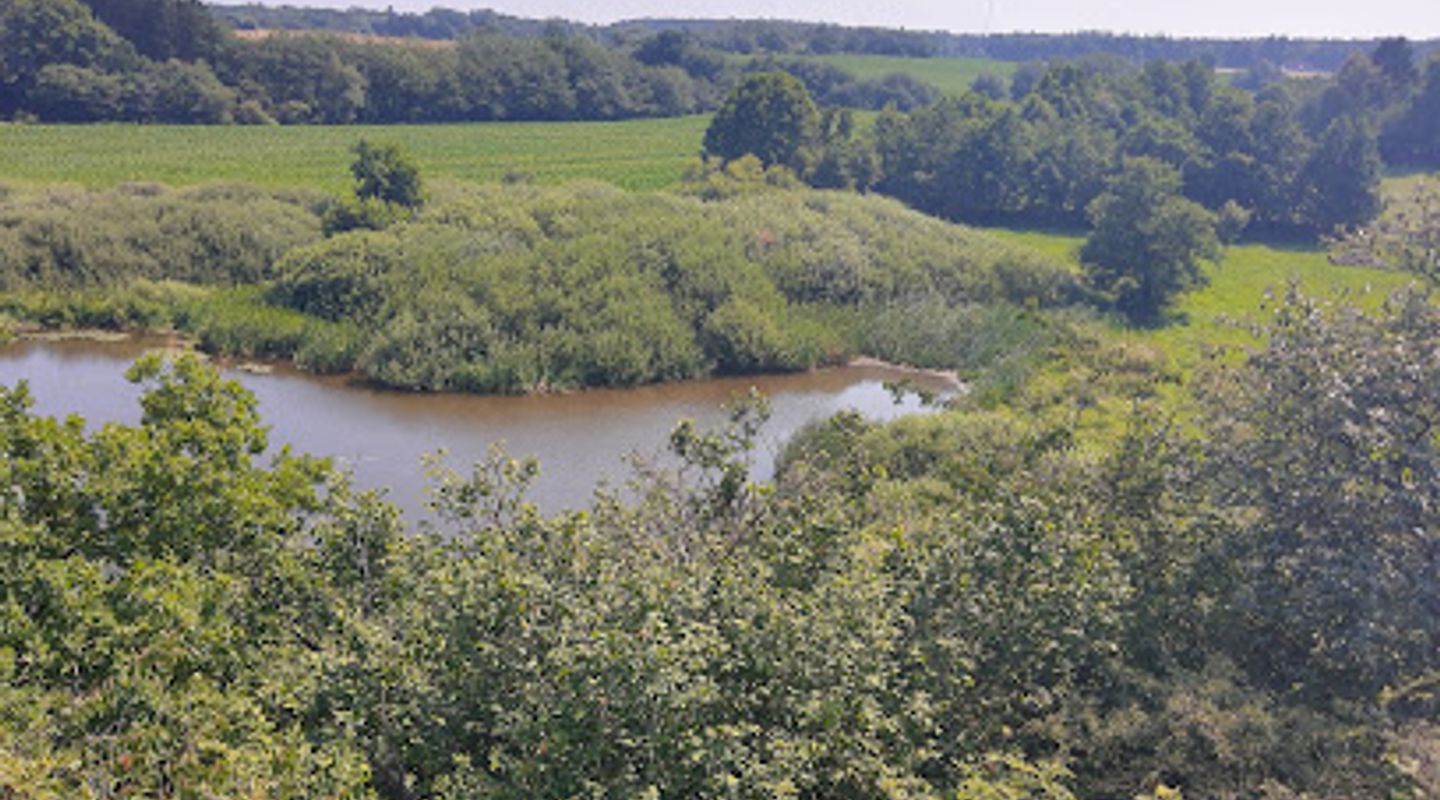
Spellinge Mose is a serene wetland basin tucked into a rocky rift valley in northern Bornholm, west of the village of Rø. Framed by cliffs, reed beds and willow thickets, this shallow 4-hectare lake and marsh offers an atmospheric glimpse of Bornholm’s wild heart. Old peat cuttings, Iron Age refuge ruins at Storeborg and the nearby former railway line – now one of the island’s prettiest cycling and walking paths – make it a rewarding stop for hikers, cyclists and nature lovers.
On-site amenities
 Trash bins
 Information boards
- Address
- 3760 Bornholm
Getting there
Bus and walking from Rønne
Car from northern Bornholm towns
Cycling on the former railway line
Discover more about Spellinge Mose
A quiet marsh in a dramatic rift valley
Spellinge Mose sits beautifully in a narrow rift valley, part of the same geological cleft that continues out to the coastal gorge of Døndalen and further southwest towards the rocky defile of Kløven. Steep rock walls, patches of forest and open heathland frame a low-lying wetland, giving this small area a surprisingly dramatic setting for such a tranquil place.The marsh itself covers around four hectares, with water rarely deeper than a couple of metres. Broad swathes of reeds and willow scrub fringe the open water, creating a dense, almost impenetrable green belt in summer. From the edges, you look across a mosaic of shallow pools, tussocky hummocks and mirror-like channels where light and sky are reflected between the reed stems.
Shaped by peat, war and conservation
Although it appears timeless, Spellinge Mose’s present-day look is the result of intensive peat cutting, especially during the two World Wars when peat was an important fuel. The shallow basins and scattered ponds you see today are the scars left behind from those excavations, gradually filling with water, reeds and bog plants.What was once a utilitarian landscape has since become a protected nature area, part of the wider Rutsker Højlyng conservation zone. Here, grazing and careful management maintain a varied mosaic of wetland, heath and woodland. The area offers an instructive snapshot of how human use and later protection can together create a rich habitat for birds, amphibians and wetland flora.
Iron Age stronghold above the reeds
At the southern end of the marsh, a rocky knoll holds the remains of Storeborg, an Iron Age refuge fort also known as Grønneborg. Perched above the valley, it once offered a defensible lookout over the surrounding highland and wetland. Although part of the rock was blasted away in the early 1900s when a railway was constructed through the valley, the site still preserves traces of walls and ramparts.Storeborg is among the older legally protected heritage sites on Bornholm, safeguarded since the 19th century. Clambering up to the knoll rewards you with fine views over the marsh, the rift valley and the surrounding Rutsker Højlyng – a strong sense of the strategic value this vantage point once held.
Trails, bikes and Bornholm’s wild corridor
Running through the valley is the former railway line between Klemensker and Rø, now a beloved cycle and walking route regarded as one of Bornholm’s most scenic. The even gravel surface and gentle gradients make it accessible for a wide range of visitors, while side paths lead closer to the water’s edge and into the surrounding heath.Spellinge Mose also lies close to the long-distance Højlyngsstien trail, which crosses Bornholm from Hammerknuden in the north to Årsdale on the eastern coast. Hikers can use the marsh as a quiet pause along a multi-day trek, linking it with wild heather uplands, forests and rocky valleys. Shorter local circuits combine the marsh with Kløven and the wider Rutsker Højlyng landscape for a compact but varied outing.
Seasonal moods and subtle wildlife
The experience of Spellinge Mose changes markedly with the seasons. On cool autumn mornings, mist often rises from the water, creating the classic “witch’s brew” effect over the reeds. Spring brings birdsong and fresh green growth, while summer is dominated by the rustle of reeds and the hum of insects. In winter, thin ice can pattern the shallow pools, and the bare rock walls of the valley feel even more prominent.Botanically, the marsh belongs to the family of highland bogs once more widespread in this part of Bornholm, with specialist wetland plants tucked among the hummocks and in the clearer pools. You are unlikely to encounter dramatic large mammals, but patient observers may spot dragonflies, frogs, waterfowl and small woodland birds that thrive in this mosaic of wet and dry habitats.
A peaceful pause between island highlights
Despite its modest size, Spellinge Mose works well as a contemplative stop amid a busy Bornholm itinerary. It offers a calm, low-key counterpoint to the island’s coastal cliffs and beach towns, and its blend of geology, cultural history and nature makes it more than just a pretty wetland.Whether you arrive by bike along the old railway, on foot from Rø, or as part of a longer hike along Højlyngsstien, the marsh invites you to slow your pace. Spend a little time simply listening to the reeds, watching the play of light on the water and imagining the long arc from Iron Age stronghold and peat cutters to today’s protected landscape.
Evendo Review Centre
 Google
Guest reviews
Best time to go
Quietest: Jan, Feb & Dec · before 7am or from 7pm
Busy times are Evendo estimates for a typical year, to help you plan. Actual crowds vary with events, school holidays and the weather.
Explore Spellinge Mose on the map
A handpicked selection of must-see spots near Spellinge Mose, mapped for you.
Get your free copy of our complete guide to Spellinge Mose, delivered straight to you.
Everything on this page, from opening hours and how to get there to Eve’s tips and the best time to go, in one PDF you can read offline, print or share.
Already have an account? Sign in
Your Spellinge Mose guide is ready.
We'll send it to · Not you? Sign out

Getting your guide ready…
We are putting together a fresh copy of the Spellinge Mose guide. This can take up to a minute.
This can take a few moments. If your browser asks, choose Allow so the download can start. You'll find the guide in your Downloads folder.
Nothing happened? Download it again
Sorry, the guide is taking longer than usual. Please try again in a minute, or get it by email instead.
Other nearby places you may find interesting
The closest places of the same kind, if this one is not quite what you had in mind.
-
Hammershus Castle Ruins Bornholm’s great clifftop fortress, where vast medieval ruins, Baltic Sea panoramas and a striking modern visitor centre bring 800 years of history to life.
-
Opal Lake A flooded granite quarry turned emerald lake, Opal Lake on Bornholm blends raw cliffs, deep clear water and coastal views with swimming, cliff jumps and rugged trails.
-
Bornholms Rovfugleshow Immersive birds-of-prey shows and evolution-themed encounters on Bornholm, where owls, falcons, reptiles and farm animals turn science into a full, family-friendly day out.
-
Bornholmertarnet Former top-secret NATO listening post turned Cold War museum, crowned by a 70 m viewing tower with sweeping panoramas over Dueodde and eastern Bornholm.
-
Hammeren Lighthouse Compact granite lighthouse on Bornholm’s highest headland, offering free summer access, sweeping Baltic views and heather-clad coastal walking trails.
Swipe for more places
More to explore near Spellinge Mose

 Best experiences near Spellinge Mose
 Best hotels near Spellinge Mose
 Best landmarks near Spellinge Mose
 Best attractions near Spellinge Mose
 Best shops near Spellinge Mose
 Best restaurants near Spellinge Mose
 Best bars near Spellinge Mose
Do you manage this location?
Take control to get all the benefits, like improved information, better appearance, and stronger visibility across AI-powered discovery.
Explore more

Explore more of Bornholm
Explore Bornholm: Denmark's Baltic gem, offering stunning nature, rich history, and vibrant local culture. Perfect for nature lovers, history buffs, and food enthusiasts.
Explore Bornholm
Explore more of Denmark
Discover Denmark: A perfect blend of history, modern design, and the cozy concept of hygge. Explore vibrant cities, serene landscapes, and world-class cuisine.
Explore Denmark
