Dry Oven CAVE Travel Guide
Free Guide: A narrow sea cave tucked into Bornholm’s dramatic Sanctuary Cliffs, where ancient granite, crashing Baltic waves and old legends meet in a dark, echoing chamber.


A brief summary of Dry Oven CAVE
A narrow sea cave tucked into Bornholm’s dramatic Sanctuary Cliffs, where ancient granite, crashing Baltic waves and old legends meet in a dark, echoing chamber.
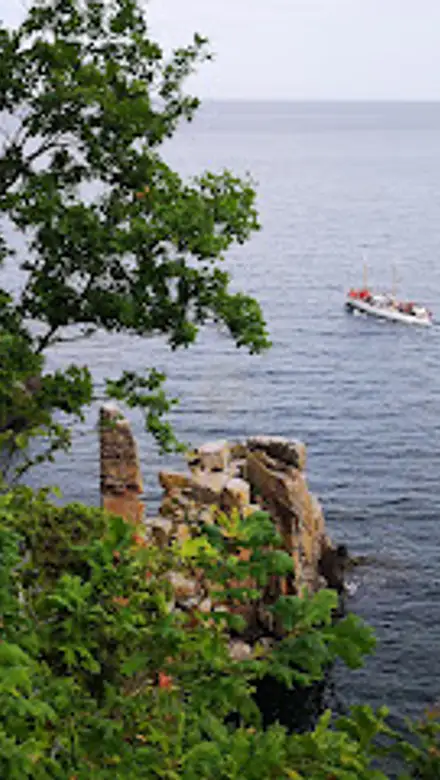
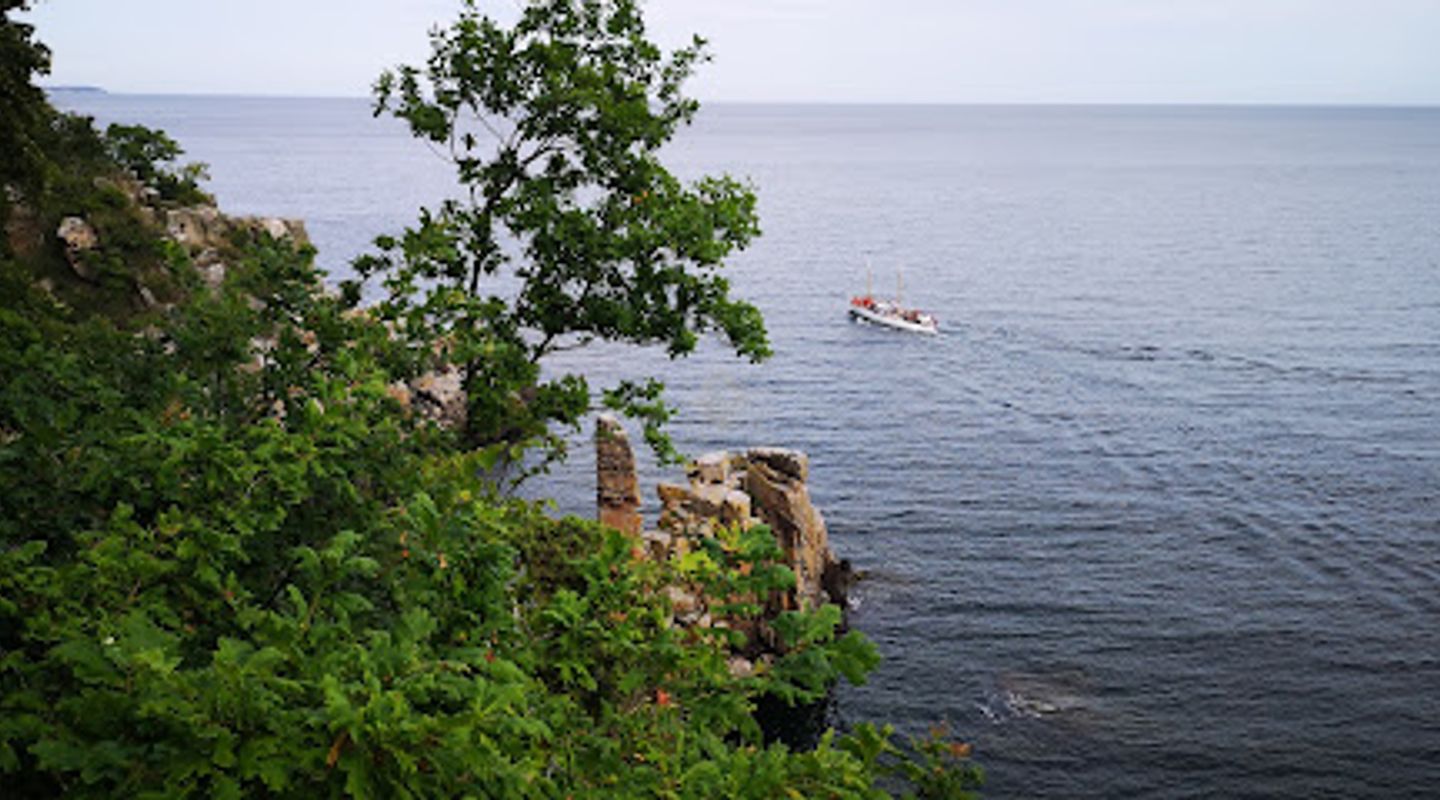
Carved into the dramatic Sanctuary Cliffs (Helligdomsklipperne) on Bornholm’s northeast coast, Dry Oven Cave is a narrow sea cave reached by steep coastal paths and rocky ledges. Waves and wind have sculpted the dark chamber out of ancient granite, creating an atmospheric hideaway where you can listen to the Baltic surge, study the layers of rock, and feel how the island’s raw geology shapes every contour of this rugged shoreline.
On-site amenities
 Restrooms
 Seating areas
 Sheltered areas
 Trash bins
 Information boards
Opening hours
- Every dayOpen 24 hours
Opening hours as listed on the venue’s Google Business Profile. Hours can change for services and special events, so check with the venue before you go.
- Address
- Helligdomsvej 14, 3760 Gudhjem
- Website
Getting there
Car from Gudhjem town
Bus from Gudhjem and nearby villages
Bicycle along the northeast coast
Discover more about Dry Oven CAVE
Bornholm’s rugged sanctuary of stone and sea
Dry Oven Cave lies tucked into the Helligdomsklipperne, a striking run of granite cliffs between Gudhjem and Tejn on Bornholm’s northeast coast. Here the island’s hard crystalline bedrock drops sharply into the Baltic, forming a jagged amphitheatre of pillars, clefts and narrow inlets. The cave itself is one of several hollows worn into the rock, its entrance partly concealed by broken boulders and the steady rise and fall of the sea.Standing above the site, you have a sweeping view of the coastline: vertical walls, tilted slabs, and isolated stacks battered by surf. The cave is part of this larger rockscape, more a dark corridor within the cliffs than a standalone attraction, and it offers a close-up look at the forces that have shaped Bornholm for millions of years.
Granite, waves and the making of a sea cave
Unlike most of Denmark, Bornholm is built on ancient granite and gneiss, rocks that fracture rather than crumble. Along this stretch of coast, cracks in the stone allowed the sea to gain a foothold. Over time, waves exploited these weaknesses, widening them into vertical clefts and horizontal passages such as Dry Oven Cave and its neighbours. At low water you can see how the walls bear the polish and pitting of impact, each groove and pocket a mark of long, repetitive motion.Inside, the cave is typically high and narrow rather than a broad cavern, with angular corners and rough, jointed surfaces. In places, the rock is slick with spray; in others it is dry, matt and almost dusty, giving the cave its name. Tiny ledges catch seaweed and driftwood, while darker streaks trace old waterlines, showing how the Baltic’s moods fluctuate from season to season.
Legends, holy springs and an old pilgrimage landscape
The surrounding cliffs are steeped in stories. Helligdomsklipperne – the Sanctuary Cliffs – take their name from a holy spring that once rose at the base of the rocks, where people came in search of healing water. Above stood a small Trinity Chapel, long vanished but still part of local memory, from which the spring’s water was drawn and offered to pilgrims during midsummer gatherings and church festivals.Cliff names recall this blend of everyday life and folklore: Light Rock catching the first rays of dawn, Seagull Tower alive with birds, Moonshine Cliffs glowing silver at night, and Love Bench where couples sat looking out to sea. Dry Oven Cave and other hollows fit naturally into this landscape of named stones, each formation another feature in a coastline that people have been reading like a story for centuries.
Exploring the cave up close
Visiting Dry Oven Cave is an elemental experience. Reaching it involves descending paths and stairways from the clifftop, then following uneven, often wet rock close to the waterline. Good footwear is essential, and the final approach may be slippery, especially after rain or in strong onshore winds. Inside, the light drops quickly: a torch turns the blackness into textured walls, revealing crystals in the granite, faint bands of colour, and the glossy sheen of sea-splashed stone.The soundtrack is constant. Even on calmer days, the echo of waves funnels into the passage, amplifying each crash and hiss. At times the cave feels like a resonant instrument, translating the Baltic’s rhythm into an enveloping roar. On brighter days, a shaft of light at the entrance frames the seascape outside, contrasting deep shadow with glittering water.
Clifftop perspectives and changing moods
Back above, footpaths thread along the cliff rim, linking viewpoints that look down over the cave, stacks and arches. From here the coast shows different personalities with the weather: blue and inviting under clear skies, brooding and steel-grey when low clouds drag across the horizon. Sunrise can set the cliffs alight in warm tones, while later in the day the angled light picks out fissures and ledges in sharp relief.However you experience it – from within the dark passage or from the safety of the clifftop – Dry Oven Cave encapsulates what makes this part of Bornholm special: hard rock, restless sea, and a sense that nature and old stories are interwoven in every crag and hollow.
Evendo Review Centre
 Google
Guest reviews
Best time to go
Quietest: Jan, Feb & Mar · before 7am or from 9pm
Busy times are Evendo estimates for a typical year, to help you plan. Actual crowds vary with events, school holidays and the weather.
Explore Dry Oven CAVE on the map
A handpicked selection of must-see spots near Dry Oven CAVE, mapped for you.
Get your free copy of our complete guide to Dry Oven CAVE, delivered straight to you.
Everything on this page, from opening hours and how to get there to Eve’s tips and the best time to go, in one PDF you can read offline, print or share.
Already have an account? Sign in
Your Dry Oven CAVE guide is ready.
We'll send it to · Not you? Sign out

Getting your guide ready…
We are putting together a fresh copy of the Dry Oven CAVE guide. This can take up to a minute.
This can take a few moments. If your browser asks, choose Allow so the download can start. You'll find the guide in your Downloads folder.
Nothing happened? Download it again
Sorry, the guide is taking longer than usual. Please try again in a minute, or get it by email instead.
Other nearby places you may find interesting
The closest places of the same kind, if this one is not quite what you had in mind.
-
Hammershus Castle Ruins Bornholm’s great clifftop fortress, where vast medieval ruins, Baltic Sea panoramas and a striking modern visitor centre bring 800 years of history to life.
-
Opal Lake A flooded granite quarry turned emerald lake, Opal Lake on Bornholm blends raw cliffs, deep clear water and coastal views with swimming, cliff jumps and rugged trails.
-
Bornholms Rovfugleshow Immersive birds-of-prey shows and evolution-themed encounters on Bornholm, where owls, falcons, reptiles and farm animals turn science into a full, family-friendly day out.
-
Bornholmertarnet Former top-secret NATO listening post turned Cold War museum, crowned by a 70 m viewing tower with sweeping panoramas over Dueodde and eastern Bornholm.
-
Hammeren Lighthouse Compact granite lighthouse on Bornholm’s highest headland, offering free summer access, sweeping Baltic views and heather-clad coastal walking trails.
Swipe for more places
More to explore near Dry Oven CAVE

 Best experiences near Dry Oven CAVE
 Best hotels near Dry Oven CAVE
 Best landmarks near Dry Oven CAVE
 Best attractions near Dry Oven CAVE
 Best shops near Dry Oven CAVE
 Best restaurants near Dry Oven CAVE
 Best bars near Dry Oven CAVE
Do you manage this location?
Take control to get all the benefits, like improved information, better appearance, and stronger visibility across AI-powered discovery.
Explore more

Explore more of Bornholm
Explore Bornholm: Denmark's Baltic gem, offering stunning nature, rich history, and vibrant local culture. Perfect for nature lovers, history buffs, and food enthusiasts.
Explore Bornholm
Explore more of Denmark
Discover Denmark: A perfect blend of history, modern design, and the cozy concept of hygge. Explore vibrant cities, serene landscapes, and world-class cuisine.
Explore Denmark