

Mindesten for befrielsen, Juelsbergvej, Nyborg
A modest liberation memorial stone in a small green enclave by Juelsbergvej, offering a quiet moment of reflection on Denmark’s freedom in May 1945.
Set quietly off Juelsbergvej on the outskirts of Nyborg, the Mindesten for befrielsen is a modest liberation memorial stone dedicated to Denmark’s freedom on 5 May 1945. Surrounded by a small, garden‑like setting, this simple monument invites a short but reflective pause on the way between town and countryside. Inscriptions and the sheltered greenery make it a serene spot to contemplate local resistance history and the end of the occupation.
A brief summary to Mindesten for befrielsen
- Juelsbergvej 11, Nyborg, 5800, DK
- Duration: 0.25 to 0.5 hours
- Free
-
 Outdoor
- Mobile reception: 4 out of 5
- Monday 10 am-5 pm

Know before you go
Hi, I'm Eve. Here are a few practical things to know before exploring Mindesten for befrielsen.
- Plan your visit in daylight so you can clearly read the inscription and appreciate the subtle details of the stone and its garden‑like surroundings.
- Combine a short stop at the memorial with a wider walk around Nyborg’s outskirts or a visit to other local World War II remembrance sites.
- Bring a light jacket outside the summer months, as the open roadside setting can feel cool and breezy even on bright days.
Do you manage this location?
Take control to get all the benefits, like improved information, better appearance, and stronger visibility across AI-powered discovery. Learn more
Activate your presenceOther nearby places you may find interesting
Getting There
-
Local bus from central Nyborg
From central Nyborg, use a local regional bus service running toward the western outskirts or Juelsbergvej; typical travel time is around 10–15 minutes depending on stops. Buses usually operate at least hourly on weekdays, with reduced frequency in the evenings and on weekends. A single adult ticket within the local zone generally costs around 20–30 DKK and can be bought on board or via regional ticket apps.
-
Taxi from Nyborg Station
Taxis are readily available outside Nyborg Station and provide the most direct option to Juelsbergvej, with a journey time of about 5–10 minutes depending on traffic. Fares within town typically range from 80–140 DKK, varying with time of day and waiting time. This is a convenient choice if travelling in a small group or with limited mobility, though it is more expensive than local buses.
-
Cycling from Nyborg centre
Nyborg is a cycle‑friendly town, and renting a bicycle from the central area allows you to reach the memorial in roughly 10–20 minutes at a relaxed pace. The route follows regular town and suburban roads with mostly flat terrain, suitable for casual cyclists. Rental prices for standard city bikes are usually from about 100–150 DKK per day, and using bike lights is essential in low‑light conditions.
For the on-the-go comforts that matter to you
-
 Trash Bins
-
 Information Boards
Discover more about Mindesten for befrielsen
A quiet remembrance on the edge of Nyborg
Set along Juelsbergvej, just outside the historic centre of Nyborg, the Mindesten for befrielsen is easy to overlook at first glance. A simple stone, raised in a small green enclave, it stands apart from traffic and houses, like a pause in the landscape. There are no grand gates or sweeping avenues here, only a discreet marker that rewards those who take the time to step closer.The surroundings feel almost like a tiny pocket garden: grass, a few trees and shrubs, and the soft sounds of the nearby road muted by foliage. It is the kind of place where you naturally lower your voice, instinctively aware that this is a site meant for reflection rather than spectacle.Commemorating 5 May 1945
The stone belongs to a wider tradition of liberation memorials raised across Denmark after the end of the German occupation in May 1945. Many small communities erected such monuments to mark the return of peace and to honour those who contributed to the struggle for freedom. Nyborg and its surrounding parishes followed the same impulse, placing stones at meaningful local spots.Although this particular stone does not dominate a square or a churchyard, it carries the same date and symbolism as its counterparts. The liberation on 5 May 1945 is remembered here as a turning point, when occupation gave way to renewed sovereignty and everyday life gradually resumed in Danish towns and villages.Design, details and symbolism
The memorial itself is typically Danish in its restraint. A natural boulder, carefully selected rather than sculpted, is set upright with a polished face for the inscription. The text is concise, focusing on the liberation and often accompanied by a simple cross, laurel branch or other understated motif. This subtlety mirrors the broader Danish approach to commemoration, in which symbolism is preferred over grandiose imagery.Stone, grass and sky form the essential palette. The lack of ornamentation encourages you to focus on the words carved into the rock and on the people and events they imply. In this way, the memorial serves as both a physical object and an open invitation to imagine the stories behind it.Experiencing the memorial today
Visiting the Mindesten for befrielsen is usually a brief stop rather than a long excursion, yet it can leave a lasting impression. The small size and accessible setting mean you may find yourself alone with the stone, free to linger without distraction. On a bright day, the sun picks out the lettering; in overcast weather, the stone feels more sombre and introspective.There is no formal program or interpretation on site, so any visit is self‑guided. Some visitors bring a book or a thermos of coffee, using the nearby grass or low walls as informal seating while they reflect on the passage of time and on how the quiet you experience now contrasts with the upheaval of the 1940s.Connecting with local history
Although compact, the memorial opens a window onto Nyborg’s role in the broader story of the Second World War in Denmark. The town and its hinterland share the narrative of occupation, resistance activities, and the cautious optimism of early May 1945. Local churches and cemeteries bear other traces of this period, including war graves and additional memorials.Seen in this context, the stone on Juelsbergvej is one element in a network of remembrance stretching across the municipality and the country. Stopping here adds a historical layer to any visit to Nyborg, linking its medieval castle, maritime traditions and modern life with the more recent memory of liberation and renewed freedom.Explore the best of what Mindesten for befrielsen has to offer













More about Funen
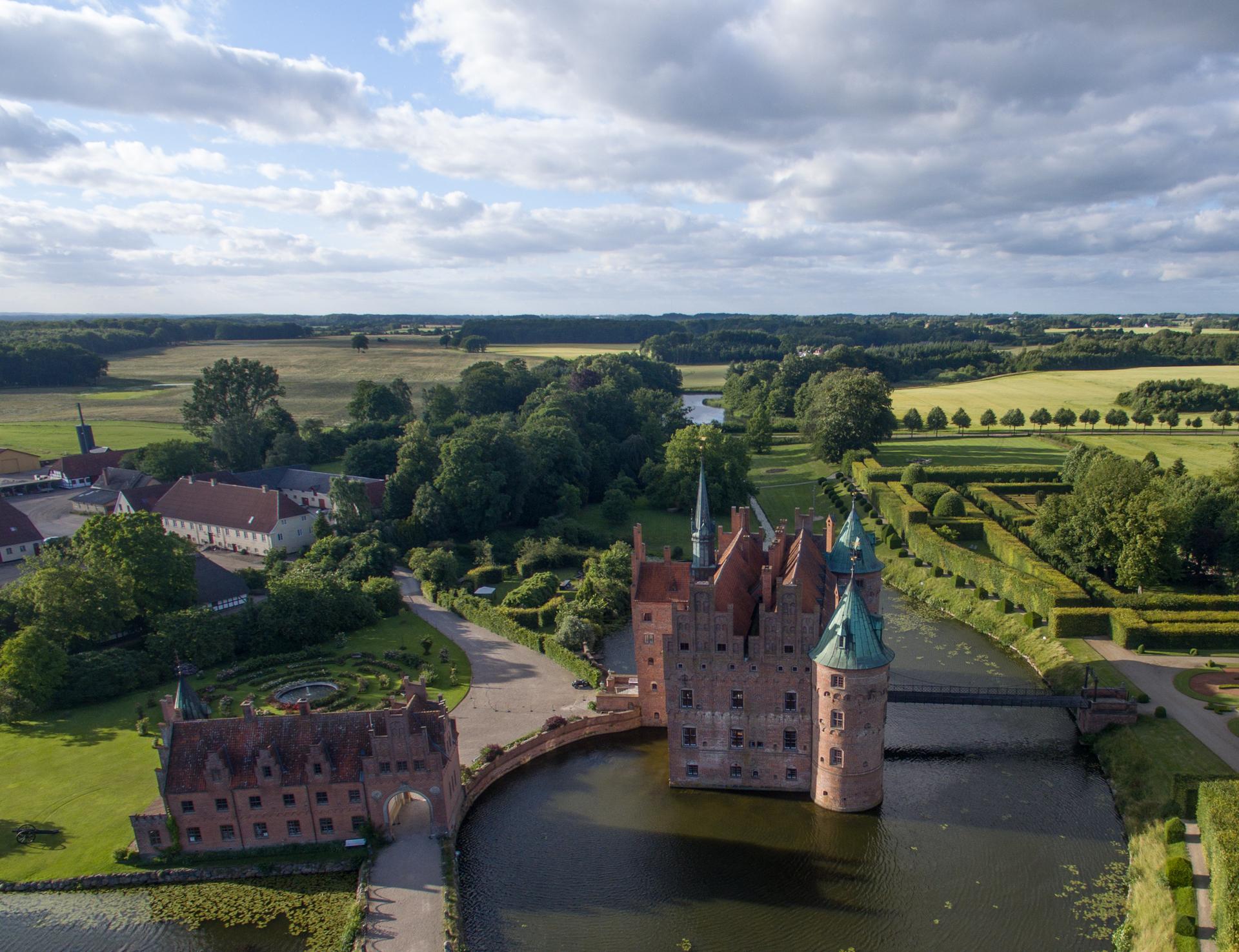
Discover Funen, Denmark's lush island treasure, where fairy tales come to life amidst scenic landscapes, historic castles, and vibrant cultural heritage.
Tell me more about Funen
A small, uninhabited Danish island of forest, shoreline and quiet wildlife, Romsø offers a tranquil, car-free escape just a short boat ride from Kerteminde.
Sensory-rich nature playground with farm animals, accessible pathways, and beach access on Denmark's Great Belt.
