

Nyborg Prison (Nyborg Fængsel)
A century-old red-brick state prison on Funen, where imposing walls, watchtowers and hidden courtyards reveal Denmark’s evolving approach to confinement and rehabilitation.
Nyborg Prison is one of Denmark’s major closed-state penitentiaries, set on the outskirts of the coastal town of Nyborg on Funen. Opened in 1913, the fortress-like complex was originally built for young inmates and today houses several specialized units behind high brick walls and watchtowers. From the outside, its red-brick architecture, perimeter walls and guard towers form a stark contrast to the surrounding fields and suburban streets, offering a rare glimpse of the country’s modern correctional system in operation.
A brief summary to Nyborg Prison
- Vindingevej 36, Nyborg, 5800, DK
- Click to display
- Click to display
- Duration: 0.5 to 1.5 hours
- Free
-
 Outdoor
- Mobile reception: 4 out of 5

Know before you go
Hi, I'm Eve. Here are a few practical things to know before exploring Nyborg Prison.
- Remain outside the secure perimeter and respect all signs and barriers; Nyborg Prison is an active closed facility, not a public attraction.
- If viewing the complex from nearby streets or paths, avoid photographing identifiable individuals, vehicles or security installations.
- Use your visit as a short reflective stop, combining it with time in Nyborg’s historic centre and coastal areas for a broader sense of the town.
Do you manage this location?
Take control to get all the benefits, like improved information, better appearance, and stronger visibility across AI-powered discovery. Learn more
Activate your presenceOther nearby places you may find interesting
Getting There
-
Regional train and local walk
From Nyborg railway station, regional trains connect frequently with major Danish cities such as Odense and Copenhagen, with typical journey times of about 20–30 minutes from Odense and around 1½ hours from Copenhagen and standard second-class fares usually in the range of 80–220 DKK one way depending on distance and ticket type. From Nyborg station, plan around 25–35 minutes on foot along ordinary town streets to reach the prison area; the route is flat but may feel long in bad weather, and there are no facilities specifically for visitors at the prison itself.
-
Local bus within Nyborg
Local bus services in Nyborg link the town centre and residential districts near Vindingevej in roughly 10–20 minutes of travel time, depending on route and traffic. A single adult ticket bought from the driver or via local ticketing apps typically costs about 20–30 DKK. Buses can be less frequent in evenings and on weekends, so check current timetables in advance and be prepared for a short additional walk of several hundred metres from the nearest stop to the outer streets by the prison.
-
Taxi from Nyborg town centre
Taxis are available in and around Nyborg, including at the railway station, and offer the most direct option to the prison area, usually taking 5–10 minutes depending on traffic. Daytime base fares and per‑kilometre rates in Denmark mean a short town journey will commonly cost in the range of 80–150 DKK. Availability can be limited late at night or during busy periods, so booking by phone or app ahead of time is advisable if you need a specific pickup time.
For the on-the-go comforts that matter to you
-
 Restrooms
-
 Trash Bins
-
 Information Boards
Discover more about Nyborg Prison
A forbidding red-brick landmark on Funen
Nyborg Prison stands just outside the town of Nyborg, its tall perimeter walls and corner watchtowers forming a massive brick rectangle in the flat landscape. Built in 1913 as a state prison for young offenders, it was laid out as a self-contained community with workshops, living quarters, service buildings and a chapel all enclosed within one fortified complex. From the road, you mainly see the long facades, barred windows and high walls, but glimpses of internal yards and rooftops hint at the scale of the institution hidden from public view.Although it is very much a working prison rather than a visitor attraction, the exterior has become a recognisable local landmark. The complex stretches over a large footprint, with additional staff housing and service areas arranged around the main enclosure, underscoring how deeply the institution is embedded in the town’s social and economic life.From youth institution to modern closed facility
When Nyborg Prison opened in the early 20th century, it was specifically designed for young inmates, reflecting changing ideas about discipline, education and rehabilitation. Inside the walls, separate wings, classrooms and a hospital wing were meant to combine strict control with opportunities for schooling and vocational training. Until 1973 a dedicated youth section operated here, before the prison was reorganised as a standard closed state facility.Today Nyborg functions as a fully closed prison with capacity for several hundred inmates under high-security conditions. Different sections handle treatment programmes, vulnerable prisoners who prefer limited contact with others, and those under disciplinary sanctions. The institution provides workshops, education and health facilities, continuing the original idea that time served here should also be used to prepare inmates for life outside, even if the physical environment remains stark.Architecture, walls and the unseen interior world
Architecturally, Nyborg Prison reflects early 1900s institutional design in Denmark: solid red-brick construction, rhythmic rows of small windows and a clear separation between inside and outside spaces. The chapels, infirmary and service buildings were given modest decorative touches, while the outer walls and gates were built purely for function and security. Over the decades, new security features, fences and technical installations have been added, layering modern systems onto the original structures.For outsiders, most of the prison’s life remains hidden: the daily routines, roll calls, workshop shifts and carefully controlled movements that structure every hour for inmates and staff. Only occasional media coverage, official visits or rare open-house events have offered short glimpses behind the walls. Standing nearby, you are always aware that a large, highly regulated community is operating just out of sight.Everyday work, risk and rehabilitation
Nyborg Prison employs a substantial staff of correctional officers, social workers, teachers, health professionals and technical personnel who keep the institution running around the clock. Their work ranges from direct supervision and conflict management to running treatment programmes for substance use, supporting education and coordinating contact with families and authorities. The prison has at times faced challenges with staffing levels and safety, underlining that maintaining security in such a concentrated environment is demanding and complex.At the same time, the institution is a key node in Denmark’s wider correctional system. Inmates can be transferred here from other facilities, participate in structured programmes and, in some cases, prepare for gradual reintegration. The contrast between the heavy physical architecture and these more progressive aims is one of the most striking aspects of the site’s identity.Nyborg Prison in the local landscape
Set near residential areas and fields, Nyborg Prison has long been intertwined with its surroundings. Generations of town residents have worked here in various roles, and the institution’s needs for services, maintenance and supplies connect it to local businesses and public authorities. Yet in daily life, the prison also remains separated: movement across the walls is tightly controlled, and the internal rhythm follows legal and administrative rules rather than the town’s pace.For a passer-by, viewing the complex from outside offers a moment to reflect on how societies balance punishment, prevention and rehabilitation. The building’s age and scale speak to over a century of changing penal philosophies, while the closed gates and secure walls make clear that this is first and foremost an active place of confinement, not a site designed for tourism.Explore the best of what Nyborg Prison has to offer













More about Funen
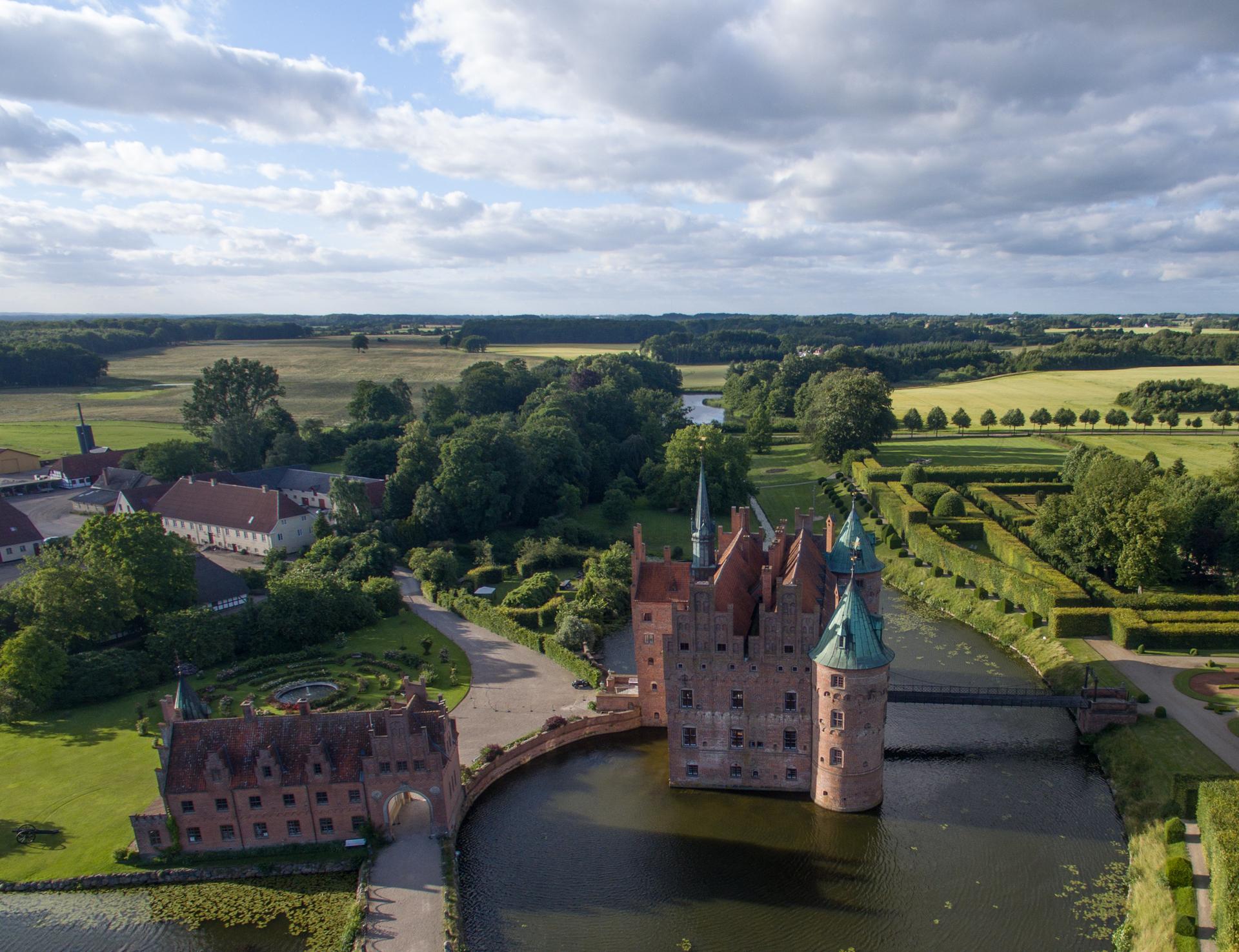
Discover Funen, Denmark's lush island treasure, where fairy tales come to life amidst scenic landscapes, historic castles, and vibrant cultural heritage.
Tell me more about Funen
An unpretentious open woodland on Nyborg’s edge, ideal for relaxed walks, quiet runs and everyday nature breaks among trees, clearings and birdsong.

Medieval power centre and early Danish capital, where moats, ramparts and royal halls tell the story of kings, parliaments and the kingdom’s first constitution.
