Borgmestergården, Funen Travel Guide
Step through the red half‑timbered façade into four centuries of Nyborg history, where a merchant’s and mayor’s home now tells the town’s intimate story.
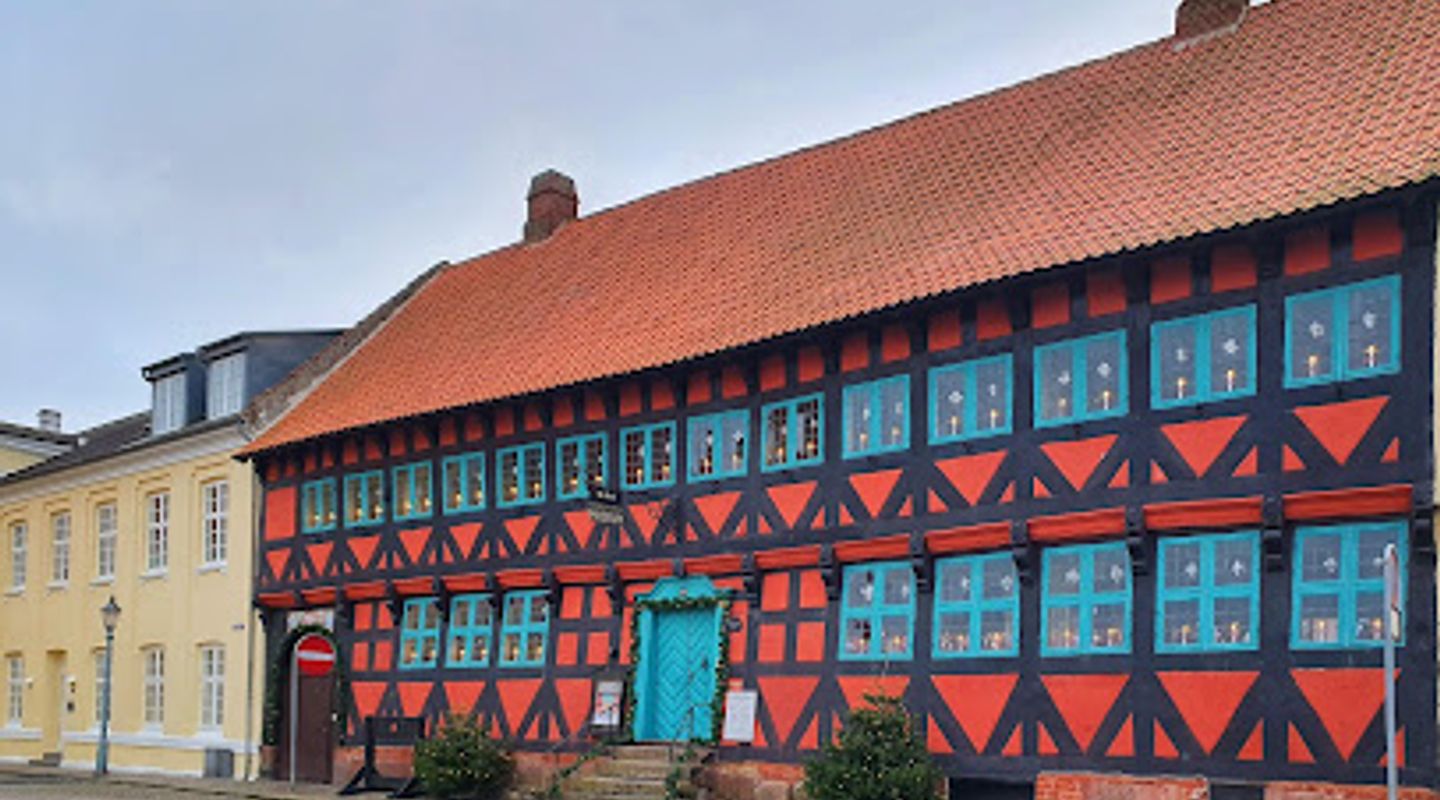
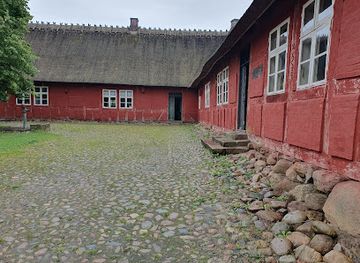
Borgmestergården, or The Mayor’s Yard, is a beautifully preserved 17th‑century merchant’s and mayor’s house in Nyborg’s old town, now home to the city’s historical museum. Behind its red timbered façade and cobbled courtyard you step into rooms furnished to evoke centuries of local life, trade and civic power. Old fire engines, a former smithy and changing exhibitions bring Nyborg’s story to life just a short stroll from Nyborg Castle.
A brief summary to Borgmestergården
- Slotsgade 11, Nyborg, 5800, DK
- Click to display
- Click to display
- Duration: 1 to 2 hours
- Free
-
 Mixed
Mixed
- Mobile reception: 4 out of 5
- Monday 10 am-4 pm
- Tuesday 10 am-4 pm
- Wednesday 10 am-4 pm
- Thursday 10 am-4 pm
- Friday 10 am-4 pm
- Saturday 10 am-4 pm
- Sunday 10 am-4 pm

Know before you go
Hi, I'm Eve. Here are a few practical things to know before exploring Borgmestergården.
- Combine Borgmestergården with nearby Nyborg Castle in the same day to understand both royal life and everyday town history in one compact walking route.
- Plan 1–2 hours for the museum so you have time to explore the interiors slowly and enjoy a quiet break with a snack or drink in the cobbled courtyard.
- Wear comfortable shoes; the historic floors and cobblestones in the yard can be uneven underfoot, especially in wet weather.
- Check the current seasonal opening months before you go, as hours are reduced outside the main spring and summer period.
- Bring a light layer even in summer; the old interiors can feel cool compared with the sunny courtyard outside.
Do you manage this location?
Take control to get all the benefits, like improved information, better appearance, and stronger visibility across AI-powered discovery. Learn more about listing your business on Evendo
Activate your presenceOther nearby places you may find interesting
The closest places of the same kind, if this one is not quite what you had in mind.

Explore Borgmestergården on the Map
A handpicked selection of must-see spots near Borgmestergården, mapped for you.
Getting There
-
Train and short walk from Odense
From Odense, take a regional train to Nyborg Station; departures are typically at least twice per hour during the day and the ride takes about 20–25 minutes. A standard adult single ticket usually costs in the range of 60–90 DKK, depending on discounts and time of purchase. From Nyborg Station it is an easy, mostly level walk of around 10–15 minutes through the town centre to Borgmestergården, suitable for most visitors with basic mobility.
-
Car via E20 across Funen
Drivers coming from Odense or across the Great Belt can use the E20 motorway and follow signs into central Nyborg, with the journey from Odense typically taking about 25–35 minutes in normal traffic. Parking near the historic centre is usually in paid or time‑restricted public car parks; budget roughly 10–20 DKK per hour depending on the zone. Once parked, expect a short walk of several hundred metres on cobbled and paved streets to reach Borgmestergården.
-
Regional bus within East Funen
Regional buses connect Nyborg with nearby towns on Funen, generally running at least once per hour on weekdays and less frequently in the evenings and on weekends. Typical journeys from neighbouring communities take 20–45 minutes, with single fares often around 30–60 DKK depending on distance and ticket type. Buses stop near Nyborg’s central area, from where you walk 5–10 minutes through relatively flat streets to the museum; check timetables in advance, especially on public holidays.
For the on-the-go comforts that matter to you
-
 Seating Areas
-
 Picnic Areas
-
 Trash Bins
-
 Information Boards
Discover more about Borgmestergården
A red‑timbered survivor in Nyborg’s old heart
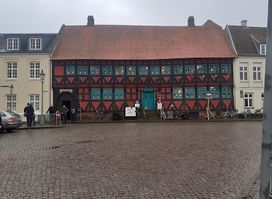
Borgmestergården stands on Slotsgade, a deep red, half‑timbered house that instantly anchors you in old Nyborg. Built in 1601 as a wealthy merchant’s residence and later home to the town mayor, it is one of the few buildings that survived the devastating town fire of 1797. Its crooked beams, small‑paned windows and steep roofline form a picturesque ensemble with the nearby Mill River and church spires, making this courtyard complex a quiet counterpoint to the more imposing Nyborg Castle.The house forms part of the local museum network and has long been used to tell the story of Nyborg as royal city, trading hub and coastal community on Funen. Walking in, you move from a busy modern pedestrian street into a self‑contained yard that once bustled with wagons, apprentices and townsfolk doing business with the family who lived and worked here.Rooms that replay four centuries of town life
Inside, Borgmestergården’s rooms are staged to reflect domestic life across several centuries. Low ceilings, creaking floorboards and tiled stoves frame interiors where painted chests, heavy tables and portraits recreate how an affluent household might have looked when Nyborg was still a royal seat. Everyday objects such as ceramics, clothing and tools trace how tastes and technology changed from the 1600s to the early industrial age.Interpretive displays explore themes like guilds, commerce and the rise of a civic middle class. In contrast to the grand banqueting halls of the castle, Borgmestergården focuses on the scale of parlours, kitchens and workrooms. You can follow how the same building shifted function over time, from merchant’s yard to mayoral residence and eventually to a museum dedicated to the town’s own story.Cobbled courtyard, smithy and historic fire engines
The cobblestoned courtyard is one of Borgmestergården’s unexpected highlights. Here you find historic fire engines and related equipment neatly lined along the walls, reminders of the town’s long struggle with wooden houses and open flames. These vehicles and hand‑pumped engines vividly illustrate how communities once fought fires before modern technology.Tucked off the yard is the entrance to a former smithy, evoking the clang of metalwork that once supplied tools, horseshoes and fittings to Nyborg’s tradespeople. Simple tables and benches invite you to pause with a picnic, surrounded by timber façades and rooflines that feel remarkably unchanged for generations. On fine days, birdsong and the muffled sounds of the town around you complete the impression of a small, living time capsule.Connecting Nyborg’s royal story and coastal setting
Although more modest than Nyborg Castle, Borgmestergården helps tie together the broader narrative of this old royal city. From here it is only a short walk to the former tournament grounds, the church and the old town squares, making it an ideal starting or finishing point for exploring the historic centre. Exhibits often highlight the relationship between the town, its castle and the Great Belt, showing how seafaring, taxation and royal politics intersected in daily life.Panels and objects illuminate Nyborg’s period as a capital, the impact of the Great Belt ferries and later the bridge, and how merchants like those who once lived here fitted into wider trade networks. For many visitors, the intimate scale of Borgmestergården makes complex chapters of Danish history more tangible and easier to picture.Planning a rewarding hour in the Mayor’s Yard
Most visits to Borgmestergården last one to two hours, enough time to tour the interiors, linger over the historical displays and enjoy a quiet break in the courtyard. The museum generally opens during daytime hours, especially from spring to late autumn, with seasonal variations in winter. Combined tickets or joint programming with Nyborg Castle are sometimes available through the local museum organisation, making it attractive to explore both sites in one day.With its central location in Nyborg’s walkable core, Borgmestergården suits curious travellers, families and anyone interested in everyday history rather than royal pageantry. It is a compact, atmospheric stop that rounds out an exploration of Nyborg’s castle, church and harbour, offering a close‑up view of how one building has witnessed more than four centuries of change.












Your all‑in‑one travel companion app
Explore expert travel guides, compare and book tours, experiences, hotels, and more—all from the palm of your hand. Download now for seamless trip planning wherever your wanderlust takes you.


Explore More of Funen
Looking beyond Borgmestergården? Discover Funen for broader travel guides, local hot-spots, and regional highlights.
Explore Funen