Dronningens Bastion & Nyborg Water Tower
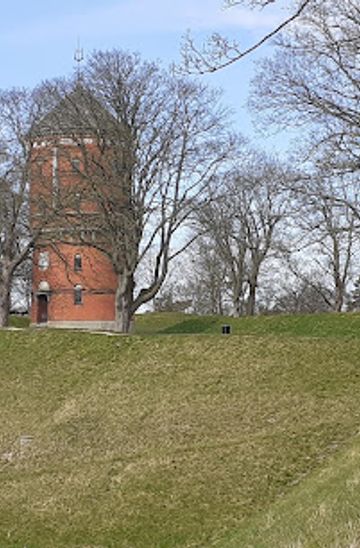
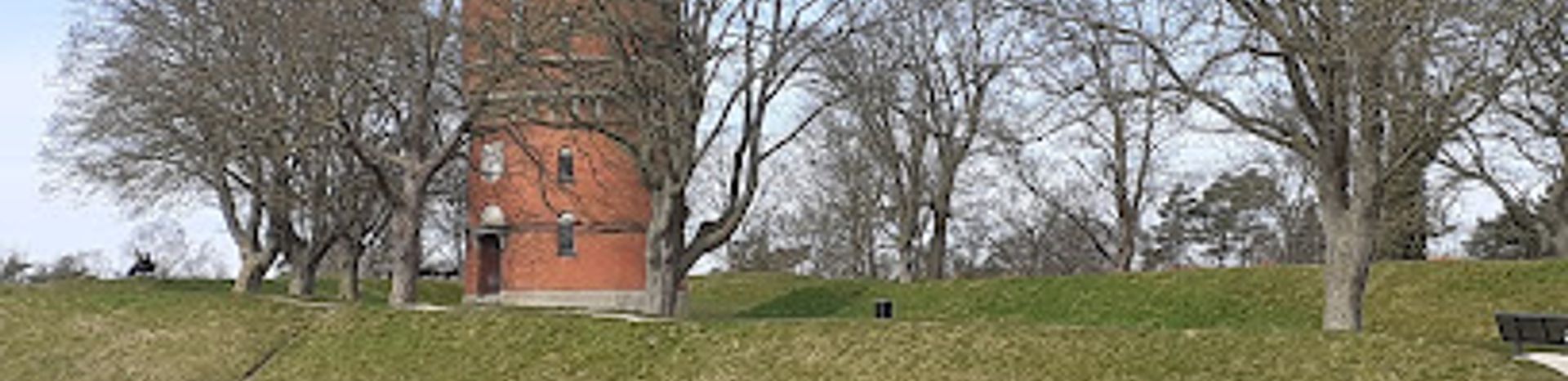
Historic earthen ramparts crowned by Nyborg’s 1899 water tower, where medieval fortifications and industrial heritage meet in a tranquil green corner of the castle landscape.
Dronningens Bastion, set just off Nyborg Castle on Funen, is one of the surviving earthen bulwarks of the town’s medieval fortifications. Today the grassy ramparts form a peaceful park-like rise, crowned by Nyborg’s distinctive red-brick water tower from 1899. Paths curve along the old defensive lines, offering close-up views of the historic tower, glimpses of moats and castle grounds, and a quiet green escape only steps from Nyborg’s centre.
A brief summary to Dronningens Bastion
- Dronningensvej 501, Nyborg, 5800, DK
- Click to display
- Duration: 0.5 to 1.5 hours
- Free
-
 Outdoor
- Mobile reception: 4 out of 5

Know before you go
Hi, I'm Eve. Here are a few practical things to know before exploring Dronningens Bastion.
- Combine your visit with a walk around the adjacent castle moats and remaining bastions to better understand Nyborg’s full defensive ring.
- Wear shoes suitable for grass and gentle slopes, as paths can be soft or slippery after rain on the earthen banks.
- Bring a camera or phone: the red-brick water tower framed by trees and water makes for striking photos in soft morning or late-afternoon light.
Do you manage this location?
Take control to get all the benefits, like improved information, better appearance, and stronger visibility across AI-powered discovery. Learn more
Activate your presenceOther nearby places you may find interesting
Getting There
-
Train + Walk from Nyborg Station
From Nyborg Station, reach Dronningens Bastion on foot in about 15–20 minutes. The route leads through the compact town centre and past the castle area before you arrive at the grassy ramparts. Walking is mostly on level pavements and park paths, suitable for most visitors, though the final slopes on the bastion itself are on grass and may be uneven or soft after rain. This option is free and works well for travellers using regional trains across Funen or via the Great Belt connection.
-
Local bus within Nyborg
Local buses in Nyborg connect residential districts with the central area near the castle and historic quarter in around 5–15 minutes, depending on the route and starting point. A single ticket typically costs in the range of 20–30 DKK, with services running more frequently on weekdays than evenings or weekends. From a stop near the centre it is a short additional walk along urban streets and park paths to reach Dronningens Bastion. Check current timetables for exact departure times and note that service can be reduced on public holidays.
-
Car or taxi within Nyborg and eastern Funen
Reaching Dronningens Bastion by car or taxi from most places in Nyborg usually takes 5–10 minutes, and around 30–40 minutes from Odense via the main east–west route across Funen. Expect a taxi within town to cost roughly 80–150 DKK each way, more from neighbouring towns. Parking is generally available in the streets and public car parks around the historic centre and castle area, from where a short walk brings you to the bastion itself. Some central parking zones may have time limits or fees, so check signs before leaving your vehicle.
For the on-the-go comforts that matter to you
-
 Seating Areas
-
 Trash Bins
-
 Information Boards
Discover more about Dronningens Bastion
Fortress earthworks turned green haven
Dronningens Bastion, the Queen’s Bulwark, was once part of the front line protecting Nyborg Castle and the royal power centred here in the Middle Ages. Shaped as an angular earthen rampart thrusting into the surrounding moat, it formed one of several bastions that allowed cannons to cover every approach to the castle. Today the guns are gone, but the geometry of war remains in the crisp lines of banks and ditches, now softened by grass and trees.Walking onto the bastion you quite literally step onto the old defensive ring of Nyborg. The elevation is modest, yet enough to give you a sense of how the town, castle, ramparts and water were all interlocked in a single fortified landscape. The original water regulation system that fed the moats still shapes the terrain, and the bastion’s outline mirrors the shapes seen on old fortress maps.The red-brick water tower above the ramparts
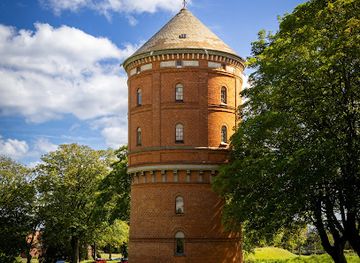
The most eye-catching feature of Dronningens Bastion is the brick water tower that rises from its crest. Built in 1899 as part of Nyborg’s modern water supply, the tower adds a vertical accent to the low earthworks below. Round-arched openings, decorative brick bands and a compact, almost castle-like silhouette tie the industrial structure back to the fortified setting around it.The tower has long since become a local landmark, visible from many angles around the town and across the castle grounds. Its protected status underlines its architectural and historical value: industrial heritage placed directly on top of medieval defence works. From the foot of the tower you can appreciate how engineers in two very different eras both chose this high point for strategic reasons, first for cannon fire, later for water pressure.A quiet park within the old castle landscape
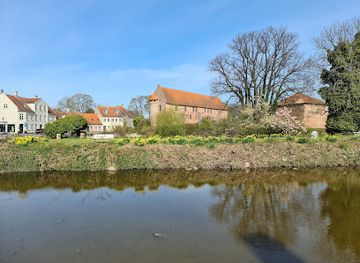
Despite its military origins, Dronningens Bastion today feels more like an intimate park than a fortress. Grassy slopes invite slow climbs and casual sitting, while small trees and shrubs break the outline of the banks. The surrounding moats and castle lake, still following their historic lines, add a sense of enclosure and calm when you pause to look across the water.The bastion links naturally with paths around the wider Nyborg fortifications, so it often forms part of a longer loop taking in other bulwarks and viewpoints. Yet it also works well as a short standalone stop: a place to stretch your legs, let children run up and down the banks, or simply sit and listen to birdsong along the water’s edge.Layers of royal and civic history
Nyborg was once a royal seat where medieval kings gathered their council and where major decisions for the kingdom were taken. Dronningens Bastion belongs to this story as one of the bulwarks that guarded the castle and the approach routes. Its name, invoking a queen, echoes the royal associations that long defined the town.When the military role of Nyborg faded, the area did not lose its importance; it was repurposed for civic infrastructure and recreation. The siting of the water tower on the bastion in the late 19th century marks a shift from royal defence to public utility. Today both layers are legible in the landscape, making a visit here a compact lesson in how towns adapt and reuse their strategic spaces over time.Experiencing the bastion on foot
Exploring Dronningens Bastion is straightforward and informal. There are no gates or ticket booths; instead you simply follow the paths that wind up onto the ramparts. Underfoot, the ground is mostly grass and compacted soil, with gentle inclines that reward slow walking rather than strenuous climbing. The modest height offers pleasing views across the castle grounds, the moats and towards Nyborg’s roofscape without ever feeling exposed.Photography-minded visitors will find varied angles: close-ups of the brickwork on the tower, long shots that capture the bastion’s profile against the sky, and compositions that frame the tower with trees and water. At quieter moments, the space invites you to pause and imagine how different the atmosphere would have been when cannon crews once occupied these same banks.A small but memorable castle-side detour
Although Dronningens Bastion is only one part of the broader Nyborg fortress landscape, it stands out through the striking pairing of earth and brick. It is an easy addition to any exploration of Nyborg Castle or the old town, requiring only a short detour to experience a different perspective on the historic centre. The combination of open air, layered history and clear, readable shapes in the land make this a spot that lingers in memory longer than its modest size might suggest.Explore the best of what Dronningens Bastion has to offer













More about Funen
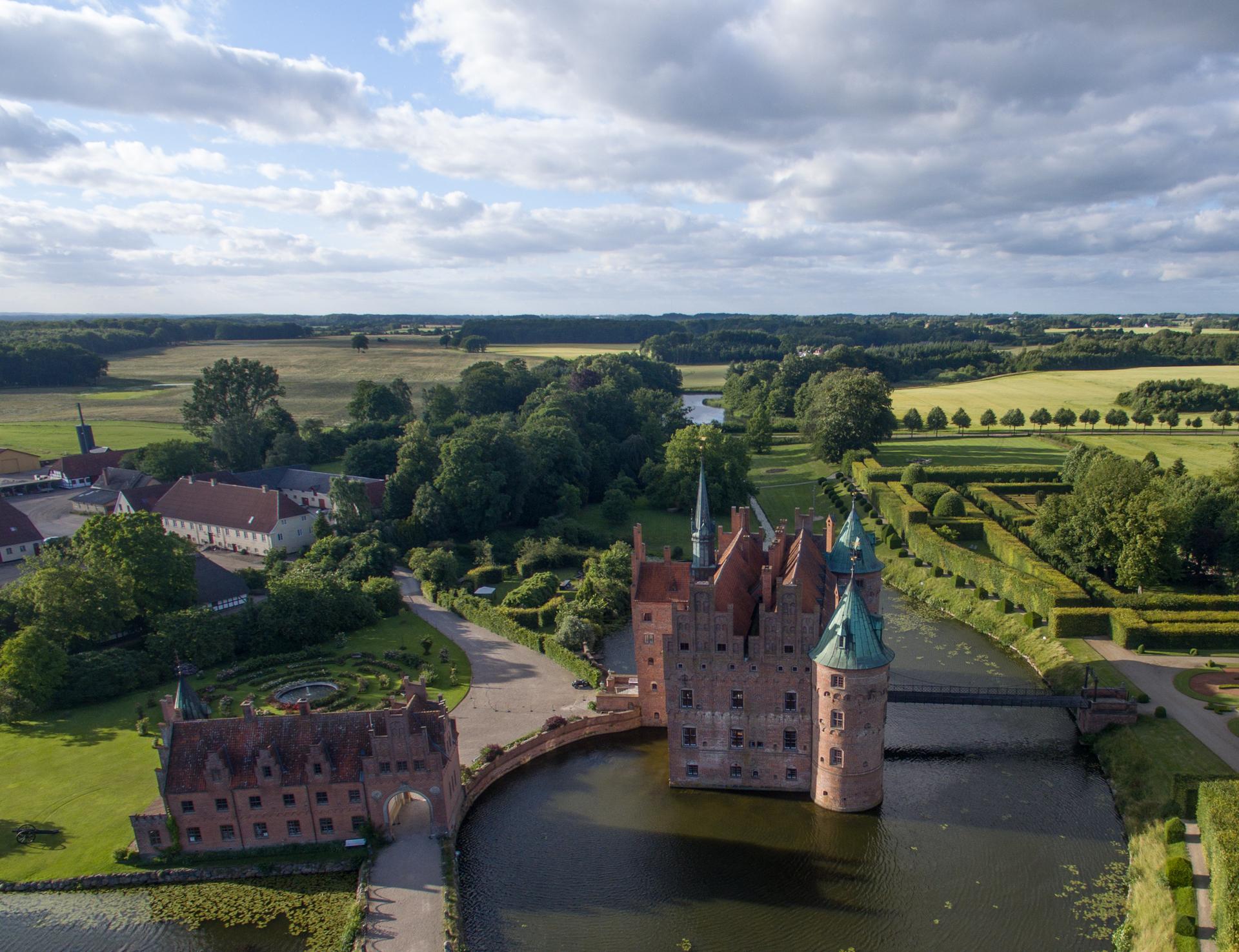
Discover Funen, Denmark's lush island treasure, where fairy tales come to life amidst scenic landscapes, historic castles, and vibrant cultural heritage.
Tell me more about Funen
Step through the red half‑timbered façade into four centuries of Nyborg history, where a merchant’s and mayor’s home now tells the town’s intimate story.

Medieval power centre and early Danish capital, where moats, ramparts and royal halls tell the story of kings, parliaments and the kingdom’s first constitution.