

Nyborg Castle Travel Guide
Free Guide: Medieval power centre and early Danish capital, where moats, ramparts and royal halls tell the story of kings, parliaments and the kingdom’s first constitution.


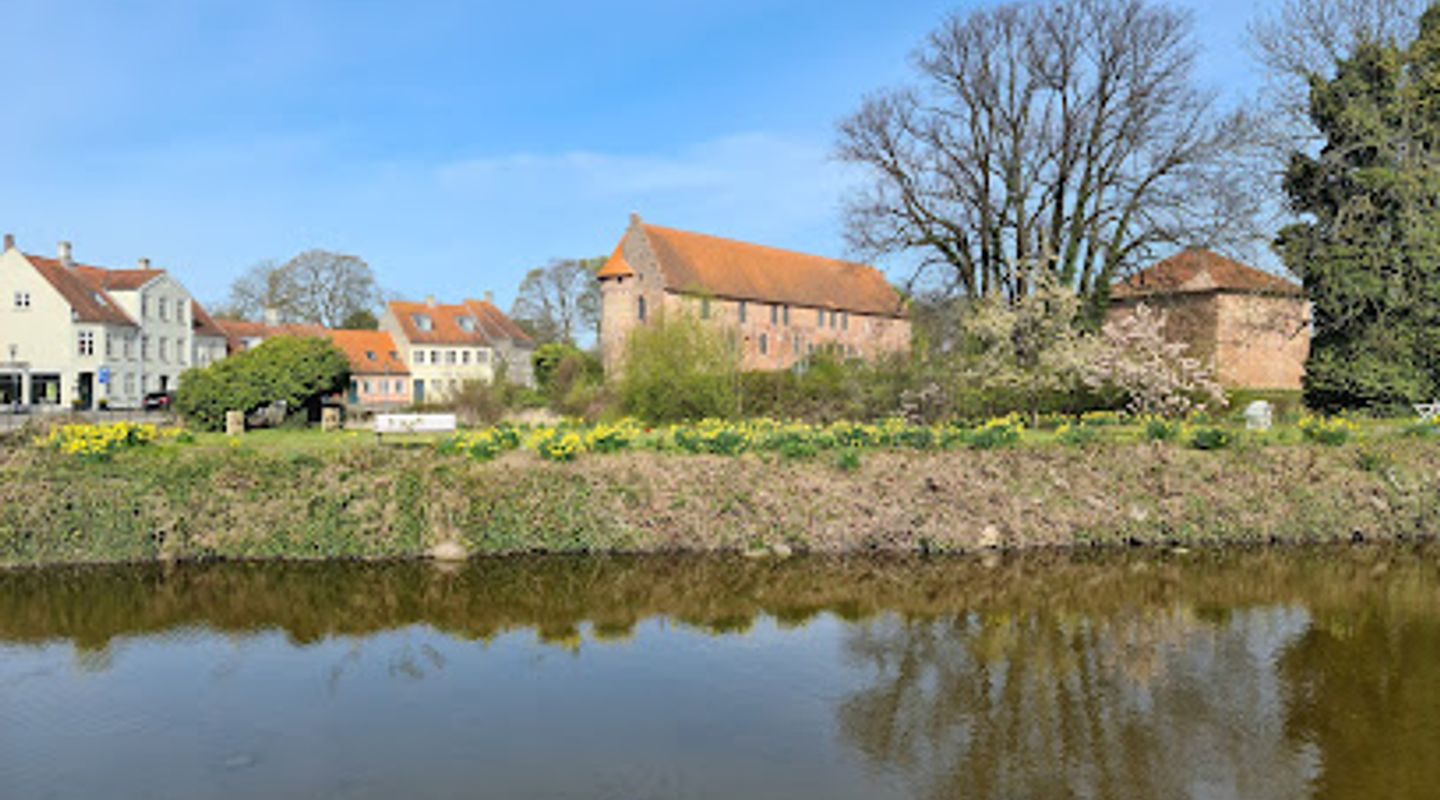
A brief summary of Nyborg Castle
Medieval power centre and early Danish capital, where moats, ramparts and royal halls tell the story of kings, parliaments and the kingdom’s first constitution.
Nyborg Castle rises above the heart of the old market town of Nyborg, on the island of Funen, as one of Denmark’s most historically charged royal strongholds. Founded in the late 12th century to guard the vital Great Belt crossing, it later hosted the Danehof, Denmark’s first parliament, and witnessed the signing of the country’s first constitution in 1282. Today, the partly reconstructed royal wing, moats, and earthworks form an atmospheric museum complex surrounded by lawns, ramparts and a historic townscape that still hints at its medieval power and Renaissance splendour.
On-site amenities
 Restrooms
 Drinking water
 Seating areas
 Sheltered areas
 Trash bins
 Information boards
 Visitor centre
Opening hours
- Every dayOpen 24 hours
Opening hours as listed on the venue’s Google Business Profile. Hours can change for services and special events, so check with the venue before you go.
- Address
- Slotsgade 34, 5800 Nyborg
- Phone
- Website
Getting there
Train and short walk from Odense
Car from Odense and eastern Funen
Train across the Great Belt from Zealand
Discover more about Nyborg Castle
Royal stronghold on the Great Belt
Nyborg Castle stands at the centre of Nyborg, perfectly placed to control the crucial crossing of the Great Belt between Funen and Zealand. First mentioned in 1193 and likely founded in the late 12th century, it formed part of a chain of royal fortifications with Sprogø and Tårnborg to defend the realm and secure trade and troop movements. Massive ring walls, deep moats fed by an ingenious canal system, and a compact island layout underlined its role as a frontline fortress.From the outset, Nyborg was more than a military outpost. Its central location made it a natural base for itinerant kings, who could move quickly across the kingdom. Over time, the complex expanded from a simple defensive stronghold into a sizeable royal residence with representative halls and a watchtower that once soared above the town and surrounding countryside.
Birthplace of parliament and constitution
Within these walls, some of Denmark’s defining political moments unfolded. From the mid‑13th century until 1413, Nyborg’s great hall hosted the Danehof, a gathering of nobles, clergy, and royal representatives that functioned as the kingdom’s first parliament. Here law was debated, alliances were forged, and royal authority was negotiated rather than simply imposed.In 1282, King Eric V Klipping put his seal to Denmark’s first written constitution at Nyborg. The charter limited royal power and codified rights, symbolising a shift toward shared governance. Standing in the restored halls today, it is easy to imagine the rustle of cloaks, the clink of spurs on stone floors and the low murmur of argument echoing beneath the timbered ceilings as the medieval realm edged toward a more formal political order.
Renaissance ambition and changing fortunes
Nyborg enjoyed a second golden age in the 15th and 16th centuries. Under King Hans and later Christian III, the town was designated a permanent royal residence and, in 1525, effectively became the first fixed capital of Denmark. The castle was reshaped into a Renaissance palace: the royal wing was extended, a splendid new great hall was created, and a broad tournament square laid out in front as a theatrical stage for royal display.Yet royal favour shifted. From the late 16th century power gravitated toward North Zealand and Copenhagen. The Swedish wars of the 17th century left Nyborg battered and partly ruined. Large sections of the complex were dismantled, their stone reused in other grand projects, while the remaining buildings were downgraded to garrison stores for grain and gunpowder rather than royal ceremony.
Ruins, restoration and museum life
By the early 20th century, Nyborg Castle was a shadow of its medieval might. When the military finally left in 1913, the structure was worn and altered, but its historical importance was unmistakable. A major restoration campaign began in 1917, guided by archaeological investigation and a desire to evoke the castle as it looked under Christian III. The royal wing was stabilised and rebuilt, interiors were furnished with historic pieces, and the moats and ramparts were slowly reclaimed as a heritage landscape.Today, the castle forms part of a broader museum organisation that uses exhibitions, reconstructed rooms and interpretive displays to tell the story of royal power, warfare, and everyday life at court. As you move from vaulted cellars to ceremonial halls, you trace the building’s transformation from fortress to palace, from near‑ruin to curated monument.
Atmosphere of walls, water and town
Much of the appeal of Nyborg lies in the way castle, ramparts and town knit together. Grassy embankments and tree‑lined moats curve around the site, offering reflective walks with views back to red‑brick walls, narrow windows and the slightly austere silhouette of the royal wing. In places you can still sense the line of the old ring wall and imagine how it once enclosed a busy inner courtyard packed with service buildings, stables and soldiers’ quarters.Beyond the castle island, cobbled streets and merchants’ houses echo the era when Nyborg was a busy royal town and gateway between the islands. Seasonal events and historical interpretations sometimes animate the grounds, but even on quiet days the site has a contemplative feel. It is an evocative place to connect big moments in Danish history with the textures of brick, timber, earth and water that have carried them into the present.
Evendo Review Centre
 Google
Guest reviews
Best time to go
Quietest: Jan, Feb & Mar · before 7am or from 8pm
Busy times are Evendo estimates for a typical year, to help you plan. Actual crowds vary with events, school holidays and the weather.
Explore Nyborg Castle on the map
A handpicked selection of must-see spots near Nyborg Castle, mapped for you.
Get your free copy of our complete guide to Nyborg Castle, delivered straight to you.
Everything on this page, from opening hours and how to get there to Eve’s tips and the best time to go, in one PDF you can read offline, print or share.
Already have an account? Sign in
Your Nyborg Castle guide is ready.
We'll send it to · Not you? Sign out

Getting your guide ready…
We are putting together a fresh copy of the Nyborg Castle guide. This can take up to a minute.
This can take a few moments. If your browser asks, choose Allow so the download can start. You'll find the guide in your Downloads folder.
Nothing happened? Download it again
Sorry, the guide is taking longer than usual. Please try again in a minute, or get it by email instead.
Other nearby places you may find interesting
The closest places of the same kind, if this one is not quite what you had in mind.
-
-
-
-
-


Swipe for more places
More to explore near Nyborg Castle

 Best experiences near Nyborg Castle
 Best hotels near Nyborg Castle
 Best landmarks near Nyborg Castle
 Best attractions near Nyborg Castle
 Best shops near Nyborg Castle
 Best restaurants near Nyborg Castle
 Best bars near Nyborg Castle
Do you manage this location?
Take control to get all the benefits, like improved information, better appearance, and stronger visibility across AI-powered discovery.
Explore more
Explore more of Funen
Discover Funen, Denmark's lush island treasure, where fairy tales come to life amidst scenic landscapes, historic castles, and vibrant cultural heritage.
Explore Funen
Explore more of Denmark
Discover Denmark: A perfect blend of history, modern design, and the cozy concept of hygge. Explore vibrant cities, serene landscapes, and world-class cuisine.
Explore Denmark
