Nyborg Lokalhistoriske Arkiv
Paper trails, photographs and quiet stories: Nyborg’s local history archive opens a focused window onto the town’s streets, families and everyday past.
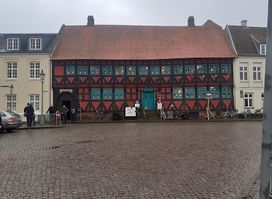
Nyborg Lokalhistoriske Arkiv, housed on Kongegade in central Nyborg, is the town’s dedicated local history archive and a quiet treasure trove for anyone curious about the past of this old royal borough. Here you can explore photographs, maps, documents and local publications that trace everyday life, businesses, buildings and families from Nyborg and its surroundings. It is an intimate, study-focused space where staff and volunteers help visitors dig into genealogy, house histories and the town’s changing urban landscape.
A brief summary to Nyborg Lokalhistoriske Arkiv
- Kongegade 4, Nyborg, 5800, DK
- Click to display
- Click to display
- Duration: 1 to 3 hours
- Free
-
 Indoor
- Mobile reception: 5 out of 5

Know before you go
Hi, I'm Eve. Here are a few practical things to know before exploring Nyborg Lokalhistoriske Arkiv.
- Check the latest opening hours in advance; the archive is only staffed on specific weekdays and often closes during parts of the summer.
- Arrive with concrete questions such as a street name, property number or family surname to make the most of staff support and on-site resources.
- Bring a notebook, laptop and, if allowed, a camera or smartphone for reference photos of documents instead of relying solely on photocopies.
- Allow extra time if you plan to consult older handwritten records; deciphering script and cross-checking references can be slower than expected.
- Combine your visit with a short walk around central Nyborg to compare historic photos or maps with the present-day streetscape just outside the archive.
Do you manage this location?
Take control to get all the benefits, like improved information, better appearance, and stronger visibility across AI-powered discovery. Learn more
Activate your presenceOther nearby places you may find interesting
Getting There
-
Train and short walk
From Nyborg Station, reach the archive on foot in about 10–15 minutes along level, paved streets suitable for most visitors. Regional trains connect Nyborg with Odense and other Funen towns roughly every 30–60 minutes in daytime, with standard adult fares typically around 40–80 DKK each way depending on distance and ticket type. Trains run year-round, but evening and weekend frequencies can be lower, so check departure times in advance if you plan a late-afternoon research session.
-
Local bus within Nyborg
Several local and regional bus routes stop within walking distance of Kongegade in Nyborg’s centre, with travel times of about 5–15 minutes from residential districts and 30–45 minutes from smaller nearby towns. Single tickets within the local zone usually fall in the 20–35 DKK range and can often be bought onboard or via regional ticket apps. Buses run more frequently on weekdays than at weekends, and some routes may have limited evening services, so align your trip with the archive’s daytime opening hours.
-
Car or taxi from surrounding area
Arriving by car from other parts of Funen or across the bridge from Zealand typically takes 20–40 minutes from nearby towns and around 1–1.5 hours from Copenhagen, depending on traffic. Expect to pay standard bridge tolls for crossing the Great Belt if arriving from Zealand. Street and public parking options are available within walking distance of Nyborg’s centre, though time limits and fees can apply during weekday business hours. Taxis within Nyborg or from the station to the archive usually take under 10 minutes, with fares often starting around 70–100 DKK for short urban trips, plus meter charges for longer distances.
For the on-the-go comforts that matter to you
-
 Restrooms
-
 Seating Areas
-
 Information Boards
Discover more about Nyborg Lokalhistoriske Arkiv
A quiet doorway into Nyborg’s past
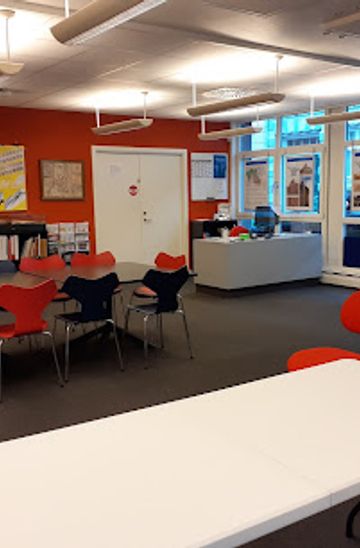
Step through the entrance on Kongegade and you leave modern Nyborg behind for a moment. Nyborg Lokalhistoriske Arkiv is a compact, paper-scented world of shelves, boxes and carefully labelled binders, devoted entirely to preserving the memory of this former royal fortress town and its hinterland. The atmosphere is more reading room than museum: tables laid out with light, power sockets and space for notebooks, the gentle hum of conversation as someone asks about a family farm or a long-gone shop on the high street.The archive’s collection spans photographs, private papers, business records, building drawings, local newspapers and ephemera that would otherwise have disappeared. Much of the material can be consulted freely on site during opening hours, with staff and volunteers on hand to help you navigate the catalogues and digital databases.From fortress town to everyday stories
Nyborg’s strategic position on the Great Belt and its history as a royal residence and fortified town provide a dramatic backdrop to the material kept here. Yet the real strength of the archive lies in its focus on everyday life: school class portraits, factory outings, harbour workers on break, and snapshots of summer days on the local beaches. Together they form a detailed visual record of how the town has changed from market town to modern municipality.Special collections delve into local industries, the railway and harbour, neighbourhood development and key events such as wartime occupation and liberation. For anyone researching how a particular street or building has evolved, cadastral maps, building files and photo series offer rich detail that brings the bricks and mortar of Nyborg’s centre to life.A hub for family and building history
For many visitors, the archive is a starting point for tracing family lines. Staff can point you towards parish records, censuses, address books and digitised sources that help piece together family stories connected to Nyborg and nearby villages. Others come to investigate the history of a house they have bought, a family farm, or a small local business that once defined a corner of the town.The archive also collaborates with the library on talks, book launches and introductions to genealogy and local history. These events often highlight newly researched themes, from the work of a particular local architect to the story of a workshop, depot or housing area that shaped Nyborg’s growth in the 19th and 20th centuries.Research setting more than classic museum
Do not expect exhibition halls and large displays here. Nyborg Lokalhistoriske Arkiv is first and foremost a research and documentation space. Most materials must be used on site and handled with care, though copying and digital scans are often possible. This focus creates a calm, studious environment that rewards patience and curiosity rather than quick browsing.The setting on Kongegade places you right in the historic core of Nyborg. Stepping back outside after a couple of hours with maps and photos, you can immediately compare what you have just studied with the streetscape around you – an unusually direct way to connect archival research with the real town.Planning a focused visit
Because opening hours are limited to specific weekdays and time slots, visits benefit from a bit of advance planning. Arriving with a clear question – a family name, an address, a particular period – makes it easier for staff to guide you quickly to the most relevant boxes and databases. Even a short session can be surprisingly productive, but those working on more detailed projects often set aside an afternoon to immerse themselves fully in the material.Whether you are a dedicated genealogist, a student, a homeowner curious about your property, or simply intrigued by how a Danish coastal town has reinvented itself over centuries, Nyborg Lokalhistoriske Arkiv offers a concentrated, quietly rewarding window into local history.Explore the best of what Nyborg Lokalhistoriske Arkiv has to offer













More about Funen
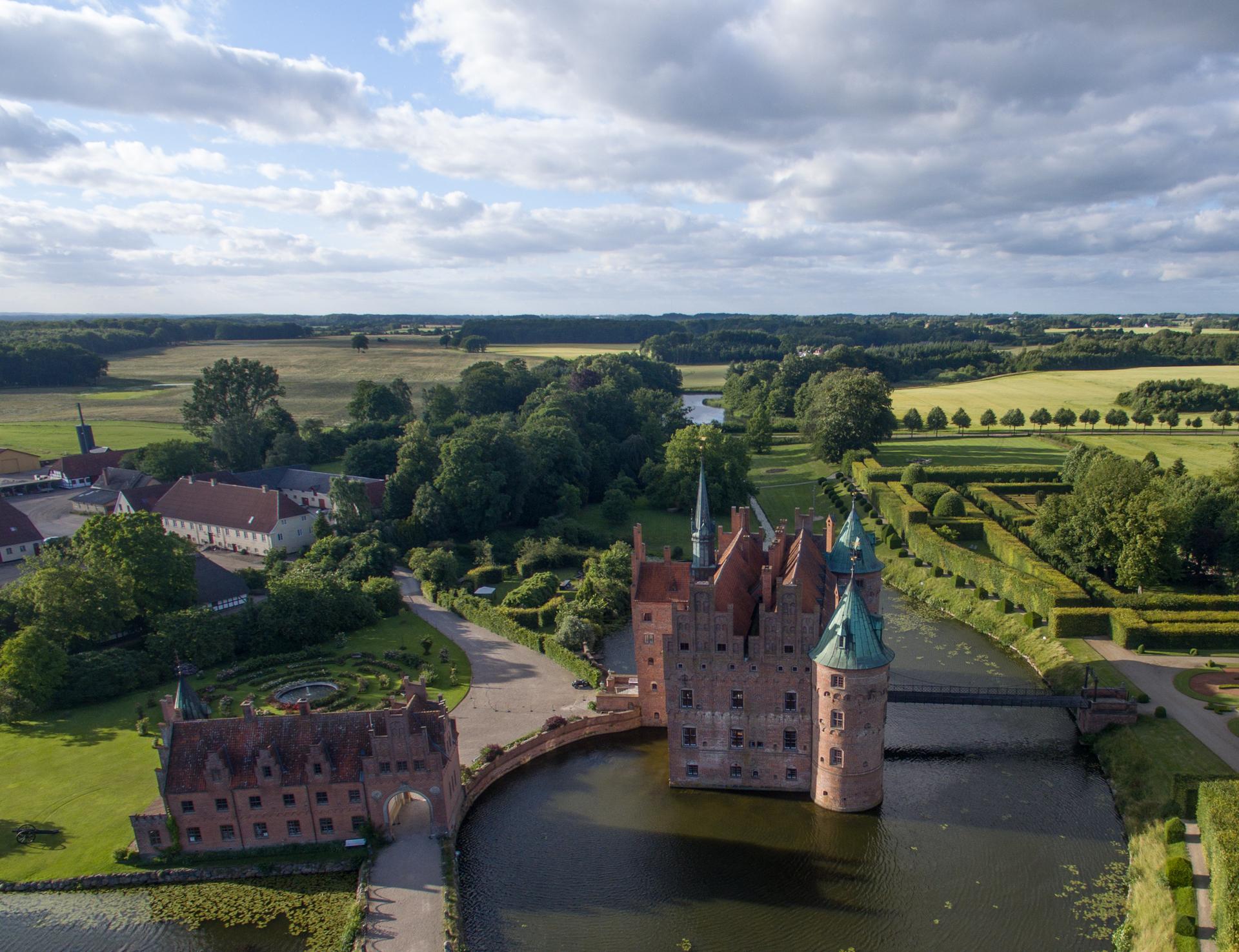
Discover Funen, Denmark's lush island treasure, where fairy tales come to life amidst scenic landscapes, historic castles, and vibrant cultural heritage.
Tell me more about Funen