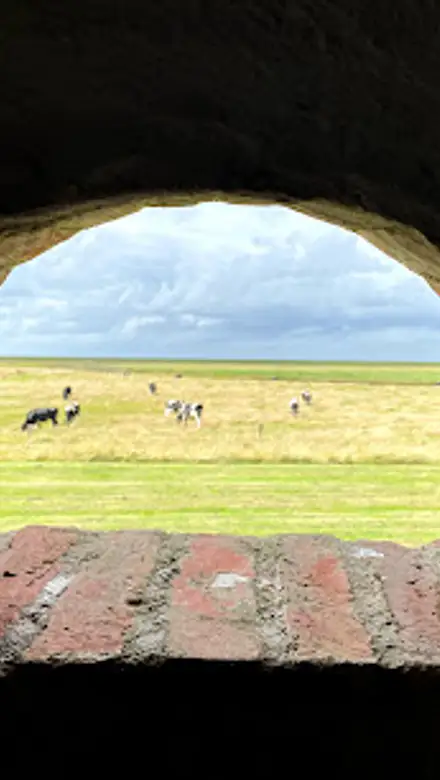
Misthusum, Romo Travel Guide
Historic marsh mounds in the Wadden Sea landscape, where abandoned Frisian dwelling platforms and wide horizons tell a quiet story of living with the sea.
Set in the flat Wadden Sea marshes southwest of Skærbæk, Misthusum is a quiet historical landscape of abandoned dwelling mounds linked to medieval Frisian settlers. These raised earth platforms once protected isolated farms from storm surges and tides, and today they form a low, sculpted pattern in the grasslands. With big skies, grazing animals and a strong sense of remoteness, Misthusum is an atmospheric stop for history‑minded visitors exploring the Danish marsh coast.
A brief summary to Misthusum
- Hjemstedvej 61, Skærbæk, 6780, DK
- Duration: 0.5 to 1.5 hours
- Free
-
 Outdoor
- Mobile reception: 3 out of 5

Know before you go
Hi, I'm Eve. Here are a few practical things to know before exploring Misthusum.
- Wear waterproof or sturdy shoes; the surrounding marshland can be wet, muddy and uneven, especially after rain or in winter.
- Bring binoculars to spot birds and to appreciate the shapes of the individual mounds from a distance across the fields.
- Pack layers and a windproof jacket, as the flat, open terrain offers little shelter from coastal winds.
- Respect fences, crops and grazing animals by staying on obvious tracks and leaving gates exactly as you find them.
Do you manage this location?
Take control to get all the benefits, like improved information, better appearance, and stronger visibility across AI-powered discovery. Learn more about listing your business on Evendo
Activate your presenceOther nearby places you may find interesting
The closest places of the same kind, if this one is not quite what you had in mind.

Explore Misthusum on the Map
A handpicked selection of must-see spots near Misthusum, mapped for you.
Getting There
-
Train and taxi from nearby towns
From Ribe or Tønder you can take a regional train to Skærbæk, with journey times typically between 20 and 35 minutes. Services usually run at least once an hour during the day. From Skærbæk station, a local taxi to the Misthusum area takes about 10–15 minutes, depending on traffic and road conditions, and typically costs in the range of 120–200 DKK one way. Taxis are easier to arrange in advance, especially outside weekday business hours.
-
Regional bus and short rural walk
Regional buses connect Skærbæk with nearby villages and stop points in the Hjemsted area, with travel times around 10–20 minutes from the town centre. Services can be less frequent in the evening and on weekends, so checking a timetable before travel is important. From the nearest bus stop you should expect a rural walk of 15–30 minutes along country roads and farm tracks across generally flat terrain; in wet weather, sections may be soft or muddy and not ideal for wheelchairs or prams.
-
Car or rental vehicle from Skærbæk
By car, Misthusum lies roughly 8–10 kilometres southwest of Skærbæk, a drive of about 10–15 minutes along local roads through open farmland. There is no formal visitor car park directly at the mounds, so you may need to park considerately on firm verges or at small lay-bys without blocking farm access. The route is straightforward in normal weather, but strong winds and winter conditions can reduce visibility on the exposed marsh roads.
For the on-the-go comforts that matter to you
-
 Trash Bins
-
 Information Boards
Discover more about Misthusum
Frisian footprints in the Danish marshes
Misthusum lies in the open marshland near Skærbæk, where the North Sea, the Wadden Sea and centuries of human ingenuity have shaped the landscape. Long before dikes tamed the tides, settlers from the Frisian coastal regions to the south arrived here in the Middle Ages, bringing techniques developed along the wider Wadden Sea. They built up earthen dwelling mounds, known locally as værfter, to lift farmsteads above the reach of storm floods and high tides.These settlers carved out a living on the thin line between land and sea, draining and grazing the salt marsh, yet always aware that the water could reclaim it. Misthusum preserves this story in the contours of the ground rather than in grand buildings, rewarding visitors who appreciate subtle traces of the past in the present-day landscape.The abandoned mounds of Misthusum
Today Misthusum is known for its group of abandoned marsh mounds, eight distinct raised platforms arranged across the flat fields. Seen from ground level they appear as gentle, grassy rises, but together they hint at a vanished cluster of isolated farms, each once ringed by ditches, barns and grazing land. Over time the buildings disappeared, leaving only the shaped earth and occasional foundation traces.Because the mounds stand free of modern development, it is relatively easy to imagine how they functioned as islands in a sea of mud and water. In winter and after heavy rain the surrounding marsh can still glisten with standing water, underlining how necessary these elevated refuges once were for people, livestock and stored grain.Life on the edge of land and sea
Standing here, it is not hard to picture the daily routines that defined Misthusum centuries ago. Cattle and sheep would have grazed the salt-tolerant grasses, while farmers walked narrow tracks between the mounds and the firmer ground inland. Every building, fence and field arrangement had to respect the rhythm of tides, storms and seasonal flooding, and the marsh itself formed both livelihood and threat.The wider Tønder marsh region is dotted with similar dwelling mounds, forming one of the northernmost expressions of a Wadden Sea tradition shared with the coasts of present-day Germany and the Netherlands. Misthusum’s mounds help explain how communities adapted before large-scale dike building and land reclamation transformed the coastline.A landscape for quiet observation
Visiting Misthusum is less about specific monuments and more about atmosphere. The horizon is wide, the land nearly level, and the sky dominates. On clear days the light can be brilliant and crisp; in mist or low cloud the marsh takes on a muted, introspective mood. Wind is a frequent companion, carrying the calls of birds and the distant sounds of farm machinery.You are likely to share the area with grazing animals and birdlife rather than crowds. The open setting offers plenty of space simply to stand and absorb the sense of exposure and isolation that defined life here in earlier centuries. Simple information on the region’s history may be available nearby, but most interpretation comes from reading the forms of the land itself.Connecting Misthusum with the Wadden Sea coast
Although the mounds themselves are modest in scale, they gain significance when seen as part of the wider Wadden Sea cultural landscape. From Misthusum, the eye and imagination can range toward the dikes, polders and islands that now characterise this stretch of coast. The site invites reflection on how people have gradually shifted from adapting to the sea to trying to control it.For travellers moving between Skærbæk, the nearby marsh viewpoints and the Wadden Sea coast, Misthusum offers a short, contemplative stop. It adds a quiet historical dimension to a region often explored for its nature, birdwatching and big-sky vistas, and it rewards those willing to slow down and look closely at the shapes hidden in the grass.












Your all‑in‑one travel companion app
Explore expert travel guides, compare and book tours, experiences, hotels, and more—all from the palm of your hand. Download now for seamless trip planning wherever your wanderlust takes you.


Explore More of Romo
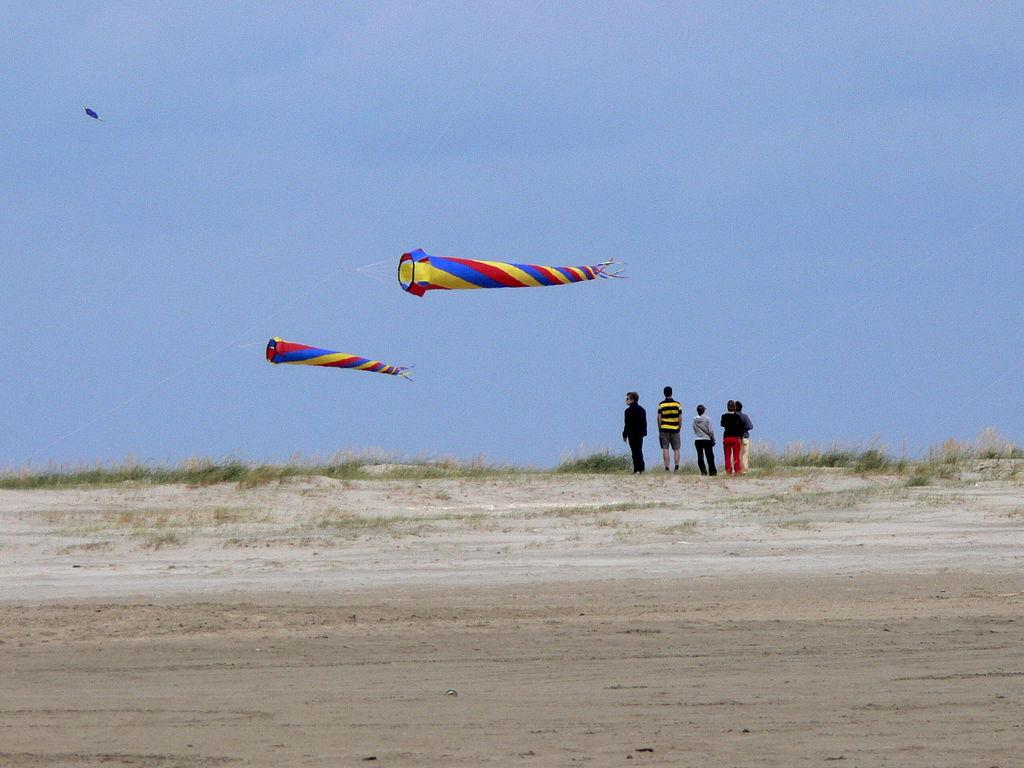
Looking beyond Misthusum? Discover Romo for broader travel guides, local hot-spots, and regional highlights.
Explore Romo
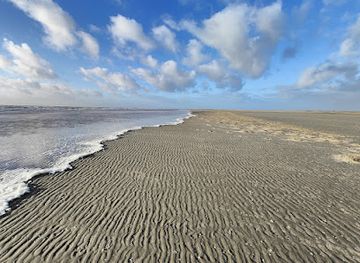
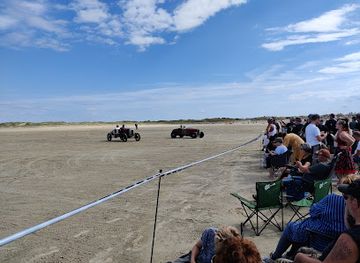
An immense North Sea strand where you can drive on the sand, chase the wind with kites and sails, and wander for kilometres between dunes, sky and sea.
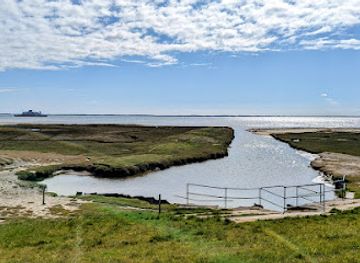
Historic drainage mills in the open marshes of Ballum Enge, where quiet dikes, wide skies and bird-filled meadows reveal Denmark’s long battle with the sea.