
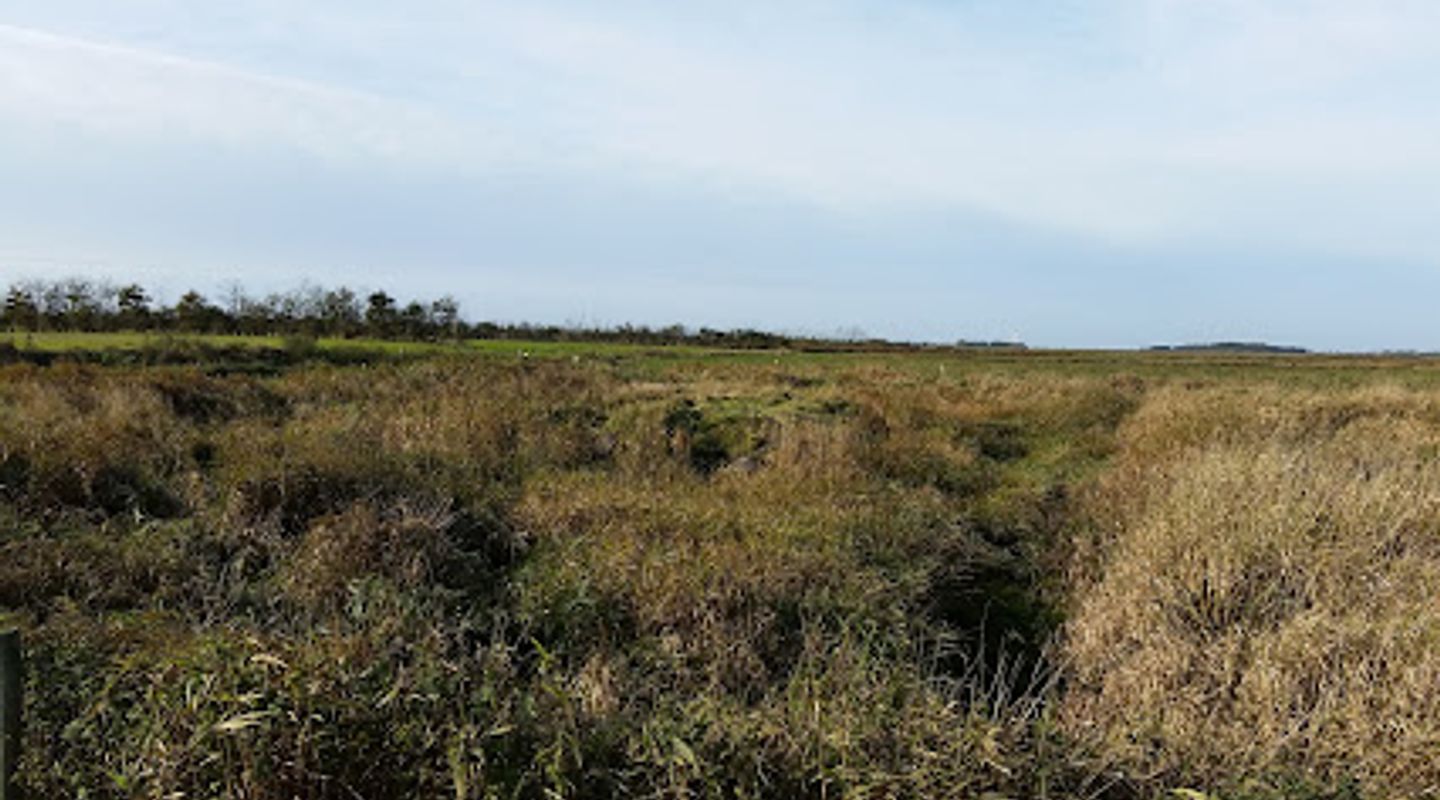
Langdysserne, Romo Travel Guide
Neolithic long dolmens on a quiet Jutland marsh, where weathered stones, big skies and the Brede Å valley reveal 5,000 years of landscape and ritual.
Set on the quiet marshland near Brede Å by the small village of Abterp, Langdysserne is a striking group of Neolithic long dolmens, protected after excavations by the National Museum. These elongated stone graves, raised more than 5,000 years ago, lie in open fields where the flat marsh, distant dikes and big skies create a powerful sense of time and solitude. It is a simple, unfenced site: no ticket booth, few signs, just ancient stones, wind, birds and the outline of one of Denmark’s oldest ritual landscapes.
A brief summary to Langdysserne
- Bredebro, 6261, DK
- Duration: 0.5 to 1.5 hours
- Free
-
 Outdoor
- Mobile reception: 3 out of 5

Know before you go
Hi, I'm Eve. Here are a few practical things to know before exploring Langdysserne.
- Wear waterproof footwear; the surrounding pasture and access track can be soft, muddy and occasionally flooded after rain or high groundwater.
- Bring any information you want to consult in advance, as on-site signage is minimal and mobile reception can vary across the marshland.
- Treat the dolmens as ancient graves: avoid climbing on the stones, do not move loose rocks and leave the site exactly as you found it.
- Combine your visit with a short walk along Brede Å or nearby dikes to better understand how the valley and marshes frame the monument.
Do you manage this location?
Take control to get all the benefits, like improved information, better appearance, and stronger visibility across AI-powered discovery. Learn more about listing your business on Evendo
Activate your presenceOther nearby places you may find interesting
The closest places of the same kind, if this one is not quite what you had in mind.

Explore Langdysserne on the Map
A handpicked selection of must-see spots near Langdysserne, mapped for you.
Getting There
-
Car from Tønder
Travelling from Tønder, you can reach Langdysserne near Abterp by car in about 25–30 minutes, mainly on regional roads across flat marshland. Traffic is usually light, but expect narrow rural lanes for the final stretch and only informal roadside or field-edge parking near the site. There is no entrance fee to visit the monument.
-
Car from Ribe
From Ribe the drive to the Abterp dolmens takes around 45–55 minutes via main roads heading south and then smaller local roads towards Bredebro. The route is straightforward year-round, though fog, winter storms and occasional surface water in low areas can slow travel. Parking is informal near the fields, and access to the dolmens is free.
-
Regional bus and walking from Bredebro
Regional buses connect nearby Bredebro with larger towns such as Tønder and Ribe in roughly 20–40 minutes, with normal local fares in the range of 20–60 DKK depending on distance. From Bredebro, reaching the dolmens requires a countryside walk of several kilometres along minor roads and farm tracks across largely flat terrain. The walk is exposed in bad weather and not ideal after heavy rain, and there are no facilities en route.
Discover more about Langdysserne
Ancient tombs in the Brede Å marshland
Langdysserne at Abterp is a small cluster of Neolithic long dolmens set on low marshland northwest of the village of Abterp in southern Jutland. The elongated burial mounds, edged with heavy kerbstones and once covered with earth, were raised by early farming communities more than five millennia ago. Today they sit in open pasture near Brede Å, the broad stream that snakes through the fertile Bredeådalen, where reclaimed meadows and former wetlands stretch towards the Wadden Sea.Freed from dense woodland and modern development, the dolmens feel exposed to the sky. Their weathered stones rise modestly from the grass, yet their linear form and sheer length give them an unmistakable presence in the flat landscape. From the edge of the site you can look out over fields, drainage ditches and distant farmsteads, imagining a time when sea levels, shorelines and settlement patterns were very different from today.From archaeological curiosity to protected monument
Interest in the Abterp dolmens grew when archaeologists from the National Museum investigated them in the 20th century. Once the research was complete, the site was granted protection, securing both the mounds and their surrounding setting. Protection status prevents ploughing, building or major alterations, allowing the dolmens to remain as landmarks in the open marsh landscape.Excavations at long dolmens like these have revealed stone-built burial chambers and deposits of pottery, stone tools and human remains, evidence of repeated use and ritual over generations. Although the interiors here are not accessible, the visible outline of the mounds still tells part of the story: long, low platforms with flanking stones, possibly once topped by a continuous earthen ridge.A landscape that has shifted with the sea
The Abterp area is part of a broader marshland that has changed dramatically over time. Archaeologists use this stretch of southern Jutland to illustrate how Stone Age landscapes have partly sunk and been reshaped by the sea and later drainage works. Dikes, channels and pumping stations now keep the Brede Å valley dry enough for agriculture, yet the wide, flat horizon and occasional flooded hollows hint at the area’s wetter past.Because the dolmens stand just slightly above the lowest ground, they gain a subtle stage-like quality: raised enough to be seen, yet still firmly part of the meadow. On misty days the stones can appear to float in low cloud, while in strong sunlight their rough granite surfaces throw hard shadows onto the grass.Quiet moments among stones and sky
There are no facilities on the mound itself and usually little in the way of interpretation, so the experience is intentionally simple. You arrive directly into the field, hearing the wind move across the grass, the calls of wading birds from drainage ditches and the distant hum of farm machinery. It is easy to find a spot on the edge of a mound, sit quietly and absorb the sounds of the marsh while tracing lichen patterns on the stones.This is a place suited to unhurried wandering rather than fixed viewpoints. Walking slowly along the length of a dolmen lets you appreciate how long these structures really are. From some angles the stones line up in a narrow ridge; from others they spread into an irregular, almost ship-like shape that invites comparisons with other ritual stone settings found across Denmark.Connecting Jutland’s prehistory
Langdysserne at Abterp forms part of a wider network of prehistoric monuments in southern Jutland, linking inland routeways, marshland settlements and later trading towns. Although modest compared to larger passage graves elsewhere, the dolmens give a valuable glimpse into an early farming society that invested enormous labour into building for the dead.Visiting here can be combined with explorations along Brede Å or trips out towards the Wadden Sea, creating a narrative that runs from Stone Age burial grounds through medieval drainage schemes to modern coastal landscapes. For anyone interested in archaeology, landscape history or simply the quiet power of old stones in open country, these long dolmens offer a compact but atmospheric stop in the far south of Denmark.












Your all‑in‑one travel companion app
Explore expert travel guides, compare and book tours, experiences, hotels, and more—all from the palm of your hand. Download now for seamless trip planning wherever your wanderlust takes you.


Explore More of Romo
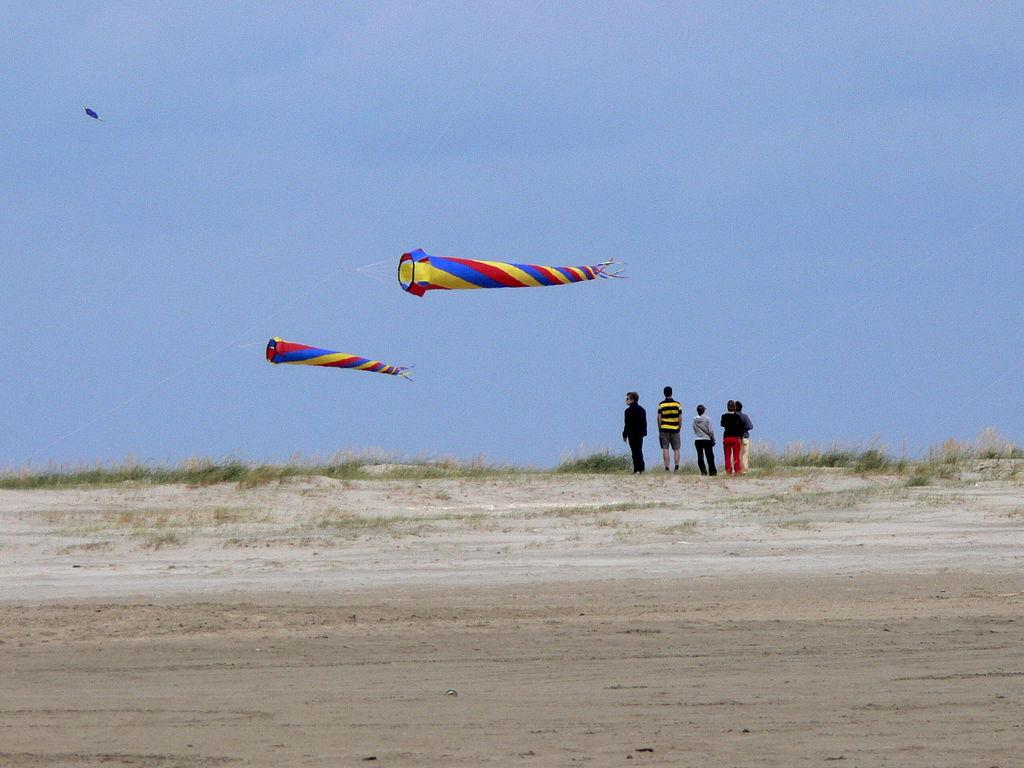
Looking beyond Langdysserne? Discover Romo for broader travel guides, local hot-spots, and regional highlights.
Explore Romo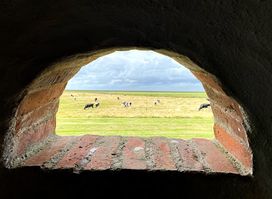
Historic marsh mounds in the Wadden Sea landscape, where abandoned Frisian dwelling platforms and wide horizons tell a quiet story of living with the sea.
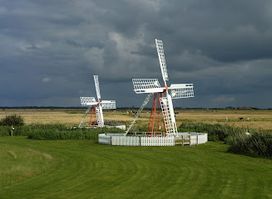
Historic drainage mills in the open marshes of Ballum Enge, where quiet dikes, wide skies and bird-filled meadows reveal Denmark’s long battle with the sea.
