

Skaftafell National Park, Iceland Travel Guide
Explore the stunning landscapes of Skaftafell National Park, where glaciers meet lush valleys and breathtaking waterfalls in the heart of Iceland's wilderness.
Skaftafell National Park, now part of the larger Vatnajökull National Park, is a stunning gem in Iceland's natural treasury. Nestled between the country's largest glaciers and black sand deserts, Skaftafell offers a unique blend of landscapes that captivate every traveler. The park's diverse scenery includes lush green valleys, jagged mountain peaks, and serene waterfalls, making it a paradise for nature enthusiasts and photographers alike. One of the park's highlights is the Svartifoss waterfall, known for its striking basalt column backdrop. The hike to Svartifoss is relatively easy and offers breathtaking views along the way. Another must-see is the Skaftafellsjökull glacier, where visitors can embark on guided glacier walks to explore the icy wilderness up close. For those looking for more adventure, the challenging hike to Kristínartindar peak promises panoramic views of the surrounding glaciers and mountains. Skaftafell is also rich in history and culture. The area was once home to ancient farms, and remnants of these early settlements can still be seen today. Additionally, the park is a haven for birdwatchers, with numerous species nesting in its varied habitats. Whether you're a seasoned hiker, a casual stroller, or simply someone who loves to immerse in nature, Skaftafell National Park offers an unforgettable Icelandic experience.

Know before you go
Hi, I'm Eve. Here are a few practical things to know before exploring Skaftafell National Park.
- Wear sturdy hiking boots; the terrain can be uneven and slippery.
- Check the weather forecast before your visit, as conditions can change rapidly.
- Bring a reusable water bottle; there are fresh streams where you can refill.
- Consider joining a guided glacier walk for a safe and informative experience.
- Visit early in the morning or late afternoon to avoid crowds at popular spots like Svartifoss.
Explore Skaftafell National Park: Things to Do, Places to Eat, Hotels & More
Handpicked recommendations for top attractions, local dining, accommodations, and more

Best attractions in Skaftafell National Park
Top-rated picks
Best Attractions

Jökulsárlón Glacier Lagoon Boat Tours and Cafe
Discover the enchanting Jökulsárlón Glacier Lagoon, an iconic Icelandic gem filled with floating icebergs and breathtaking scenery.

Strokkur Geyser
Experience the breathtaking eruptions of Strokkur Geyser, a must-see natural wonder in Iceland's geothermal landscape.

Svartifoss
Discover the enchanting beauty of Svartifoss, Iceland's iconic waterfall surrounded by stunning basalt columns and breathtaking landscapes.

Fjaðrárgljúfur
Explore the breathtaking beauty of Fjaðrárgljúfur, an iconic canyon in Iceland known for its stunning landscapes and picturesque hiking trails.

Best landmarks in Skaftafell National Park
Top-rated picks
Best Landmarks

Jökulsárlón Glacier Lagoon Boat Tours and Cafe
Discover the enchanting beauty of Jökulsárlón Glacier Lagoon, where floating icebergs meet stunning landscapes in Iceland's natural wonder.

Strokkur Geyser
Experience the breathtaking eruptions of Strokkur Geyser amidst Iceland's stunning geothermal landscape, a must-visit stop on the Golden Circle.

Vatnajökull National Park
Discover the breathtaking landscapes of Vatnajökull National Park, featuring Europe's largest glacier, stunning waterfalls, and diverse wildlife.

Svartifoss
Discover Svartifoss, the iconic waterfall in Skaftafell National Park, renowned for its unique basalt columns and breathtaking natural beauty.

Best restaurants in Skaftafell National Park
Top-rated picks
Best Restaurants

Pakkhús Restaurant
Experience exquisite Icelandic cuisine at Pakkhús Restaurant in Höfn - where fresh seafood meets stunning coastal views.

Veitingasala Restaurant, Shop, And Gas
Experience authentic Icelandic cuisine at Veitingasala Restaurant in Svínafell – where local flavors meet stunning landscapes.

Saatvik Restaurant (Kaffiterían Skaftafelli)
Discover delicious local cuisine at Saatvik Restaurant while exploring the breathtaking Skaftafell area in Iceland.

Glacier Goodies
Experience quick and delicious fast food at Glacier Goodies in Skaftafell – perfect for adventurers exploring Iceland's stunning landscapes.

Best bars in Skaftafell National Park
Top-rated picks
Best Bars

Fosshotel Glacier Lagoon
Discover luxury and nature at Fosshotel Glacier Lagoon, your gateway to Iceland's stunning landscapes and unforgettable experiences.

Systrakaffi
Discover Systrakaffi, a delightful restaurant in Kirkjubæjarklaustur, offering authentic Icelandic cuisine and breathtaking views for an unforgettable culinary journey.

Skaftafell tjaldsvæði
Discover the breathtaking beauty of Skaftafell Campground nestled in Vatnajökull National Park, a paradise for nature lovers and adventure seekers.
Fosshótel Núpar
Experience the beauty of Iceland at Fosshótel Núpar, your perfect retreat surrounded by breathtaking landscapes and rich local culture.

Best nightclubs in Skaftafell National Park
Top-rated picks
Best Nightclubs

Bravó
Discover the vibrant nightlife at Bravó, Reykjavík's go-to bar for cocktails, live music, and an unforgettable atmosphere.

Kaffibarinn
Discover the vibrant nightlife of Reykjavik at Kaffibarinn, a bar known for its lively atmosphere, creative cocktails, and local charm.

Gaukurinn
Discover Reykjavík's nightlife at Gaukurinn, a vibrant bar with live shows, local brews, and a welcoming atmosphere.

Pablo Discobar
Experience the vibrant nightlife at Pablo Discobar, Reykjavik's premier cocktail bar and nightclub, where great drinks meet unforgettable music.

Best shops in Skaftafell National Park
Top-rated picks
Best Shops

Jökulsárlón Glacier Lagoon Boat Tours and Cafe
Experience the breathtaking beauty of Jökulsárlón Glacier Lagoon, where icebergs drift serenely and nature's splendor unfolds.

Vatnajökull National Park
Discover the breathtaking beauty of Vatnajökull National Park, Iceland's stunning natural gem filled with glaciers, waterfalls, and diverse wildlife.

Svartifoss
Explore the breathtaking Svartifoss waterfall, a stunning natural masterpiece framed by unique basalt columns in Iceland's Vatnajökull National Park.

Skaftafell
Explore the breathtaking landscapes of Skaftafell National Park, where glaciers meet waterfalls in Iceland's stunning wilderness.

Explore Skaftafell National Park on the Map
A handpicked selection of must-see spots in Skaftafell National Park, mapped for you.
Skaftafell National Park Essentials
-
Skaftafell National Park is located in southeastern Iceland and is part of the larger Vatnajökull National Park. The nearest international airport is Keflavík International Airport, located about 327 kilometers away. From Keflavík, you can take a rental car or a bus to Skaftafell. The drive typically takes around 4 to 5 hours via Route 1, also known as the Ring Road. Alternatively, you can take a domestic flight from Reykjavík to Höfn and then drive approximately 2 hours to reach Skaftafell.
-
Within Skaftafell National Park, the primary mode of transportation is by car or on foot. The park offers various hiking trails that cater to different fitness levels. Car rentals are available at Keflavík International Airport and in Reykjavík. Public buses also operate between Reykjavík and Skaftafell, though they may be less frequent during the off-season. Guided tours are another option, providing transportation and expert knowledge about the park.
-
The official currency in Iceland is the Icelandic Króna (ISK). Credit and debit cards are widely accepted throughout the country, including in Skaftafell. ATMs are available in nearby towns like Kirkjubæjarklaustur and Höfn. It is advisable to carry some cash, especially for smaller establishments and remote areas where card payments may not be possible.
-
Skaftafell National Park is generally very safe for tourists. However, the natural environment can be unpredictable. Always stay on marked trails and follow safety guidelines provided by park rangers. Weather conditions can change rapidly, so be prepared with appropriate clothing and gear. There are no specific high-crime areas targeting tourists, but it's always a good idea to keep an eye on your belongings and avoid leaving valuables in your car.
-
In case of emergency, dial 112 for immediate assistance. Emergency services in Iceland are well-equipped and responsive. Skaftafell has a visitor center that can provide help and information. It is highly recommended to have travel insurance that covers medical emergencies. For minor health issues, the nearest medical facilities are located in Kirkjubæjarklaustur and Höfn.
-
Fashion: Do wear layers and waterproof clothing, as weather can change quickly. Don’t wear cotton, as it retains moisture and can make you cold. Religion: Do respect Icelandic traditions and local customs. Public Transport: Do use public buses to reduce your carbon footprint. Don’t expect extensive public transport within the park. Greetings: Do greet people with a simple 'hello' or 'Góðan daginn'. Eating & Drinking: Do try local Icelandic dishes like lamb stew and skyr. Don’t litter; always carry your trash out of the park.
-
To experience Skaftafell National Park like a local, visit during the shoulder seasons (spring and fall) to avoid the peak tourist crowds. Participate in ranger-led programs to learn more about the park’s unique geology and ecosystems. Don’t miss the opportunity to hike to Svartifoss, a stunning waterfall surrounded by basalt columns. For a unique experience, consider joining a guided glacier hike or ice cave tour, available in the winter months.
When is the best time to visit Skaftafell National Park?
Useful Local Phrases for Skaftafell National Park
You don't need to speak the language perfectly. Even learning a few simple words can make conversations warmer—and locals usually appreciate the effort.
— Eve

Here are the phrases I use most often in Skaftafell National Park. Try a few—you'll be surprised how far they go! 😊
❤️
-
- HelloHalló
[HAH-loh] - GoodbyeBless
[bless] - YesJá
[yah] - NoNei
[nay] - Please/You're welcomeTakk fyrir
[tahk FIH-rir] - Thank youTakk
[tahk] - Excuse me/SorryFyrirgefðu
[FIH-rir-yehf-thu] - How are you?Hvernig hefur þú það?
[KVER-nik HEH-rur thoo thahth] - Fine. And you?Í lagi. En þú?
[EE LAH-gee. enn thoo] - Do you speak English?Talar þú ensku?
[TAH-lahr thoo EHN-skoo] - I don't understandÉg skil ekki
[yeh skil EHK-ki]
- HelloHalló
-
- I'd like to see the menu, pleaseÉg ætla að sjá matsedilinn, vinsamlegast
[yeh EHT-lah ath shyah MAHT-seh-dil-inn, VIN-sahm-leh-gahst] - I don't eat meatÉg borða ekki kjöt
[yeh BOHR-tha EHK-ki chyoht] - Cheers!Skál!
[skowl] - I would like to pay, pleaseÉg ætla að borga, vinsamlegast
[yeh EHT-lah ath BOHR-gah, VIN-sahm-leh-gahst]
- I'd like to see the menu, pleaseÉg ætla að sjá matsedilinn, vinsamlegast
-
- Help!Hjálp!
[HYOWLP] - Go away!Farðu í burtu!
[FAHR-thoo ee BEER-too] - Call the Police!Hringdu í lögreglu!
[HRING-doo ee LEUH-greh-lu] - Call a doctor!Hringdu í læknir!
[HRING-doo ee LIGHK-neer] - I'm lostÉg er týndur
[yeh ehr TIN-thur] - I'm illÉg er veikur
[yeh ehr VAY-kur]
- Help!Hjálp!
-
- I'd like to buy...Ég ætla að kaupa...
[yeh EHT-lah ath KOY-pah] - I'm just lookingÉg er bara að skoða
[yeh ehr BAH-rah ath SKOH-tha] - How much is it?Hvað kostar það?
[kvath KOS-tar thahth] - That's too expensiveÞað er of kostlegt
[thahth ehr ohf KOHS-tlegt] - Can you lower the price?Getur þú lækkat verðið?
[GEH-tur thoo LAY-kkat VEHR-thith]
- I'd like to buy...Ég ætla að kaupa...
-
- What time is it?Hvað er klukkan?
[kvath ehr KLOO-kan] - It's one o'clockKlukkan er eitt
[KLOO-kan ehr ayt] - Half past (10)Hálf tíu
[howlf tee-oo] - MorningMorgunn
[MOHR-goon] - AfternoonSíðdegis
[SEETH-deh-yis] - EveningKvöld
[kvuld] - YesterdayÍ gær
[ee gai] - TodayÍ dag
[ee dahg] - TomorrowÁ morgun
[ow MOR-gun] - 1Einn
[aythn] - 2Tveir
[tveir] - 3Þrír
[threer] - 4Fjórir
[fyo-rir] - 5Fimm
[fim] - 6Sex
[sehx] - 7Sjö
[syoh] - 8Átta
[owt-ta] - 9Níu
[nee-yu] - 10Tíu
[tee-oo]
- What time is it?Hvað er klukkan?
-
- Where's a/the...?Hvar er...
[kvar ehr] - What's the address?Hvað er heimilisfangið?
[kvath ehr HAY-mil-is-fan-gith] - Can you show me (on the map)?Getur þú sýnt mér (á kortinu)?
[GEH-tur thoo seent mehr (ow KOR-tih-noo)] - When's the next (bus)?Hvenær kemur næsta (strætisvagn)?
[KVER-nighr KEH-mur NIGH-sta (strai-tis-vahn)] - A ticket (to ....)Miða (til ...)
[MITH-a (til)]
- Where's a/the...?Hvar er...
History of Skaftafell National Park
-
The region around Skaftafell National Park has been inhabited since the early settlement of Iceland around 874 AD. The fertile lands and abundant water sources made it an ideal location for the Norse settlers. Evidence of early farmsteads and Viking artifacts have been found in and around the park, illustrating the integration of the settlers with the harsh Icelandic environment.
-
During the medieval period, the region saw the establishment of the prominent Svínfell farmstead. The farmstead was one of the most influential in the area, with historical records indicating its significance in local governance and culture. The farmstead was owned by prominent chieftains who played key roles in the regional politics of Iceland during this era.
-
The Skaftáreldar (Skaftá Fires) eruptions, part of the larger Laki eruption, had a profound impact on the region. The eruptions and the subsequent toxic fallout caused widespread devastation, leading to the death of livestock, destruction of farmland, and significant loss of human life. This catastrophic event deeply affected the local population and left a lasting mark on the landscape.
-
Skaftafell National Park was officially established in 1967, covering an area of approximately 500 square kilometers. The park was created to protect the unique natural beauty and diverse ecosystems of the region, including glaciers, mountains, and lush valleys. The establishment of the park marked a significant step in Iceland's conservation efforts and has since become a major destination for nature enthusiasts and hikers.
-
In 2008, Skaftafell National Park was incorporated into the larger Vatnajökull National Park, which is now one of the largest national parks in Europe. This incorporation aimed to provide a more comprehensive protection of the vast glacial and volcanic landscapes, offering a unified approach to the conservation and management of these unique geological features.
-
Skaftafell is steeped in Icelandic folklore and cultural traditions. Local legends speak of hidden people (huldufólk) and supernatural occurrences in the area. The park's landscape, with its dramatic contrasts and secluded spots, has inspired numerous tales and continues to be a source of cultural heritage for the Icelandic people.
-
Today, Skaftafell is a hub for outdoor activities and environmental education. The park attracts thousands of visitors annually who come to explore its hiking trails, witness the stunning Svartifoss waterfall, and experience the immense Vatnajökull glacier. The park also serves as a research site for scientists studying glaciology, geology, and climate change.
Neighbouring destination travel guides
Browse our curated selection of top destinations, scenic points, and must-visit spots in the area.



Your all‑in‑one travel companion app
Explore expert travel guides, compare and book tours, experiences, hotels, and more—all from the palm of your hand. Download now for seamless trip planning wherever your wanderlust takes you.


Explore More of Highlands

Looking beyond Skaftafell National Park? Discover Highlands for broader travel guides, local hot-spots, and regional highlights.
Explore HighlandsExplore More of Iceland

Looking beyond Skaftafell National Park? Discover Iceland for broader travel guides, local hot-spots, and regional highlights.
Explore IcelandSkaftafell National Park in Photos
Browse through our photo collection highlighting the charm and character of the destination.


Skaftafell National Park: Iceland's Natural Wonderland
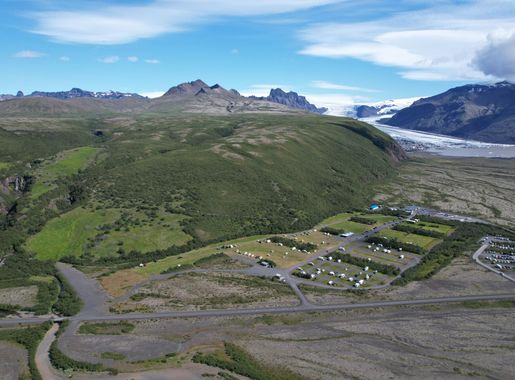
Skaftafell National Park, now part of the larger Vatnajökull National Park, is a stunning gem in Iceland's natural treasury. Nestled between the country's largest glaciers and black sand deserts, Skaftafell offers a unique blend of landscapes that captivate every traveler. The park's diverse scenery includes lush green valleys, jagged mountain peaks, and serene waterfalls, making it a paradise for nature enthusiasts and photographers alike. One of the park's highlights is the Svartifoss waterfall, known for its striking basalt column backdrop. The hike to Svartifoss is relatively easy and offers breathtaking views along the way. Another must-see is the Skaftafellsjökull glacier, where visitors can embark on guided glacier walks to explore the icy wilderness up close. For those looking for more adventure, the challenging hike to Kristínartindar peak promises panoramic views of the surrounding glaciers and mountains. Skaftafell is also rich in history and culture. The area was once home to ancient farms, and remnants of these early settlements can still be seen today. Additionally, the park is a haven for birdwatchers, with numerous species nesting in its varied habitats. Whether you're a seasoned hiker, a casual stroller, or simply someone who loves to immerse in nature, Skaftafell National Park offers an unforgettable Icelandic experience.