

Morgan-Monroe State Forest Travel Guide - Free Web & App
Your ultimate guide to Morgan-Monroe State Forest. Discover top landmarks, proposed trips, and local tips. Free on the web or via the Evendo companion app.


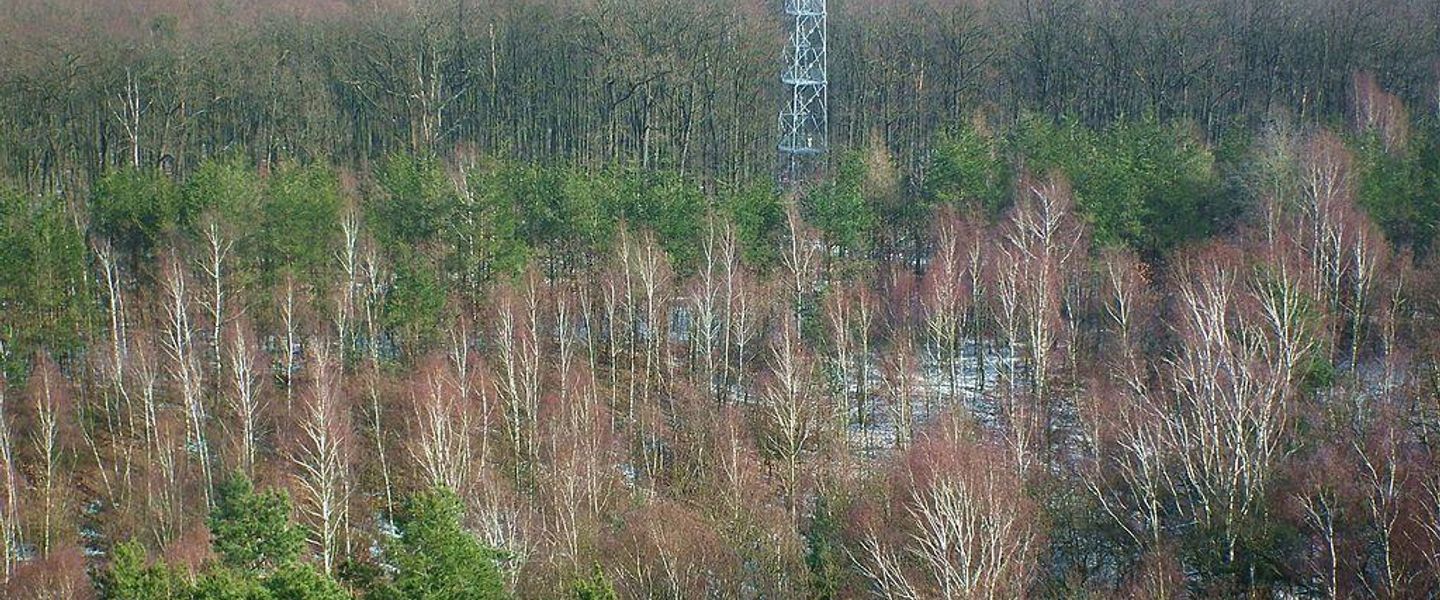
Morgan-Monroe State Forest in Indiana offers wooded trails, ridges, wildlife, camping and quiet outdoor recreation near Bloomington and Martinsville.
Ridges, Hollows and Hardwood Forest
Morgan-Monroe State Forest occupies roughly 24,000 acres across Morgan and Monroe counties in south-central Indiana, a heavily wooded landscape of ridges, steep-sided hollows, narrow streams and winding forest roads. The forest lies within the unglaciated hills of the Knobstone region, where elevations and slopes create a more rugged setting than the broad agricultural landscapes elsewhere in central Indiana. Deciduous woodland dominates, with oak, hickory, maple and tulip poplar contributing to a varied canopy that changes markedly through the seasons.Read more about Morgan-Monroe State Forest
Walking and Exploring
Gateway Communities and Conservation
When is the best time to visit Morgan-Monroe State Forest?
Best: May, August–September · 24–29°C| Month | High (°C) | Rainfall (mm) |
|---|---|---|
| January | 3 | 72 |
| February | 6 | 67 |
| March | 12 | 89 |
| April | 18 | 97 |
| May (best) | 24 | 113 |
| June | 28 | 104 |
| July | 31 | 102 |
| August (best) | 29 | 93 |
| September (best) | 26 | 91 |
| October | 19 | 86 |
| November | 12 | 94 |
| December | 6 | 85 |
Getting to and around Morgan-Monroe State Forest
How to get there
Transportation
Best attractions in Morgan-Monroe State Forest
Morgan-Monroe State Forest’s main attractions are its extensive hardwood woodland, ridged terrain and network of quiet backcountry trails rather than a collection of built sights. The Low Gap Trail offers a demanding route through the forest’s hills, ravines and regenerating woodland, while the Tecumseh Trail forms a longer connection between Morgan-Monroe and neighbouring Yellowwood State Forest. Forest roads provide access to changing views of hollows, small streams, clearings and managed timber stands, although individual access conditions vary. Wildlife observation is possible in the forest’s varied habitats, with sightings dependent on season, weather and patience rather than guaranteed encounters. The nearby communities of Bloomington and Martinsville provide contrasting gateways: Bloomington is the larger cultural and service centre, while Martinsville has a closer relationship with the northern rural landscape. Visitors interested in the wider region can also combine the forest with other public lands and reservoirs around Monroe County, while taking care to distinguish those neighbouring attractions from Morgan-Monroe itself.
-
Winery
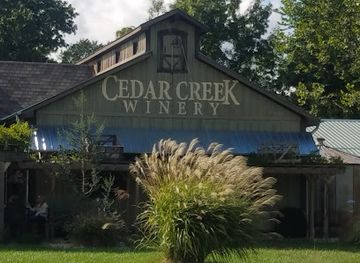
Cedar Creek Winery, Brewing Co and Distillery
Discover the delightful Cedar Creek Winery, Brewing Co and Distillery in Martinsville, Indiana, where fine wines, handcrafted beers, and artisanal spirits await.
-
Campground
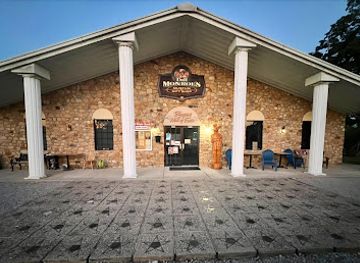
Bill Monroe Music Park & Campground
Discover the enchanting Bill Monroe Music Park & Campground, where nature meets the rhythm of live music in beautiful Morgantown, Indiana.
-
Tourist attraction
Mason Ridge Camping Area
Discover Mason Ridge Camping Area in Martinsville, Indiana – a serene campground surrounded by nature, perfect for outdoor lovers and families seeking adventure.
-
Tourist attraction
Draper Cabin
Explore Draper Cabin in Indiana: a historical gem surrounded by nature's beauty in the heart of Hoosier National Forest.
Best landmarks in Morgan-Monroe State Forest
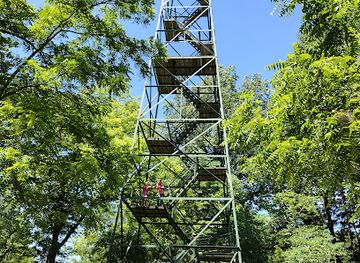
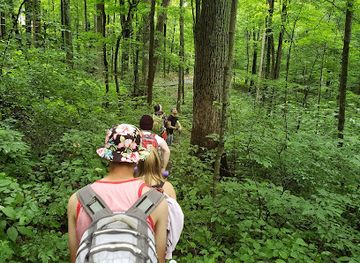
The defining landmarks of Morgan-Monroe State Forest are natural rather than architectural. Its long wooded ridges, steep hollows and narrow stream valleys express the character of south-central Indiana’s unglaciated hill country, while mature and regenerating hardwood stands give the forest its visual identity. Low Gap is a recognised trail and landscape feature within the forest, valued for its secluded woodland setting and demanding terrain. The Tecumseh Trail is another significant marker of the area’s recreational geography, crossing Morgan-Monroe and continuing into Yellowwood State Forest. There is no single castle, monument or historic town centre at the heart of the destination; its significance lies in the scale of publicly managed woodland restored across formerly farmed and cut-over land. Forest roads, clearings and old rural patterns also provide reminders of the area’s agricultural past, although individual historic remains should not be assumed to be marked or publicly accessible.
-
Flea market
Traderbakers Flea Market
Explore Traderbakers Flea Market in Martinsville, Indiana, where unique finds and local treasures await in a vibrant shopping atmosphere.
-
Mexican
Los Reyes Restaurant
Experience authentic Mexican flavors in Martinsville at Los Reyes Restaurant, where every meal is a festive celebration of culinary tradition.
-
Winery
Cedar Creek Winery, Brewing Co and Distillery
Experience the best of Indiana at Cedar Creek Winery, Brewing Co and Distillery, where craft beverages and delightful dining come together.
-
Bakery
Knead The Dough LLC
Discover Knead The Dough LLC in Martinsville, Indiana – a bakery that promises fresh breads and delightful pastries in a welcoming atmosphere.


Explore Morgan-Monroe State Forest on the map
Plan your trip on one map. See where the top attractions, landmarks, restaurants and hotels are, and book hotels and experiences in a few clicks.
Best hotels in Morgan-Monroe State Forest
Best restaurants in Morgan-Monroe State Forest
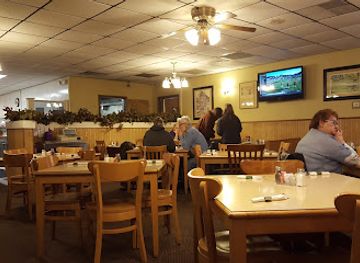
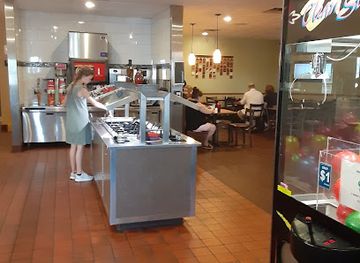
Morgan-Monroe State Forest has no concentrated dining district, so most visitors eat before or after exploring in Bloomington, Martinsville or smaller communities on the surrounding roads. Bloomington provides the broadest choice, from independent cafés and casual restaurants to international food and Indiana-influenced menus shaped by its university population. Martinsville offers practical places for breakfast, lunch, takeaway food and traditional American dining, useful for visitors approaching the forest from the north-west. In the countryside, options are more limited and may consist of scattered cafés, restaurants, convenience stores and seasonal farm-oriented businesses rather than establishments within the forest itself. Regional food shopping can include Indiana-grown produce, baked goods, local meats and craft beverages, but exact availability changes by season and business. Visitors planning a long hike should carry provisions, as there is no reason to expect food service at an isolated trailhead or deep within the woodland.
-
Family-friendly
Indy's Family Restaurant
Experience hearty breakfasts and warm hospitality at Indy's Family Restaurant in Martinsville - where every meal feels like home.
-
Pizza
Mr Gatti's Pizza
Discover delicious pizzas and family fun at Mr Gatti's Pizza in Martinsville - perfect for every occasion!
-
Chicken
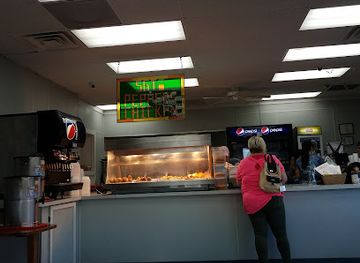
Sgt Pepper's Chicken
Savor delicious American-style chicken at Sgt Pepper's Chicken in Martinsville – where fast food meets flavor!
-
Mexican
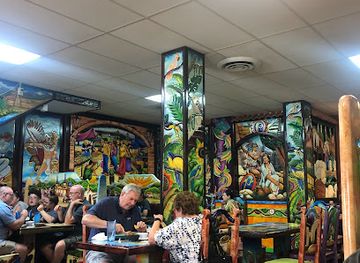
Los Reyes Restaurant
Discover authentic Mexican flavors at Los Reyes Restaurant in Martinsville, Indiana - where every dish tells a story.
Best bars in Morgan-Monroe State Forest
Evening entertainment is limited within Morgan-Monroe State Forest, where darkness, dispersed roads and the absence of a built settlement favour quiet nights rather than nightlife. Visitors staying nearby usually find the most developed choice in Bloomington, whose university and arts community support pubs, music venues, breweries and restaurants with later evening activity. Martinsville provides a smaller selection of bars, taverns and community-oriented social venues, with the atmosphere more local and generally quieter. Rural communities around the forest may have traditional pubs or seasonal events, but opening patterns and entertainment vary, so they should not be treated as guaranteed facilities. In the forest itself, evening experiences are primarily natural: listening to woodland sounds, watching the sky from an authorised site and returning to accommodation before navigating unfamiliar roads in darkness.
-
Grill
Port Hole Inn
Experience the perfect blend of delicious grilled cuisine, live music, and a scenic lakeside atmosphere at the Port Hole Inn in Unionville, Indiana.
-
Grill
Trackside bar and grill
Experience the vibrant flavors of American grill cuisine at Trackside Bar and Grill in Paragon, Indiana, a must-visit for food enthusiasts.
-
Grill
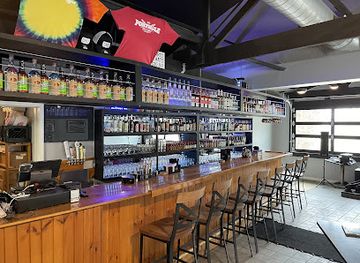
Bar Ziek
Discover the vibrant flavors of Bar Ziek in Martinsville, where exceptional grilled dishes meet a friendly atmosphere, perfect for every traveler.


Best nightclubs in Morgan-Monroe State Forest
Evening entertainment is limited within Morgan-Monroe State Forest, where darkness, dispersed roads and the absence of a built settlement favour quiet nights rather than nightlife. Visitors staying nearby usually find the most developed choice in Bloomington, whose university and arts community support pubs, music venues, breweries and restaurants with later evening activity. Martinsville provides a smaller selection of bars, taverns and community-oriented social venues, with the atmosphere more local and generally quieter. Rural communities around the forest may have traditional pubs or seasonal events, but opening patterns and entertainment vary, so they should not be treated as guaranteed facilities. In the forest itself, evening experiences are primarily natural: listening to woodland sounds, watching the sky from an authorised site and returning to accommodation before navigating unfamiliar roads in darkness.
-
Mexican
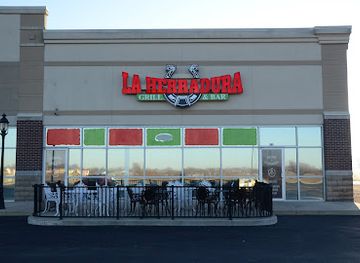
La Herradura Grill & Bar
Discover authentic Mexican cuisine and vibrant cocktails at La Herradura Grill & Bar, a must-visit culinary gem in Martinsville, Indiana.
-
Grill
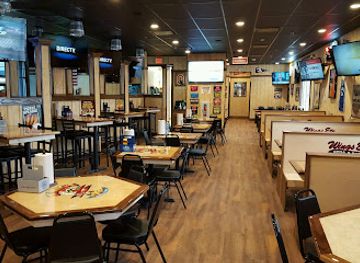
Wings Etc.
Discover the vibrant flavors and lively atmosphere of Wings Etc. in Martinsville, Indiana - your go-to spot for wings, burgers, and fun!
-
Grill
Bar Ziek
Experience the essence of Martinsville at Bar Ziek, where delicious grilled dishes and a friendly atmosphere await you.
-
Bar
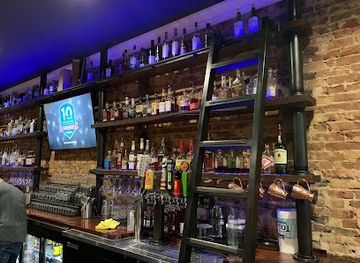
Gillispie's Cigar Bar
Discover the perfect blend of premium cigars and crafted cocktails at Gillispie's Cigar Bar in Martinsville, Indiana.

Best shops in Morgan-Monroe State Forest
Shopping within Morgan-Monroe State Forest is minimal, with no central retail area and few services beyond those associated with nearby communities. Bloomington is the principal place for outdoor equipment, groceries, books, arts and crafts, regional food and independent retail, while Martinsville provides practical shopping for supplies, fuel and everyday needs. Small towns and rural roads around the forest may have convenience stores, farm stands, seasonal produce sellers or local craft businesses, but these are dispersed and their opening patterns vary. Suitable regional purchases can include Indiana food products, handmade goods, artwork and items connected with the state’s rural and woodland traditions, although visitors should distinguish genuinely local products from generic souvenirs. Buying provisions before entering the forest is sensible, particularly for day hikes on the longer trails, because trailheads and remote access points are not commercial shopping locations.
-
Department store
Walmart Supercenter
Explore Walmart Supercenter in Martinsville, Indiana - your go-to destination for groceries, electronics, clothing, and more, all at affordable prices.
-
Flea market
Traderbakers Flea Market
Explore Traderbakers Flea Market in Martinsville, Indiana, for unique shopping, local crafts, and a lively community atmosphere.
-
Ice Cream
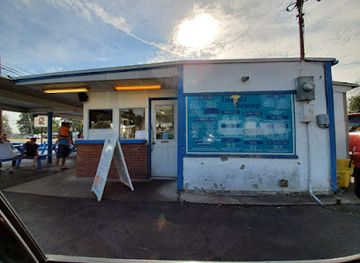
Inside Scoop Inc
Experience the sweet taste of summer at Inside Scoop Inc, the premier ice cream shop in Martinsville, Indiana, offering a delightful selection of flavors.
-
Bakery
Knead The Dough LLC
Discover Knead The Dough LLC in Martinsville, IN, where delightful pastries and artisanal breads create a heavenly bakery experience for all.


Get your free copy of our complete guide to Morgan-Monroe State Forest, delivered straight to you.
Everything on this page, from attractions and restaurants to essentials and local phrases, in one PDF you can read offline, print or share.
Already have an account? Sign in
Your Morgan-Monroe State Forest guide is ready.
We'll send it to · Not you? Sign out

Getting your guide ready…
We are putting together a fresh copy of the Morgan-Monroe State Forest guide. This can take up to a minute.
This can take a few moments. If your browser asks, choose Allow so the download can start. You'll find the guide in your Downloads folder.
Nothing happened? Download it again
Sorry, the guide is taking longer than usual. Please try again in a minute, or get it by email instead.
Morgan-Monroe State Forest essentials
Currency and Payment
Safety
Emergency Situations
Do's and Don'ts
Local Tips
From Eve
Local phrases worth knowing
You don't need to get them perfect. A few words go a long way, and locals appreciate the effort.
Basics
| English | Local | Say it |
|---|---|---|
| Hello | Howdy | [hah-dee] |
| Goodbye | See ya later | [see yuh lay-tur] |
| Yes | Yep | [yep] |
| No | Nah | [nah] |
| Please/You're welcome | Please/No problem | [pleez / no prob-lem] |
| Thank you | Thanks | [thanks] |
| Excuse me/Sorry | Pardon me/My bad | [par-dun me / my bad] |
| How are you? | Howdy | [hah-dee] |
| Fine. And you? | Just dandy. How 'bout you? | [just dan-dee. how bout yuh] |
| Do you speak English? | Ya speak English? | [ya speak in-glish] |
| I don't understand | No clue | [no kloo] |
Eating & Drinking
| English | Local | Say it |
|---|---|---|
| I'd like to see the menu, please | I reckon I'll take a gander at the menu | [i rek-uhn ayl tayk uh gan-der at the men-yoo] |
| I don't eat meat | I ain't no meat eater | [i aint no meet ee-ter] |
| Cheers! | Bottoms up! | [bot-ums up] |
| I would like to pay, please | I reckon I'll settle up | [i rek-uhn ayl set-ul up] |
Emergencies
| English | Local | Say it |
|---|---|---|
| Help! | SOS! | [ess-oh-ess] |
| Go away! | Git! | [git] |
| Call the Police! | Ring up the Sheriff! | [ring up the sher-iff] |
| Call a doctor! | Call the Doc! | [call the doc] |
| I'm lost | I'm turned around | [im turnd uh-round] |
| I'm ill | I'm feelin' poorly | [im fee-lin poor-lee] |
Shopping
| English | Local | Say it |
|---|---|---|
| I'd like to buy... | I reckon I'll buy... | [i rek-uhn ayl by] |
| I'm just looking | Just browsin' | [just brow-zin] |
| How much is it? | What's the damage? | [whats the dam-ij] |
| That's too expensive | That's a bit steep | [thats uh bit steep] |
| Can you lower the price? | Can ya knock a few bucks off? | [can ya nok uh few buks off] |
Time & Numbers
| English | Local | Say it |
|---|---|---|
| What time is it? | What's the hour? | [whats the our] |
| It's one o'clock | It's one | [its one] |
| Half past (10) | Half ten | [half ten] |
| Morning | Mornin' | [mornin] |
| Afternoon | Afternoon | [after-noon] |
| Evening | Evenin' | [evenin] |
| Yesterday | Yest'day | [yes-t-day] |
| Today | Today | [to-day] |
| Tomorrow | Tomorrer | [tom-or-er] |
| 1 | One | [wun] |
| 2 | Two | [too] |
| 3 | Three | [three] |
| 4 | Four | [four] |
| 5 | Five | [five] |
| 6 | Six | [six] |
| 7 | Seven | [seven] |
| 8 | Eight | [ate] |
| 9 | Nine | [nine] |
| 10 | Ten | [ten] |
Transport & Directions
| English | Local | Say it |
|---|---|---|
| Where's a/the...? | Where's the...? | [wheres the] |
| What's the address? | What's the addy? | [whats the add-ee] |
| Can you show me (on the map)? | Can ya point it out? | [can ya point it out] |
| When's the next (bus)? | When's the next bus? | [whens the next bus] |
| A ticket (to ....) | A pass (to ....) | [a pass to] |
History of Morgan-Monroe State Forest
A Landscape Shaped by Uplift and Erosion
Morgan-Monroe State Forest lies in south-central Indiana’s unglaciated hill country, where long geological processes and stream erosion produced the ridges, ravines and narrow valleys visible today. Unlike much of northern Indiana, this area was not levelled by the last continental ice sheets. Its soils, slopes and drainage patterns encouraged a mixture of woodland and small-scale agriculture rather than the extensive, easily cultivated fields characteristic of the state’s glaciated north. The physical form of the land remains central to the forest’s identity, influencing roads, trails, timber management and the distribution of streams and hollows.
Settlement, Farming and Woodland Clearance
European-American settlement expanded through Morgan and Monroe counties during the nineteenth century, bringing small farms, cabins, mills, local roads and extensive woodland clearance. Families cultivated the more workable slopes and valley bottoms while using forests for fuel, fencing, construction timber and grazing. Much of the region became a patchwork of farms and heavily cut woodland, although the steepest ground remained difficult to cultivate. The surviving pattern of hollows, old roads and scattered clearings reflects this earlier rural economy, even where forest has since reclaimed former agricultural land.
State Acquisition and Reforestation
Indiana began assembling the Morgan-Monroe State Forest in 1929, when public concern about soil erosion, depleted timber and the loss of forest cover was growing. The state acquired worn-out farmland and cut-over land, then managed it for reforestation, watershed protection, timber production and public recreation. This work formed part of a wider twentieth-century effort to restore forests in the hill country of southern Indiana. Roads, fire-control infrastructure and other improvements gradually made the area more manageable while allowing woodland to regenerate across land that had previously been cleared.
Conservation, Recreation and Managed Forest
During the twentieth century, Morgan-Monroe developed as a working public forest rather than a park devoted solely to scenic visitation. Timber management, wildlife habitat, hunting, fishing and outdoor recreation remain interconnected uses, with Indiana’s Department of Natural Resources regulating activities across the property. Hiking routes, including the Low Gap Trail and the longer Tecumseh Trail, have broadened access to the forest’s interior and linked it with the neighbouring Yellowwood State Forest. The modern landscape therefore represents both natural regeneration and continuing human management, close to the growing university city of Bloomington and the regional centre of Martinsville.
Morgan-Monroe State Forest in Photos
Browse through our photo collection highlighting the charm and character of the destination.
Neighbouring destination travel guides
The closest destinations to Morgan-Monroe State Forest, if you have time for more than one.
-

-

-

-

-


Swipe for more destinations
Explore more

Explore more of The Knobs
Explore The Knobs in southern Indiana for wooded ridges, cave country, Corydon history, scenic drives, orchards and outdoor recreation.
Explore The Knobs
Explore more of Indiana
Explore Indiana: From the bustling streets of Indianapolis to the serene beauty of Indiana Dunes, discover the diverse experiences that make Indiana the Crossroads of America.
Explore Indiana