

Back Bay (Boston) Travel Guide - Free
Explore Back Bay in Boston with Evendo's free guide. Find the best shops, historic streets, restaurants, and gems on web or mobile.


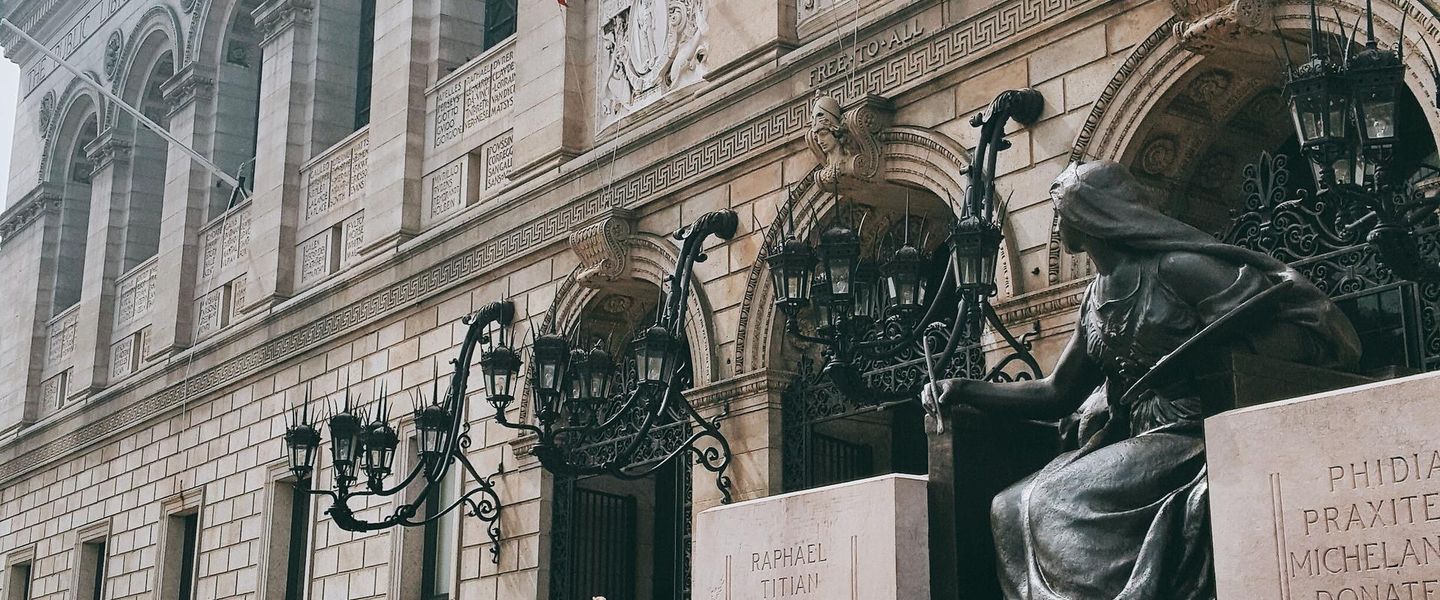


Back Bay Boston blends Victorian brownstones, Copley Square, Newbury Street shopping, landmark churches, galleries, dining and Charles River walks in historic Boston.
Streets Planned on Reclaimed Land
Back Bay is one of Boston’s most recognisable neighbourhoods, a carefully planned district of broad avenues, handsome brownstone terraces and formal public spaces west of the historic core. Much of it stands on land reclaimed from a tidal basin during the nineteenth century, and its ordered street grid gives the area a composed, metropolitan character quite unlike Boston’s older, irregular quarters. Commonwealth Avenue forms its grand central axis, with a tree-lined mall linking the Public Garden towards the east with the Charles River Esplanade towards the west.Read more about Back Bay
Architecture, Art and Public Life
A Walkable Urban Landscape
Best attractions in Back Bay
Back Bay’s principal attractions are concentrated around Copley Square, where Trinity Church and the Boston Public Library’s grand McKim Building face one another across a formal civic space. The library’s historic interiors, murals and reading rooms make it one of the neighbourhood’s most rewarding cultural visits, while Trinity’s architecture and interior decoration provide a different kind of experience. Newbury Street offers a changing panorama of nineteenth-century townhouses, galleries, cafés, independent shops and international retailers. Commonwealth Avenue supplies a more spacious walking route, with statues, mature trees and views towards the Public Garden and Charles River. At the western end, the Christian Science Plaza introduces modern open space and notable mid-century architecture, while the Prudential complex provides shopping, dining and elevated city perspectives. The Charles River Esplanade, immediately beyond the neighbourhood, adds riverside paths and broad views.
-
City park
Copley Square Park
Discover Copley Square Park, a vibrant urban sanctuary in Boston's Back Bay, surrounded by historic landmarks, art, and lush greenery.
2 min walk · 0.2 km from neighbourhood centre
-
Sightseeing tour agency
Boston Duck Tours Prudential Center Departure Location
Discover Boston's rich history and stunning views on the iconic Boston Duck Tours, the ultimate sightseeing adventure for all ages.
6 min walk · 0.5 km from neighbourhood centre
-
Museum
Gibson House Museum
Discover Victorian elegance and rich history at the Gibson House Museum in Boston's Back Bay, a must-visit for culture and history enthusiasts.
6 min walk · 0.5 km from neighbourhood centre


Best landmarks in Back Bay
Back Bay’s landmark character comes from the superimposition of distinguished nineteenth-century buildings and later modern towers. Trinity Church, designed by Henry Hobson Richardson and completed in 1877, dominates the east side of Copley Square with its Romanesque massing and richly decorated interior. Opposite it, the Boston Public Library’s McKim Building, opened in 1895, is a major Beaux-Arts civic work with a monumental façade, central courtyard and celebrated reading spaces. The Old South Church, at the square’s corner, adds another important ecclesiastical presence. Commonwealth Avenue’s tree-lined central mall is itself a defining piece of urban design, while the John Hancock Tower creates a sharp modern counterpoint beside the older buildings. At the western edge, the Christian Science Plaza forms a significant twentieth-century architectural ensemble with a reflecting pool and broad paved spaces.
-
City park
Public Garden
Discover Boston's Public Garden, a stunning city park blending lush landscapes, historical statues, and serene swan boat rides in a botanical paradise.
7 min walk · 0.6 km from neighbourhood centre
-
Tourist attraction
View Boston
Discover breathtaking views and a unique dining experience at View Boston, the city's premier observation deck and tourist attraction.
9 min walk · 0.7 km from neighbourhood centre
-
Historical landmark
Boston Women's Memorial
Discover the Boston Women's Memorial, a historical landmark celebrating the remarkable contributions of women in American history in the heart of Back Bay.
8 min walk · 0.7 km from neighbourhood centre
-
Museum
Gibson House Museum
Discover the rich history of the Gibson House Museum in Boston's Back Bay, where the past comes alive in a beautifully preserved 19th-century home.
6 min walk · 0.5 km from neighbourhood centre


Explore Back Bay on the map
A handpicked selection of must-see spots in Back Bay, mapped for you.
Best hotels in Back Bay
Best restaurants in Back Bay
Back Bay has one of Boston’s broadest concentrations of restaurants, with the strongest activity around Newbury Street, Boylston Street, Copley Square and the Prudential complex. Dining ranges from long-established American and New England-style restaurants to seafood houses, steakhouses, Italian cooking, sushi, cafés and contemporary international menus. Atlantic Fish Co and Legal Sea Foods are associated with the neighbourhood’s seafood tradition, while Abe & Louie’s and Grill 23 & Bar represent its established steakhouse culture. Eataly Boston at the Prudential Center brings a large Italian food-market format alongside restaurants and counters, and smaller cafés provide useful stops between architectural and retail visits. The area also has hotel dining rooms, bakeries and polished cocktail-led restaurants, though the atmosphere varies considerably between the formal spaces around Copley Square and the more casual options along its busy retail corridors.
-
Italian
Eataly
Discover Eataly in Boston: an authentic Italian marketplace with restaurants, cafes, and gourmet groceries for all food enthusiasts.
9 min walk · 0.7 km from neighbourhood centre
-
Mexican
Lolita Back Bay
Discover vibrant Mexican cuisine and innovative cocktails at Lolita Back Bay, Boston's favorite dining destination for flavor enthusiasts.
2 min walk · 0.2 km from neighbourhood centre
-
Seafood
Saltie Girl
Experience Boston's culinary scene at Saltie Girl, where fresh seafood meets innovative flavors in a vibrant setting.
2 min walk · 0.2 km from neighbourhood centre
-
Southern
Buttermilk & Bourbon
Experience Southern hospitality and innovative comfort food at Buttermilk & Bourbon in Boston's vibrant Back Bay neighborhood.
3 min walk · 0.3 km from neighbourhood centre


Best bars in Back Bay
Back Bay’s nightlife is varied but generally more polished and dispersed than the concentrated club scenes found in some other parts of Boston. Hotel bars and restaurant lounges around Copley Square and the Prudential area provide comfortable evening settings, while Boylston Street has sports bars and lively places aimed at visitors, office workers and event crowds. The neighbourhood also includes established pubs such as Bukowski Tavern, known for its beer-focused atmosphere, and cocktail-oriented venues including OAK Long Bar + Kitchen. The Beehive, just beyond the neighbourhood in the South End, is nearby but should not be confused with a Back Bay venue. Evening entertainment can also include performances and cultural programming at nearby institutions, while Newbury Street tends to become quieter as its retail businesses close.
-
Mexican
Lolita Back Bay
Explore the vibrant flavors of Mexico at Lolita Back Bay, where traditional cuisine meets modern flair in an unforgettable dining experience.
2 min walk · 0.2 km from neighbourhood centre
-
Bar
Parish Cafe & Bar
Discover the eclectic flavors of American cuisine at Parish Cafe & Bar, a lively venue in Boston's Back Bay that promises a memorable dining experience.
4 min walk · 0.3 km from neighbourhood centre
-
Bar
Bukowski Tavern
Discover Bukowski Tavern in Boston's Back Bay, where gourmet burgers and craft beers meet a vibrant, laid-back atmosphere.
12 min walk · 0.9 km from neighbourhood centre
-
American
Back Bay Social
Experience the vibrant atmosphere and delectable American cuisine at Back Bay Social, a must-visit restaurant in Boston's Back Bay.
9 min walk · 0.7 km from neighbourhood centre


Best nightclubs in Back Bay
Back Bay’s nightlife is varied but generally more polished and dispersed than the concentrated club scenes found in some other parts of Boston. Hotel bars and restaurant lounges around Copley Square and the Prudential area provide comfortable evening settings, while Boylston Street has sports bars and lively places aimed at visitors, office workers and event crowds. The neighbourhood also includes established pubs such as Bukowski Tavern, known for its beer-focused atmosphere, and cocktail-oriented venues including OAK Long Bar + Kitchen. The Beehive, just beyond the neighbourhood in the South End, is nearby but should not be confused with a Back Bay venue. Evening entertainment can also include performances and cultural programming at nearby institutions, while Newbury Street tends to become quieter as its retail businesses close.
-
American
Club Café
Experience the vibrant nightlife and delightful American cuisine at Club Café, Boston's premier gay and piano bar in the heart of Back Bay.
4 min walk · 0.4 km from neighbourhood centre
-
Night club
Royale
Discover the pulsating energy of Royale, Boston's top night club and live music venue, where unforgettable nights await.
10 min walk · 0.8 km from neighbourhood centre
-
Cocktail bar
City Bar Back Bay
Experience the essence of Boston nightlife at City Bar Back Bay, where exquisite cocktails and American cuisine await in a stylish setting.
5 min walk · 0.4 km from neighbourhood centre
-
Night club
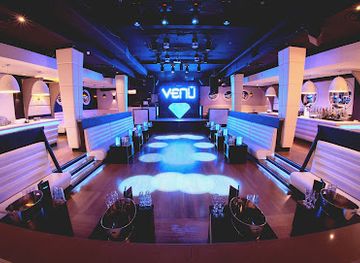
Venu Nightclub
Venu Nightclub: Boston's Premier Destination for Nightlife, Cocktails, and Comedy Entertainment.
9 min walk · 0.7 km from neighbourhood centre


Best shops in Back Bay
Shopping in Back Bay is anchored by Newbury Street, where the historic townhouse façades contain a mixture of independent boutiques, fashion houses, galleries, beauty businesses, cafés and larger international brands. Its retail character changes from the more formal eastern end near the Public Garden to a broader mix towards Massachusetts Avenue, making the entire length worth exploring rather than treating it as a single shopping centre. Boylston Street adds chain stores, sports-related retail and everyday conveniences, while the Prudential Center offers a substantial indoor collection of shops and food businesses. Copley Place, across from the Back Bay transport area, extends the neighbourhood’s luxury and department-store-oriented retail offer. The area is more suited to fashion, design, gifts, books, beauty and dining than to a traditional produce market or craft bazaar.
-
Gift shop
Anime Zakka
Explore Anime Zakka, Boston's premier gift shop for unique anime collectibles, figurines, and a vibrant community of fans.
13 min walk · 1.0 km from neighbourhood centre
-
Boutique
Mure and Grand - Back Bay
Explore Mure and Grand - a boutique treasure in Back Bay, Boston, offering unique clothing and jewelry for every fashion enthusiast.
4 min walk · 0.3 km from neighbourhood centre
-
Clothing store
Urban Outfitters
Explore Urban Outfitters in Boston for trendy clothing, unique beauty supplies, and stylish home goods in a vibrant shopping environment.
13 min walk · 1.1 km from neighbourhood centre
-
Gift shop
Harry Potter Shop
Discover the magic of Harry Potter at the enchanting gift shop in Boston, filled with exclusive merchandise and delightful memorabilia.
9 min walk · 0.7 km from neighbourhood centre


Back Bay essentials
Getting There
Getting Around
Safety
Emergency Situations
Do's and Don'ts
Local Tips

From Eve
Local phrases worth knowing
You don't need to get them perfect. A few words go a long way, and locals appreciate the effort.
Basics
| English | Local | Say it |
|---|---|---|
| Hello | Hey there | [Hey thair] |
| Goodbye | Take care | [Tayk kair] |
| Yes | Yeah | [Yeh] |
| No | Nah | [Nah] |
| Please/You're welcome | Please/No worries | [Pleez/No wor-eez] |
| Thank you | Thanks | [Thaynks] |
| Excuse me/Sorry | Pardon me/My bad | [Pahrdn mee/My bad] |
| How are you? | How you doin'? | [How yoo dooin] |
| Fine. And you? | Good. You? | [Gud. Yoo] |
| Do you speak English? | You speak English? | [Yoo speak Ing-lish] |
| I don't understand | I dunno | [I dun-no] |
Eating & Drinking
| English | Local | Say it |
|---|---|---|
| I'd like to see the menu, please | I wanna check out the menu, please | [I wanna chek out the menu, please] |
| I don't eat meat | I'm vegetarian | [I'm ve-jai-tear-ee-an] |
| Cheers! | Cheers! | [Cheers!] |
| I would like to pay, please | I'll settle the bill, please | [I'll set-tl the bil, please] |
Emergencies
| English | Local | Say it |
|---|---|---|
| Help! | Help! | [Help!] |
| Go away! | Get lost! | [Get lost!] |
| Call the Police! | Call the cops! | [Call the cops!] |
| Call a doctor! | Get a doctor! | [Get a doctor!] |
| I'm lost | I'm lost | [I'm lost] |
| I'm ill | I'm sick | [I'm sik] |
Shopping
| English | Local | Say it |
|---|---|---|
| I'd like to buy... | I wanna pick up... | [I wanna pick up...] |
| I'm just looking | Just browsing | [Just brows-ing] |
| How much is it? | What's the price? | [Whats the prys?] |
| That's too expensive | That's pricey | [That's prys-ee] |
| Can you lower the price? | Can you give me a deal? | [Can yoo giv mee a deel?] |
Time & Numbers
| English | Local | Say it |
|---|---|---|
| What time is it? | What's the time? | [Whuts the time?] |
| It's one o'clock | It's one | [It's wun] |
| Half past (10) | Ten thirty | [Ten thur-tee] |
| Morning | Morning | [Morning] |
| Afternoon | Afternoon | [Afternoon] |
| Evening | Evening | [Evening] |
| Yesterday | Yesterday | [Yesterday] |
| Today | Today | [Today] |
| Tomorrow | Tomorrow | [Tomorrow] |
| 1 | One | [Wun] |
| 2 | Two | [Too] |
| 3 | Three | [Three] |
| 4 | Four | [Four] |
| 5 | Five | [Fyv] |
| 6 | Six | [Siks] |
| 7 | Seven | [Sev-un] |
| 8 | Eight | [Ayt] |
| 9 | Nine | [Nyn] |
| 10 | Ten | [Ten] |
Transport & Directions
| English | Local | Say it |
|---|---|---|
| Where's a/the...? | Where's the...? | [Wheres the...?] |
| What's the address? | Where's the address? | [Wheres the address?] |
| Can you show me (on the map)? | Can you point it out (on the map)? | [Can yoo point it out (on the map)?] |
| When's the next (bus)? | When's the next (bus)? | [Whens the next (bus)?] |
| A ticket (to ....) | One ticket (to ...) | [Wun ticket (to ...)] |
History of Back Bay
The Former Tidal Basin
The name Back Bay recalls the tidal waterway that once lay west of Boston’s original peninsula. Tides flowed across a broad basin between the city and the mainland, limiting development and leaving mudflats at low water. During the nineteenth century, public and private engineering projects gradually filled the area with earth brought largely from the surrounding region. The transformation created buildable land close to the expanding city centre, but it also required elaborate drainage and foundations because the new district rested on soft, waterlogged ground. Back Bay’s existence is therefore inseparable from Boston’s nineteenth-century ambition to reshape its shoreline and accommodate urban growth.
A Planned Residential District
Once the basin was being filled, Back Bay was laid out as a highly ordered neighbourhood of parallel streets, cross streets and formal avenues. Commonwealth Avenue, Boylston Street and Newbury Street became the principal east-west routes, while Arlington, Clarendon, Berkeley, Marlborough and other streets were lined with substantial townhouses. Much of the residential construction took place from the 1860s into the late nineteenth century, using masonry façades and repeating architectural rhythms that gave the district its cohesive appearance. The plan reflected contemporary ideas about urban order, comfort and prestige, setting Back Bay apart from Boston’s older streets, which had developed more irregularly.
Copley Square and Cultural Institutions
Back Bay’s civic and cultural importance grew as major institutions established themselves around Copley Square. Trinity Church, completed in 1877 to designs by Henry Hobson Richardson, became a defining work of American architecture, while the Boston Public Library’s McKim Building opened in 1895 with monumental reading rooms, murals and a courtyard influenced by European models. The square consequently developed into more than a residential address: it became a setting for education, worship, public gatherings and the visual expression of Boston’s intellectual ambitions. The arrival of the library and other institutions also helped anchor the district’s reputation as a centre of culture and learning.
Commercial Change and Modern Towers
During the twentieth century, Back Bay became increasingly commercial as offices, department stores, hotels and cultural venues joined the original townhouses. Boylston Street and the area around Copley Square absorbed major changes, while the Prudential complex brought a large-scale mixed-use development to the western part of the neighbourhood from the 1960s onwards. Modern buildings such as the John Hancock Tower introduced a contrasting glass-and-steel skyline beside the older masonry streetscape. The coexistence of preserved nineteenth-century buildings, active retail streets and high-rise offices remains central to Back Bay’s contemporary identity.
Preservation and Present-Day Identity
Back Bay’s historic character became increasingly valued as Boston’s post-war development altered other parts of the city. Preservation efforts helped retain the continuous rows of townhouses, the mature Commonwealth Avenue mall and the institutional buildings around Copley Square, while adaptive reuse gave many former residences commercial, office or hospitality functions. Newbury Street developed into a prominent shopping and dining address, and the neighbourhood continued to attract residents, businesses and visitors. Today, Back Bay combines a nineteenth-century urban plan with modern commercial activity, major transport links and access to the Charles River, making its history visible in the streetscape rather than confined to museums.
Back Bay in Photos
Browse through our photo collection highlighting the charm and character of the destination.
Neighbourhoods near Back Bay
The closest neighbourhoods to Back Bay, if you have time for more than one stop.
-

-

-

-

-


Swipe for more neighbourhoods
Explore more

Explore more of Boston
Boston blends Revolutionary history, harbour walks, world-class museums, brownstone streets and lively neighbourhoods into a richly rewarding American city break.
Explore Boston