

Beacon Hill (Boston) Travel Guide - Free
Explore Beacon Hill in Boston with Evendo's free guide. Find the best shops, historic streets, restaurants, and gems on web or mobile.


Beacon Hill, Boston, pairs Federal-era streets, Black heritage, independent shops, historic landmarks and intimate dining beside the Common and Charles River.
Federal Streets and Hilltop Character
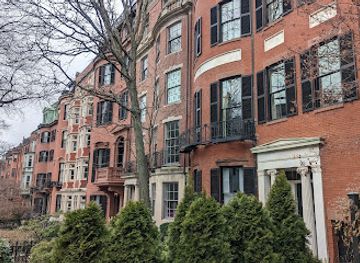
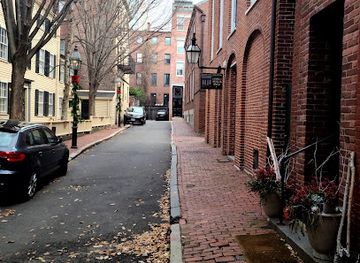
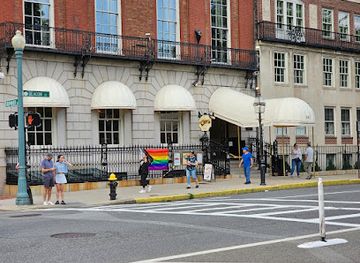
Beacon Hill rises immediately north of Boston Common, its narrow lanes and brick pavements forming one of the city’s most recognisable historic quarters. Federal and Greek Revival town houses line Beacon, Chestnut, Mount Vernon and Pinckney streets, while gas-style lamps, iron railings and the steep passage of Acorn Street create a streetscape that rewards slow exploration. The Massachusetts State House crowns the southern slope, its gilded dome visible from several approaches, while Louisburg Square provides a more private, residential expression of the neighbourhood’s nineteenth-century elegance.Read more about Beacon Hill
A Neighbourhood of Many Histories
Daily Life on Charles Street
Best attractions in Beacon Hill
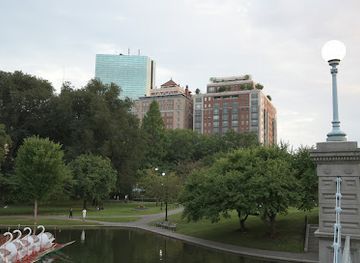
Beacon Hill’s attractions are concentrated in its streetscape and museums rather than in a large collection of purpose-built visitor venues. The Massachusetts State House anchors the southern slope, while Charles Street offers an accessible route through cafés, small shops and historic brick buildings. On the north side, the Museum of African American History interprets Black life, education, religion and abolition in Boston through the African Meeting House and other associated sites. The Black Heritage Trail provides a valuable way to connect these locations with homes, churches and civic buildings around Joy Street. Mount Vernon Street, Louisburg Square, Pinckney Street and the much-photographed Acorn Street reward architectural walks, though they remain working residential spaces. Boston Common, the Public Garden and the Charles River Esplanade are immediately adjacent and easily combined with a Beacon Hill visit, but should be understood as neighbouring public landscapes rather than attractions within the hill itself.
-
City park
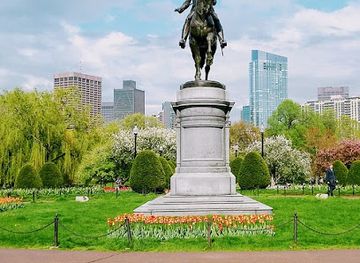
Public Garden
Explore the stunning Public Garden in Boston, a botanical paradise filled with vibrant flowers, serene paths, and rich history, perfect for relaxation and exploration.
7 min walk · 0.5 km from neighbourhood centre
-
Museum
Nichols House Museum
Discover the Nichols House Museum, a historic gem in Beacon Hill, offering a glimpse into 19th-century Boston life through art and architecture.
2 min walk · 0.1 km from neighbourhood centre
-
Tourist attraction
Black Heritage Trail
Walk through history on the Black Heritage Trail, celebrating African American contributions and cultural richness in Boston's Beacon Hill.
3 min walk · 0.3 km from neighbourhood centre
-
Tourist attraction
Barrio Beacon Hill
Experience the historic charm and scenic beauty of Beacon Hill, Boston's iconic neighborhood filled with cobblestone streets and stunning architecture.
3 min walk · 0.3 km from neighbourhood centre
Best landmarks in Beacon Hill
The Massachusetts State House is Beacon Hill’s defining civic landmark, its Bulfinch-designed building and gilded dome marking the summit above Beacon Street and Boston Common. The residential architecture is equally important: Louisburg Square, Mount Vernon Street, Chestnut Street and Pinckney Street preserve rows of nineteenth-century town houses that express the neighbourhood’s planned, affluent development. Acorn Street is a tiny cobbled passage whose scale and brick façades make it one of the hill’s most recognisable views, although it is a residential lane rather than a formal monument. On Joy Street, the African Meeting House carries exceptional local and national significance as a surviving centre of Black religious, educational and political life. The Harrison Gray Otis House, operated by Historic New England on Cambridge Street, represents the Federal-era expansion of Boston and helps place Beacon Hill’s domestic architecture in its early nineteenth-century context.
-
City park
Boston Common
Experience Boston Common, the oldest public park in the U.S., rich in history and beauty, perfect for relaxation and exploration.
5 min walk · 0.4 km from neighbourhood centre
-
State government office
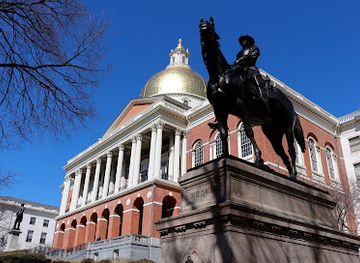
Massachusetts State House
Explore the iconic Massachusetts State House, a historical landmark offering stunning architecture and guided tours in the heart of Boston.
4 min walk · 0.3 km from neighbourhood centre
-
Monument
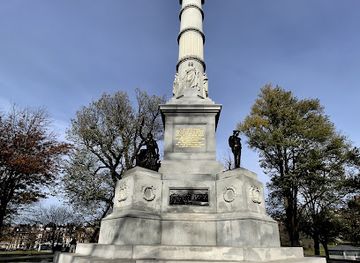
Soldiers and Sailors Monument
Discover the Soldiers and Sailors Monument in Boston Common, a stunning tribute to Civil War heroes rich in history and artistry.
4 min walk · 0.3 km from neighbourhood centre
-
Historical place
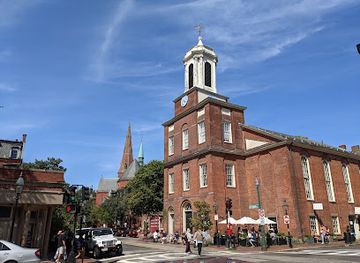
Charles Street Meeting House
Discover the Charles Street Meeting House, a historic landmark in Boston's Beacon Hill, offering a glimpse into the city's rich cultural heritage.
3 min walk · 0.3 km from neighbourhood centre
Explore Beacon Hill on the map
A handpicked selection of must-see spots in Beacon Hill, mapped for you.
Best hotels in Beacon Hill
Best restaurants in Beacon Hill
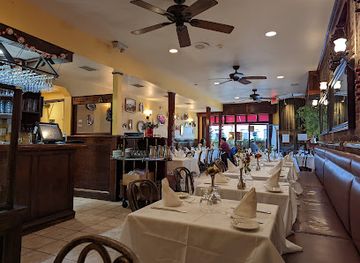
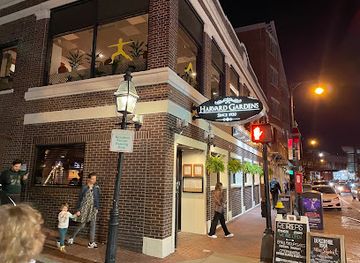
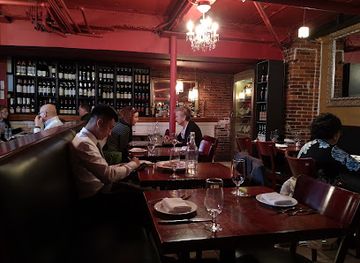
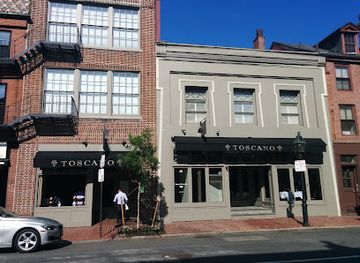
Beacon Hill’s dining scene is concentrated along Charles Street and the surrounding lower slopes, where restaurants and cafés occupy compact historic premises. The choice ranges from polished New American and Italian cooking to casual breakfasts, sandwiches, pastries and coffee, giving the area a more local, small-scale feel than Boston’s large restaurant districts. Established names associated with the neighbourhood include Toscano, known for Italian cooking, The Paramount on Charles Street for informal all-day dining, and The Grotto for Italian-influenced dishes in a tucked-away setting. Independent shops and cafés make Charles Street useful for a pause between architectural walks, while the residential upper streets are quieter and offer fewer places to eat. Dining rooms can be intimate, and visitors should distinguish Beacon Hill’s own restaurants from the broader selection in nearby Downtown, Back Bay and the North End.
-
French
Ma Maison
Experience authentic French cuisine at Ma Maison, a charming bistro in Beacon Hill that brings Parisian flair to Boston.
3 min walk · 0.3 km from neighbourhood centre
-
American
Harvard Gardens
Experience the vibrant flavors of America at Harvard Gardens – Boston's premier brunch and lunch destination in Beacon Hill.
4 min walk · 0.3 km from neighbourhood centre
-
Italian
Grotto
Experience the essence of Italy at Grotto in Boston's Beacon Hill - where exquisite flavors meet inviting ambiance.
5 min walk · 0.4 km from neighbourhood centre
-
Italian
Toscano
Experience authentic Italian cuisine at Toscano in Beacon Hill, Boston - where tradition meets elegance in every dish.
3 min walk · 0.2 km from neighbourhood centre
Best bars in Beacon Hill
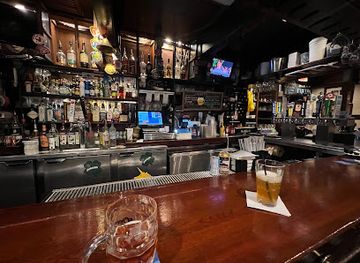
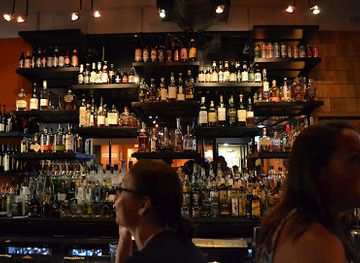
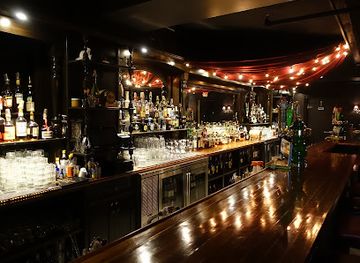
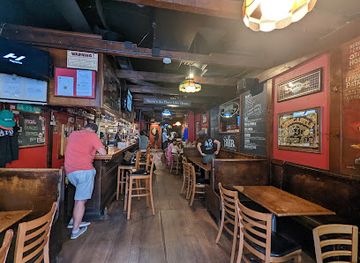
Beacon Hill is not a late-night club district; its evening character is quieter, shaped by neighbourhood pubs, restaurant bars and low-key conversation rather than large venues. Charles Street is the main focus, with traditional drinking places and restaurants that remain sociable after dark, while the 21st Amendment near Bowdoin Street has a long association with Beacon Hill’s pub culture. The narrow streets and close-set homes make considerate behaviour important, particularly when leaving venues. Visitors seeking live music, theatres or larger nightclubs will find a considerably broader choice elsewhere in central Boston, while the adjacent West End and Downtown areas provide more substantial late-night entertainment. Beacon Hill works best in the evening for a meal, a drink and an atmospheric walk through illuminated historic streets, not for an all-night party itinerary.
-
Pub
Cheers
Experience the iconic Cheers pub in Boston's Beacon Hill, where American cuisine meets a rich history and a vibrant atmosphere.
5 min walk · 0.4 km from neighbourhood centre
-
American
The Tip Tap Room
Savor the essence of Boston's culinary scene at The Tip Tap Room, where American flavors meet an impressive beer selection in a cozy atmosphere.
5 min walk · 0.4 km from neighbourhood centre
-
Cocktail bar
Carrie Nation Cocktail Club
Discover the historic charm and modern mixology at Carrie Nation Cocktail Club, a premier cocktail bar in the heart of Boston.
6 min walk · 0.5 km from neighbourhood centre
-
Pub
The Sevens Ale House
Experience the heart of Boston's nightlife at The Sevens Ale House, where delicious American cuisine meets a lively sports bar atmosphere.
3 min walk · 0.2 km from neighbourhood centre
Best nightclubs in Beacon Hill
Beacon Hill is not a late-night club district; its evening character is quieter, shaped by neighbourhood pubs, restaurant bars and low-key conversation rather than large venues. Charles Street is the main focus, with traditional drinking places and restaurants that remain sociable after dark, while the 21st Amendment near Bowdoin Street has a long association with Beacon Hill’s pub culture. The narrow streets and close-set homes make considerate behaviour important, particularly when leaving venues. Visitors seeking live music, theatres or larger nightclubs will find a considerably broader choice elsewhere in central Boston, while the adjacent West End and Downtown areas provide more substantial late-night entertainment. Beacon Hill works best in the evening for a meal, a drink and an atmospheric walk through illuminated historic streets, not for an all-night party itinerary.
-
Night club
Royale
Discover the heart of Boston's nightlife at Royale, a lively night club and live music venue offering unforgettable experiences.
12 min walk · 1.0 km from neighbourhood centre
-
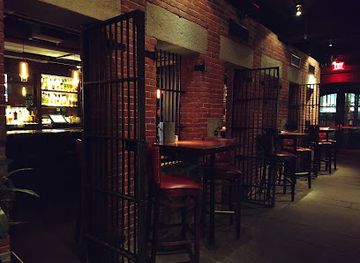
Lounge
Alibi
Experience the vibrant nightlife and exquisite cuisine at Alibi, Boston's premier lounge and cocktail bar, set in a historic former jail.
6 min walk · 0.5 km from neighbourhood centre
-
Night club
The Alley Bar
Experience the vibrant nightlife at The Alley Bar, Boston's premier gay bar and night club for a night filled with fun, community, and unforgettable entertainment.
9 min walk · 0.7 km from neighbourhood centre
-
Night club
Bijou Nightclub
Discover the pulse of Boston's nightlife at Bijou Nightclub, where electrifying music and stylish ambiance create unforgettable nights.
11 min walk · 0.9 km from neighbourhood centre



Best shops in Beacon Hill
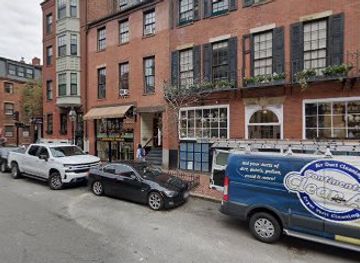
Shopping in Beacon Hill is centred on Charles Street, where independent retailers occupy handsome brick buildings between the Common and the northern end of the neighbourhood. Visitors will find books, antiques, decorative objects, clothing, gifts, flowers and specialist services rather than a large concentration of international chains. The street’s antique and interior-focused businesses reflect Beacon Hill’s long association with historic houses and design, while cafés and food shops give the area an everyday commercial rhythm. The smaller streets above Charles Street are primarily residential and offer little conventional retail, so they are better approached as architectural routes than shopping destinations. There is no single market defining Beacon Hill; for broader food and market shopping, visitors need to continue into adjoining parts of central Boston. Window-shopping here works best alongside a heritage walk, with care taken not to obstruct narrow pavements or photograph shop interiors without permission.
-
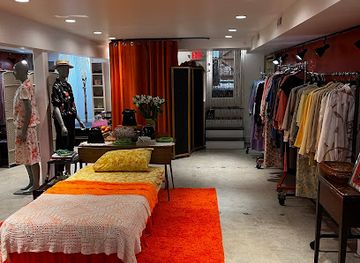
Vintage clothing store
Vico Style
Explore Vico Style, Boston's vintage clothing store, and find unique fashion treasures that bring the past to life in the heart of Beacon Hill.
4 min walk · 0.3 km from neighbourhood centre
-
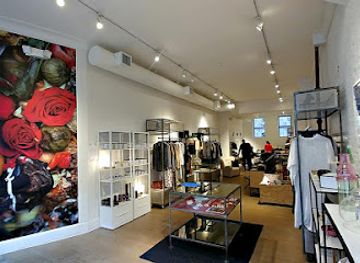
Clothing store
ouimillie
Explore the stylish offerings of Ouimillie in Boston's historic Beacon Hill, where unique fashion meets local craftsmanship.
4 min walk · 0.3 km from neighbourhood centre
-
Gift shop
Cheers Gift Shop
Discover the charm of Boston at Cheers Gift Shop, where unique souvenirs and local treasures await in the heart of Beacon Hill.
5 min walk · 0.4 km from neighbourhood centre
-
Clothing store
December Thieves
Explore December Thieves in Boston's Beacon Hill for unique clothing, handbags, jewelry, and shoes that tell a story.
3 min walk · 0.2 km from neighbourhood centre

Beacon Hill essentials
Getting There
Getting Around
Safety
Emergency Situations
Do's and Don'ts
Local Tips

From Eve
Local phrases worth knowing
You don't need to get them perfect. A few words go a long way, and locals appreciate the effort.
Basics
| English | Local | Say it |
|---|---|---|
| Hello | Hi | [Hahy] |
| Goodbye | Bye | [Bahy] |
| Yes | Yeah | [Yeh] |
| No | Nope | [Nohp] |
| Please/You're welcome | Sure | [Shuhr] |
| Thank you | Thanks | [Thaynks] |
| Excuse me/Sorry | Sorry | [Saw-ree] |
| How are you? | How ya doin'? | [How yuh doo-in'] |
| Fine. And you? | Good. You? | [Guhd. Yuh?] |
| Do you speak English? | Ya speak English? | [Yuh speak Ing-glish?] |
| I don't understand | I don't get it | [I don't get it] |
Eating & Drinking
| English | Local | Say it |
|---|---|---|
| I'd like to see the menu, please | Can I see the menu? | [Can I see the menu?] |
| I don't eat meat | I'm vegetarian | [I'm veg-et-ayr-ee-an] |
| Cheers! | Cheers! | [Cheers!] |
| I would like to pay, please | Can I pay now? | [Can I pay now?] |
Emergencies
| English | Local | Say it |
|---|---|---|
| Help! | Help! | [Help!] |
| Go away! | Get lost! | [Get lost!] |
| Call the Police! | Call the cops! | [Call the cops!] |
| Call a doctor! | Get a doctor! | [Get a doctor!] |
| I'm lost | I'm lost | [I'm lost] |
| I'm ill | I'm sick | [I'm sick] |
Shopping
| English | Local | Say it |
|---|---|---|
| I'd like to buy... | I wanna buy... | [I wanna buy...] |
| I'm just looking | Just browsing | [Just brows-ing] |
| How much is it? | How much does it cost? | [How much duhz it cost?] |
| That's too expensive | That's pricey | [That's pry-see] |
| Can you lower the price? | Can you drop the price? | [Can you drop the price?] |
Time & Numbers
| English | Local | Say it |
|---|---|---|
| What time is it? | What's the time? | [What's the time?] |
| It's one o'clock | It's one | [It's one] |
| Half past (10) | 10:30 | [Ten-thur-tee] |
| Morning | Morning | [Morning] |
| Afternoon | Afternoon | [Afternoon] |
| Evening | Evening | [Evening] |
| Yesterday | Yesterday | [Yesterday] |
| Today | Today | [Today] |
| Tomorrow | Tomorrow | [Tomorrow] |
| 1 | One | [Wun] |
| 2 | Two | [Too] |
| 3 | Three | [Three] |
| 4 | Four | [Fohr] |
| 5 | Five | [Fahyv] |
| 6 | Six | [Siks] |
| 7 | Seven | [Sev-uhn] |
| 8 | Eight | [Ayt] |
| 9 | Nine | [Nine] |
| 10 | Ten | [Ten] |
Transport & Directions
| English | Local | Say it |
|---|---|---|
| Where's a/the...? | Where's the...? | [Where's the...?] |
| What's the address? | What's the address? | [What's the address?] |
| Can you show me (on the map)? | Can you show me (on the map)? | [Can you show me (on the map)?] |
| When's the next (bus)? | When's the next bus? | [When's the next bus?] |
| A ticket (to ....) | A ticket (to ....) | [A ticket (to ....)] |
History of Beacon Hill
From Sheep Pasture to Beacon Hill
Before urban development, the hill was part of the elevated land north of Boston’s colonial centre and was associated with pasture and Beacon Hill, a signalling point whose name survived as the district grew. Eighteenth-century Boston gradually expanded northwards, and the slopes were subdivided for streets and houses. The area’s height, proximity to the Common and position near the expanding civic centre made it attractive for substantial residences. Much of the present street pattern emerged between the late eighteenth and early nineteenth centuries, although later grading altered the hill’s original form.
Federal Boston Takes Shape
After American independence, Beacon Hill became closely associated with Boston’s political, mercantile and professional elite. The Massachusetts State House, designed by Charles Bulfinch and completed in 1798, established the southern summit as a civic focal point. Brick town houses spread along Mount Vernon, Chestnut, Pinckney and Beacon streets, combining domestic scale with the orderly restraint of Federal and later Greek Revival architecture. Louisburg Square developed in the 1820s as a formal residential enclosure. These buildings and streets gave Beacon Hill the architectural character that later preservation efforts sought to retain.
Black Community and Abolitionist Leadership
The north slope developed a distinct Black community during the nineteenth century, centred on homes, churches, schools and meeting places around Joy Street and the adjoining streets. The African Meeting House, completed in 1806, served as a church, school and civic gathering place; it is now part of the Museum of African American History. Residents including abolitionists, educators and community organisers connected local life to the wider struggle against slavery and racial discrimination. The Black Heritage Trail interprets this history through surviving buildings and sites, making it central to Beacon Hill’s identity rather than a peripheral episode.
Preservation and a Layered Present
By the twentieth century, parts of Beacon Hill had experienced physical change and economic pressure, while its historic architecture attracted growing recognition. Boston designated the Beacon Hill Historic District in 1955, helping protect the streetscape from wholesale redevelopment. Preservation has maintained much of the nineteenth-century housing, but the neighbourhood remains socially and commercially layered: Charles Street supports everyday businesses, institutions occupy historic premises, and long-established residential streets sit alongside expensive property and visitor activity. Museums and heritage projects, especially those interpreting Black Boston, have broadened public understanding of what the district represents.
Beacon Hill in Photos
Browse through our photo collection highlighting the charm and character of the destination.
Neighbourhoods near Beacon Hill
The closest neighbourhoods to Beacon Hill, if you have time for more than one stop.
-

-
-

-

-


Swipe for more neighbourhoods
Explore more

Explore more of Boston
Boston blends Revolutionary history, harbour walks, world-class museums, brownstone streets and lively neighbourhoods into a richly rewarding American city break.
Explore Boston