

Cape Ann Travel Guide - Free Web & App
Your ultimate guide to Cape Ann. Discover top landmarks, proposed trips, and local tips. Free on the web or via the Evendo companion app.


Cape Ann, Massachusetts, combines rocky Atlantic coast, historic Gloucester and Rockport, beaches, lighthouses, seafood, art and maritime heritage.
Rocky Shores and Working Harbours
Cape Ann occupies the northeastern corner of Massachusetts, where the Atlantic meets a peninsula shaped by granite headlands, sheltered coves, sandy beaches and working waterfronts. The region is commonly associated with Gloucester, Rockport, Essex and Manchester-by-the-Sea, each offering a different perspective on the coast. Gloucester remains a major fishing port, while Rockport is known for its harbour, rocky shoreline and long association with artists. Essex lies inland along the Essex River, with boatbuilding heritage and access to tidal marshes; Manchester-by-the-Sea combines village character with beaches and wooded coastal landscapes.Read more about Cape Ann
Maritime Heritage and Coastal Landscapes
Beaches, Art and Outdoor Time
When is the best time to visit Cape Ann?
Best: June, August–September · 22–27°C| Month | High (°C) | Rainfall (mm) |
|---|---|---|
| January | 2 | 79 |
| February | 3 | 74 |
| March | 8 | 84 |
| April | 12 | 89 |
| May | 18 | 94 |
| June (best) | 23 | 99 |
| July | 27 | 104 |
| August (best) | 27 | 94 |
| September (best) | 22 | 89 |
| October | 16 | 94 |
| November | 10 | 99 |
| December | 4 | 104 |
Getting to and around Cape Ann
How to get there
Transportation
Best attractions in Cape Ann
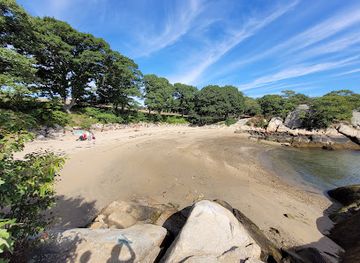
Cape Ann's attractions range from working waterfronts to open coastal landscapes. Gloucester's harbour and waterfront provide the setting for maritime museums, fishing activity and whale-watching departures, while the Cape Ann Museum explores local art, industry and seafaring. Rockport's Bearskin Neck leads towards the harbour and rocky shoreline, with galleries and views across the water; nearby Halibut Point State Park combines a former granite quarry with elevated coastal scenery. Good Harbor Beach and Wingaersheek Beach offer broad sandy shores, subject to seasonal access and conditions, while Eastern Point marks the entrance to Gloucester Harbor. Inland, Ravenswood Park provides woodland trails, and Essex brings visitors to the Essex River estuary, tidal marshes and boatbuilding traditions. Hammond Castle in Gloucester adds an architectural and historical dimension, while Manchester-by-the-Sea offers Singing Beach and a village setting on the western side of the region.
-
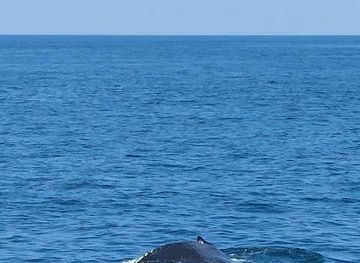
Cape Ann Whale Watch
Embark on an unforgettable adventure with Cape Ann Whale Watch in Gloucester, Massachusetts, and witness the awe of marine life up close.
-
Tourist attraction
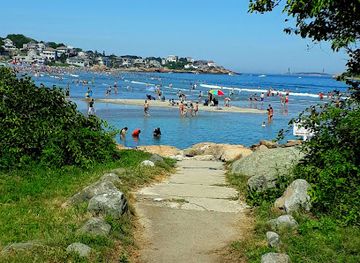
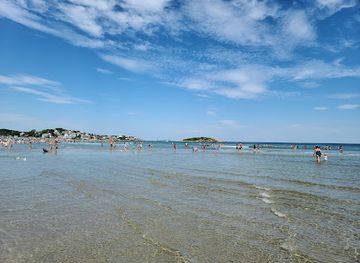
Good Harbor Beach
Discover the serene beauty of Good Harbor Beach in Gloucester, Massachusetts—an ideal destination for sunbathers, swimmers, and families seeking coastal adventure.
-
Tourist attraction
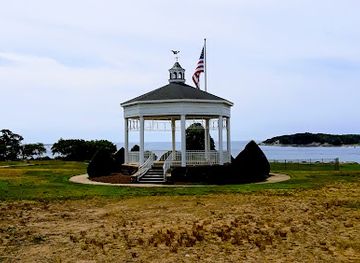
Stage Fort Park
Experience the charm of Stage Fort Park, a picturesque coastal retreat in Gloucester, MA, offering stunning views, recreational activities, and rich history.
-
Tourist attraction
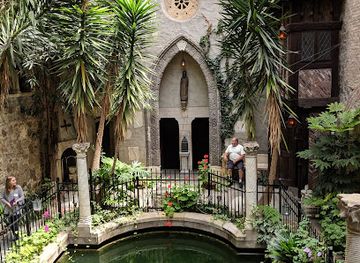
Hammond Castle Museum
Explore the Hammond Castle Museum, a historical treasure in Gloucester, Massachusetts, blending stunning architecture with rich history and ocean views.

Best landmarks in Cape Ann
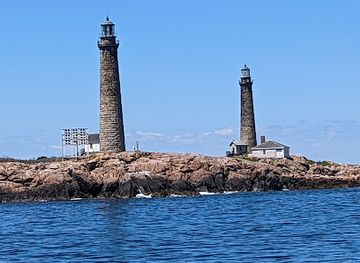
Cape Ann's defining landmarks are both physical and cultural. Halibut Point State Park's granite quarry and open Atlantic outlook illustrate the geological resource that supported a major local industry, while Eastern Point and its lighthouse mark the entrance to Gloucester Harbor. Gloucester's harbour, fishing vessels and maritime monuments embody the area's continuing relationship with the sea, and Rockport's Bearskin Neck provides a recognisable historic waterfront setting. Hammond Castle, built in Gloucester in the early twentieth century by inventor John Hays Hammond Jr., is a prominent architectural landmark with a strong local presence. In Essex, river marshes and boatyards reflect the landscape's tidal character and shipbuilding history. Beaches such as Good Harbor and Singing Beach are important natural landmarks, but their conditions, access and seasonal management can change.
-
Public beach
Good Harbor Beach
Experience the breathtaking beauty and recreational fun at Good Harbor Beach, Gloucester's coastal jewel perfect for families and adventurers alike.
-
Park
Stage Fort Park
Discover the natural beauty and historical charm of Stage Fort Park in Gloucester, MA, a perfect retreat for families and nature lovers alike.
-
Whale watching tour agency
Cape Ann Whale Watch
Explore the breathtaking beauty of the ocean with Cape Ann Whale Watch, where unforgettable marine adventures come to life along Massachusetts' stunning coastline.
-
Museum
Hammond Castle Museum
Explore the medieval charm and inventive history at Hammond Castle Museum, a unique destination in Gloucester, Massachusetts, rich in art and culture.
Explore Cape Ann on the map
Plan your trip on one map. See where the top attractions, landmarks, restaurants and hotels are, and book hotels and experiences in a few clicks.
Best hotels in Cape Ann
Best restaurants in Cape Ann
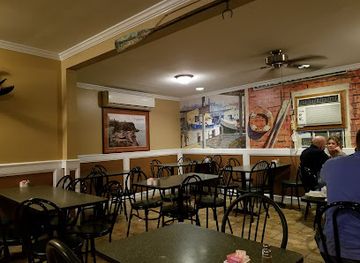
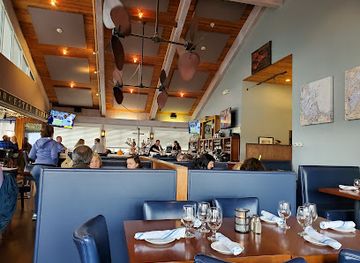
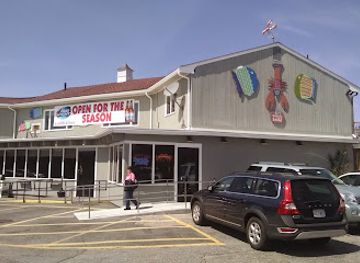
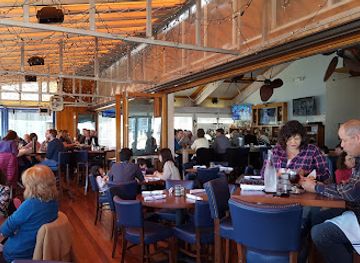
Cape Ann's dining identity is grounded in the North Atlantic, with Gloucester's working fishing port providing the clearest connection to seafood, from fish and shellfish to informal waterfront meals and traditional New England preparations. Restaurants, cafés and bakeries are concentrated in Gloucester and Rockport, while Essex has a strong association with local seafood and the wider Essex River estuary. Menus vary seasonally and may include clams, oysters, lobster and locally landed fish, alongside regional staples such as chowder and fried seafood, though availability changes with weather and landings. Farm stands and small food businesses around Essex and the surrounding North Shore add produce and prepared goods. In popular coastal towns, dining is busiest in summer, and visitors should distinguish restaurants in the settled communities from the limited food options near beaches, parks and conservation areas.
-
Italian
Causeway Restaurant
Savor authentic Italian flavors in a cozy setting at Causeway Restaurant, Gloucester's culinary treasure offering homemade pasta and fresh seafood.
-
Seafood
Seaport Grille
Experience fresh seafood and breathtaking waterfront views at Seaport Grille in Gloucester—an essential stop for food lovers visiting New England.
-
Seafood
Lobsta Land Restaurant
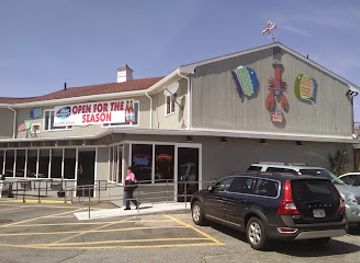
Discover Lobsta Land Restaurant in Gloucester: A seafood lover's dream featuring fresh catches and stunning harbor views.
-
Seafood
Roy Moore Lobster Company
Discover fresh seafood delights at Roy Moore Lobster Company in Rockport, MA—where every dish celebrates coastal flavors.
Best bars in Cape Ann
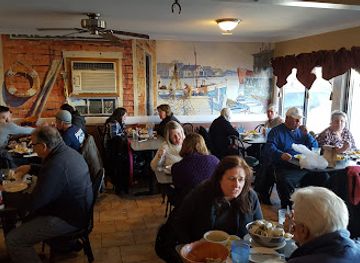
Cape Ann is not a late-night clubbing destination; evening life is centred on established pubs, taverns, restaurant bars and the social atmosphere of working harbour towns. Gloucester has the broadest choice of places for a drink after a day on the water or at the museum, while Rockport offers a quieter evening around its harbour and village streets. Essex and Manchester-by-the-Sea have a more residential, small-town character, with evening options concentrated in local restaurants and traditional hospitality venues rather than dedicated nightlife districts. Live music, gallery events and seasonal performances may appear in the region, but programmes vary. In summer, sunset walks near the coast are a popular alternative to nightlife, although visitors should follow access rules and avoid restricted waterfront areas.
-
Italian
Causeway Restaurant
Experience the flavors of Italy at Causeway Restaurant, where fresh ingredients and culinary tradition create unforgettable meals in Gloucester, MA.
-
Seafood
Seaport Grille
Experience the best of New England seafood dining at Seaport Grille in Gloucester, where fresh flavors meet stunning waterfront views.
-
Seafood
Lobsta Land Restaurant
Savor the freshest seafood in Gloucester at Lobsta Land Restaurant, where coastal charm meets culinary excellence.
-
Bar
Azorean Restaurant & Bar
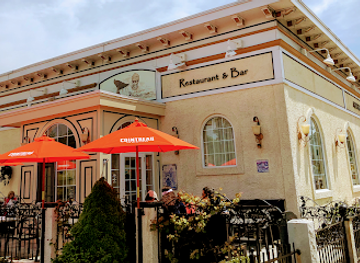
Savor authentic Portuguese and Mediterranean cuisine at Azorean Restaurant & Bar in Gloucester, a must-visit for food lovers.
Best nightclubs in Cape Ann
Cape Ann is not a late-night clubbing destination; evening life is centred on established pubs, taverns, restaurant bars and the social atmosphere of working harbour towns. Gloucester has the broadest choice of places for a drink after a day on the water or at the museum, while Rockport offers a quieter evening around its harbour and village streets. Essex and Manchester-by-the-Sea have a more residential, small-town character, with evening options concentrated in local restaurants and traditional hospitality venues rather than dedicated nightlife districts. Live music, gallery events and seasonal performances may appear in the region, but programmes vary. In summer, sunset walks near the coast are a popular alternative to nightlife, although visitors should follow access rules and avoid restricted waterfront areas.
-
 Lodging
Crow's Nest
Experience the charm of Gloucester at Crow's Nest, combining cozy lodging with a lively bar atmosphere for a memorable coastal getaway.
-
Bowling alley
Cape Ann Lanes/ Laneside Pub & Brewery
Discover the joy of bowling, craft beer, and delicious food at Cape Ann Lanes in Gloucester, MA - perfect for families and friends alike!
-
Bar
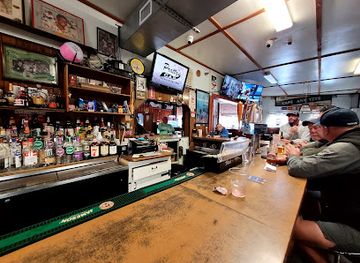
The Rhumb Line Bar & Restaurant
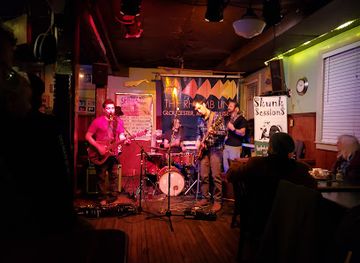
Explore The Rhumb Line Bar & Restaurant in Gloucester, MA for an unforgettable culinary and nightlife experience surrounded by local charm.
-
Bar
Pratty's CAV
Experience the vibrant nightlife at Pratty's CAV, Gloucester's favorite bar for great drinks and live entertainment.

Best shops in Cape Ann
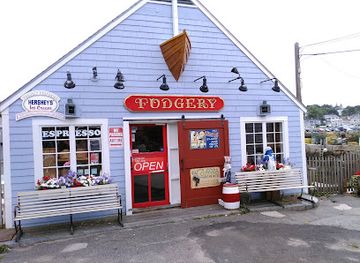
Shopping on Cape Ann is concentrated in Gloucester, Rockport and Essex rather than in a single regional retail centre. Rockport's harbour streets are associated with galleries, artists' studios and small independent shops, reflecting the town's long artistic tradition. Gloucester offers maritime-themed goods, galleries, practical provisions and food businesses, while Essex is known for craft and boatbuilding connections alongside smaller local retailers. Visitors may find regional seafood, speciality foods, locally made art, pottery, jewellery and textiles, although stock and opening patterns vary by season. Farm stands and food producers around the North Shore provide another way to buy local goods. Outdoor equipment and everyday supplies are most reliably found in the larger communities, so visitors staying near beaches or conservation areas should plan purchases before heading to more isolated sites.
-
Gift shop
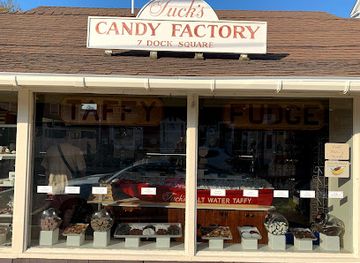
Tuck's Candy & Gifts
Discover the sweetness of Rockport at Tuck's Candy & Gifts, your delightful stop for candies, gifts, and local souvenirs.
-
Thrift store
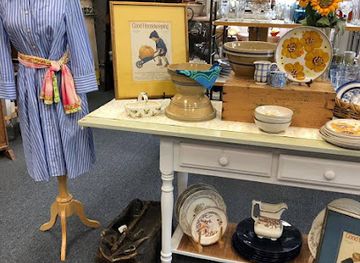
Second Glance
Explore Second Glance Thrift Store in Gloucester for unique vintage clothing, antiques, and sustainable shopping that supports local communities.
-
Grocery store
Cape Ann Market Place
Explore the local flavors of Gloucester at Cape Ann Market Place, your one-stop grocery destination for fresh produce and unique regional goods.
-
Gift shop
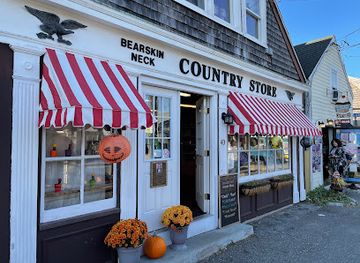
Bearskin Neck Country Store
Discover the charm of Bearskin Neck Country Store in Rockport, MA, where unique gifts and mouthwatering candies create unforgettable memories.
Get your free copy of our complete guide to Cape Ann, delivered straight to you.
Everything on this page, from attractions and restaurants to essentials and local phrases, in one PDF you can read offline, print or share.
Already have an account? Sign in
Your Cape Ann guide is ready.
We'll send it to · Not you? Sign out

Getting your guide ready…
We are putting together a fresh copy of the Cape Ann guide. This can take up to a minute.
This can take a few moments. If your browser asks, choose Allow so the download can start. You'll find the guide in your Downloads folder.
Nothing happened? Download it again
Sorry, the guide is taking longer than usual. Please try again in a minute, or get it by email instead.
Cape Ann essentials
Currency and Payment
Safety
Emergency Situations
Do's and Don'ts
Local Tips
From Eve
Local phrases worth knowing
You don't need to get them perfect. A few words go a long way, and locals appreciate the effort.
Basics
| English | Local | Say it |
|---|---|---|
| Hello | Ahoy | [uh-hoy] |
| Goodbye | See ya | [see yah] |
| Yes | Yup | [yuhp] |
| No | Nope | [nohp] |
| Please/You're welcome | Please | [pleez] |
| Thank you | Thanks | [thanks] |
| Excuse me/Sorry | Pardon me | [pahr-dn me] |
| How are you? | How ya doin'? | [hao yuh doin] |
| Fine. And you? | Good. You? | [good. yuh?] |
| Do you speak English? | Ya speak English? | [yuh speak ing-glish?] |
| I don't understand | I'm lost | [ahm lost] |
Eating & Drinking
| English | Local | Say it |
|---|---|---|
| I'd like to see the menu, please | Can I check the menu? | [ken eye chek the men-yoo?] |
| I don't eat meat | I don't do meat | [ahm lost] |
| Cheers! | Cheers! | [cheers] |
| I would like to pay, please | I'll settle up, please | [ahll set-l up, pleez] |
Emergencies
| English | Local | Say it |
|---|---|---|
| Help! | Help! | [help] |
| Go away! | Scram! | [skram] |
| Call the Police! | Call the cops! | [call the cops] |
| Call a doctor! | Get a doc! | [get a doc] |
| I'm lost | I'm lost | [ahm lost] |
| I'm ill | I'm sick | [ahm sik] |
Shopping
| English | Local | Say it |
|---|---|---|
| I'd like to buy... | I wanna get... | [ah wanna get] |
| I'm just looking | Just browsin' | [just brow-sin] |
| How much is it? | How much? | [hao much] |
| That's too expensive | Too pricey | [too prai-see] |
| Can you lower the price? | Can ya do better? | [ken yuh do bet-ter] |
Time & Numbers
| English | Local | Say it |
|---|---|---|
| What time is it? | What's the time? | [whats the time] |
| It's one o'clock | It's one | [its one] |
| Half past (10) | Half ten | [half ten] |
| Morning | Mornin' | [mornin] |
| Afternoon | Afternoon | [after-noon] |
| Evening | Evenin' | [evenin] |
| Yesterday | Yest'day | [yest-day] |
| Today | Today | [to-day] |
| Tomorrow | Tomorr'a | [tom-or-a] |
| 1 | One | [wun] |
| 2 | Two | [too] |
| 3 | Three | [three] |
| 4 | Four | [for] |
| 5 | Five | [five] |
| 6 | Six | [siks] |
| 7 | Seven | [sev-n] |
| 8 | Eight | [ate] |
| 9 | Nine | [nine] |
| 10 | Ten | [ten] |
Transport & Directions
| English | Local | Say it |
|---|---|---|
| Where's a/the...? | Where's the...? | [wheres the] |
| What's the address? | What's the addy? | [whats the addy] |
| Can you show me (on the map)? | Show me on the map? | [show me on the map] |
| When's the next (bus)? | When's the next bus? | [whens the next bus] |
| A ticket (to ....) | A ticket (to ....) | [a ticket to] |
History of Cape Ann
Granite, Glaciers and the Atlantic Coast
Cape Ann's underlying granite and its exposed coastal form are products of ancient geological processes later reshaped by glaciation and rising seas. Ice, meltwater and marine erosion helped create the headlands, coves, boulders and irregular shoreline that distinguish the peninsula today. The region's geology became economically important as well as scenic: granite quarried around Cape Ann was used in buildings and infrastructure in Massachusetts and beyond. These physical foundations also created sheltered harbours, tidal marshes and offshore waters that supported later fishing, shipping and settlement.
Indigenous Homelands and English Settlement
Before European colonisation, the Cape Ann area was inhabited and used by Indigenous peoples, including communities associated with the Pawtucket and Agawam peoples. English settlement expanded during the seventeenth century, and Gloucester was established in 1642 on the west side of the peninsula. Fishing, farming and maritime trade influenced the early communities, while the coast's natural harbours connected Cape Ann to wider Atlantic networks. European settlement brought profound displacement, disease and loss of land for Indigenous communities, a history that remains part of the region's wider heritage.
Fishing, Shipbuilding and Maritime Growth
From the colonial period onward, Cape Ann developed around cod fishing, coastal trade and boatbuilding. Gloucester became one of New England's most important fishing ports, with generations of residents working at sea and in related processing, supply and construction trades. Essex, on the Essex River, became particularly associated with wooden boatbuilding, while Rockport's harbour supported fishing, quarrying and coastal commerce. Changing fishing methods, regulation and market conditions altered the industry over time, but working waterfronts and maritime institutions still preserve its importance to local identity.
Artists, Writers and the Coastal Imagination
During the nineteenth and early twentieth centuries, Cape Ann attracted painters and other artists drawn by its granite shorelines, fishing communities and distinctive light. Rockport and Gloucester became notable centres of artistic activity, with artists' colonies, studios and schools adding a cultural dimension to the maritime economy. Fitz Henry Lane, Winslow Homer and other artists are associated with the wider Cape Ann artistic story, although their connections with particular places differ. Museums, galleries and historic houses continue to express this relationship between the coast and creative work.
Conservation and Modern Tourism
As industry and settlement changed, Cape Ann's beaches, wetlands, woodlands and coastal waters became increasingly important to conservation, recreation and environmental education. Public agencies and private organisations now manage or protect a range of beaches, parks and natural areas, while historic preservation has maintained much of the character of Gloucester, Rockport and Essex. Tourism developed alongside, rather than replacing, fishing and other local industries. Today the region's visitor economy combines maritime heritage, art, beaches, wildlife excursions and outdoor recreation, with seasonal pressure making responsible access and respect for working communities especially important.
Cape Ann in Photos
Browse through our photo collection highlighting the charm and character of the destination.
Cities in Cape Ann
The towns and cities of Cape Ann, and the easiest places to base yourself.

Swipe for more cities
Neighbouring destination travel guides
The closest destinations to Cape Ann, if you have time for more than one.
-

-
-

-

-


Swipe for more destinations
Explore more

Explore more of North Shore
Explore North Shore Massachusetts for Salem history, fishing harbours, rocky coves, Atlantic beaches, seafood and expansive salt-marsh landscapes.
Explore North Shore
Explore more of Massachusetts
Discover Massachusetts: A blend of rich history, stunning landscapes, and vibrant culture. From Boston's historic sites to Cape Cod's beaches, it's the heart of New England.
Explore Massachusetts