

St Lawrence Jewry Travel Guide
Free Guide: Historic Baroque church by Christopher Wren, official church of the Lord Mayor, nestled next to Guildhall in the heart of London’s financial district.


A brief summary of St Lawrence Jewry
Historic Baroque church by Christopher Wren, official church of the Lord Mayor, nestled next to Guildhall in the heart of London’s financial district.
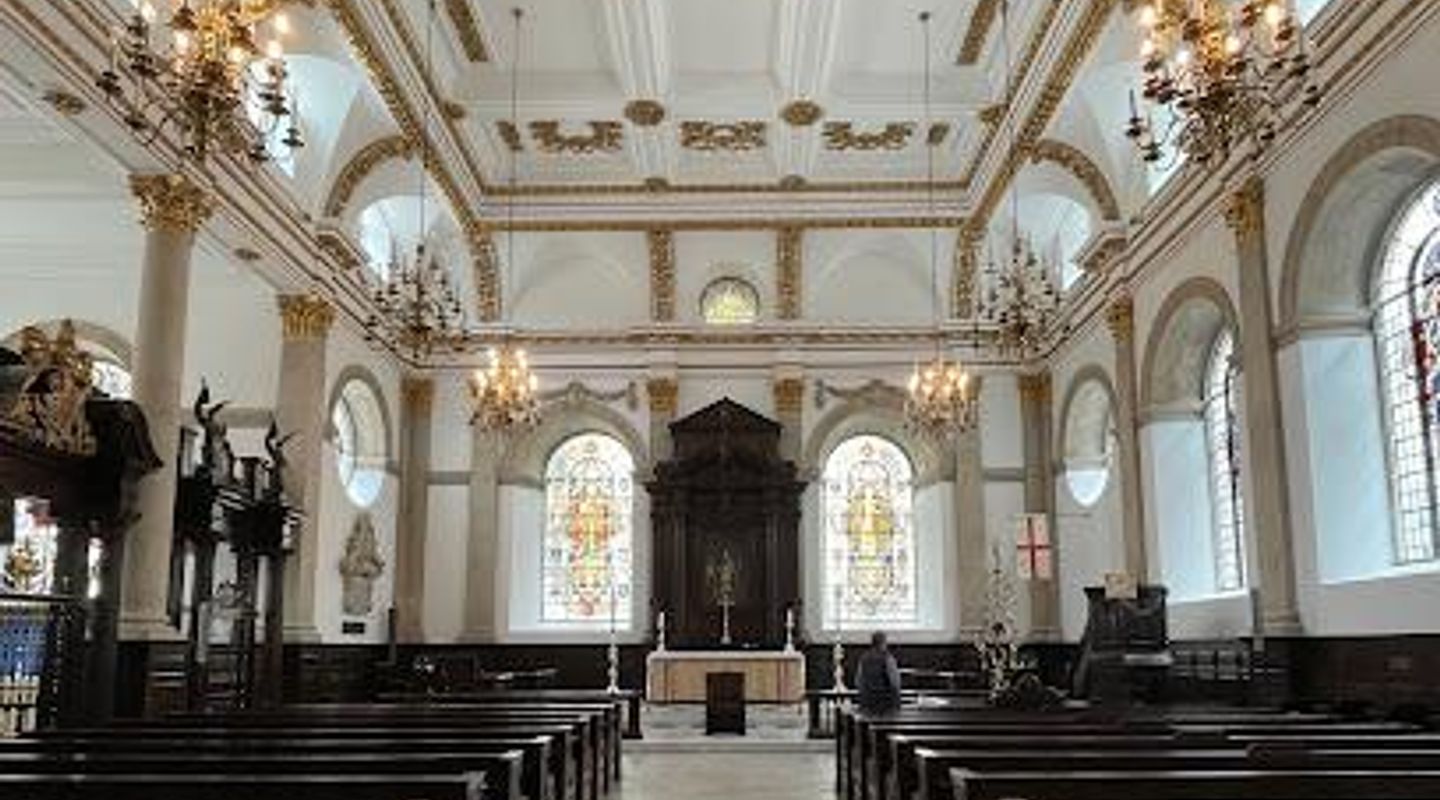
St Lawrence Jewry next Guildhall is a historic Anglican guild church located in the City of London on Guildhall Yard. Originally built in the 12th century, it was destroyed in the Great Fire of London in 1666 and rebuilt by Sir Christopher Wren between 1670 and 1677. The church is renowned for its Baroque architecture, rich interior, and its role as the official church of the Lord Mayor of London. It was heavily damaged during the Blitz in 1940 and restored in the 1950s to Wren’s original design. The church stands as a Grade I listed building and a symbol of London’s resilience and heritage.
On-site amenities
 Restrooms
 Seating areas
 Information boards
Opening hours
- Mon10 am–5 pm
- Tue10 am–5 pm
- Wed10 am–5 pm
- Thu10 am–5 pm
- Fri10 am–5 pm
- SatClosed
- SunClosed
Opening hours as listed on the venue’s Google Business Profile. Hours can change for services and special events, so check with the venue before you go.
- Address
- Guildhall Yard, London EC2V 5AA
- Phone
- Website
Getting there
London Underground
Bus
Taxi or Rideshare
Walking
Discover more about St Lawrence Jewry
Historic Foundations and Medieval Legacy
St Lawrence Jewry’s origins trace back to around 1136 when the first church was built on this site, situated near the medieval Jewish ghetto known as Old Jewry. The church’s name reflects this proximity, marking its historical connection to the Jewish community that lived here until their expulsion in 1290. The site is also believed to overlay the remains of the Roman Amphitheatre of London, discovered in 1988, whose ruins lie beneath the nearby Guildhall Art Gallery. The medieval church was a significant religious and civic landmark, with notable figures such as Sir Thomas More preaching here. The church’s dedication to St Lawrence, a 3rd-century martyr who was roasted alive on a gridiron, is symbolized throughout the building, including a distinctive gridiron-shaped weather vane atop the tower.
Rebirth After the Great Fire
The medieval structure was destroyed in the Great Fire of London in 1666. Renowned architect Sir Christopher Wren was commissioned to rebuild it, completing the new stone church between 1670 and 1677. This reconstruction was one of Wren’s most expensive City churches and is celebrated for its grand Baroque façade featuring four Corinthian columns supporting a triangular pediment. The interior showcases a lavish white and gold color scheme, enriched by exquisite craftsmanship including a magnificent modern organ built by Johannes Klais Orgelbau. This organ is considered among the finest in the world. The church’s design balances classical Grecian purity with Wren’s distinctive architectural style, making it a masterpiece of 17th-century ecclesiastical architecture.
War Damage and Postwar Restoration
During the Blitz on December 29, 1940, St Lawrence Jewry suffered extensive damage from incendiary bombs, which destroyed much of the interior and roof. Despite this, the tower chapel remained intact, allowing worship to continue in a limited capacity throughout the war. In the 1950s, the City of London Corporation took over patronage from Balliol College, Oxford, and commissioned architect Cecil Brown to restore the church. The restoration, completed in 1957, faithfully followed Wren’s original design, preserving the church’s historic character. The church was designated a Grade I listed building in 1950, recognizing its exceptional architectural and historic importance.
Civic and Cultural Significance Today
St Lawrence Jewry serves as the official church of the Lord Mayor of London and the Civic Church of the City of London Corporation. It functions as a guild church, meaning it has no parish and does not hold regular Sunday services, focusing instead on civic and ceremonial events. The church houses several memorials, including monuments to Archbishop John Tillotson and merchant Francis Levett. Its rich history, architectural grandeur, and connection to London’s governance make it a unique spiritual and cultural landmark in the heart of the City.
Architectural and Artistic Highlights
Visitors can admire the church’s Baroque architecture, characterized by its stone façade, Corinthian columns, and pediment. Inside, the white and gold interior creates a luminous and elegant atmosphere. The modern organ adds a powerful musical dimension to the space. Stained glass windows depict Christopher Wren, master carver Grinling Gibbons, and master mason Edward Strong, linking the church’s artistic heritage to its architectural origins. The weather vane shaped like a gridiron is a constant reminder of St Lawrence’s martyrdom and the church’s deep historical roots.
Location and Surroundings
Situated on Guildhall Yard, St Lawrence Jewry is adjacent to the historic Guildhall, the seat of the City of London Corporation. Nearby are the Goldsmiths’ Hall and Wax Chandlers’ Hall, historic guild halls that enrich the area’s medieval and civic character. The church’s location in the financial and administrative heart of London offers visitors a blend of history, architecture, and the vibrant life of the City.
Evendo Review Centre
 Google
Guest reviews
Best time to go
Quietest: Jan, Feb & Dec · before 7am or from 8pm
Busy times are Evendo estimates for a typical year, to help you plan. Actual crowds vary with events, school holidays and the weather.
Explore St Lawrence Jewry on the map
A handpicked selection of must-see spots near St Lawrence Jewry, mapped for you.
Get your free copy of our complete guide to St Lawrence Jewry, delivered straight to you.
Everything on this page, from opening hours and how to get there to Eve’s tips and the best time to go, in one PDF you can read offline, print or share.
Already have an account? Sign in
Your St Lawrence Jewry guide is ready.
We'll send it to · Not you? Sign out

Getting your guide ready…
We are putting together a fresh copy of the St Lawrence Jewry guide. This can take up to a minute.
This can take a few moments. If your browser asks, choose Allow so the download can start. You'll find the guide in your Downloads folder.
Nothing happened? Download it again
Sorry, the guide is taking longer than usual. Please try again in a minute, or get it by email instead.
Unlock the best of St Lawrence Jewry
Skip-the-line tickets, guided tours with entry, and walking tours of the area, booked in a few clicks.


Other nearby places you may find interesting
The closest places of the same kind, if this one is not quite what you had in mind.
-
-
-
-
-


Swipe for more places
More to explore near St Lawrence Jewry

 Best experiences near St Lawrence Jewry
 Best hotels near St Lawrence Jewry
 Best landmarks near St Lawrence Jewry
 Best attractions near St Lawrence Jewry
 Best shops near St Lawrence Jewry
 Best restaurants near St Lawrence Jewry
 Best bars near St Lawrence Jewry
Do you manage this location?
Take control to get all the benefits, like improved information, better appearance, and stronger visibility across AI-powered discovery.
Explore more

Explore more of Sutherland
Discover Sutherland, the untamed beauty of the Scottish Highlands, where rugged landscapes, serene lochs, and dramatic coastlines await the adventurous traveler.
Explore Sutherland
Explore more of United Kingdom
Discover the United Kingdom: A blend of rich history, stunning landscapes, and vibrant cities, offering a unique travel experience for every visitor.
Explore United Kingdom
