Gamleborg i Paradisbakkerne Travel Guide
Free Guide: Iron Age refuge hidden in Bornholm’s rocky Paradisbakkerne, where low ramparts, steep slopes and heather‑clad forest reveal a quiet but powerful story of defence.


A brief summary of Gamleborg i Paradisbakkerne
Iron Age refuge hidden in Bornholm’s rocky Paradisbakkerne, where low ramparts, steep slopes and heather‑clad forest reveal a quiet but powerful story of defence.
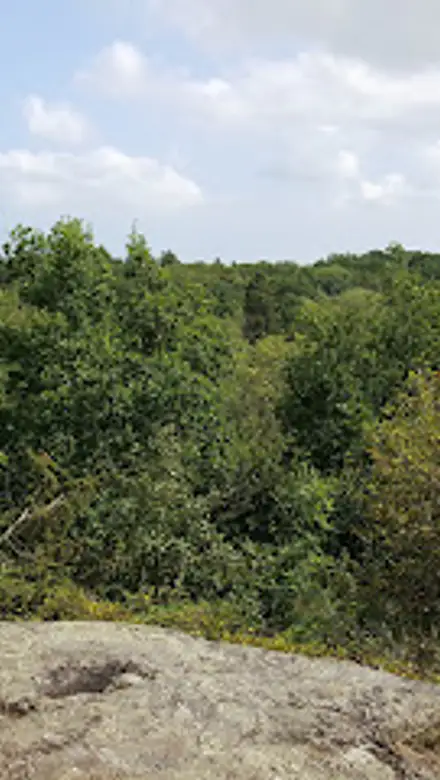
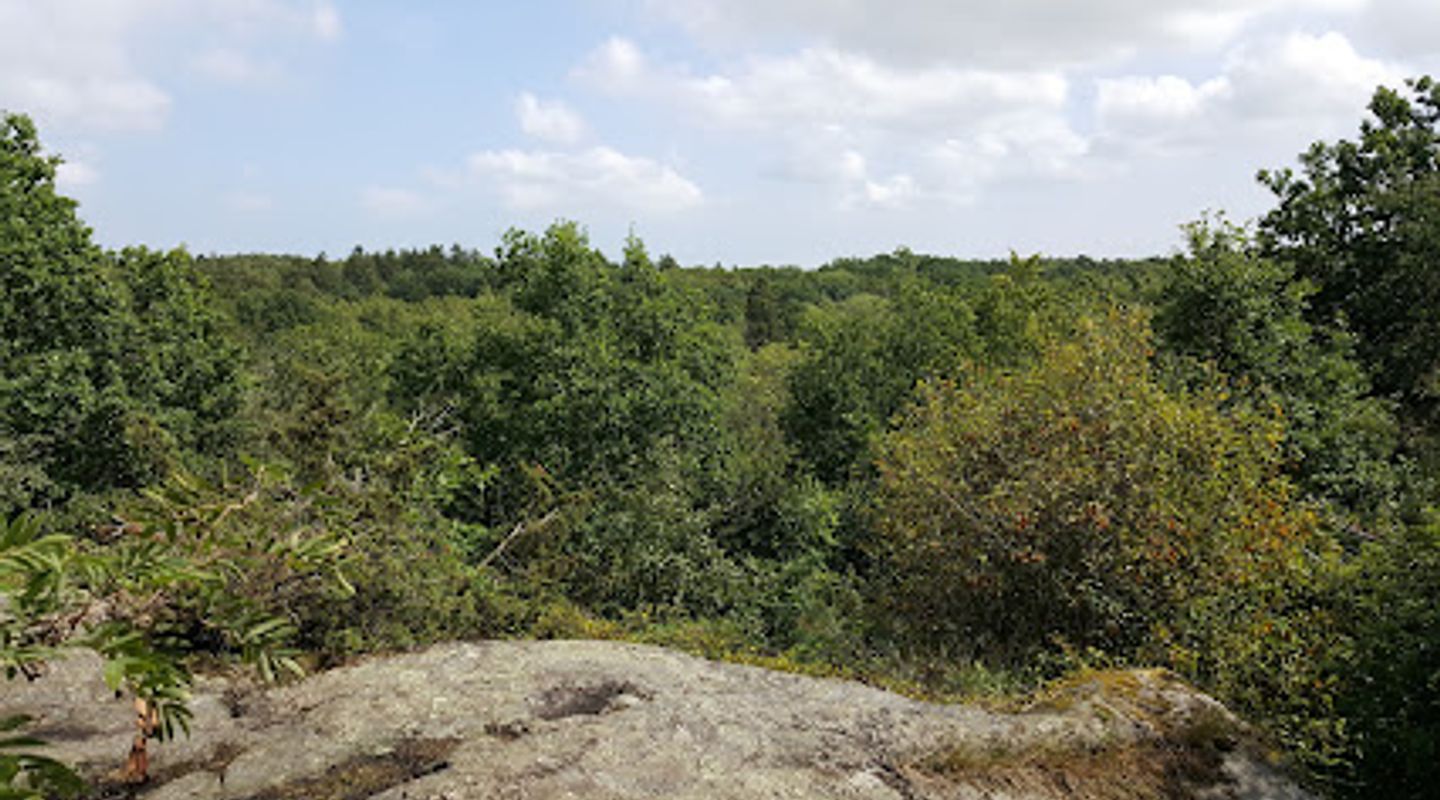
Hidden deep in the wild, rocky landscape of Paradisbakkerne near Nexø, Gamleborg is one of Bornholm’s most evocative ancient fortifications. This Iron Age hilltop refuge, encircled by low ramparts and steep cliffs, once sheltered local farmers and their livestock during troubled times. Today you wander through heather, boulders and gnarled forest to explore grass-grown walls, traces of gateways and sweeping views that hint at the strategic thinking of Bornholm’s early inhabitants.
On-site amenities
 Seating areas
 Trash bins
 Information boards
- Address
- 3730 Nexø
- Phone
Getting there
Car from Nexø
Public bus and walk from Nexø
Cycling from Nexø
Discover more about Gamleborg i Paradisbakkerne
Ancient stronghold in a wild Bornholm landscape
Gamleborg lies tucked into the south‑western corner of Paradisbakkerne, a rugged mosaic of rocky ridges, forest and heathland east of Nexø. Here a natural plateau of bedrock has been enclosed by earthworks to form a defended refuge: a so‑called hillfort or village fortification. Archaeological research suggests that the first fortifications were raised around the 2nd or 3rd century CE, placing Gamleborg firmly in the Iron Age, with use continuing in various phases towards around the year 1000.Standing on the uneven plateau, it is easy to see why the site was chosen. Steep slopes and rock faces form natural barriers on several sides, while low ramparts and ditches complete the enclosure where the terrain is gentler. Rather than a castle with towers, Gamleborg was a practical refuge where local communities could retreat briefly with animals, tools and valuables when danger threatened.
Everyday life behind the protective earthworks
Within the roughly oval enclosure there would once have been simple timber buildings, pens and storage areas, though these now survive only as faint traces and subtle changes in the ground. When unrest loomed in the Baltic, families would have hurried uphill, driving cattle and sheep ahead of them and bringing grain, textiles and metalwork into the safety of the fort. For a short time Gamleborg became a compact, crowded village, protected by its ramparts and a carefully controlled entrance.The fort’s defensive strategy was as much about psychology as brute strength. Attackers faced awkward slopes of fractured granite, funnelling approaches and defenders who knew every rock and hollow. Archaeological finds of hand‑sized beach stones just inside the ramparts show how simply armed defenders could rain down missiles on anyone trying to force their way in, turning the plateau into a formidable stronghold despite its modest walls.
Stories of refuge and resistance
Written references from the 17th century describe Gamleborg as a place where the island’s inhabitants once sought shelter in times of enemy incursions, pelting attackers with stones before firearms were in use. While the text was recorded long after the fort’s main period, excavations have confirmed stockpiles of rounded stones ready to be used as projectiles, tying together legend and physical evidence.Bornholm’s nickname as the “island of castles” reflects centuries of raiders and shifting power in the Baltic. Gamleborg is one link in a chain of defensive sites that includes other hillforts and later strongholds. Here, on a smaller and more intimate scale than at medieval Hammershus, you sense how defence began at the level of local farming communities organising to protect themselves long before stone castles dominated the skyline.
Walking through nature and deep time
Today the fort is partly cloaked in birch and conifer, with patches of heather and moss covering the old ramparts. Approaching on foot, you pass glacial boulders, small marshy hollows and stretches of exposed rock that make the Paradisbakkerne area such a rewarding hiking country. The transition from ordinary forest path to the subtly raised edge of the fort is easy to miss until you realise you are walking along the top of a man‑made defence line blending seamlessly into the natural terrain.The atmosphere is surprisingly tranquil. Birds call from the trees, the wind brushes through the canopy, and in clearings you catch glimpses of the surrounding rocky hills. It is worth circling the enclosure slowly, noticing how the walls are higher in some sections, how the slopes drop away on others, and imagining where watchful eyes once scanned the horizons for sails or smoke.
Practical visit among heather and granite
Gamleborg is an unfenced archaeological site embedded in a broader nature area rather than a stand‑alone monument with facilities. There is no built visitor centre at the fort itself and interpretation is usually limited to simple information boards, so you experience the place largely through your own observation. The uneven ground, roots and rocks require sturdy footwear and moderate mobility, especially in wet weather when slopes can be slippery.There is no entrance fee to visit the hillfort, and access is by forest paths that also serve hikers exploring the wider Paradisbakkerne system. Basic amenities such as marked trails, occasional seating spots and wayfinding signs are typically found at selected trailheads and along main routes rather than right inside the fort. A visit combines naturally with longer walks through the area’s ravines, rocking stones and viewpoints, making Gamleborg both a cultural highlight and a rewarding pause amid Bornholm’s distinctive nature.
Evendo Review Centre
 Google
Guest reviews
Best time to go
Quietest: Jan, Feb & Nov · before 8am or at 8pm
Busy times are Evendo estimates for a typical year, to help you plan. Actual crowds vary with events, school holidays and the weather.
Explore Gamleborg i Paradisbakkerne on the map
A handpicked selection of must-see spots near Gamleborg i Paradisbakkerne, mapped for you.
Get your free copy of our complete guide to Gamleborg i Paradisbakkerne, delivered straight to you.
Everything on this page, from opening hours and how to get there to Eve’s tips and the best time to go, in one PDF you can read offline, print or share.
Already have an account? Sign in
Your Gamleborg i Paradisbakkerne guide is ready.
We'll send it to · Not you? Sign out

Getting your guide ready…
We are putting together a fresh copy of the Gamleborg i Paradisbakkerne guide. This can take up to a minute.
This can take a few moments. If your browser asks, choose Allow so the download can start. You'll find the guide in your Downloads folder.
Nothing happened? Download it again
Sorry, the guide is taking longer than usual. Please try again in a minute, or get it by email instead.
Other nearby places you may find interesting
The closest places of the same kind, if this one is not quite what you had in mind.
-
Hammershus Castle Ruins Bornholm’s great clifftop fortress, where vast medieval ruins, Baltic Sea panoramas and a striking modern visitor centre bring 800 years of history to life.
-
Opal Lake A flooded granite quarry turned emerald lake, Opal Lake on Bornholm blends raw cliffs, deep clear water and coastal views with swimming, cliff jumps and rugged trails.
-
Bornholms Rovfugleshow Immersive birds-of-prey shows and evolution-themed encounters on Bornholm, where owls, falcons, reptiles and farm animals turn science into a full, family-friendly day out.
-
Bornholmertarnet Former top-secret NATO listening post turned Cold War museum, crowned by a 70 m viewing tower with sweeping panoramas over Dueodde and eastern Bornholm.
-
Hammeren Lighthouse Compact granite lighthouse on Bornholm’s highest headland, offering free summer access, sweeping Baltic views and heather-clad coastal walking trails.
Swipe for more places
More to explore near Gamleborg i Paradisbakkerne
-
 Best experiences near Gamleborg i Paradisbakkerne
-
 Best hotels near Gamleborg i Paradisbakkerne
-
 Best landmarks near Gamleborg i Paradisbakkerne
-
 Best attractions near Gamleborg i Paradisbakkerne
-
 Best shops near Gamleborg i Paradisbakkerne
-
 Best restaurants near Gamleborg i Paradisbakkerne
-
 Best bars near Gamleborg i Paradisbakkerne







Do you manage this location?
Take control to get all the benefits, like improved information, better appearance, and stronger visibility across AI-powered discovery.
Explore more

Explore more of Bornholm
Explore Bornholm: Denmark's Baltic gem, offering stunning nature, rich history, and vibrant local culture. Perfect for nature lovers, history buffs, and food enthusiasts.
Explore Bornholm
Explore more of Denmark
Discover Denmark: A perfect blend of history, modern design, and the cozy concept of hygge. Explore vibrant cities, serene landscapes, and world-class cuisine.
Explore Denmark