

Nexø Museum Travel Guide
Free Guide: Harbourside museum in a 1796 sandstone guardhouse, sharing Nexø’s maritime heritage and dramatic wartime story on Bornholm’s windswept east coast.


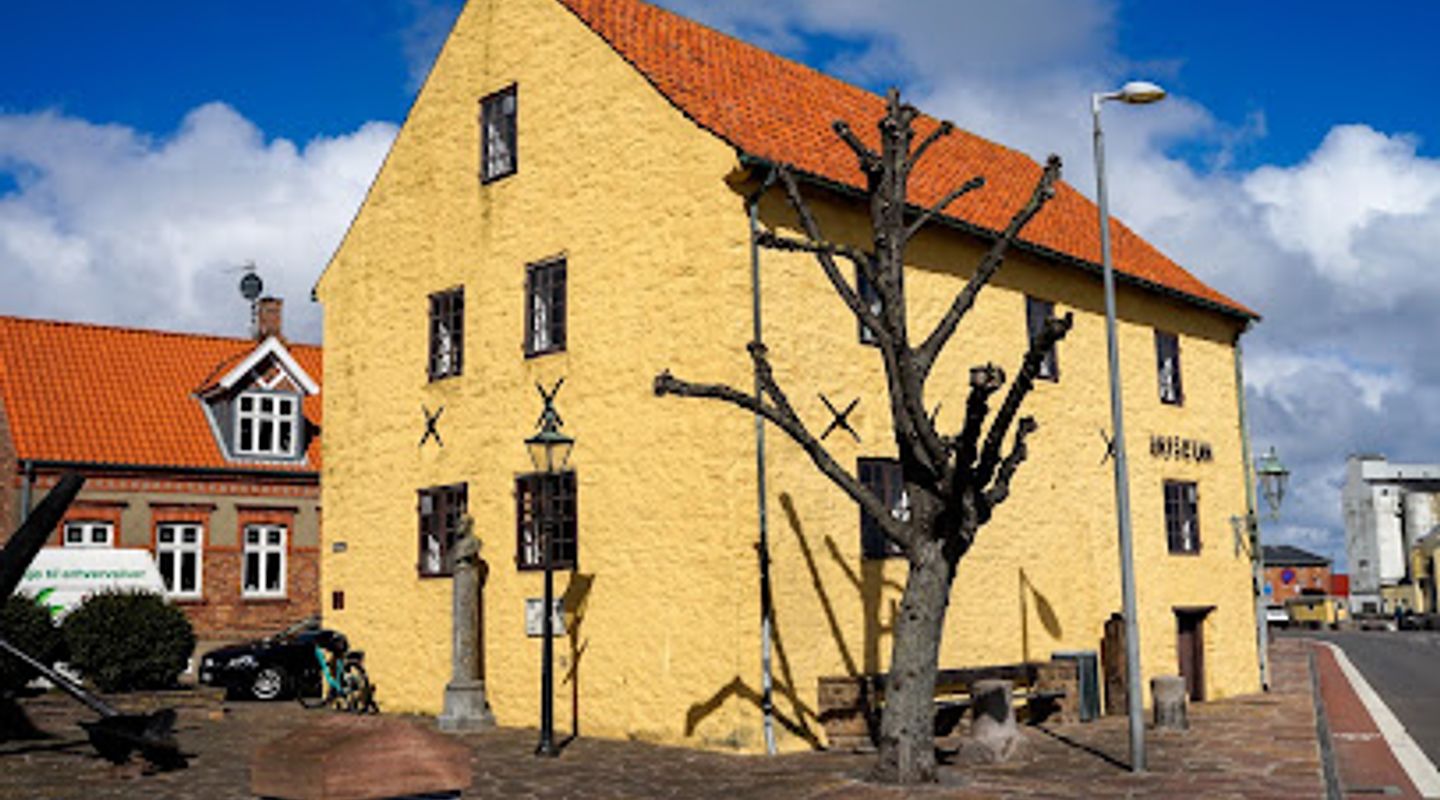
A brief summary of Nexø Museum
Harbourside museum in a 1796 sandstone guardhouse, sharing Nexø’s maritime heritage and dramatic wartime story on Bornholm’s windswept east coast.
Set in a handsome 1796 sandstone building by Nexø’s harbour on Bornholm, Nexø Museum explores the town’s seafaring past and its dramatic wartime experiences. Inside the former guard and warehouse building, compact but evocative exhibits trace local fishing traditions, trade, and the devastating Soviet bombing of 1945 through photos, artifacts, uniforms, documents and everyday objects. It is an atmospheric stop for anyone curious about Bornholm’s history and Nexø’s resilience.
On-site amenities
 Restrooms
 Trash bins
 Information boards
Opening hours
- MonClosed
- Tue10 am–4 pm
- Wed10 am–4 pm
- Thu10 am–4 pm
- Fri10 am–4 pm
- Sat10 am–1 pm
- SunClosed
Opening hours as listed on the venue’s Google Business Profile. Hours can change for services and special events, so check with the venue before you go.
- Address
- Havnen 9, 3730 Nexø
- Phone
- Website
Getting there
Bus from Rønne on Bornholm
Car from elsewhere on Bornholm
Cycling along the Bornholm coast
Discover more about Nexø Museum
A historic sandstone sentinel on Nexø’s harbour
Housed in a solid sandstone building right beside the harbour, Nexø Museum immediately feels rooted in the town’s maritime story. The structure dates from 1796, when it was built as “Nexøe Vagt,” the local guard house overseeing the busy port and coastline. Its thick stone walls and gabled roof once symbolised security and authority in a town that lived by the sea.Over time, as Nexø grew and a new town hall took over civic duties in the mid-19th century, the harbour building shifted into use as a warehouse. The walls were heightened to create two full storeys and outbuildings sprang up around it. Today, with those later additions gone, the museum stands as a compact but characterful remnant of the town’s older harbour front, its weathered stone and simple lines mirroring the practical, hard-working life of this fishing town.
From fishing village to Bornholm’s east coast hub
Inside, the museum’s rooms open a window onto Nexø’s transformation from modest fishing village to one of Bornholm’s key harbour towns. Exhibits trace the rise of sea fishing and trade, showing how the harbour was gradually expanded to handle larger fleets and growing commerce. Old tools, navigation instruments, harbour equipment and trade documents bring to life a period when the town’s fortunes rose and fell with the catch.Panels and photographs explain how Nexø became the largest fishing port on the island, drawing workers, merchants and shipbuilders. You can follow how new quays, warehouses and processing facilities reshaped the shoreline. The museum situates Nexø’s story within the broader Bornholm context, highlighting the island’s dependence on the Baltic Sea and the constant interplay between local livelihoods and wider regional currents.
War, occupation and the 1945 bombardment
One of the most striking parts of Nexø Museum focuses on the Second World War and the Soviet bombing of the town in 1945. Here, archival photographs show Nexø before and after the attacks, revealing just how much of the built-up area was destroyed in a matter of hours. Uniforms, helmets, weapons and emergency equipment add a tangible weight to these stories.Text panels and documents describe the German occupation of Bornholm and the unusual post-war period, when Soviet forces remained on the island for several months after the rest of Denmark was liberated. The displays emphasise the human cost, but also the resilience of residents who rebuilt their lives and homes. Standing in this solid 18th-century building, it is easy to imagine the contrast between the stability of stone and the upheaval outside.
Everyday objects and maritime curiosities
Beyond the wartime material, the museum’s collection of everyday items paints a quieter picture of Nexø’s past. Household objects, toiletries, clothing and tools hint at domestic routines in a working harbour town. There are maritime curiosities too, including cannons, signal gear and hefty diving equipment that speak to the dangers and ingenuity of life at sea.Photographs and documents chart local social life, from community events to working scenes on the docks. Taken together, these displays show Nexø not as an abstract name on a map, but as a lived-in place shaped by weather, work and the rhythms of the harbor. The modest scale of the museum makes it easy to absorb these layers of history without feeling overwhelmed.
A compact museum with a strong sense of place
Nexø Museum is small enough to explore in an hour or two, yet rich in atmosphere. Many texts are in Danish, but visual material, objects and layouts are straightforward to follow, and printed English information is usually available to help international visitors navigate the themes. The setting by the harbour means that stepping outside, you immediately see modern Nexø framed by the same sea that defines the exhibits inside.This is not a grand national institution but a locally run museum focused on its own town. That focus is its strength: it offers context for everything else you see in Nexø, from the rebuilt streets to the active fishing harbour. For travellers exploring Bornholm’s east coast, Nexø Museum provides a grounded, human-scale introduction to the island’s maritime history and its experience of war and recovery.
Evendo Review Centre
 Google
Guest reviews
Best time to go
Quietest: Jan, Feb & Nov · before 8am or from 7pm
Busy times are Evendo estimates for a typical year, to help you plan. Actual crowds vary with events, school holidays and the weather.
Explore Nexø Museum on the map
A handpicked selection of must-see spots near Nexø Museum, mapped for you.
Get your free copy of our complete guide to Nexø Museum, delivered straight to you.
Everything on this page, from opening hours and how to get there to Eve’s tips and the best time to go, in one PDF you can read offline, print or share.
Already have an account? Sign in
Your Nexø Museum guide is ready.
We'll send it to · Not you? Sign out

Getting your guide ready…
We are putting together a fresh copy of the Nexø Museum guide. This can take up to a minute.
This can take a few moments. If your browser asks, choose Allow so the download can start. You'll find the guide in your Downloads folder.
Nothing happened? Download it again
Sorry, the guide is taking longer than usual. Please try again in a minute, or get it by email instead.
Other nearby places you may find interesting
The closest places of the same kind, if this one is not quite what you had in mind.
-
Hammershus Castle Ruins Bornholm’s great clifftop fortress, where vast medieval ruins, Baltic Sea panoramas and a striking modern visitor centre bring 800 years of history to life.
-
Opal Lake A flooded granite quarry turned emerald lake, Opal Lake on Bornholm blends raw cliffs, deep clear water and coastal views with swimming, cliff jumps and rugged trails.
-
Bornholms Rovfugleshow Immersive birds-of-prey shows and evolution-themed encounters on Bornholm, where owls, falcons, reptiles and farm animals turn science into a full, family-friendly day out.
-
Bornholmertarnet Former top-secret NATO listening post turned Cold War museum, crowned by a 70 m viewing tower with sweeping panoramas over Dueodde and eastern Bornholm.
-
Hammeren Lighthouse Compact granite lighthouse on Bornholm’s highest headland, offering free summer access, sweeping Baltic views and heather-clad coastal walking trails.
Swipe for more places
More to explore near Nexø Museum

 Best experiences near Nexø Museum
 Best hotels near Nexø Museum
 Best landmarks near Nexø Museum
 Best attractions near Nexø Museum
 Best shops near Nexø Museum
 Best restaurants near Nexø Museum
 Best bars near Nexø Museum
Do you manage this location?
Take control to get all the benefits, like improved information, better appearance, and stronger visibility across AI-powered discovery.
Explore more

Explore more of Bornholm
Explore Bornholm: Denmark's Baltic gem, offering stunning nature, rich history, and vibrant local culture. Perfect for nature lovers, history buffs, and food enthusiasts.
Explore Bornholm
Explore more of Denmark
Discover Denmark: A perfect blend of history, modern design, and the cozy concept of hygge. Explore vibrant cities, serene landscapes, and world-class cuisine.
Explore Denmark
