

TIME - Museum for Odense Travel Guide
Free Guide: Dive into 10,000 years of Odense history in a maze of courtyards and historic houses, where archaeology, city life and hands-on children’s exhibits meet.


A brief summary of TIME - Museum for Odense
Dive into 10,000 years of Odense history in a maze of courtyards and historic houses, where archaeology, city life and hands-on children’s exhibits meet.
TID – Museum for Odense is the city’s main history museum, tucked into a maze of cobbled courtyards and timbered houses in Odense’s old town. Spanning more than 10,000 years, its exhibitions trace Funen’s story from prehistoric finds and Viking power to medieval market streets, 17th‑century interiors and contemporary city life. Immersive displays, a hands-on children’s museum and peaceful outdoor yards make this a rewarding stop for families, culture lovers and anyone curious about how Odense became the city it is today.
On-site amenities
 Restrooms
 Drink options
 Drinking water
 Food options
 Seating areas
 Sheltered areas
 Picnic areas
 Trash bins
 Information boards
 Visitor centre
Opening hours
- Every day10 am–5 pm
Opening hours as listed on the venue’s Google Business Profile. Hours can change for services and special events, so check with the venue before you go.
- Address
- Møntestræde 1, 5000 Odense C
- Phone
- Website
Getting there
Local bus from Odense Banegård Center
Walking from Odense Banegård Center
Cycling within central Odense
Discover more about TIME - Museum for Odense
Odense’s story gathered in one city block
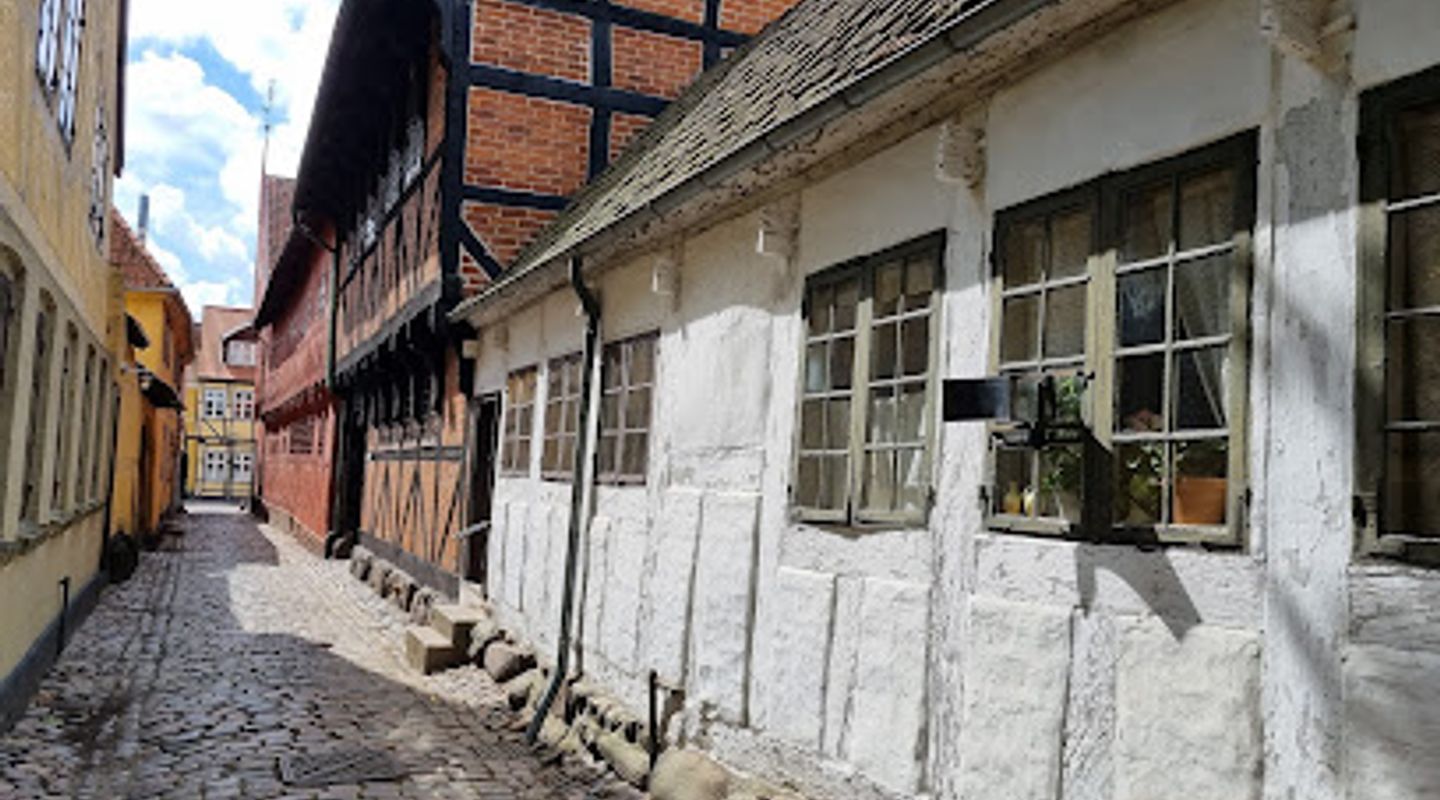
TID – Museum for Odense brings the city’s history together in a compact cluster of historical buildings and modern galleries right in the heart of the old town. Step through the entrance on Møntestræde and you move into a self-contained world of cobbles, courtyards and rooftops where the past presses in on all sides. The museum is designed as Odense’s collective memory, weaving local objects and personal stories into a broader picture of how life on Funen has evolved over thousands of years.The site combines preserved townhouses with a contemporary wing, so each courtyard turn offers a different architectural mood. It feels less like a single museum building and more like a small neighbourhood dedicated to time itself, from prehistory to the present day.
From Stone Age traces to Viking power
Inside, one of the core narratives follows the long arc from the region’s earliest settlers to the age of Viking fortresses and trade. Funen’s archaeology is used as a starting point: ancient tools, everyday objects and skeletal remains, including one of Scandinavia’s oldest known skulls, anchor the story in deep time. Displays explain how landscape, waterways and fertile soils shaped life here and connected Odense to wider Nordic networks.A highlight is the material related to Nonnebakken, the Viking ring fortress that once dominated a rise above the river. Models, finds and reconstructions show how this stronghold fit into a system of royal power and warfare, while also revealing traces of markets, crafts and domestic life. The exhibition balances dramatic moments of history with the quieter evidence of how ordinary people lived, traded and worshipped.
Medieval streets and renaissance courtyards
Another part of the museum leads into preserved merchant houses and almshouses dating from the 17th century and earlier. Here, the story narrows to Odense itself in the Middle Ages and Renaissance, when the town grew around churches, markets and guilds. Timbered beams, creaking floors and small-paned windows provide an atmospheric frame for displays on trade, religion and everyday routines.Rooms are set up to evoke interiors from different centuries, with worn floorboards, heavy chests and tiled stoves suggesting how craftsmen, widows and merchants might have shared these spaces. The courtyards outside open up to the sky, giving glimpses of red brick gables and crooked roofs. It is easy to imagine the sound of carts and church bells that once filled these same yards.
Children’s history in miniature
Families find a separate universe in the children’s museum and the play yard designed like a small town around 1890. Here, history becomes something that can be climbed on, dressed up in and rearranged. A tiny street scene features a carpenter’s workshop, a domestic apartment, a pump for hauling water and even chickens, inviting children to act out daily tasks from another era.Indoors, a dedicated children’s area combines original objects with robust replicas. Rather than asking visitors to stand back, many items are intended to be handled, tested and explored. This tactile approach turns abstract dates and periods into memories of textures, sounds and small discoveries, making the museum feel engaging rather than formal for younger visitors.
Funen at the centre of wider worlds
In the newest building, an exhibition on Funen as the "centre of the universe" links local events to broader Danish and global history. Multimedia installations, soundscapes and short films show how international currents such as industrialisation, war or migration have been experienced in and around Odense. Maps and personal accounts place the island at the crossroads of trade routes, ideas and cultural exchange.The galleries highlight how the city has constantly reinvented itself—from monastic town to industrial hub and modern knowledge centre. Themes like work, housing, social change and cultural life provide entry points into different decades, making it easy to connect what you see outside on Odense’s streets with the stories told inside the museum.
Courtyard calm and seasonal atmospheres
Between buildings, small courtyards offer pockets of quiet where visitors can pause with a picnic or simply sit and take in the surroundings. Trees, plantings and uneven cobbles soften the museum complex, giving a sense of stepping out of time for a moment. In warmer months, these yards feel particularly inviting as open-air living rooms framed by centuries-old walls.Throughout the year, temporary exhibitions and changing displays add new angles on the city’s heritage, sometimes focusing on specific neighbourhoods, crafts or moments of upheaval. Seasonal decorations and a traditional Christmas market bring additional colour to the historic setting, reinforcing the museum’s role as a cultural meeting place as well as a storehouse of objects.
Evendo Review Centre
 Google
Guest reviews
Best time to go
Quietest: Jan, Feb & Mar · before 8am or from 6pm
Busy times are Evendo estimates for a typical year, to help you plan. Actual crowds vary with events, school holidays and the weather.
Explore TIME - Museum for Odense on the map
A handpicked selection of must-see spots near TIME - Museum for Odense, mapped for you.
Get your free copy of our complete guide to TIME - Museum for Odense, delivered straight to you.
Everything on this page, from opening hours and how to get there to Eve’s tips and the best time to go, in one PDF you can read offline, print or share.
Already have an account? Sign in
Your TIME - Museum for Odense guide is ready.
We'll send it to · Not you? Sign out

Getting your guide ready…
We are putting together a fresh copy of the TIME - Museum for Odense guide. This can take up to a minute.
This can take a few moments. If your browser asks, choose Allow so the download can start. You'll find the guide in your Downloads folder.
Nothing happened? Download it again
Sorry, the guide is taking longer than usual. Please try again in a minute, or get it by email instead.
Other nearby places you may find interesting
The closest places of the same kind, if this one is not quite what you had in mind.
-
-
-
-
-


Swipe for more places
More to explore near TIME - Museum for Odense
-
 Best experiences near TIME - Museum for Odense
-
 Best hotels near TIME - Museum for Odense
-
 Best landmarks near TIME - Museum for Odense
-
 Best attractions near TIME - Museum for Odense
-
 Best shops near TIME - Museum for Odense
-
 Best restaurants near TIME - Museum for Odense
-
 Best bars near TIME - Museum for Odense


Do you manage this location?
Take control to get all the benefits, like improved information, better appearance, and stronger visibility across AI-powered discovery.
Explore more
Explore more of Funen
Discover Funen, Denmark's lush island treasure, where fairy tales come to life amidst scenic landscapes, historic castles, and vibrant cultural heritage.
Explore Funen
Explore more of Denmark
Discover Denmark: A perfect blend of history, modern design, and the cozy concept of hygge. Explore vibrant cities, serene landscapes, and world-class cuisine.
Explore Denmark
