
Dyrehave Mølle, Funen Travel Guide
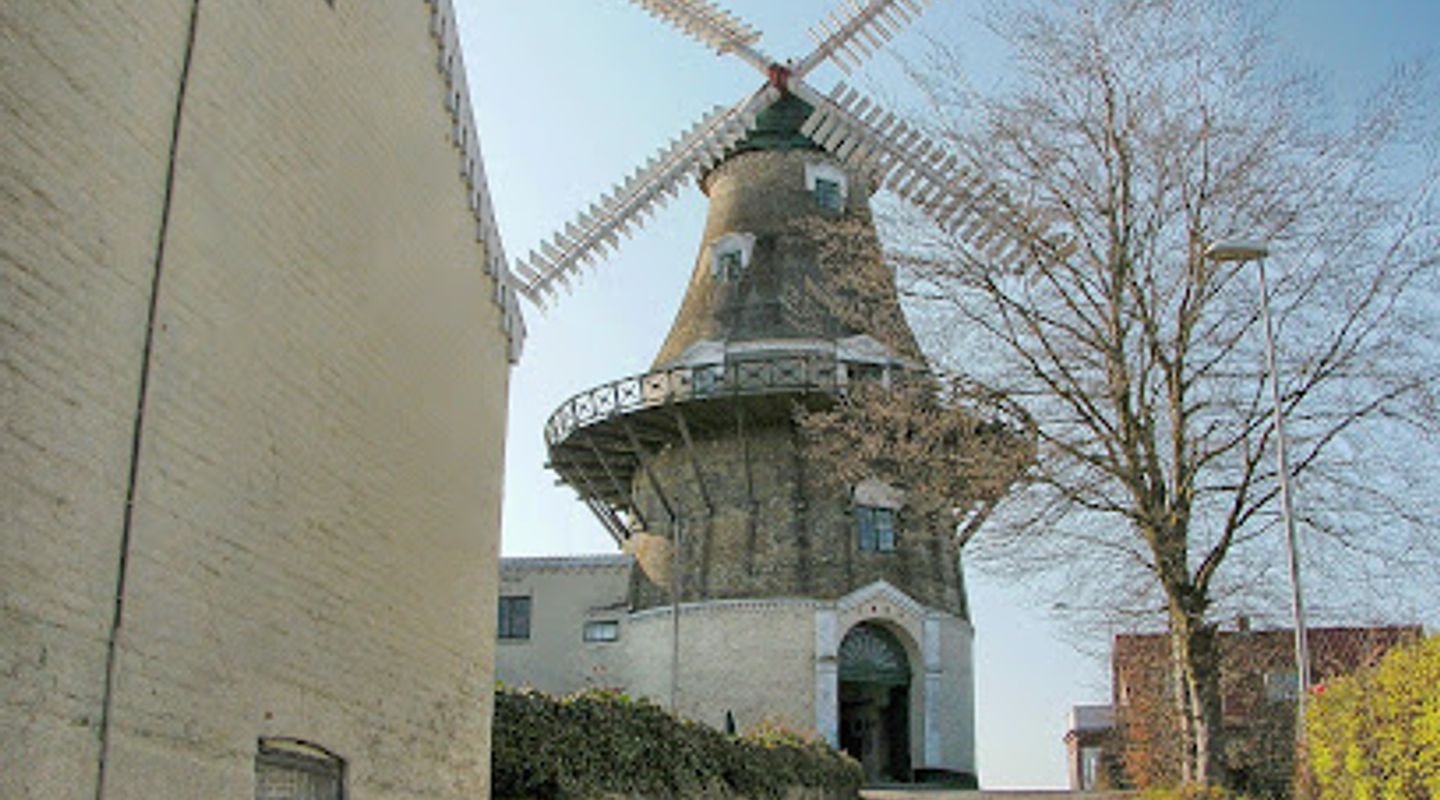
One of Denmark’s tallest brick windmills, Dyrehave Mølle combines historic milling machinery, steep stairways and airy views over Nyborg, its harbour and the Great Belt.
Rising 25 metres above the harbourfront of Nyborg, Dyrehave Mølle is one of Denmark’s tallest windmills and a striking landmark on the shores of the Great Belt. Built in 1858 from around a million bricks, this seven-storey Dutch-style smock mill once powered local grain production and today offers a rare chance to step inside a fully preserved mill interior, climb through its lofts and enjoy sweeping views over Nyborg, the fjord and the marina.
A brief summary to Dyrehave Mølle
- Møllevænget 2-14, Nyborg, 5800, DK
- Click to display
- Click to display
- Duration: 0.5 to 1.5 hours
- Budget
-
 Mixed
Mixed
- Mobile reception: 4 out of 5
- Monday 12 pm-4 pm

Know before you go
Hi, I'm Eve. Here are a few practical things to know before exploring Dyrehave Mølle.
- Check current seasonal opening hours before you go; the mill is typically only open limited days and hours between spring and early autumn.
- Wear sturdy shoes and be prepared for steep, narrow stairs and ladders inside the mill; upper levels are best suited to reasonably fit visitors.
- Combine your visit with a harbourfront walk from Nyborg Slot and the marina to enjoy changing views of the mill and the fjord.
- On windy days bring an extra layer; the gallery around the upper part of the mill can feel significantly cooler and more exposed.
Do you manage this location?
Take control to get all the benefits, like improved information, better appearance, and stronger visibility across AI-powered discovery. Learn more about listing your business on Evendo
Activate your presenceOther nearby places you may find interesting
The closest places of the same kind, if this one is not quite what you had in mind.

Explore Dyrehave Mølle on the Map
A handpicked selection of must-see spots near Dyrehave Mølle, mapped for you.
Getting There
-
Walk from Nyborg town centre
From Nyborg’s central area around the castle and main square, allow about 15–20 minutes on foot to reach Dyrehave Mølle. The route typically follows level urban streets and harbour promenades with pavements and mixed surfaces, suitable for most walkers and pushchairs. There are no entrance fees for the walk itself, and the approach is generally accessible year-round, though it can feel exposed in windy or wet weather along the waterfront.
-
Local bus within Nyborg
City and regional buses serving Nyborg often run along routes between the railway station, harbour and residential districts near Møllevænget. Travel within town usually takes 5–15 minutes depending on the line and timetable, with single adult tickets commonly in the range of 20–30 DKK. Services run more frequently on weekdays, with reduced schedules during evenings and weekends, so checking a current timetable before planning a bus connection is advisable.
-
Train and walk via Nyborg Station
If you are arriving from elsewhere on Funen or across the Great Belt, regional and intercity trains stop at Nyborg Station, typically 15–25 minutes from Odense and around 15–20 minutes from Korsør, with prices often between 60–120 DKK one way depending on service and advance purchase. From the station, expect a 20–25 minute walk through the town and towards the harbour to reach the mill. The route is mostly flat and fully paved, but allow extra time in poor weather.
-
Car or bicycle within Nyborg area
By car, Dyrehave Mølle is a short 5–10 minute drive from most parts of Nyborg, using local streets towards Møllevænget. Street parking in nearby residential areas is typically free but limited, especially on weekday afternoons, so be prepared to park a little further away and walk. Cyclists can reach the mill in about 5–10 minutes from the centre along quiet streets and harbour paths; there is no dedicated cycle parking at the mill itself, so bring a lock and use nearby railings or stands.
For the on-the-go comforts that matter to you
-
 Restrooms
-
 Drink Options
-
 Food Options
-
 Seating Areas
-
 Trash Bins
-
 Information Boards
Discover more about Dyrehave Mølle
A towering brick mill on the edge of Nyborg Fjord
Dyrehave Mølle stands just south of Nyborg’s centre, a 25‑metre‑high Dutch-style windmill that anchors the skyline above the marina and harbour. Completed in 1858 and built from roughly one million bricks, it is among the tallest traditional windmills in Denmark, its white cap and long timber sails clearly visible from the waterfront and nearby paths. Surrounded today by housing and green pockets, the mill still feels closely tied to the open seascape of Nyborg Fjord.The name “Dyrehave” recalls the former royal deer park that once occupied this area, hinting at the site’s historic connection with the old castle town. For generations the mill helped turn the region’s grain into flour, linking rural farmland to the growing market of Nyborg. Though the sails no longer drive commercial production, the building has been carefully maintained, preserving the machinery and layout of a working 19th‑century mill.Seven lofts of gears, grain and ingenious engineering
Step inside and Dyrehave Mølle becomes a vertical journey through traditional milling technology. Seven distinct floors, or lofts, are stacked above one another, each with its own role in the milling process. On the lower levels you find storage spaces and the area where finished flour was once loaded onto carts bound for town and harbour. Higher up are the sacking and hoist lofts, where grain and flour were winched between floors, saving the millers from hauling heavy sacks by hand.Above, massive timber gears, drive shafts and the great cap wheel occupy the upper lofts beneath the rotating cap. The structure’s Douglas fir sails, around 20 metres long, are fitted with wooden shutters, while a smaller auxiliary windmill, the fantail, turns the cap automatically into the wind. Walking through these levels reveals how every beam and cog is part of one integrated machine designed to capture and tame the strong coastal winds of eastern Funen.Family tradition and the life of a working mill
Since 1916 Dyrehave Mølle has been in the hands of the same family, who oversaw its working years and later its transition into a heritage attraction. Milling here once followed the rhythm of the seasons: farmers bringing in grain from the countryside, sacks stacked in the storage lofts, and the sound of grinding stones echoing through the tower on windy days.This continuity of ownership has helped preserve not only the machinery, but also the character of a place where work and home life overlapped. Outbuildings, yard spaces and former service rooms around the base of the mill still suggest a small rural enterprise on the town’s edge. Interpretive material and displays focus on traditional techniques rather than industrial-scale production, giving a sense of how important sites like this were to everyday food supply in 19th‑ and early 20th‑century Denmark.Views, steep stairs and the harbour surroundings
Climbing Dyrehave Mølle is part of the experience. Narrow wooden stairs and ladder-like steps connect the lofts, requiring steady footing but rewarding you with ever-expanding views. A gallery encircling the upper part of the mill acts as an outdoor viewing platform, bringing you almost level with the sails and opening wide vistas over Nyborg’s red roofs, the marina, and the shimmering waters of the Great Belt beyond.Outside, the mill forms a focal point on walks linking the castle area, harbour promenade and maritime playgrounds along the fjord. From its base you can appreciate how closely the town, its historic defences, and later industrial and maritime facilities all cluster along this sheltered stretch of coast. The contrast between the traditional windmill and the modern Great Belt Bridge on the horizon underlines how this shoreline has evolved from sail power and grain to high-speed transport and contemporary leisure.Seasonal opening and a quieter corner of Nyborg’s heritage
Dyrehave Mølle usually opens seasonally, with limited weekly hours that often fall in spring, summer and early autumn. At these times you can explore the interior floors and machinery; outside those periods the mill remains an impressive landmark to admire from the surrounding streets and paths. The setting is generally calm, with only modest visitor numbers compared to Nyborg Castle and the busy harbourfront.Combined with the nearby waterfront and green spaces, the mill makes a relaxed stop on a broader circuit of Nyborg’s historic sites. Whether you linger on the gallery in the wind, trace the path of grain through its lofts, or simply pause below to watch the sails against the sky, Dyrehave Mølle offers a tangible connection between coastal landscape, local industry and the long story of wind power on Funen.












Your all‑in‑one travel companion app
Explore expert travel guides, compare and book tours, experiences, hotels, and more—all from the palm of your hand. Download now for seamless trip planning wherever your wanderlust takes you.


Explore More of Funen
Looking beyond Dyrehave Mølle? Discover Funen for broader travel guides, local hot-spots, and regional highlights.
Explore Funen
Step through the red half‑timbered façade into four centuries of Nyborg history, where a merchant’s and mayor’s home now tells the town’s intimate story.

A compact coastal lighthouse on Nyborg’s shoreline, Nyborg Bagfyr offers a quiet glimpse of Denmark’s maritime past amid open sky, sea breeze and simple forms.
