Saint Hans Church (Sankt Hans Kirke), Odense
Historic red-brick monastery church beside Odense Castle, with star-vaulted ceilings, Baroque woodcarving and a distinguished tradition of organ music.
Saint Hans Church in central Odense is a red-brick former monastery church with roots in the late 13th century. Built by the Knights Hospitaller and closely linked to nearby Odense Castle, it combines Brick Gothic exteriors, a distinctive step-gabled tower and atmospheric vaulted interiors. Step inside for star-vaulted ceilings, a richly carved 17th‑century pulpit, an ornate Baroque altarpiece and a renowned Marcussen organ, all set beside the green expanse of the King’s Garden.
A brief summary to Saint Hans Church
- Sankt Hans Pl. 2, Odense, Odense C, 5000, DK
- Click to display
- Click to display
- Duration: 0.5 to 1.5 hours
- Free
-
 Indoor
- Mobile reception: 4 out of 5

Know before you go
Hi, I'm Eve. Here are a few practical things to know before exploring Saint Hans Church.
- Check current opening hours before you go; like many parish churches, Saint Hans Church is sometimes closed outside services or events.
- Bring a light jacket: the interior can feel cool even in summer due to the thick masonry and shaded position beside the castle.
- If possible, time your visit for when the organ is being played to fully appreciate the acoustics and the Marcussen instrument.
- Combine a visit with a stroll through the King’s Garden and around Odense Castle to understand how church, palace and park fit together.
- Photography is generally welcome, but keep it discreet during services and avoid flash to respect worshippers and preserve artworks.
Do you manage this location?
Take control to get all the benefits, like improved information, better appearance, and stronger visibility across AI-powered discovery. Learn more
Activate your presenceOther nearby places you may find interesting
Getting There
-
On foot from Odense Station
From Odense central railway station, allow 10–15 minutes on foot to reach Saint Hans Church. The walk is along paved city streets with gentle gradients and pedestrian crossings, generally suitable for most mobility levels including prams and wheelchairs. In winter, be aware that pavements can be icy and may require a little extra time.
-
Local city bus within Odense
Several city bus routes run through Odense C and stop within a 5–10 minute walk of Sankt Hans Plads. Typical travel time from residential districts around Odense is 10–25 minutes depending on distance and traffic. Single tickets on city buses usually cost in the range of 20–30 DKK, with services running more frequently on weekdays than late evenings and Sundays.
-
Bicycle from elsewhere in the city
Cycling to Saint Hans Church from most central and inner suburban areas of Odense takes around 10–20 minutes. The city has an extensive network of cycle lanes and generally flat terrain, making the ride accessible for casual cyclists. Bicycle parking racks are available near the church and in the adjacent streets, though they can be busy at weekday peak hours.
-
Car or taxi within Odense
Driving from other parts of Odense to the streets around Sankt Hans Plads usually takes 10–20 minutes in normal traffic. Public parking is available in nearby car parks and on certain streets in Odense C, often with time limits or paid zones; expect typical short-stay parking costs of roughly 15–25 DKK per hour. Taxis in the city centre generally charge a starting fee plus distance, with short rides commonly falling in the 70–140 DKK range depending on time of day and traffic.
For the on-the-go comforts that matter to you
-
 Restrooms
-
 Seating Areas
-
 Trash Bins
-
 Information Boards
Discover more about Saint Hans Church
Medieval monastery roots beside Odense Castle
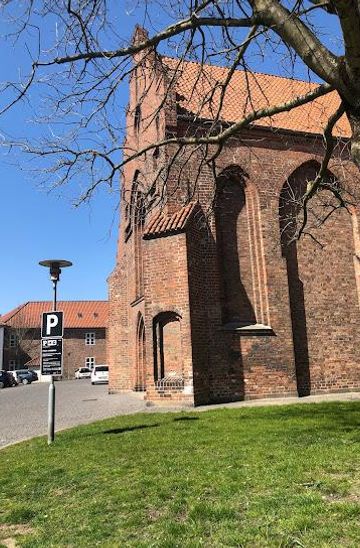
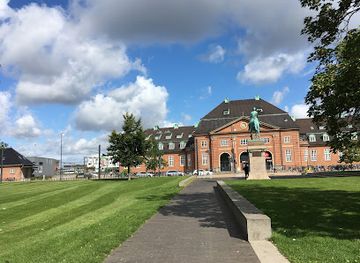
Saint Hans Church stands in the heart of Odense, its red-brick walls pressed close to Odense Castle and the leafy King’s Garden. First mentioned in 1295, the church was built as the abbey church for a Knights Hospitaller monastery, tying it into a wider European network of crusading and care-giving religious orders. Over the centuries, the monastic buildings evolved into a royal residence and later an administrative castle, but the church has remained an active place of worship.The link between castle and church is still visible today in the connecting wing running between them, making this one of the most evocative corners of Odense’s historic centre. From the outside, the building’s long, narrow form, stepped gables and robust tower give a clear sense of its medieval origins, even though much of the current structure dates from later rebuilding and restorations.Brick Gothic tower and characterful exterior
Approaching from Sankt Hans Plads, you are met by classic Danish Brick Gothic. The church is built in warm red brick, broken by pale horizontal bands and large pointed-arch windows that flood the interior with light. The square tower, likely completed around the late 15th century, rises in simple stages and houses three bells, including one cast in 1496 that hints at the church’s late-medieval silhouette.Around the walls, buttresses and blind arches add rhythm to the façades, while the tiled roof and stepped gables anchor the building firmly in the architectural traditions of Funen. The church forms a visual ensemble with Odense Castle and the surrounding gardens, making this a rewarding spot for quiet architectural photography and contemplative wandering rather than grand spectacle.Star-vaulted nave and serene interior space
Stepping through the modest porch, the interior opens dramatically into a tall central nave. Overhead, three intricately patterned star vaults span the main space, supported by four heavy octagonal pillars. Their pale plaster surfaces catch and soften the daylight from the tall Gothic windows, creating a calm, luminous atmosphere ideal for unhurried reflection.Side aisles run along both flanks with lower cross vaults, giving the church a basilica-like plan and adding a layered spatial rhythm as you walk towards the chancel. The simple whitewashed walls, wooden pews and restrained decoration keep the focus on light, proportion and a few standout artworks rather than overwhelming ornamentation.Baroque craftsmanship at altar and pulpit
The focal point of the chancel is a richly framed Baroque altarpiece, which preserves sculptural elements from the 18th century. On either side stand figures of Moses with the tablets of the law and Aaron in high-priestly robes, their presence tying the Christian narrative to Old Testament tradition. The altar table is draped in a deep red velvet frontal embroidered with the mirror monogram of King Frederik IV and the year 1719, a royal gift from the period when the neighbouring palace wing was built.On the nave’s side, an impressive wooden pulpit from around 1650 is attributed to the Odense sculptor Anders Mortensen. Its carved figures wear contemporary 17th‑century dress, giving an almost theatrical glimpse into the era that reshaped the church after the Reformation. Together, pulpit and altarpiece offer a compact lesson in Danish Baroque woodcarving and royal patronage.Organ music and traces of renewal
High above the west end stands the organ façade, enclosing a three-manual instrument built in 1962 by Marcussen & Søn, one of Denmark’s most respected organ builders. Organ music has been documented here since the early 1500s, and the church has long been associated with distinguished musical life; the present instrument is considered well suited to the works of Bach and other Baroque composers.Scattered details hint at later chapters in the church’s story. A painted consecration cross near one of the pillars bears the date 22 February 1880, marking the rededication after a major 19th‑century restoration. Smaller memorials and inscriptions weave in bishops, governors and benefactors connected to the adjacent palace, underlining how Saint Hans Church has mirrored Odense’s religious and political history for more than seven centuries.Quiet corner of Odense’s historic heart
Despite its central location, the atmosphere inside is usually tranquil, offering a peaceful counterpoint to nearby shopping streets and Hans Christian Andersen attractions. Benches outside and the neighbouring park invite you to linger and admire the ensemble of church tower, palace façades and garden trees. For many visitors, the appeal lies less in grand spectacle and more in the layered, lived-in character of a working parish church that still anchors this part of Odense’s old town.Explore the best of what Saint Hans Church has to offer













More about Funen
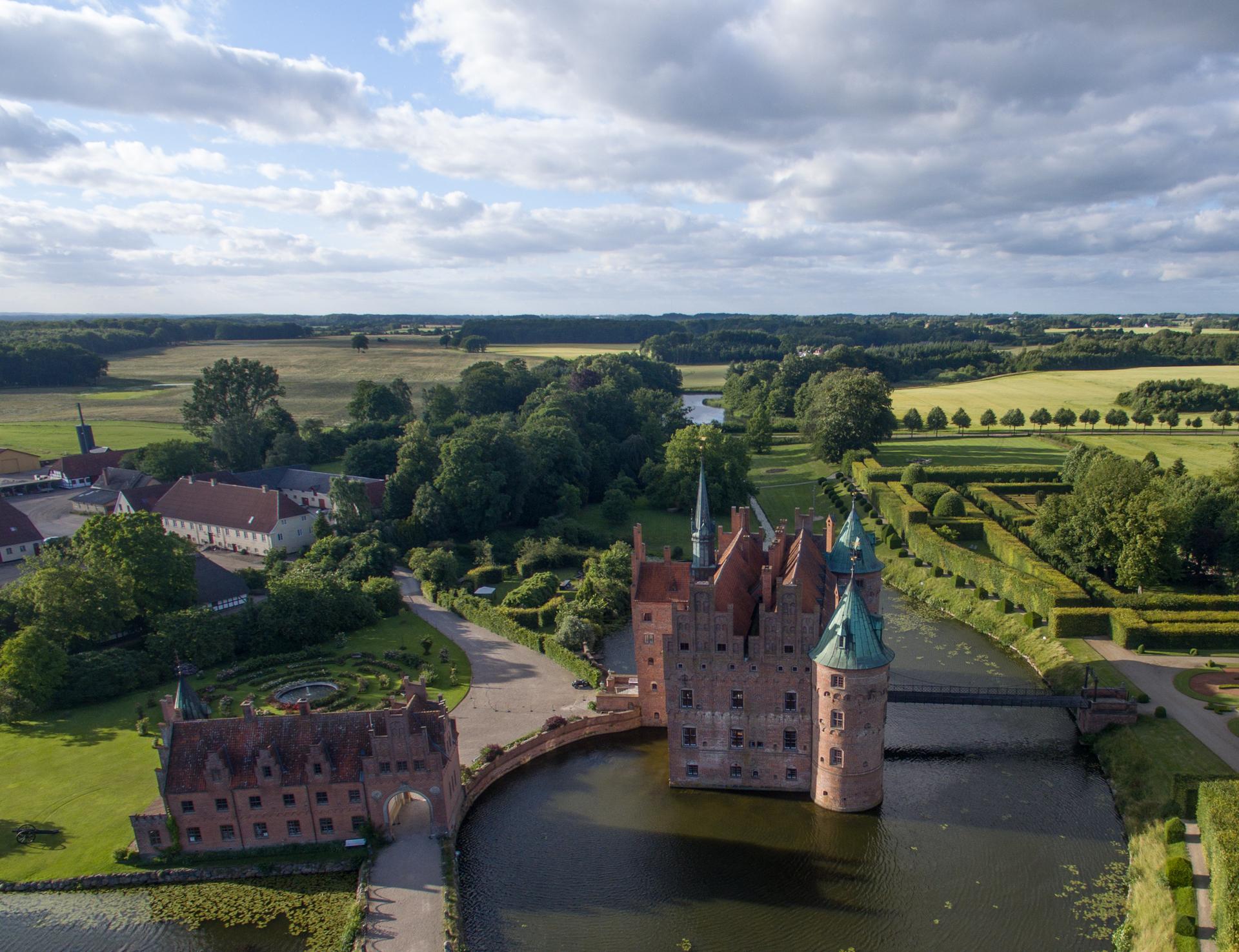
Discover Funen, Denmark's lush island treasure, where fairy tales come to life amidst scenic landscapes, historic castles, and vibrant cultural heritage.
Tell me more about Funen
A small but vibrant picture wall where Hans Christian Andersen’s bold misfit, Klods Hans, steps off the page and into the streets of historic Odense.
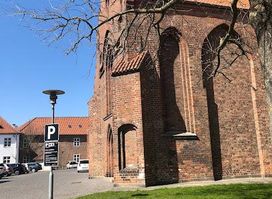
A medieval monastic church of red brick and quiet light, Saint Hans links Odense’s castle, sacred history and old-town charm in one compact, atmospheric stop.