

Dueodde, Bornholms sydligste punkt Travel Guide
Free Guide: Vast white dunes, ultra-fine sand and a towering lighthouse meet at Bornholm’s southern tip, where forest and Baltic Sea blend into one luminous coastal landscape.


A brief summary of Dueodde, Bornholms sydligste punkt
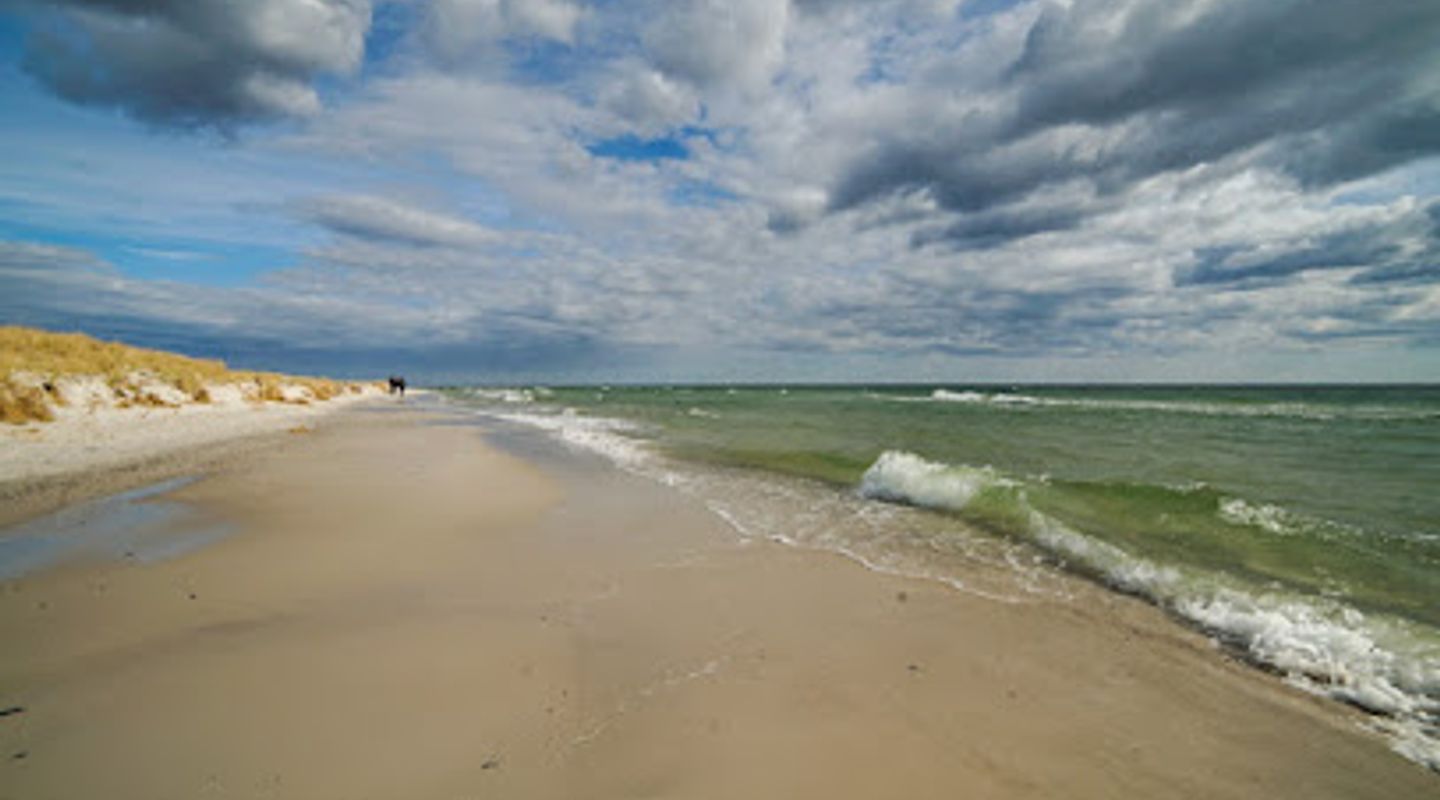
Vast white dunes, ultra-fine sand and a towering lighthouse meet at Bornholm’s southern tip, where forest and Baltic Sea blend into one luminous coastal landscape.
Dueodde marks Bornholm’s southernmost point, a vast sweep of dazzling white sand and shifting dunes meeting the clear waters of the Baltic Sea. Famous for its ultra-fine grains once used in hourglasses, this protected coastal landscape blends wild pine forest, boardwalks over the dunes and long, shallow waters ideal for wading. The tall modern lighthouse crowns the dune ridge with wide Baltic panoramas, while hidden wartime bunkers in the nearby woods add a quieter historical layer to this otherwise tranquil seaside escape.
On-site amenities
 Restrooms
 Drink options
 Drinking water
 Food options
 Seating areas
 Trash bins
 Information boards
- Address
- X3PG+XC, Bornholm
- Website
Getting there
Public bus from Nexø
Car from Rønne town
Cycling from Balka/Snogebæk area
Walking from nearby holiday cottages
Discover more about Dueodde, Bornholms sydligste punkt
Where Bornholm Tapers into Sand and Sea
Dueodde is more than just the southernmost point of Bornholm; it is where the island dissolves into a wide, pale arc of sand and sky. Here, the Baltic Sea curves gently around a headland of dunes and pine forest, creating one of Denmark’s broadest, most open seascapes. On calm days the water lies almost glassy and shallow far out, broken by sandbars that shift with the currents.Stand anywhere along this coast and the horizon feels unusually expansive. To the west and east, the beach continues for many kilometres, sometimes narrowing to a ribbon, sometimes widening into a sandy plain where the dunes roll back from the water. Behind you, the dark greens of pine and spruce press close to the shore, sheltering holiday cottages and quiet paths from the wind.
Legendary Sand and Shaping the Dunes
The sand at Dueodde is so fine that it has long been famed for use in hourglasses, its tiny grains flowing smoothly and silently through glass necks. Under bare feet it feels almost silky, squeaking faintly as you walk. Wind sweeps this sand inland, forming high dunes ribbed by the patterns of grasses that hold them together. Some slopes rise several metres above the sea, creating natural lookouts and sheltered hollows.Centuries ago, the same flowing sand that delights visitors was a menace to farms inland. To tame it, large areas were planted with pines and hardy beach grasses, stabilising the dunes and giving the landscape its now-familiar mosaic of forest and open sand. Today the area is protected as a nature reserve, valued both for its beauty and for the specialised plants and insects that thrive in the harsh, salty environment.
Walking the Boardwalks and Quiet Forest Trails
Access to the shore is part of Dueodde’s character. Long wooden boardwalks lead from parking areas through the dunes, lifting you above fragile vegetation and making it easier to bring buggies or wheelchairs towards the beach. As you walk, the forest gradually opens, wind picks up, and the distant hush of waves grows louder until the final steps reveal an expanse of white sand and water.Away from the main access points, sandy tracks wind through aromatic pine forest. Here the soundscape shifts from surf to wind in the needles and the occasional call of seabirds. In sheltered dune bowls, you find spots where the breeze drops and only the rustle of grass remains. These quiet corners invite slow hours of reading, picnicking or simply watching light move across the sea.
The Lighthouse and Panorama of the South Coast
Guarding the southern tip stands the tall white Dueodde Lighthouse, visible for many kilometres along the coast and out at sea. Built in the 20th century, it is among the tallest lighthouses in the Nordic region, its clean geometric profile contrasting with the organic folds of the dunes below. From its upper platform, the view stretches over a tapestry of sand, forest and fields, with the Baltic’s blues changing shade with every cloud.Close to the modern tower, remnants of earlier navigation aids and military structures hint at Dueodde’s strategic position. The stretch of water south of Bornholm has long been an important shipping lane, and in the forest beyond the dunes lie concrete shells of unfinished gun emplacements from the Second World War, now slowly being reclaimed by moss and trees.
Seasons, Light and the Mood of the Baltic
Dueodde’s atmosphere changes markedly with the seasons. In high summer the long, bright days and warm sands invite lazy hours near the water, with the shallow sea particularly welcoming for paddling and play during calm spells. Early and late in the year, the beach feels open and elemental, with stronger winds sculpting sharp lines on the dunes and sending plumes of sand skimming across the surface.Sunrise and sunset can be especially memorable. The southern exposure means light can streak across the beach from either side of the horizon, turning the white sand golden and picking out every ripple. Even in winter, when the air is cold and the forest darkens early, the vastness of the seascape and the constant motion of waves lend a quiet, contemplative quality to this edge-of-island landscape.
Nature, History and a Sense of Space
What sets Dueodde apart is the way its different layers coexist. A protected dune system supports hardy coastal life; a working lighthouse continues a maritime story centuries old; and silent wartime ruins sit hidden in the trees. Yet despite these details, the overriding impression is one of space: long sightlines, big skies, and the simple pleasure of walking where land gently yields to sea.Whether you linger in a sheltered dune, follow the waterline for kilometres, or climb towards a broader view, Dueodde offers a rare combination of wildness and accessibility at the very tip of Bornholm.
Evendo Review Centre
 Google
Guest reviews
Best time to go
Quietest: Jan, Feb & Dec · before 6am or from 9pm
Busy times are Evendo estimates for a typical year, to help you plan. Actual crowds vary with events, school holidays and the weather.
Explore Dueodde, Bornholms sydligste punkt on the map
A handpicked selection of must-see spots near Dueodde, Bornholms sydligste punkt, mapped for you.
Get your free copy of our complete guide to Dueodde, Bornholms sydligste punkt, delivered straight to you.
Everything on this page, from opening hours and how to get there to Eve’s tips and the best time to go, in one PDF you can read offline, print or share.
Already have an account? Sign in
Your Dueodde, Bornholms sydligste punkt guide is ready.
We'll send it to · Not you? Sign out

Getting your guide ready…
We are putting together a fresh copy of the Dueodde, Bornholms sydligste punkt guide. This can take up to a minute.
This can take a few moments. If your browser asks, choose Allow so the download can start. You'll find the guide in your Downloads folder.
Nothing happened? Download it again
Sorry, the guide is taking longer than usual. Please try again in a minute, or get it by email instead.
Other nearby places you may find interesting
The closest places of the same kind, if this one is not quite what you had in mind.
-
Hammershus Castle Ruins Bornholm’s great clifftop fortress, where vast medieval ruins, Baltic Sea panoramas and a striking modern visitor centre bring 800 years of history to life.
-
Opal Lake A flooded granite quarry turned emerald lake, Opal Lake on Bornholm blends raw cliffs, deep clear water and coastal views with swimming, cliff jumps and rugged trails.
-
Bornholms Rovfugleshow Immersive birds-of-prey shows and evolution-themed encounters on Bornholm, where owls, falcons, reptiles and farm animals turn science into a full, family-friendly day out.
-
Bornholmertarnet Former top-secret NATO listening post turned Cold War museum, crowned by a 70 m viewing tower with sweeping panoramas over Dueodde and eastern Bornholm.
-
Hammeren Lighthouse Compact granite lighthouse on Bornholm’s highest headland, offering free summer access, sweeping Baltic views and heather-clad coastal walking trails.
Swipe for more places
More to explore near Dueodde, Bornholms sydligste punkt
-
 Best experiences near Dueodde, Bornholms sydligste punkt
-
 Best hotels near Dueodde, Bornholms sydligste punkt
-
 Best landmarks near Dueodde, Bornholms sydligste punkt
-
 Best attractions near Dueodde, Bornholms sydligste punkt
-
 Best shops near Dueodde, Bornholms sydligste punkt
-
 Best restaurants near Dueodde, Bornholms sydligste punkt
-
 Best bars near Dueodde, Bornholms sydligste punkt







Do you manage this location?
Take control to get all the benefits, like improved information, better appearance, and stronger visibility across AI-powered discovery.
Explore more

Explore more of Bornholm
Explore Bornholm: Denmark's Baltic gem, offering stunning nature, rich history, and vibrant local culture. Perfect for nature lovers, history buffs, and food enthusiasts.
Explore Bornholm
Explore more of Denmark
Discover Denmark: A perfect blend of history, modern design, and the cozy concept of hygge. Explore vibrant cities, serene landscapes, and world-class cuisine.
Explore Denmark
