Nyborg Castle (Nyborg Slot)
Medieval power centre and early Danish capital, where moats, ramparts and royal halls tell the story of kings, parliaments and the kingdom’s first constitution.
Nyborg Castle rises above the heart of the old market town of Nyborg, on the island of Funen, as one of Denmark’s most historically charged royal strongholds. Founded in the late 12th century to guard the vital Great Belt crossing, it later hosted the Danehof, Denmark’s first parliament, and witnessed the signing of the country’s first constitution in 1282. Today, the partly reconstructed royal wing, moats, and earthworks form an atmospheric museum complex surrounded by lawns, ramparts and a historic townscape that still hints at its medieval power and Renaissance splendour.
A brief summary to Nyborg Castle
- Slotsgade 34, Nyborg, 5800, DK
- Click to display
- Click to display
- Duration: 1.5 to 3 hours
- Mid ranged
-
 Mixed
Mixed
- Mobile reception: 4 out of 5

Know before you go
Hi, I'm Eve. Here are a few practical things to know before exploring Nyborg Castle.
- Allow time to walk the full circuit of moats and ramparts; some of the most atmospheric views of the castle and town come from the grassy banks outside the main building.
- Inside, start in the great hall and interpretive rooms before exploring smaller chambers; the historical context helps make architectural details more meaningful.
- Wear comfortable shoes suitable for uneven surfaces; older staircases, earthworks and cobbled approaches can be slippery in wet or icy weather.
- Check ahead for special exhibitions or historical events, which can add depth but may also make certain rooms or courtyards busier than usual.
Do you manage this location?
Take control to get all the benefits, like improved information, better appearance, and stronger visibility across AI-powered discovery. Learn more
Activate your presenceOther nearby places you may find interesting
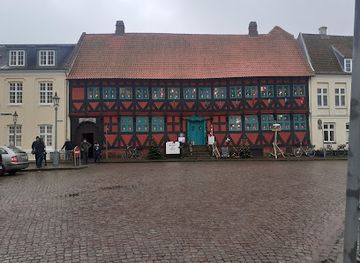
Getting There
-
Train and short walk from Odense
From Odense, regional trains run frequently to Nyborg Station, with a journey time of about 20–25 minutes. Standard tickets typically cost around 40–80 DKK one way, depending on discounts and time of purchase. From Nyborg Station it is an easy, mostly level walk of roughly 10–15 minutes through the town centre to the castle. Trains run throughout the day, but late‑evening services are less frequent, so check the return timetable in advance.
-
Car from Odense and eastern Funen
Driving from Odense to Nyborg takes about 25–35 minutes along the main highway across Funen, depending on traffic. There is usually public parking within walking distance of the historic centre; some areas are time‑restricted or paid during the day, so allow extra time to find a suitable space and read local signs. The approach to the castle itself is on narrow, often cobbled streets, and access directly to the moat area is restricted to preserve the heritage setting.
-
Train across the Great Belt from Zealand
Direct intercity and regional trains cross the Great Belt from major towns on Zealand, including Copenhagen, to Nyborg in about 1–1.5 hours. One‑way fares vary widely with booking conditions but are commonly in the range of 120–260 DKK in standard class. Trains are generally comfortable, with space for luggage, and run in most weather conditions, though very severe storms can affect schedules. From Nyborg Station, the walk to the castle is short and mostly flat, suitable for most visitors.
For the on-the-go comforts that matter to you
-
 Restrooms
-
 Drinking Water
-
 Seating Areas
-
 Sheltered Areas
-
 Trash Bins
-
 Information Boards
-
 Visitor Center
Discover more about Nyborg Castle
Royal stronghold on the Great Belt
Nyborg Castle stands at the centre of Nyborg, perfectly placed to control the crucial crossing of the Great Belt between Funen and Zealand. First mentioned in 1193 and likely founded in the late 12th century, it formed part of a chain of royal fortifications with Sprogø and Tårnborg to defend the realm and secure trade and troop movements. Massive ring walls, deep moats fed by an ingenious canal system, and a compact island layout underlined its role as a frontline fortress.From the outset, Nyborg was more than a military outpost. Its central location made it a natural base for itinerant kings, who could move quickly across the kingdom. Over time, the complex expanded from a simple defensive stronghold into a sizeable royal residence with representative halls and a watchtower that once soared above the town and surrounding countryside.Birthplace of parliament and constitution
Within these walls, some of Denmark’s defining political moments unfolded. From the mid‑13th century until 1413, Nyborg’s great hall hosted the Danehof, a gathering of nobles, clergy, and royal representatives that functioned as the kingdom’s first parliament. Here law was debated, alliances were forged, and royal authority was negotiated rather than simply imposed.In 1282, King Eric V Klipping put his seal to Denmark’s first written constitution at Nyborg. The charter limited royal power and codified rights, symbolising a shift toward shared governance. Standing in the restored halls today, it is easy to imagine the rustle of cloaks, the clink of spurs on stone floors and the low murmur of argument echoing beneath the timbered ceilings as the medieval realm edged toward a more formal political order.Renaissance ambition and changing fortunes
Nyborg enjoyed a second golden age in the 15th and 16th centuries. Under King Hans and later Christian III, the town was designated a permanent royal residence and, in 1525, effectively became the first fixed capital of Denmark. The castle was reshaped into a Renaissance palace: the royal wing was extended, a splendid new great hall was created, and a broad tournament square laid out in front as a theatrical stage for royal display.Yet royal favour shifted. From the late 16th century power gravitated toward North Zealand and Copenhagen. The Swedish wars of the 17th century left Nyborg battered and partly ruined. Large sections of the complex were dismantled, their stone reused in other grand projects, while the remaining buildings were downgraded to garrison stores for grain and gunpowder rather than royal ceremony.Ruins, restoration and museum life
By the early 20th century, Nyborg Castle was a shadow of its medieval might. When the military finally left in 1913, the structure was worn and altered, but its historical importance was unmistakable. A major restoration campaign began in 1917, guided by archaeological investigation and a desire to evoke the castle as it looked under Christian III. The royal wing was stabilised and rebuilt, interiors were furnished with historic pieces, and the moats and ramparts were slowly reclaimed as a heritage landscape.Today, the castle forms part of a broader museum organisation that uses exhibitions, reconstructed rooms and interpretive displays to tell the story of royal power, warfare, and everyday life at court. As you move from vaulted cellars to ceremonial halls, you trace the building’s transformation from fortress to palace, from near‑ruin to curated monument.Atmosphere of walls, water and town
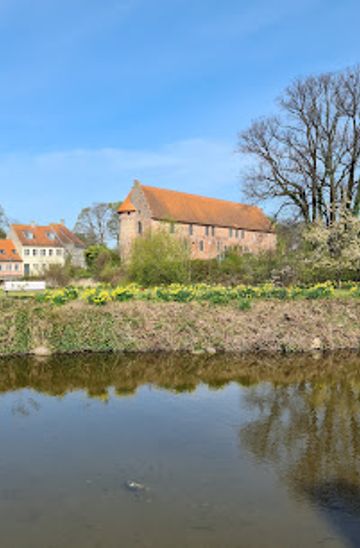
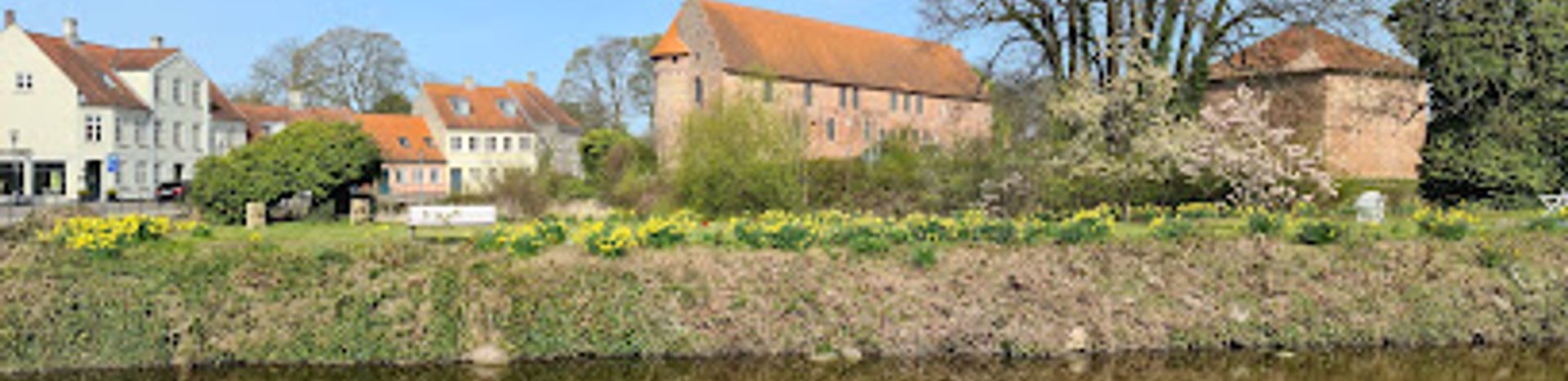
Much of the appeal of Nyborg lies in the way castle, ramparts and town knit together. Grassy embankments and tree‑lined moats curve around the site, offering reflective walks with views back to red‑brick walls, narrow windows and the slightly austere silhouette of the royal wing. In places you can still sense the line of the old ring wall and imagine how it once enclosed a busy inner courtyard packed with service buildings, stables and soldiers’ quarters.Beyond the castle island, cobbled streets and merchants’ houses echo the era when Nyborg was a busy royal town and gateway between the islands. Seasonal events and historical interpretations sometimes animate the grounds, but even on quiet days the site has a contemplative feel. It is an evocative place to connect big moments in Danish history with the textures of brick, timber, earth and water that have carried them into the present.Explore the best of what Nyborg Castle has to offer













More about Funen
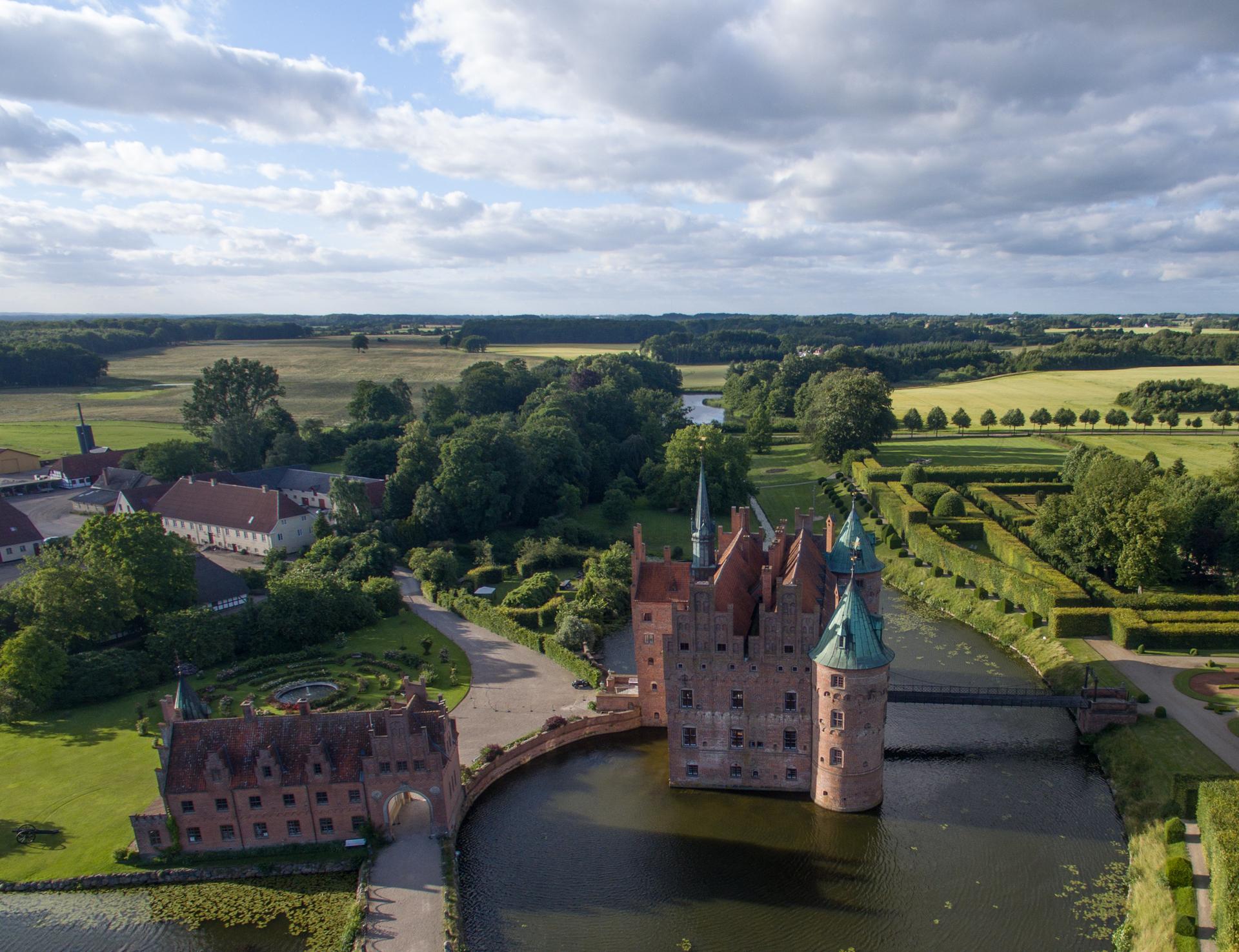
Discover Funen, Denmark's lush island treasure, where fairy tales come to life amidst scenic landscapes, historic castles, and vibrant cultural heritage.
Tell me more about Funen
A compact coastal lighthouse on Nyborg’s shoreline, Nyborg Bagfyr offers a quiet glimpse of Denmark’s maritime past amid open sky, sea breeze and simple forms.

Denmark’s oldest open‑air theatre, staging big summer musicals on Nyborg’s historic ramparts beneath tall trees and long Nordic evening skies.