Sølsted Mose Nature Reserve
A restored Southern Jutland raised bog of big skies, rare birds and quiet trails, where peat, water and wind shape an intimate yet expansive nature experience.
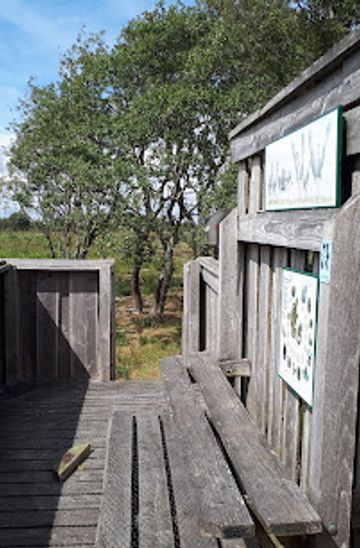
Sølsted Mose is a restored heath and raised bog north of Tønder in Southern Jutland, renowned for its rare birdlife, wetland plants and wide, open skies. Trails, footbridges and bird hides lead you through peat pools, grazing meadows and sphagnum bog, where cranes, bluethroats and marsh harriers breed. As a protected Natura 2000 site, it offers an immersive, low-key nature experience with big horizons, ever‑changing light and a strong sense of wild Danish marshland.
A brief summary to Sølsted Mose
- Ribe Landevej 133, Tønder, 6270, DK
- Click to display
- Duration: 1.5 to 4 hours
- Free
-
 Outdoor
- Mobile reception: 3 out of 5

Know before you go
Hi, I'm Eve. Here are a few practical things to know before exploring Sølsted Mose.
- Wear waterproof boots or sturdy hiking shoes; even with boardwalks, paths can be muddy and partially flooded, especially in winter and after rain.
- Bring binoculars or a zoom lens to make the most of the bird hides and long views across reedbeds, particularly during spring and early summer.
- Pack drinking water and snacks, as there are no cafés or shops inside the reserve and only basic facilities at the parking areas.
- In warmer months, carry insect repellent; calm evenings over wet ground can bring plenty of midges and mosquitoes.
- Stay on the marked trails and boardwalks to protect the fragile bog surface and avoid disturbing nesting birds and grazing animals.
Do you manage this location?
Take control to get all the benefits, like improved information, better appearance, and stronger visibility across AI-powered discovery. Learn more
Activate your presenceOther nearby places you may find interesting

Getting There
-
Car from Tønder
From central Tønder, driving to Sølsted Mose typically takes 10–15 minutes. The route follows main roads north towards Sølsted and offers clear signposting to parking areas near the reserve on Ribe Landevej and Brændevej. Parking at these small lots is free, but spaces are limited on fine weekends, and surfaces are simple gravel or grass. There is no entrance fee to access the bog, but be prepared for narrow rural roads and grazing animals near the entrances.
-
Regional bus and short walk
Regional buses between Tønder and Bredebro generally stop in or near Sølsted, with journey times of around 15–25 minutes depending on the service and time of day. A standard single adult fare on local buses in Southern Jutland is usually in the range of 20–40 DKK. From the nearest bus stop, expect a walk of 1–3 km along village and country roads to reach one of the reserve’s parking areas. Services run less frequently in evenings and on weekends, so checking timetables in advance is important.
-
Cycling from nearby towns
Cycling from Tønder or Bredebro to Sølsted Mose offers a scenic and low‑impact way to arrive. The largely flat landscape and a mix of minor roads and cycle‑friendly routes mean the ride usually takes 30–45 minutes from either town. There is no cost beyond any bike rental, which in the area commonly starts around 100–150 DKK per day. Expect exposure to wind on open stretches, and note that there are no dedicated bike racks inside the reserve, so bring a lock and leave your bicycle at the parking area before continuing on foot.
For the on-the-go comforts that matter to you
-
 Restrooms
-
 Seating Areas
-
 Information Boards
-
 Trash Bins
Discover more about Sølsted Mose
A southern Jutland bog reborn
Sølsted Mose spreads out as a mosaic of peat pools, heath and open bog just north of Tønder, one of the last sizeable heath and raised bogs in this corner of Denmark. Once heavily drained, cultivated and cut for peat through the 1900s, it risked turning into scrub woodland. Large-scale restoration work from the 1990s onwards raised water levels, cleared birch and willow and re‑opened the landscape, bringing the classic high bog character back to life.Today the reserve covers more than 200 hectares of protected Natura 2000 habitat. Parts are owned and managed by a bird protection foundation, which uses grazing cattle and careful water management to keep the vegetation low and the peat wet. The result is a rare glimpse of the kind of windswept, nutrient‑poor bog that once covered great swathes of Jutland, complete with rust‑coloured pools and trembling sphagnum mats underfoot.Birdlife in a sea of reeds and heather
Sølsted Mose is best known for its birdlife. Open, waterlogged areas and reedbeds host species such as snipe, water rail, whinchat and grasshopper warbler, while the bog supports one of Denmark’s densest breeding populations of bluethroat, whose vivid blue throat flashes as it sings from willow clumps. Marsh harriers quarter low over the reeds, and in some years hen harriers and hobby also appear.The reserve’s restoration has helped cranes establish themselves as breeding birds, their loud trumpeting echoing across the bog on still days. In migration periods, ducks, geese and waders drop in to feed in shallow pools and flooded depressions, and summer evenings can be filled with the buzzing, trilling and churring of warblers and rails hidden in dense cover.Rare species in a fragile landscape
Beyond birds, Sølsted Mose shelters a suite of specialists that depend on wet, acidic, nutrient‑poor conditions. Rare bog orchids have one of their very few Danish sites here, growing alongside sundews, cotton grass and other classic peatland plants. The reserve is also the only confirmed Danish locality for the tiny fish dyndsmerling (a type of loach), which survives in the dark, oxygen‑poor waters of old peat cuttings.This combination of rare plants, specialised insects and threatened peatland habitat is why the bog carries high conservation value at a European scale. Projects have focused on blocking old ditches, reducing nutrient inputs and allowing wetland processes to run more naturally, so that peat can slowly accumulate again and the raised bog can continue to develop.Boardwalks, viewpoints and quiet paths
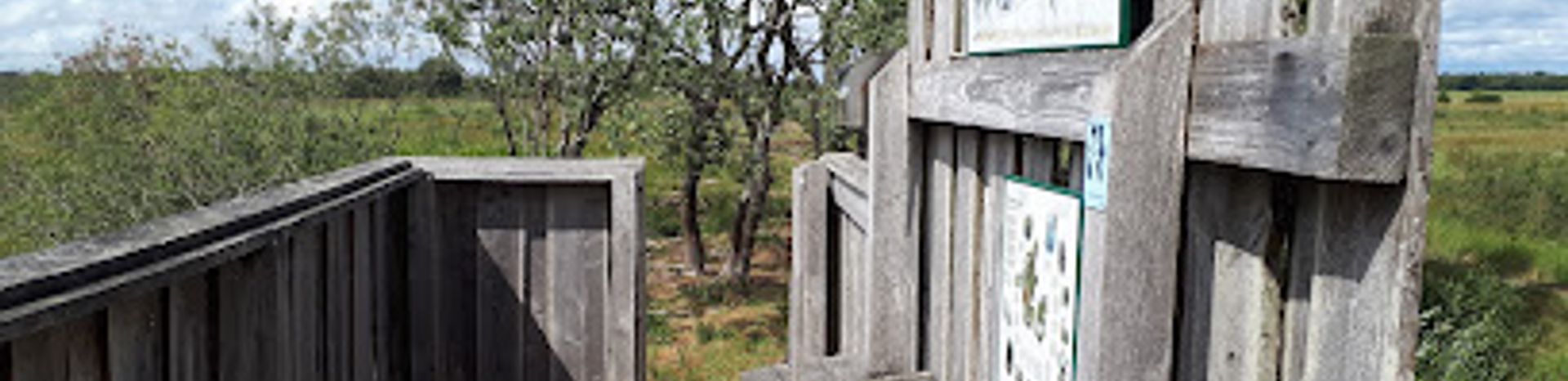
For visitors, Sølsted Mose offers a surprisingly accessible way into a demanding landscape. Waymarked trails form a loop of several kilometres around the bog, mixing firm tracks with stretches that can be muddy or waterlogged, especially in winter. Boardwalks carry you safely over the wettest ground, leading out into the heart of the bog where land feels reduced to water, sky and low vegetation.Two bird hides and simple viewing platforms provide sheltered vantage points where you can sit and scan the reedbeds and open pools. Information boards near the main access points explain the bog’s formation, restoration and key species. There are no elaborate facilities or catering on site; the focus is firmly on low‑impact nature experience, so bringing your own water, snacks and suitable footwear is important.Experiencing the moods of the bog
Sølsted Mose offers a very different character with each season and time of day. Spring and early summer bring song, displaying waders and rich dawn choruses rising out of the mist. High summer can be alive with insects and the scent of heather on warm, still evenings. In autumn, migrating birds pass overhead and the colours shift to deep rusts and browns, while winter often transforms the bog into a stark, open plane of frozen pools and low light.Throughout the year, the reserve feels spacious and elemental. The flat terrain and big skies make weather a constant companion; wind can sweep unimpeded across the bog, while sudden shafts of sunlight can pick out distant reedbeds and flocks of birds in dramatic light. It is a place for unhurried walking, lingering in hides and letting the patterns of cloud, reed and birds define the experience.Conservation story in the borderlands
Set in the broader marsh and heath landscape of Southern Jutland, close to the German border, Sølsted Mose also tells a story about changing relationships with nature. Where once the bog was seen mainly as a source of peat and grazing, it is now valued as a living carbon store, a refuge for threatened species and a quiet counterpoint to intensively farmed surroundings. Restoration investments over recent decades have transformed a drying, overgrown bog into an active raised bog system again.Walking here, it is easy to sense the scale of that transformation: old peat cuttings filled with dark water, former drains now blocked, and cattle grazing in ways designed to benefit the ecosystem. For visitors interested in ecology and landscape change, Sølsted Mose offers a tangible, walk‑through example of how damaged peatlands can be brought back towards a wilder, wetter future.Explore the best of what Sølsted Mose has to offer













More about Southern Jutland
Explore Southern Jutland: A blend of scenic nature, rich history, and delightful cuisine in Denmark's picturesque region.
Tell me more about Southern Jutland
Small, quietly curated museum where Rømø’s everyday life, island traditions and sea-shaped history are preserved in a modest house on Kromosevej.

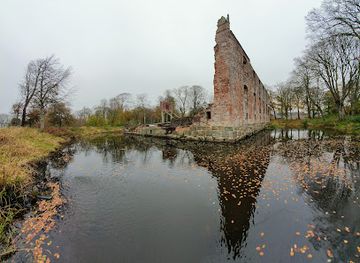
Evocative moated ruins of a former Renaissance manor, Trøjborg offers quiet marshland scenery, layered borderland history and plenty of room for imagination.