

Bear Mountain State Park Travel Guide - Free Web & App
Your ultimate guide to Bear Mountain State Park. Discover top landmarks, proposed trips, and local tips. Free on the web or via the Evendo companion app.


Bear Mountain State Park in New York combines Hudson Highlands trails, river views, Perkins Memorial Tower, wildlife exhibits, boating and historic scenery.
Geographical Identity
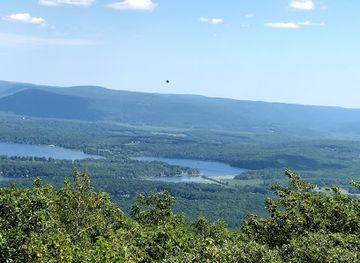
Bear Mountain State Park is a large Hudson Highlands recreation area in Rockland County, New York, on the western bank of the Hudson River. It is not in Connecticut; Connecticut’s Bear Mountain is a separate summit near Salisbury, while the state park named in this request lies north of New York City and south of the Bear Mountain Bridge. The park’s wooded slopes rise above the river and surround Hessian Lake, with roads, footpaths and viewpoints revealing a landscape of ridges, steep valleys and broad Hudson panoramas.Read more about Bear Mountain State Park
Landscape and Wildlife
Recreation and Heritage
When is the best time to visit Bear Mountain State Park?
Best: June, August–September · 24–28°C| Month | High (°C) | Rainfall (mm) |
|---|---|---|
| January | 1 | 80 |
| February | 4 | 70 |
| March | 9 | 90 |
| April | 15 | 100 |
| May | 20 | 100 |
| June (best) | 26 | 90 |
| July | 29 | 90 |
| August (best) | 28 | 100 |
| September (best) | 24 | 90 |
| October | 18 | 90 |
| November | 11 | 90 |
| December | 3 | 90 |
Getting to and around Bear Mountain State Park
How to get there
Transportation
Best landmarks in Bear Mountain State Park
Bear Mountain is the park’s defining natural landmark, a prominent Hudson Highlands summit whose wooded slopes and rocky trails rise above the west bank of the Hudson River. Perkins Memorial Tower, positioned high on the mountain, is the best-known built viewpoint within the park and is valued for its broad outlook across the river and surrounding ridges. Hessian Lake is another central landmark, linking the park’s recreational history with its landscape design. The Bear Mountain Inn represents the early twentieth-century development of the area as a public recreation destination. Just beyond the park, Fort Montgomery preserves the setting of the Revolutionary War’s Hudson River defences, while the Bear Mountain Bridge spans the river and provides a distinctive visual connection between the two sides of the Highlands.
-
Park
Mount Riga State Park
Explore the scenic trails and breathtaking vistas of Mount Riga State Park, a hidden gem for nature lovers and outdoor enthusiasts in Connecticut.
Explore Bear Mountain State Park on the map
Plan your trip on one map. See where the top attractions, landmarks, restaurants and hotels are, and book hotels and experiences in a few clicks.
Best hotels in Bear Mountain State Park
Get your free copy of our complete guide to Bear Mountain State Park, delivered straight to you.
Everything on this page, from attractions and restaurants to essentials and local phrases, in one PDF you can read offline, print or share.
Already have an account? Sign in
Your Bear Mountain State Park guide is ready.
We'll send it to · Not you? Sign out

Getting your guide ready…
We are putting together a fresh copy of the Bear Mountain State Park guide. This can take up to a minute.
This can take a few moments. If your browser asks, choose Allow so the download can start. You'll find the guide in your Downloads folder.
Nothing happened? Download it again
Sorry, the guide is taking longer than usual. Please try again in a minute, or get it by email instead.
Bear Mountain State Park essentials
Currency and Payment
Safety
Emergency Situations
Do's and Don'ts
Local Tips
From Eve
Local phrases worth knowing
You don't need to get them perfect. A few words go a long way, and locals appreciate the effort.
Basics
| English | Local | Say it |
|---|---|---|
| Hello | Howdy | [haʊdi] |
| Goodbye | See ya | [si jə] |
| Yes | Yup | [jʌp] |
| No | Nah | [nɑː] |
| Please/You're welcome | Please and thank you | [pliːz ənd θæŋk juː] |
| Thank you | Thanks a lot | [θæŋks ə lɒt] |
| Excuse me/Sorry | Pardon me | [pɑːrdn miː] |
| How are you? | Howdy | [haʊdi] |
| Fine. And you? | Just swell. You? | [dʒʌst swɛl juː] |
| Do you speak English? | Can ya talk English? | [kæn jə tɔːk ˈɪŋɡlɪʃ] |
| I don't understand | No clue | [nəʊ kluː] |
Eating & Drinking
| English | Local | Say it |
|---|---|---|
| I'd like to see the menu, please | Let me see the grub list, please | [lɛt miː siː ðə ɡrʌb lɪst pliːz] |
| I don't eat meat | I'm veggie | [aɪm ˈvɛdʒi] |
| Cheers! | Bottoms up! | [ˈbɒtəmz ʌp] |
| I would like to pay, please | Check please | [tʃɛk pliːz] |
Emergencies
| English | Local | Say it |
|---|---|---|
| Help! | SOS! | [ɛs oʊ ɛs] |
| Go away! | Beat it! | [bit ɪt] |
| Call the Police! | Ring the cops! | [rɪŋ ðə kɒps] |
| Call a doctor! | Get me a medico! | [ɡɛt miː ə mɛdɪkoʊ] |
| I'm lost | I'm all turned around | [aɪm ɔːl tɜrnd əˈraʊnd] |
| I'm ill | I'm under the weather | [aɪm ˈʌndər ðə ˈwɛðər] |
Shopping
| English | Local | Say it |
|---|---|---|
| I'd like to buy... | I wanna snag... | [aɪ ˈwɒnə snæɡ] |
| I'm just looking | Just browsing | [dʒʌst ˈbraʊzɪŋ] |
| How much is it? | What's the damage? | [wɒts ðə ˈdæmɪdʒ] |
| That's too expensive | Pricey! | [ˈpraɪsi] |
| Can you lower the price? | Can ya drop it? | [kæn jə drɒp ɪt] |
Time & Numbers
| English | Local | Say it |
|---|---|---|
| What time is it? | What's the time? | [wɒts ðə taɪm] |
| It's one o'clock | It's one | [ɪts wʌn] |
| Half past (10) | 10:30 | [ˈtɛnθi ˈθɜrti] |
| Morning | Mornin' | [ˈmɔːnɪn] |
| Afternoon | Arvo | [ˈɑːvoʊ] |
| Evening | Sundown | [ˈsʌndaʊn] |
| Yesterday | Yest'day | [ˈjɛstˌdeɪ] |
| Today | Today | [təˈdeɪ] |
| Tomorrow | Tomorra | [təˈmɒrə] |
| 1 | One | [wʌn] |
| 2 | Two | [tuː] |
| 3 | Three | [θriː] |
| 4 | Four | [fɔːr] |
| 5 | Five | [faɪv] |
| 6 | Six | [sɪks] |
| 7 | Seven | [ˈsɛvən] |
| 8 | Eight | [eɪt] |
| 9 | Nine | [naɪn] |
| 10 | Ten | [tɛn] |
Transport & Directions
| English | Local | Say it |
|---|---|---|
| Where's a/the...? | Where's the... | [wɛəz ðə] |
| What's the address? | What's the addy? | [wɒts ðə ˈædi] |
| Can you show me (on the map)? | Can ya point it out (on the map)? | [kæn jə pɔɪnt ɪt aʊt ɒn ðə mæp] |
| When's the next (bus)? | When's the next (bus)? | [wɛnz ðə nɛkst bʌs] |
| A ticket (to ....) | A pass (to ....) | [eɪ pæs tuː] |
History of Bear Mountain State Park
Hudson Highlands Geology
Bear Mountain stands within the Hudson Highlands, an ancient mountainous belt shaped by resistant metamorphic rocks and later erosion. The steep ridges, narrow valleys and exposed rock faces reflect geological structures that extend along both sides of the Hudson River. Glacial activity during the Ice Age further altered the terrain, scouring valleys and leaving the rugged relief that now defines the park. This geological setting explains the area’s elevated viewpoints and demanding footpaths, while the river corridor helped make the surrounding highlands historically important for travel, settlement and military strategy.
Indigenous and Colonial Landscapes
Before European colonisation, the Hudson Valley was inhabited by Indigenous peoples, including Munsee-speaking communities associated with the wider Lenape cultural region. European settlement brought farms, roads and changing land ownership to the Hudson corridor, although the steep uplands remained less intensively cultivated than the river lowlands. The landscape’s value came not only from its resources but also from its position beside a major navigable waterway linking the interior of New York with the Atlantic coast.
The Revolutionary Hudson
The Hudson Highlands were strategically significant during the American Revolutionary War because control of the river was vital to movement between New York and the interior. Fort Montgomery, immediately south of Bear Mountain, was attacked and captured by British forces in 1777, and the nearby chain barrier across the Hudson illustrates attempts to obstruct enemy shipping. Today, Fort Montgomery State Historic Site and other nearby remnants provide the clearest historical context for understanding the military importance of the river corridor around the park.
Park Creation and Public Recreation
Bear Mountain State Park emerged during the early twentieth-century movement to preserve the Hudson Highlands for public recreation. The Palisades Interstate Park Commission, created in 1900, played a central role in acquiring and managing land along the Hudson in New York and New Jersey. Bear Mountain became one of the commission’s principal recreation landscapes, with roads, trails, picnic grounds and visitor facilities developed around the mountain and Hessian Lake. The park’s continuing identity reflects this combination of scenic preservation, accessible outdoor recreation and interpretation of the Hudson Highlands.
Bear Mountain State Park in Photos
Browse through our photo collection highlighting the charm and character of the destination.
Neighbouring destination travel guides
The closest destinations to Bear Mountain State Park, if you have time for more than one.
-

-

-

-
-


Swipe for more destinations
Explore more

Explore more of Litchfield County
Explore Litchfield County’s historic towns, Housatonic valleys, wooded hills, farm-to-table food and four-season outdoor pursuits in north-west Connecticut.
Explore Litchfield County
Explore more of Connecticut
Discover Connecticut: A blend of charming coastal towns, rich history, and scenic landscapes, perfect for nature lovers, history buffs, and cultural enthusiasts.
Explore Connecticut