Stevns Klint Experience, Zealand Travel Guide
A striking quarry-side visitor centre where chalk cliffs, dinosaurs and asteroid impacts come to life through immersive exhibits at Denmark’s Stevns Klint.
Stevns Klint Experience is the modern visitor centre for Denmark’s UNESCO-listed Stevns Klint, set in the dramatic chalk quarry at Boesdalsvej in Rødvig. Inside this striking concrete-and-glass museum you step into the story of the asteroid impact that ended the age of the dinosaurs, with fossils, meteorite fragments, immersive films and hands-on exhibits. Outside, walking trails lead straight into the old quarry and towards the white cliffs and the Baltic Sea, blending geology, landscape and family-friendly learning in one compact site.
A brief summary to Stevns Klint Experience
- Boesdalsvej 14, Rødvig Stevns, 4673, DK
- Click to display
- Click to display
- Duration: 1.5 to 3 hours
- Mid ranged
-
 Mixed
Mixed
- Mobile reception: 4 out of 5
- Monday 10 am-5 pm
- Tuesday 10 am-5 pm
- Wednesday 10 am-5 pm
- Thursday 10 am-5 pm
- Friday 10 am-5 pm
- Saturday 10 am-5 pm
- Sunday 10 am-5 pm

Know before you go
Hi, I'm Eve. Here are a few practical things to know before exploring Stevns Klint Experience.
- Plan at least 1.5–2 hours for the exhibition so you have time to watch the film, explore the interactive displays and still take a short walk into Boesdal Quarry.
- Bring sturdy shoes and weather-appropriate layers if you want to combine the indoor visit with a walk on the trail; the chalk and gravel paths can be dusty when dry and slippery when wet.
- Families with children will get more from the visit by starting at the Lucky-themed exhibits and interactive games before tackling the more detailed geological panels.
- If you are also visiting Højerup or Stevns Lighthouse the same day, start at Stevns Klint Experience to understand the geology before seeing the cliff sections outdoors.
Do you manage this location?
Take control to get all the benefits, like improved information, better appearance, and stronger visibility across AI-powered discovery. Learn more about listing your business on Evendo
Activate your presenceOther nearby places you may find interesting
The closest places of the same kind, if this one is not quite what you had in mind.

Explore Stevns Klint Experience on the Map
A handpicked selection of must-see spots near Stevns Klint Experience, mapped for you.
Unlock the Best of Stevns Klint Experience
Buy tickets
-
No tickets available
Book tours with entry

Book tours without entry
-
No tours available
Getting There
-
Regional train and local walk
From Copenhagen Central Station, take a regional train to Køge and change to the local train towards Rødvig; the full rail journey usually takes about 1 hour 15–30 minutes and a one‑way adult ticket typically costs around 120–160 DKK in total, depending on time and ticket type. From Rødvig station, expect roughly a 20–25 minute walk on mixed pavement and gravel paths to reach Stevns Klint Experience. The route is generally flat but not ideal for heavy luggage, and services run at least hourly during the day with reduced frequency in late evenings and on some weekends.
-
Car from Copenhagen
Driving from central Copenhagen to Stevns Klint Experience usually takes about 1 hour 15–30 minutes, depending on traffic, following main roads through Køge and on toward Rødvig. There are no motorway tolls on this route, but fuel costs for the return trip typically add up to roughly 120–200 DKK depending on vehicle and prices. Parking by the centre is available but can feel busy on sunny weekends and school holidays, so arriving earlier in the day helps. Surfaces around the quarry are gravel or chalk, which may be uneven for low‑slung vehicles and wheelchairs.
-
Bike from Rødvig area
If you are staying in or near Rødvig, reaching Stevns Klint Experience by bicycle is a pleasant option, usually taking around 10–20 minutes from most local accommodations. The route uses small local roads and paths with gentle gradients, but chalk dust and gravel can make some sections soft after rain and dusty in dry weather. There is no specific charge for cycling, though basic city‑bike rentals in the region often cost around 100–150 DKK per day. This option is best in daylight and in the milder months from spring to early autumn.
For the on-the-go comforts that matter to you
-
 Restrooms
-
 Drink Options
-
 Food Options
-
 Seating Areas
-
 Sheltered Areas
-
 Trash Bins
-
 Information Boards
-
 Visitor Center
Discover more about Stevns Klint Experience
Gateway to a UNESCO cliff of deep time
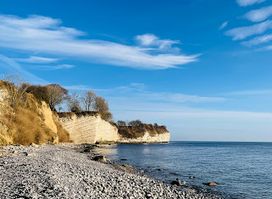
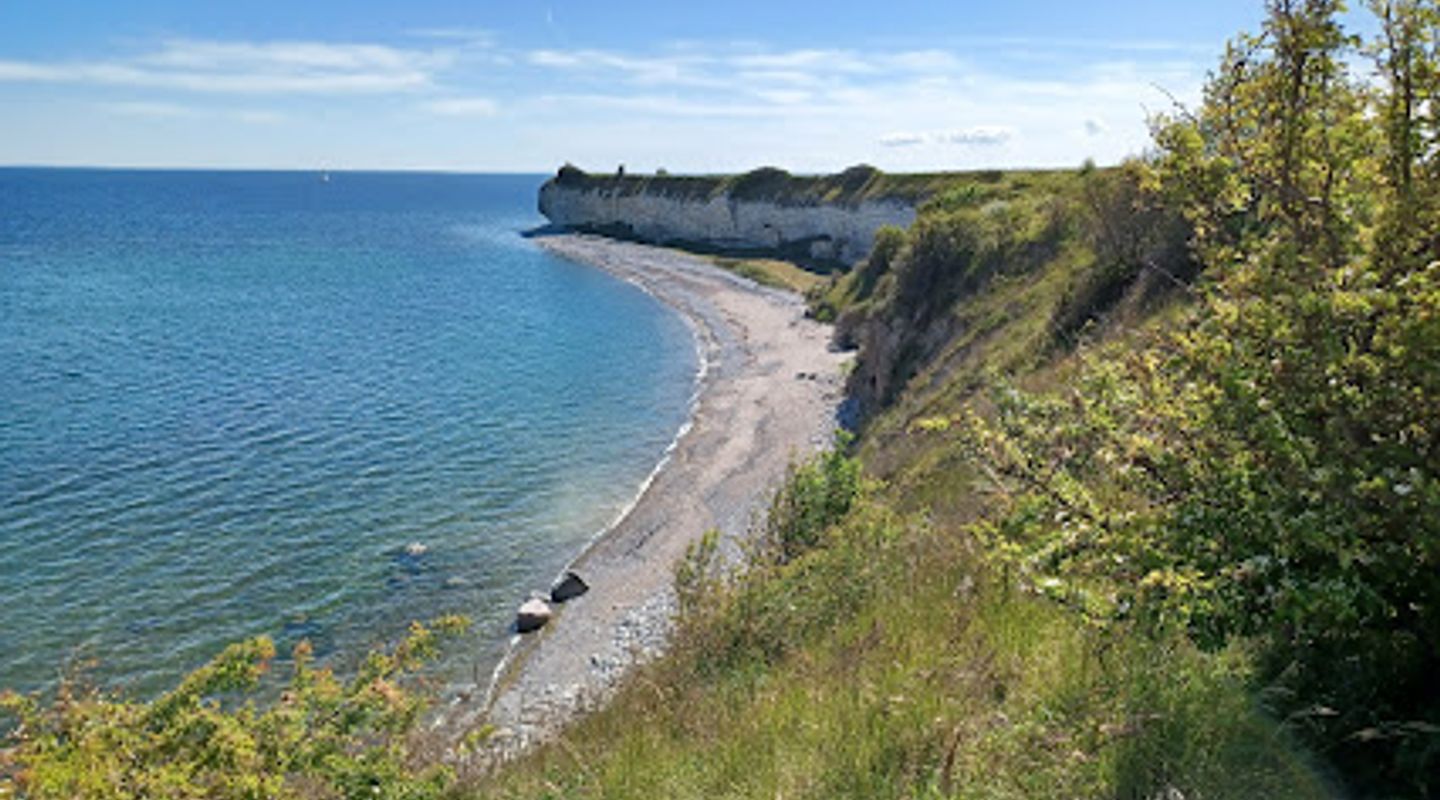
Stevns Klint Experience is the main starting point for exploring Stevns Klint, the white chalk coastline on Zealand that is listed as a UNESCO World Heritage Site for its unique record of the asteroid impact that helped wipe out the dinosaurs. The centre sits just outside Rødvig, right at Boesdal Quarry, where the raw, pale stone walls echo the nearby 40-metre-high seafront cliffs. From here, trails lead directly out into the landscape, so you move seamlessly between exhibition galleries, open quarry and distant views of the Baltic Sea.The architecture leans into its industrial surroundings: angular concrete forms, broad glass panels and a low profile that seems to grow from the chalk itself. Inside, daylight filters in softly, reflecting off pale surfaces and fossil displays, creating the sense of being just below the surface of the Earth’s crust. It feels more like entering a sculpted piece of landscape than a conventional museum.The day the dinosaurs disappeared
At the heart of the centre is the story of the Chicxulub impact, the meteorite strike 66 million years ago that triggered mass extinction and reshaped life on Earth. Stevns Klint is one of the world’s clearest places to see the thin dark layer of clay that settled from the global dust cloud after the impact, sandwiched between bright Cretaceous chalk below and younger Paleogene limestone above.Exhibits walk you through this transition in vivid detail. Fossils of marine animals from thriving pre-impact seas sit beside the depleted fauna that survived the catastrophe and the gradually richer communities that evolved afterwards. Models and graphics show how more than half of all species vanished, while small mammals and other survivors began to dominate. Standing among these displays, you gain a tangible sense of geological time and of how the cliffs outside function as an open textbook in rock.Immersive storytelling and family-friendly science
Stevns Klint Experience is designed to be as engaging for children as for geology enthusiasts. A central feature is a cinema where films are projected onto a massive block of limestone carved directly from the cliff, so the images of firestorms and ancient oceans play across the very material that recorded them. Sound design and gentle vibrations pull you into the moment of impact and its aftermath without feeling overwhelming.Interactive stations invite you to handle replica fossils, match ancient creatures to their modern relatives, and experiment with digital tools that simulate asteroid trajectories and global climate shifts. A recurring figure is “Lucky,” a small mammal character representing the line of animals that survived and ultimately led to us. Through Lucky’s story, complex concepts such as extinction, adaptation and recovery become accessible, making the centre particularly appealing for school-age explorers and curious adults alike.From quarry floor to cliff-top trail
Step outside and the narrative continues in the open air. Boesdal Quarry is a bowl of white chalk walls, scattered blocks and sparse grass, where you can see the same materials used in the buildings and exhibits. The textures underfoot shift from fine chalk dust to rough gravel, and in dry weather the pale ground glows in the sun against the blue line of the sea.From the centre, a signposted trail along the edge of the UNESCO site links a series of viewpoints and information points about fossils, birdlife and the Cold War heritage embedded in the cliff. The route forms part of the longer Stevns Klint Trail, but even a short stroll gives you changing angles on the coastline. On clear days, you can pick out Højerup and its church clinging to the cliff edge or the silhouette of Stevns Lighthouse further north, tying the centre into the wider story of the coast.Café, design shop and seasonal atmosphere
After exploring, the café offers a calm place to pause with views over the quarry and distant sea. The menu highlights simple local flavours, from salads built on regional produce to comforting pies and classic Nordic snacks suited to a quick museum break. Large windows frame the chalk walls outside, so even while you sit with a coffee you remain visually connected to the landscape you came to learn about.A small shop focuses on objects inspired by Stevns: ceramics in chalky tones, wooden pieces, books on geology and local history, and educational toys with a fossil or dinosaur twist. The atmosphere changes with the seasons: in summer the open doors and outdoor seating spill activity into the quarry, while in colder months the interior feels like a sheltered cocoon in the stone. Throughout the year, the centre balances scientific depth with an approachable, hands-on experience that makes this corner of Denmark’s deep past feel immediate and alive.More to explore near Stevns Klint Experience













Your all‑in‑one travel companion app
Explore expert travel guides, compare and book tours, experiences, hotels, and more—all from the palm of your hand. Download now for seamless trip planning wherever your wanderlust takes you.


Explore More of Zealand
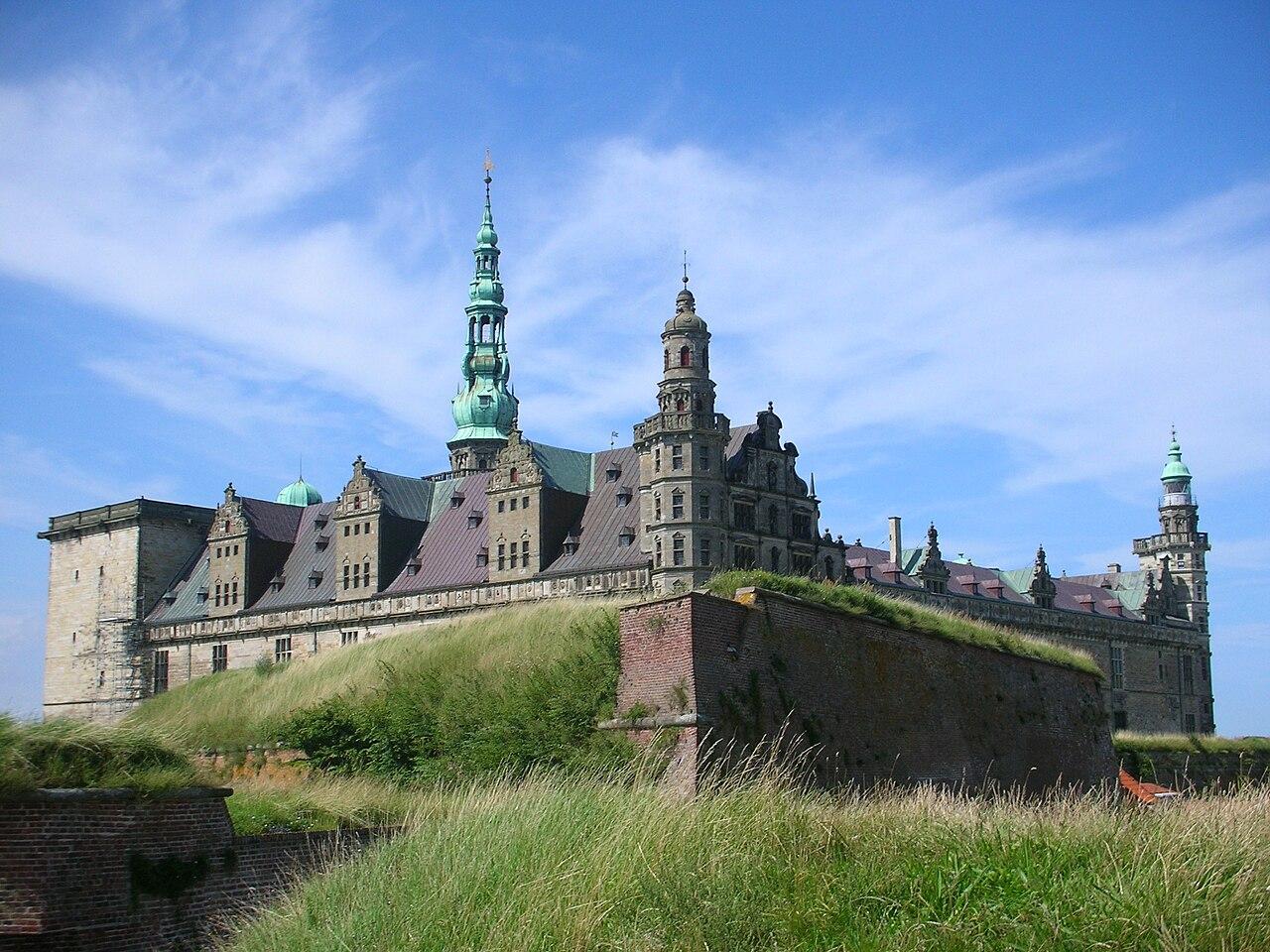
Looking beyond Stevns Klint Experience? Discover Zealand for broader travel guides, local hot-spots, and regional highlights.
Explore Zealand