

Best Landmarks Near Heriot Row (Stirling)
Planning a trip to Heriot Row? Discover the best landmarks nearby with history, expert tips, and routes. Free on web or the Evendo app.


The best landmarks near Heriot Row
- Top rated
- Closest to Heriot Row
- Price level: low to high
- Time to spend: shortest first
- A–Z
49 landmarks
-
Castle4.6★94,263 reviews
Edinburgh Castle
Perched dramatically on an extinct volcanic plug in Scotland's capital, Edinburgh Castle dominates the skyline and stands as one of Europe's most iconic fortresses. This UNESCO World Heritage site has served as a royal residence, military stronghold, and national symbol for over a thousand years. Home to Scotland's Crown Jewels, the medieval Great Hall, and the famous One o'Clock Gun, the castle offers sweeping panoramic views across Edinburgh and the Firth of Forth. A visit combines rich history, architectural grandeur, and spectacular vistas.
Daily 9:30–18:00Price level $$Time to spend 2–3.5 hrs
-
Tourist attraction4.7★16,039 reviews
Royal Mile
Edinburgh's most iconic thoroughfare stretches nearly a mile from Edinburgh Castle to the Palace of Holyroodhouse, forming the spine of the historic Old Town. This atmospheric cobbled street is lined with medieval tenements, hidden closes (narrow alleyways), world-class museums, and atmospheric pubs. Home to St Giles' Cathedral, Mary King's Close, and countless shops and restaurants, the Royal Mile offers an immersive journey through Scottish history and culture in one unforgettable walk.
Open 24 hoursTime to spend 1.5–4 hrs
-
Cathedral4.6★9,919 reviews
St Giles' Cathedral
St Giles' Cathedral, located on Edinburgh's Royal Mile, is a stunning Gothic church founded in 1124 by King David I. Known as the High Kirk of Edinburgh, it features a distinctive crown steeple, magnificent stained glass windows, and the ornate Thistle Chapel. The cathedral is a vibrant place of worship, history, and culture, hosting daily services, concerts, and guided tours that reveal its deep connections to Scottish history and the Reformation.
Time to spend 0.5–2 hrs
-
Monument4.7★4,801 reviews
Scott Monument
The Scott Monument is a towering Victorian Gothic spire in Princes Street Gardens, Edinburgh, dedicated to the celebrated Scottish writer Sir Walter Scott. Standing 200 feet tall, it features intricate carvings and 64 statues of characters from Scott’s novels. Visitors can climb 287 steps to multiple viewing platforms offering panoramic views of Edinburgh’s skyline, including Edinburgh Castle and Arthur’s Seat. The monument also houses a museum room with stained-glass windows and exhibits on Scott’s life and works.
Daily 10:00–12:30, 13:45–16:30Price level $$Time to spend 0.5–1.5 hrs
-
Tour operator4.6★1,770 reviews
Mercat Tours
Mercat Tours offers immersive guided experiences through Edinburgh’s rich and eerie history, specializing in ghost tours, historical walks, and underground vault explorations. Located at 28 Blair Street, their expert guides bring to life the city’s dark past with theatrical storytelling, making it a must-visit for those intrigued by Edinburgh’s haunted tales and cultural heritage.
Daily 9:00–22:00Price level $$Time to spend 1.5–2.5 hrs
-
Historical landmark4.7★1,615 reviews
Greyfriars Bobby Statue
The Greyfriars Bobby Statue in Edinburgh commemorates the legendary Skye Terrier famed for his unwavering loyalty, guarding his owner’s grave for 14 years. Created by sculptor William Brodie in 1872, this bronze statue stands near Greyfriars Kirkyard and has become an iconic symbol of devotion and a beloved landmark in Scotland’s capital.
Open 24 hoursTime to spend 0.5–1.5 hrs
-
Monument4.7★798 reviews
Dugald Stewart Monument
The Dugald Stewart Monument is a striking memorial on Calton Hill in Edinburgh, dedicated to the Scottish philosopher Dugald Stewart (1753–1828). Designed by William Henry Playfair in 1831, it features a circular Greek temple style with Corinthian columns, overlooking the city skyline. This iconic monument celebrates Stewart’s legacy as a key figure of the Scottish Enlightenment and offers panoramic views of Edinburgh’s historic landscape.
Open 24 hoursTime to spend 0.5–1.5 hrs
-
Historical landmark4.5★761 reviews
St. Bernard's Well
Nestled beside the Water of Leith in Edinburgh, St. Bernard's Well is an exquisite 18th-century monument inspired by ancient Roman temples. Designed by Alexander Nasmyth in 1789, it features a domed roof, Doric columns, and a statue of Hygieia, the goddess of health. Once famed for its mineral spring believed to have healing powers, the well has a rich history linked to Scottish Enlightenment ideals and remains a serene landmark surrounded by woodland.
Time to spend 0.5–1.5 hrs
-
Church4.6★490 reviews
The Parish Church of St Cuthbert
The Parish Church of St Cuthbert, located at 5 Lothian Road in Edinburgh, is one of the oldest Christian worship sites in the city, with origins dating back to around 670 AD. The current building, designed by Hippolyte Blanc and completed in 1894, stands on a site that has hosted at least six earlier churches. Known as the 'Kirk below the Castle,' it features notable stained glass, including a famous Tiffany window, and a rich history intertwined with Edinburgh’s development and religious heritage.
Time to spend 0.5–2 hrs
-
Bridge4.6★398 reviews
The Dean Bridge
The Dean Bridge is a historic stone bridge in Edinburgh, designed by renowned civil engineer Thomas Telford and completed in 1831. Spanning 447 feet across the Water of Leith valley, it rises 106 feet above the river and was built to connect the expanding New Town with the northwestern suburbs. The bridge is notable for its elegant four-arch design, hollow piers, and its role in shaping Edinburgh’s urban development.
Open 24 hoursTime to spend 0.5–1.5 hrs


Floral Clock
The Floral Clock in Edinburgh’s West Princes Street Gardens is the world’s oldest floral clock, first created in 1903. This vibrant and meticulously crafted timepiece combines horticultural artistry with clockmaking ingenuity, featuring thousands of colorful plants arranged in intricate designs that change annually. Located halfway down the stairs into the gardens, it operates with real clockwork and blooms from July to October, offering a unique blend of botanical beauty and functional timekeeping in the heart of the city.
Open 24 hoursTime to spend 0.2–1 hr

Adam Smith Statue
Standing prominently on Edinburgh's Royal Mile, the Adam Smith Statue is a 10-foot bronze monument honouring the 18th-century Scottish economist and philosopher widely regarded as the father of modern economics. Unveiled in 2008 on American Independence Day, this masterwork by sculptor Alexander Stoddart depicts Smith in his later years, surrounded by symbolic elements—a plough representing agrarian economics, a beehive symbolizing industry, and a globe beneath his hand. Positioned in an ancient marketplace within sight of St Giles' Cathedral, the statue serves as both a historical landmark and a popular meeting point for walking tours exploring Edinburgh's intellectual heritage.
Open 24 hoursTime to spend 0.2–1 hr

David Hume Statue
The David Hume Statue, located at 379-381 High Street in Edinburgh, is a striking bronze monument portraying the Scottish Enlightenment philosopher in classical Greek attire. Erected in 1997 outside the High Court, the statue is famous for its polished toe, rubbed by visitors for good luck and wisdom. The monument commemorates Hume’s profound influence on philosophy, history, and economics, while also sparking debate due to his controversial views on race.
Open 24 hoursTime to spend 0.2–1 hr

Royal Palace
The Palace of Holyroodhouse, located at the eastern end of Edinburgh’s Royal Mile, is the official Scottish residence of King Charles III. Steeped in centuries of history, it offers visitors a glimpse into royal life through its magnificent State Apartments, the preserved chambers of Mary, Queen of Scots, and the evocative ruins of Holyrood Abbey. The palace’s beautifully maintained gardens provide a tranquil setting with stunning views of Arthur’s Seat, making it a captivating destination for history and culture enthusiasts.
Daily 9:30–17:00Price level $$Time to spend 1.5–2.5 hrs

Steps to Calton Hill
Calton Hill is a volcanic hill rising dramatically at the eastern end of Princes Street, crowned with neoclassical monuments and offering some of Edinburgh's most iconic panoramic views. This UNESCO World Heritage Site embodies 19th-century ambitions to make Edinburgh the 'Athens of the North', featuring the striking National Monument (modelled on the Parthenon), Nelson's Monument, and the City Observatory. Free to access 24/7, the hill provides a peaceful yet inspiring vantage point over Edinburgh Castle, Arthur's Seat, and the Firth of Forth.
Open 24 hoursTime to spend 1–3 hrs

Melville Monument
The Melville Monument is a striking neoclassical column standing about 45 meters tall in the heart of Edinburgh’s St Andrew Square. Erected between 1821 and 1827, it commemorates Henry Dundas, 1st Viscount Melville, a prominent Scottish statesman. The monument’s towering column is topped by a 4.2-meter sandstone statue of Dundas, designed by Francis Leggatt Chantrey. This landmark offers rich historical context and architectural grandeur, making it a key feature of Edinburgh’s New Town skyline.
Daily 7:00–20:00Time to spend 0.5–2 hrs

Circus Lane
Circus Lane is a picturesque cobbled mews street in Edinburgh's Stockbridge neighbourhood, renowned for its charming flower-covered terraced houses and Instagram-worthy aesthetic. Built in the early 1800s as service quarters for wealthy New Town residents, the lane features converted stables-turned-garages, colourful hanging baskets, and Victorian street lamps. St Stephen's Church, an A-listed landmark with Europe's longest clock pendulum, anchors the street's northern end. The lane offers a quintessential Edinburgh experience combining Georgian heritage with contemporary appeal.
Time to spend 0.2–1 hr

Heart of Midlothian Mosaic
The Heart of Midlothian is a historic mosaic set into the pavement on Edinburgh's Royal Mile, marking the site of the Old Tolbooth prison and administrative center. This iconic heart-shaped mosaic, located outside St Giles’ Cathedral, is steeped in history and local tradition, including the unique custom of spitting on it for good luck or as a sign of disdain for the prison’s harsh past.
Open 24 hoursTime to spend 0.2–1 hr

Cockburn St
A serpentine Victorian street linking Edinburgh's Royal Mile to Waverley Station, Cockburn Street winds down a dramatic four-storey descent through the heart of the Old Town. Named after Lord Henry Cockburn, a 19th-century lawyer and conservationist, this characterful thoroughfare showcases Scots Baronial architecture alongside independent boutiques, quirky shops, cafes, and restaurants. The street's distinctive curve and historic stonework—including carved stone portraits and architectural details—make it one of Edinburgh's most visually distinctive shopping and dining destinations.
Price level $$Time to spend 0.8–2.5 hrs

The Witches Well
Nestled at the foot of Edinburgh Castle’s esplanade, The Witches' Well is a poignant cast iron monument commemorating the hundreds of Scottish women accused and executed for witchcraft between the 15th and 18th centuries. Featuring symbolic bronze reliefs and an inscription, it serves as a somber reminder of Scotland’s dark history of witch trials and reflects on the victims’ tragic fates.
Daily 10:00–18:00Time to spend 15–45 min

Flodden Wall
The Flodden Wall is a historic defensive wall built around Edinburgh’s Old Town in the 16th century following Scotland’s devastating defeat at the Battle of Flodden in 1513. Enclosing about 140 acres, it was constructed to protect the city from an anticipated English invasion that never occurred. Today, surviving fragments of this imposing sandstone wall can be seen near Greyfriars Kirkyard, the Vennel, and along Drummond Street, offering a tangible connection to Edinburgh’s turbulent past and medieval heritage.
Open 24 hoursTime to spend 0.5–2 hrs

Edinburgh City Chambers
Edinburgh City Chambers, located at 253 High Street in the heart of Edinburgh's Old Town, is a grand neoclassical building originally constructed as the Royal Exchange in the mid-18th century. Today, it serves as the administrative center for the City of Edinburgh Council and hosts weddings, conferences, and public events. Its impressive architecture, historic courtyard, and connection to the sealed medieval Mary King's Close make it a notable landmark on the Royal Mile.
Open 24 hoursTime to spend 1–3 hrs

James Clerk Maxwell Statue
The James Clerk Maxwell Statue stands on George Street in Edinburgh, commemorating one of the most influential physicists in history. Sculpted by Alexander Stoddart and unveiled in 2008, the bronze statue features Maxwell seated with his dog Toby at his feet, holding a spinning colour top symbolizing his pioneering work in colour photography and electromagnetic theory. The statue is a tribute to Maxwell’s groundbreaking contributions that underpin modern physics and technology.
Open 24 hoursTime to spend 0.5–1.5 hrs

Scottish National War Memorial
Nestled within Edinburgh Castle's historic walls, the Scottish National War Memorial stands as Scotland's solemn shrine of remembrance for all those who have fallen in service from World War I to the present day. This deeply moving space honors the sacrifice of Scottish soldiers, sailors, and airmen through its dignified architecture and the Roll of Honour containing thousands of names. Free entry is available for memorial-only visits, making it an accessible place of reflection for all visitors seeking to pay respects to Scotland's war dead.
Daily 9:30–17:00Time to spend 0.8–1.5 hrs

Mercat Cross
Edinburgh's Mercat Cross, situated on the Royal Mile outside St Giles’ Cathedral, is a historic monument symbolizing the city's medieval market heritage and civic importance. Originally established in 1365 and rebuilt in 1885 using parts of the 1617 cross, it served as a site for royal proclamations, public announcements, and even punishments. The octagonal stone cross, topped by a unicorn holding the Scottish flag, remains a focal point of Edinburgh's Old Town, blending centuries of history with ongoing cultural significance.
Time to spend 0.5–1.5 hrs

Martyrs of Reform Monument
The Political Martyrs' Monument is a 27-meter tall sandstone obelisk located in the Old Calton Burial Ground, Edinburgh. Erected in 1844, it commemorates five late 18th-century political reformists—Thomas Muir, Thomas Fyshe Palmer, William Skirving, Maurice Margarot, and Joseph Gerrald—who were sentenced to transportation for advocating parliamentary reform and universal suffrage. Designed by Thomas Hamilton, the monument stands as a symbol of radical political struggle and reformist ideals in Scotland and England.
Open 24 hoursTime to spend 0.5–1.5 hrs

Supreme Courts
Located at 11 Parliament Square in Edinburgh, the Supreme Courts of Scotland have been the seat of Scotland’s highest civil and criminal courts since 1532. Housed in the historic Parliament House, this landmark features striking classical architecture with intricate stonework and imposing columns. Visitors can explore Parliament Hall and attend court proceedings, experiencing centuries of Scottish legal history in the heart of the city.
Mon–Fri 9:00–17:00Time to spend 0.5–2 hrs

Duke of Wellington Equestrian statue
Standing proudly at 9 Waterloo Place in Edinburgh, the Duke of Wellington Equestrian Statue is a magnificent bronze monument unveiled in 1852. Sculpted by Sir John Steell, it depicts the Duke mounted on his famous horse Copenhagen, commemorating his victory at the Battle of Waterloo. This historic statue remains a prominent symbol of military prowess and leadership in Scotland’s capital.
Time to spend 0.5–1.5 hrs

Warriston's Close Stairs
Warriston's Close is a historic narrow alleyway in Edinburgh's Old Town that descends 120 steps from the Royal Mile to Cockburn Street. This atmospheric close features a unique architectural quirk: the staircase widens dramatically as you descend, transforming from a typical narrow lane into a quadruple-width staircase at the bottom. The close exemplifies the medieval character of Edinburgh's Old Town, with its steep slopes and maze-like layout that once housed the city's working classes and poor.
Open 24 hoursTime to spend 0.2–1 hr

Scottish-American Soldiers Monument
The Scottish-American Soldiers Monument in Edinburgh is a unique historical landmark commemorating Scots who served in the American Civil War (1861–65). It stands as the only memorial of its kind outside the United States, featuring statues of Abraham Lincoln and a freed African-American soldier, symbolizing liberty and emancipation. Located in Old Calton Cemetery, this poignant monument honors the bravery and sacrifice of Scottish-American soldiers and reflects deep transatlantic ties.
Open 24 hoursTime to spend 0.5–1.5 hrs

Robert Louis Stevenson Memorial
The Robert Louis Stevenson Memorial in Edinburgh is a modest yet poignant tribute to the famed Scottish author, located in West Princes Street Gardens. This historical landmark commemorates Stevenson’s literary legacy, featuring a simple stone monument nestled amid the city’s vibrant green space. It offers visitors a quiet place to reflect on the life and works of the author of classics like Treasure Island and The Strange Case of Dr Jekyll and Mr Hyde.
Open 24 hoursTime to spend 0.2–1 hr

Pont George Ⅳ
George IV Bridge is a historic elevated street and bridge in central Edinburgh, completed in 1832. Designed by architect Thomas Hamilton, it connects the South Side district to the Old Town and New Town, spanning the Cowgate. The 300-metre-long bridge is lined with important public buildings, libraries, bars, and restaurants, and offers striking views of Greyfriars Graveyard and Arthur’s Seat. It is a vital artery linking Edinburgh’s historic and modern quarters.
Open 24 hoursTime to spend 0.5–2 hrs

Statue of King George Ⅳ
The Statue of King George IV stands prominently at the lively intersection of Hanover Street and George Street in Edinburgh’s New Town. Created by Sir Francis Legatt Chantrey and unveiled in 1831, it commemorates the historic 1822 visit of King George IV, the first Hanoverian monarch to set foot in Scotland. The bronze statue captures the king in regal naval attire, symbolizing his role and the era’s political significance, amidst the elegant Georgian architecture of the surrounding streets.
Open 24 hoursTime to spend 15–30 min

Earl of Hopetoun Statue
The Earl of Hopetoun Statue, located in the heart of Edinburgh’s St Andrew Square, is a striking bronze tribute to John Hope, the 4th Earl of Hopetoun. Depicted as a Roman consul clad in a toga and accompanied by a horse, the statue commemorates a prominent Scottish politician and British Army general. Positioned in front of Dundas House, the statue enriches the historic and elegant atmosphere of this Georgian square.
Open 24 hoursTime to spend 0.2–1 hr

Lady Stair's Close
Lady Stair's Close is a tranquil historic courtyard tucked off Edinburgh's Royal Mile, featuring the 17th-century Lady Stair's House, now home to the Writers' Museum. This atmospheric close also hosts Makars’ Court, a literary monument celebrating Scotland’s great writers. With its 1622 baronial architecture, rich history tied to prominent Scottish families, and proximity to landmarks like Gladstone’s Land and Edinburgh Castle, it offers a peaceful glimpse into Edinburgh’s cultural heritage.
Price level $Time to spend 1–2 hrs

The India Cross
A striking Celtic cross monument stands on Edinburgh Castle's esplanade, commemorating the 78th Highlanders who fell during the Indian Rebellion of 1857–58. Erected in 1862 by public subscription, this eight-foot sandstone memorial honours soldiers whose conduct earned widespread recognition. The site offers visitors a contemplative space to reflect on a pivotal moment in British and Indian history, with interpretive signage providing historical context about the siege of Lucknow and the broader rebellion.
Open 24 hoursTime to spend 0.2–1 hr

The High Street Wellhead
The High Street Wellhead is a historic landmark tucked away at the end of Old Assembly Close on Edinburgh's Royal Mile. This intricately carved stone wellhead once served as a vital water source for the city’s residents and remains a poignant symbol of Edinburgh’s medieval heritage. Surrounded by cobbled streets and historic architecture, it offers visitors a glimpse into the daily life and community spirit of old Edinburgh, making it a captivating stop for history enthusiasts and cultural explorers alike.
Open 24 hoursTime to spend 0.2–1 hr

The Centre of Edinburgh
The Stamp Office at 10 Waterloo Place is a distinguished Grade A listed Georgian building in Edinburgh’s city centre, comprehensively refurbished to provide high-spec, open-plan office space. Adjacent to Waverley Station and St James Quarter, it combines historic architectural charm with modern amenities including wellness facilities, secure cycle storage, and sustainability certifications, making it a prime business location in the heart of Edinburgh.
Price level $$Time to spend 1–3 hrs

15 Charlotte Square
15 Charlotte Square is part of Edinburgh’s prestigious Georgian New Town, designed by renowned architect Robert Adam and completed in 1820. Situated within Charlotte Square, this address embodies the elegance and historical significance of one of the city’s finest urban planning achievements, surrounded by lush private gardens and notable landmarks including the First Minister of Scotland’s official residence.
Price level $$Time to spend 0.5–2 hrs

The Mound & Mound Place
The Mound is a historic artificial slope and road in central Edinburgh, created by depositing over 1.5 million cartloads of earth excavated from the New Town foundations into the drained Nor Loch. Completed by 1830, it connects the Old Town’s Royal Mile with the New Town’s Princes Street, serving as a vital thoroughfare and cultural hub. The area hosts iconic institutions like the National Gallery of Scotland, the Royal Scottish Academy, and the Bank of Scotland headquarters, blending history, architecture, and vibrant city life.
Time to spend 0.5–2 hrs

Waverley Steps
The Waverley Steps connect Edinburgh's Princes Street to Waverley Station, one of Scotland's busiest railway hubs. Named after Sir Walter Scott's iconic novel, these historic steps have been dramatically transformed with modern accessibility features including glass-covered walkways, escalators, and lifts. Serving approximately 14,000 passengers daily, the steps offer a unique blend of Victorian heritage and contemporary design, providing step-free access to the station for the first time in over 140 years.
Time to spend 0.2–1 hr

Lady Stair's House
A striking 17th-century townhouse nestled in Lady Stair's Close, off Edinburgh's historic Lawnmarket, now home to the Writers' Museum. Built in 1622 for Sir William Gray of Pittendrum, this fairytale-like building features distinctive Scottish Baronial architecture with ornate stonework, a romantic turret, and a carved lintel bearing the original date. The intimate courtyard setting offers a peaceful literary escape celebrating Scotland's greatest writers—Robert Burns, Sir Walter Scott, and Robert Louis Stevenson—with personal manuscripts, portraits, and belongings on display inside.
Time to spend 0.8–2 hrs

Anchor Close
Anchor Close is a historic passageway in Edinburgh's Old Town, dating back to approximately 1521. This atmospheric close once served as a gathering place for distinguished figures including Robert Burns and Sir Walter Scott's parents. Today, it remains a charming slice of Edinburgh's medieval heritage, connecting the Royal Mile to Market Street and intersecting with Cockburn Street. The close features well-preserved 17th-century buildings and carries centuries of literary and cultural significance.
Time to spend 0.2–1 hr

North Bridge
North Bridge is a historic and architectural landmark in Edinburgh, connecting the medieval Old Town with the Georgian New Town across the Waverley Valley. Built in 1897 to replace the original 18th-century bridge, it offers panoramic city views and serves as a vital transport link. The bridge features ornate cast-iron facades, a war memorial, and overlooks key landmarks such as Edinburgh Castle and Princes Street Gardens.
Time to spend 0.5–2 hrs

Fleshmarket Cl
Fleshmarket Close is a narrow medieval alley in Edinburgh's Old Town that descends steeply from Cockburn Street to Market Street near Waverley Station. Named after the historic meat market and slaughterhouse once located there, this atmospheric close features Scottish baronial revival architecture and remains one of the city's most evocative passages. The lane inspired Ian Rankin's fifteenth Inspector Rebus novel and continues to captivate visitors with its shadowy corners and rich historical character.
Time to spend 0.2–1.5 hrs

1 Parliament Sqr
Parliament Square in Edinburgh is a historic public space adjacent to St Giles' Cathedral, once the site of Scotland's original Parliament House built in 1641. This L-shaped square features notable landmarks such as the Mercat Cross, statues of Charles II and Adam Smith, and is surrounded by important civic buildings including the Law Courts and Edinburgh City Chambers. It embodies centuries of Scottish political and judicial history, making it a key cultural landmark in the Old Town.
Time to spend 0.5–2 hrs

Old and New Towns of Edinburgh UNESCO
The Old and New Towns of Edinburgh form a UNESCO World Heritage Site celebrated for its exceptional urban landscape that contrasts the medieval, organic layout of the Old Town with the neoclassical, planned Georgian New Town. This site showcases Edinburgh’s evolution as Scotland’s capital since the 15th century, featuring iconic architecture, historic streets, and expansive green spaces that together create one of Europe’s most striking cityscapes.
Time to spend 2–6 hrs

124 High St
Located on Edinburgh’s historic Royal Mile, 124 High St is a notable building serving as the iconic starting point for the World Famous Underground Ghost Tour. Situated in the heart of Edinburgh’s Old Town, this spot offers visitors a unique entry into the city’s dark past, with nearby access to eerie closes, haunted cemeteries, and subterranean vaults beneath the city streets.
Price level $$Time to spend 1–1.5 hrs

George IV Bridge
George IV Bridge is an elevated historic street in Edinburgh's city centre, spanning the Cowgate and connecting the Royal Mile to the South Side. Completed in 1836 and designed by architect Thomas Hamilton, this 300-metre stone thoroughfare is lined with elegant Victorian buildings and hosts significant cultural institutions including the National Library of Scotland and Edinburgh Central Library. The bridge showcases architectural heritage, literary history, and serves as a vital pedestrian and vehicular route through Scotland's capital.
Time to spend 1–3 hrs
Explore Heriot Row on the map
A handpicked selection of must-see spots near Heriot Row, mapped for you.
More about Heriot Row
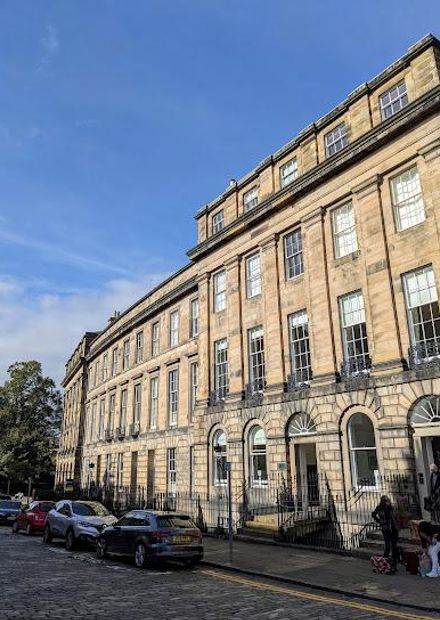
More to explore near Heriot Row

 Best experiences near Heriot Row
 Best hotels near Heriot Row
 Best attractions near Heriot Row
 Best shops near Heriot Row
 Best bars near Heriot Row
 Best restaurants near Heriot Row
Explore more


Getting your guide ready…
We are putting together a fresh copy of the Heriot Row guide. This can take up to a minute.
This can take a few moments. If your browser asks, choose Allow so the download can start. You'll find the guide in your Downloads folder.
Nothing happened? Download it again
Sorry, the guide is taking longer than usual. Please try again in a minute, or get it by email instead.

