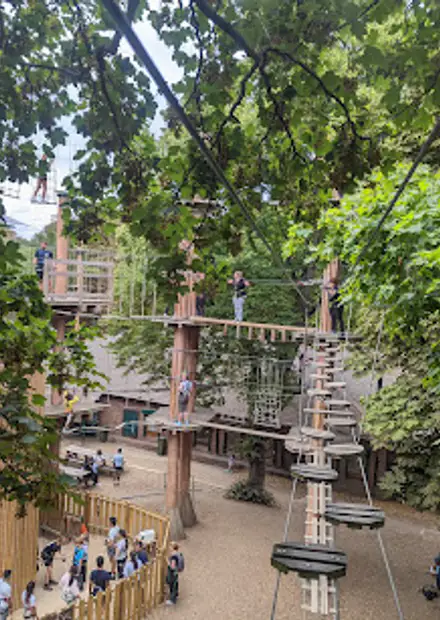
Best Landmarks Near Go Ape Battersea (Middlesex)
Planning a trip to Go Ape Battersea? Discover the best landmarks nearby with history, expert tips, and routes. Free on web or the Evendo app.


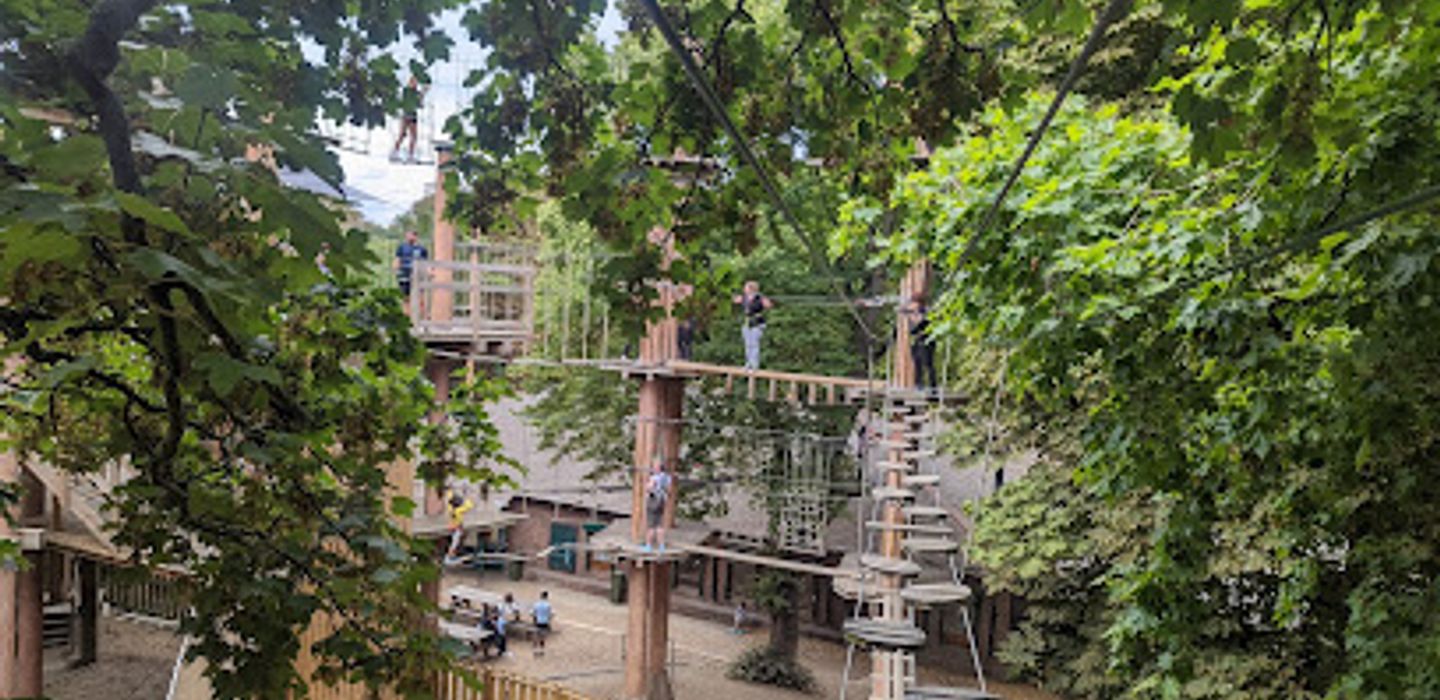
The best landmarks near Go Ape Battersea
- Top rated
- Closest to Go Ape Battersea
- Price level: low to high
- Time to spend: shortest first
- A–Z
62 landmarks
-
Cultural landmark4.5★166,636 reviews
Buckingham Palace
Buckingham Palace, located in London SW1A 1AA, is the official residence of His Majesty The King and a symbol of the British monarchy. Open to the public during the summer months, visitors can tour the lavishly decorated State Rooms, stroll through the beautiful gardens, and witness the famous Changing of the Guard ceremony. With 775 rooms and over 400 staff, the palace blends historic grandeur with living tradition, making it a must-see cultural landmark and tourist attraction.
Price level $$Time to spend 2–3 hrs
-
Cultural landmark4.5★67,349 reviews
Big Ben
Dominating the north end of the Palace of Westminster, Elizabeth Tower – popularly known as Big Ben – is London’s most iconic clock tower. Completed in 1859 in Gothic Revival style, it houses the Great Clock of Westminster and the Great Bell, whose deep chime has become a symbol of the United Kingdom. Though officially renamed in 2012 to honour Queen Elizabeth II’s Diamond Jubilee, the nickname Big Ben endures worldwide as a synonym for the tower itself. The structure stands 96 metres tall, with four clock faces made from hundreds of glass panes, and remains a powerful emblem of British history, engineering, and parliamentary democracy.
Time to spend 0.5–2 hrs
-
Bridge4.6★10,295 reviews
Westminster Bridge
Westminster Bridge is a historic road and pedestrian bridge spanning the River Thames in London, linking Westminster with Lambeth. Opened in 1862 and designed by Thomas Page with Gothic detailing by Charles Barry, it features seven cast-iron arches painted green to echo the House of Commons seats. The bridge offers spectacular panoramic views of landmarks like Big Ben, the Houses of Parliament, and the London Eye, making it a must-visit for sightseeing and photography.
Open 24 hoursTime to spend 0.5–2 hrs
-
Government office4.6★4,392 reviews
Palace of Westminster
The iconic seat of British Parliament and one of the world's most recognizable buildings, the Palace of Westminster stands as a masterpiece of Neo-Gothic architecture along the River Thames. Home to the House of Commons and House of Lords, this working government building blends nearly 1,000 years of history with Victorian grandeur. Visitors can explore Westminster Hall's medieval hammer-beam roof, ornate chambers, and gilded corridors through guided or self-guided audio tours, gaining insight into the machinery of British democracy and the ceremonies that define the monarchy.
Price level $$Time to spend 1.5–2.5 hrs
-
Historical landmark4.5★4,184 reviews
Wellington Arch
Wellington Arch, located at Hyde Park Corner in London, is a grand neoclassical triumphal arch built between 1825 and 1830 to commemorate the Duke of Wellington's victories in the Napoleonic Wars. Designed by Decimus Burton, it features the iconic Quadriga sculpture atop, symbolizing peace and victory. The arch houses a museum and exhibition spaces, offering panoramic views of Hyde Park and Buckingham Palace from its viewing gallery. Open Wednesday to Sunday, it blends rich history, art, and striking architecture in the heart of London.
Wed–Sun 10:00–17:00Price level $$Time to spend 0.5–1.5 hrs
-
Historical landmark4.7★3,552 reviews
Queen Victoria Memorial
Standing majestically at the end of The Mall in front of Buckingham Palace, the Queen Victoria Memorial is a grand Edwardian monument completed in 1911 and designed by sculptor Sir Thomas Brock. This Grade I listed structure features an enthroned statue of Queen Victoria surrounded by allegorical bronze figures representing Truth, Justice, Motherhood, and Victory, all constructed from 2,300 tons of white marble. The memorial serves as both a tribute to Britain's longest-reigning monarch and a centerpiece of London's imperial urban planning, attracting millions of visitors annually who come to appreciate its intricate sculptural details and historical significance.
Open 24 hoursTime to spend 0.5–2 hrs
-
Memorial4.6★3,628 reviews
The Albert Memorial
The Albert Memorial is a grand Victorian Gothic monument in Kensington Gardens, London, dedicated to Prince Albert, husband of Queen Victoria. Unveiled in 1872 and designed by Sir George Gilbert Scott, it features a gilded statue of Albert beneath an ornate canopy, surrounded by intricate allegorical sculptures representing arts, sciences, and continents. Located opposite the Royal Albert Hall, it stands as a poignant symbol of Victorian grandeur and royal remembrance.
Daily 6:00–20:30Time to spend 0.5–2 hrs
-
Historical place4.5★3,260 reviews
St. James's Palace
St James's Palace, built by Henry VIII in the 1530s on the site of a former leper hospital, is London’s oldest royal palace. Though no longer the monarch’s residence, it remains the senior royal palace and a key ceremonial site, hosting the Accession Council and royal baptisms. Its Tudor red-brick architecture, historic chapels, and courtyards speak to centuries of royal history at the heart of London’s Westminster.
Time to spend 0.5–2 hrs
-
Historical landmark4.1★2,522 reviews
Speakers' Corner
Nestled in the northeast corner of Hyde Park near Marble Arch, Speakers' Corner is a historic open-air forum renowned worldwide for its tradition of free speech and public debate. Since the 19th century, it has been a vibrant gathering place where anyone can express their views on any lawful topic, continuing a legacy born from democratic protests and social movements. This iconic site blends a rich, sometimes dark history with a lively atmosphere of open dialogue and activism.
Daily 5:00–24:00Time to spend 0.5–2 hrs
-
Bridge4.5★1,888 reviews
Lambeth Bridge
Lambeth Bridge is a striking steel arch bridge spanning the River Thames in London, connecting Lambeth on the south bank with Westminster on the north. Opened in 1932, it features distinctive red paintwork and decorative obelisks topped with pine cone sculptures. The bridge stands on granite-faced piers and carries four lanes of road traffic, linking key landmarks such as Lambeth Palace and the MI5 headquarters. Its rich history includes a predecessor horse ferry and an earlier suspension bridge, making it a notable part of London’s river crossings.
Open 24 hoursTime to spend 0.5–1.5 hrs


The Cenotaph
Standing solemnly in the heart of London on Whitehall, The Cenotaph is the United Kingdom’s national war memorial, dedicated to the fallen of the First and Second World Wars and later conflicts. Designed by Sir Edwin Lutyens and unveiled in 1920, this austere Portland stone monument bears the simple inscription ‘The Glorious Dead’ and serves as the focal point of the annual National Service of Remembrance. Its stark, secular form invites quiet reflection and has become a powerful symbol of national sacrifice and remembrance.
Open 24 hoursTime to spend 0.2–1 hr

Sir Winston Churchill statue
The statue of Sir Winston Churchill in Parliament Square is a prominent bronze sculpture commemorating Britain’s iconic wartime Prime Minister. Standing 12 feet tall on an 8-foot plinth, it depicts Churchill in his military greatcoat with a walking stick, facing the Palace of Westminster. Unveiled in 1973 by his widow Clementine Churchill, the statue is a significant historical landmark symbolizing resilience and leadership during World War II.
Open 24 hoursTime to spend 0.5–1.5 hrs

Lambeth Palace
The official London residence of the Archbishop of Canterbury for over 800 years, Lambeth Palace stands as a masterpiece of medieval and Tudor architecture on the south bank of the Thames. This historic landmark has witnessed pivotal moments in English religious and political history, from the English Reformation to the English Civil War. Recently restored with a £40 million renovation, the palace combines its role as a private residence with a venue for state occasions and ecclesiastical gatherings, housing museum-quality artefacts and featuring iconic structures like Morton's Tower and the 13th-century chapel.
Time to spend 0.5–2 hrs

Queen Victoria Statue
The Queen Victoria Statue in Kensington Palace Gardens is a striking white marble sculpture depicting Queen Victoria at age 18 in her coronation robes. Created by her daughter Princess Louise and unveiled in 1893 to mark Victoria's Golden Jubilee, it stands prominently outside Kensington Palace, the monarch's birthplace and childhood home. The statue symbolizes Victoria’s long reign and deep connection to the palace, enduring wartime damage and restorations over the years.
Time to spend 0.5–1.5 hrs
Bomber Command Memorial
An open Portland-stone pavilion on the Piccadilly edge of Green Park honours the 55,573 aircrew of RAF Bomber Command who died in the Second World War. Seven life-size bronze figures stand beneath an open roof that lets daylight and weather reach them, their exhausted postures framed against the sky they flew in. Roof aluminium comes from a 1944 Halifax bomber shot down over Belgium. Inscriptions dedicate the memorial to the dead of Bomber Command and to civilians of all nations killed in the bombing campaigns. The setting is solemn and architectural rather than spectacular, best experienced as a short, reflective stop during a Hyde Park Corner to Buckingham Palace walk.
Open 24 hoursTime to spend 10–40 hrs

10 Downing Street
The iconic official residence and office of the Prime Minister of the United Kingdom, located in the heart of Westminster. This modest-looking Georgian terraced townhouse has been home to British leaders since 1735 and stands as one of the world's most recognizable addresses. Behind its famous black door lies centuries of political history, from wartime speeches to pivotal government decisions that have shaped the nation and the world.
Time to spend 0.2–1 hr

Brompton Cemetery
Brompton Cemetery is one of London's Magnificent Seven Victorian garden cemeteries, established in 1840 as a response to overcrowded churchyards. Spanning 40 acres in West Brompton, this Grade I listed site contains over 205,000 burials marked by 35,000 monuments ranging from simple headstones to elaborate mausolea. Designed by architect Benjamin Baud, the cemetery features a striking central avenue, classical colonnades inspired by St Peter's in Rome, and a sandstone domed chapel. Now managed by The Royal Parks as Britain's only Crown cemetery, it serves as both a historical landmark and thriving wildlife habitat.
Daily 7:00–16:00Time to spend 1.5–3 hrs

Westminster Hall
Westminster Hall, built in 1097, is the oldest surviving part of the Palace of Westminster and a masterpiece of medieval architecture. Renowned for its vast hammer-beam oak roof, it has hosted pivotal events in British history, from royal coronation banquets to landmark trials and state ceremonies. Situated in central London beside the River Thames, the hall remains a powerful symbol of monarchy, democracy, and the nation’s heritage.
Price level $$Time to spend 1–2 hrs

Little Ben Clock
Little Ben is a cast iron miniature clock tower located at the junction of Vauxhall Bridge Road and Victoria Street in London, near Victoria Station. Erected in 1892 as a smaller homage to the iconic Big Ben, it symbolizes Franco-British friendship and has a unique history of removal and restoration. This charming landmark features a distinctive inscription and stands as a quaint yet significant piece of London's urban heritage.
Open 24 hoursTime to spend 0.2–1 hr
Canada Gate
Canada Gate is an ornate, gilded wrought iron gateway located at South Carriage Drive, London, opposite Buckingham Palace. Completed in 1911 as part of the Queen Victoria Memorial scheme, it was a gift from Canada to the United Kingdom, symbolizing the historical ties and shared heritage between the two nations. Featuring the coats of arms of Canadian provinces, the gate serves as a grand ceremonial entrance to Green Park and a poignant reminder of Canada’s contributions to the British Empire.
Open 24 hoursTime to spend 0.5–1.5 hrs

St Margaret's Church
St Margaret's Church is a historic 12th-century Anglican church located next to Westminster Abbey in London. Known as the parish church of the House of Commons, it forms part of the UNESCO World Heritage Site alongside the Palace of Westminster and Westminster Abbey. Rebuilt between 1486 and 1523 under King Henry VII, the church is famed for its Perpendicular Gothic architecture and notable stained-glass windows. It has witnessed significant historical events and hosted ceremonies for prominent figures including Winston Churchill and Samuel Pepys.
Mon–Fri 10:30–15:30 · Sat 10:30–15:00Time to spend 0.5–2 hrs

Guards Memorial
The Guards Memorial, located at 69 Horse Guards Road in London, commemorates the 14,000 Guardsmen who died in World War I. Unveiled in 1926, this solemn monument features five life-sized bronze statues representing the five Guards regiments, set against a stone cenotaph adorned with detailed bronze relief panels. It stands prominently opposite Horse Guards Parade, offering a place of reflection amidst London's historic ceremonial district.
Open 24 hoursTime to spend 0.5–1.5 hrs

Chelsea Old Town Hall
Chelsea Old Town Hall, located on the iconic King's Road in London, is a magnificent Grade II listed late Victorian building renowned for its neoclassical architecture and rich civic history. Originally completed in 1887 and extended in 1908, it features ornate interiors, grand halls, and has served as a cultural hub for weddings, concerts, and exhibitions. Today, it remains a cherished venue blending heritage with modern functionality in the heart of Chelsea.
Mon–Sat 7:00–19:00Price level $$Time to spend 1–3 hrs

Canada Memorial
The Canada Memorial in London’s Green Park honors nearly one million Canadian and Newfoundland service members who fought alongside Britain in the First and Second World Wars. Designed by Pierre Granche and unveiled in 1994 by Queen Elizabeth II, the memorial features red granite divided by a walkway, bronze maple leaves, and flowing water symbolizing the enduring bond between Canada and the UK.
Open 24 hoursTime to spend 0.5–1.5 hrs

Mahatma Gandhi statue
Standing in the heart of London’s political district, the bronze statue of Mahatma Gandhi in Parliament Square is a powerful tribute to the leader of India’s non-violent independence movement. Created by sculptor Philip Jackson and unveiled in 2015, the life-sized figure captures Gandhi in his later years, dressed in simple robes and spectacles. Positioned among statues of British and global leaders, it symbolizes peace, civil rights, and the enduring bond between India and the UK. The statue’s low plinth invites close reflection, making it both a historical monument and a quiet place for contemplation.
Open 24 hoursTime to spend 0.2–1 hr

King George VI & Queen Elizabeth,The Queen Mother Memorial
Situated between The Mall and Carlton Gardens in central London, the King George VI and Queen Elizabeth Memorial honors the legacy of King George VI and his consort, Queen Elizabeth, the Queen Mother. Featuring two prominent bronze statues—King George VI in naval uniform by William McMillan, and Queen Elizabeth by Philip Jackson—the memorial was completed in its current form in 2009. It stands as a poignant tribute to their leadership and enduring presence in British royal history.
Open 24 hoursTime to spend 0.5–1.5 hrs

Royal Artillery Memorial
A monumental First World War memorial at Hyde Park Corner, unveiled in 1925, commemorating 49,076 Royal Artillery soldiers killed in the Great War. Designed by sculptor Charles Sargeant Jagger and architect Lionel Pearson, this Grade I listed landmark features a life-size stone howitzer as its centerpiece, surrounded by bronze figures depicting gunners and a fallen soldier. The memorial's unflinching portrayal of warfare—including detailed reliefs of trench life and military equipment—sparked controversy upon unveiling but is now recognized as one of Britain's greatest war memorials and a masterpiece of 20th-century sculpture.
Open 24 hoursTime to spend 0.5–1.5 hrs

The Tower House
The Tower House, located at 29 Melbury Road in London’s Holland Park, is a late-Victorian townhouse designed and built by architect William Burges as his private residence between 1875 and 1881. This Grade I listed building exemplifies French Gothic Revival architecture with its distinctive cylindrical tower and conical roof. The richly decorated interiors reflect Burges’s medieval-inspired design philosophy, making it a unique architectural landmark in London.
Open 24 hoursTime to spend 0.5–1 hr

Equestrian Statue of the Duke of Wellington
The Equestrian Statue of the Duke of Wellington in the City of London is a historic bronze monument unveiled in 1844 to honor Arthur Wellesley, 1st Duke of Wellington, for his military achievements and contributions to London’s infrastructure. Crafted by Sir Francis Chantrey and completed by Henry Weekes, the statue stands near the Royal Exchange, made from bronze melted down from captured enemy cannons after the Battle of Waterloo.
Open 24 hoursTime to spend 0.2–1 hr

Queen Elizabeth Gate
The Queen Elizabeth Gate is a striking historical landmark at Hyde Park’s entrance in London, erected in 1993 to honor Queen Elizabeth The Queen Mother’s 90th birthday. This intricately designed gate features stainless steel and bronze work, combining regal symbols like the lion and unicorn with organic foliage motifs. It serves as a grand portal to Hyde Park, blending architectural elegance with the natural beauty of one of London’s most beloved green spaces.
Daily 5:00–22:00Time to spend 0.5–2 hrs

Commonwealth Memorial Gates
The Commonwealth Memorial Gates on Constitution Hill in London honor the five million servicemen and women from the Indian subcontinent, Africa, and the Caribbean who volunteered with the British Armed Forces during the First and Second World Wars. Featuring four Portland stone pylons topped with bronze urns and flames, the gates blend Eastern and Western architectural styles and include a domed pavilion inscribed with the names of Victoria and George Cross recipients. This poignant memorial symbolizes sacrifice, unity, and the enduring legacy of the Commonwealth’s contribution to British history and society.
Open 24 hoursTime to spend 0.5–1.5 hrs
New Zealand War Memorial
Located at Hyde Park Corner in London, the New Zealand War Memorial is a striking contemporary monument dedicated to New Zealanders who died in the First and Second World Wars. Unveiled by Queen Elizabeth II on Armistice Day 2006, the memorial features 16 bronze cross-shaped standards of varying heights arranged in formation, with ten standards positioned to represent the Southern Cross constellation. Each 700-kilogram standard is inscribed with text, patterns, and sculptures reflecting New Zealand's cultural heritage, including Māori symbols, native flora, and excerpts from New Zealand authors and military figures.
Open 24 hoursTime to spend 0.2–1 hr
Round Pond
An ornamental lake spanning seven acres in the heart of Kensington Gardens, Round Pond has been a cherished London landmark since its creation by King George II in 1730. Located directly in front of Kensington Palace, this rectangular body of water with rounded corners measures approximately 200 by 150 metres and reaches depths of up to 5 metres. Home to abundant waterfowl including swans, ducks, and geese, the pond serves as a sanctuary for model yacht enthusiasts and birdwatchers alike. The historic Model Yacht Sailing Association, established in 1876, continues to host regular races here, making it a unique blend of natural beauty and recreational tradition.
Time to spend 0.8–2.5 hrs

Millicent Garrett Fawcett Statue
The Millicent Garrett Fawcett Statue, unveiled in 2018, stands in Parliament Square, London, as the first monument to a woman and the first sculpture by a woman there. Created by artist Gillian Wearing, it honors the pioneering suffragist leader who tirelessly campaigned for women's voting rights. The statue features Fawcett holding a banner inscribed with her famous quote, 'Courage calls to courage everywhere,' and is surrounded by a plinth etched with images of suffrage campaigners, symbolizing the collective struggle for equality.
Open 24 hoursTime to spend 0.2–1 hr

Queen's Tower
The Queen's Tower, rising 287 feet in South Kensington, London, is the sole surviving remnant of the Imperial Institute, built to commemorate Queen Victoria's Golden Jubilee in 1887. Designed in neo-Renaissance style by T.E. Collcutt, the tower stands as a symbol of the British Empire's scientific ambitions and architectural grandeur. It features a copper-covered dome, a belfry with ten historic bells, and offers panoramic views of London from its upper gallery, open on special occasions.
Price level $Time to spend 0.5–2 hrs

The Old Police House
Nestled within the iconic Hyde Park, The Old Police House is a historic 19th-century building originally constructed in the 1870s as a police station. It now serves as the main office for The Royal Parks and a Tourist Information Centre, offering visitors a unique glimpse into London's policing heritage amidst the park’s lush greenery and vibrant cultural landscape.
Mon–Fri 9:00–17:00Time to spend 0.5–2 hrs

Republic of Texas Plaque
A brass plaque marking the site of the Republic of Texas's diplomatic mission to the British Court, housed above a historic wine merchant from 1842 to 1845. Located in Pickering Place, a hidden alley off St. James's Street near St. James's Palace, this modest memorial commemorates a fascinating chapter when Texas sought international recognition as an independent nation. The plaque was erected in 1963 by the Anglo-Texan Society and remains a quirky reminder of Texas's brief sovereignty.
Open 24 hoursTime to spend 0.2–1 hr

Speke Monument
Standing quietly in Kensington Gardens, the Speke Monument is a red granite obelisk honouring Victorian explorer John Hanning Speke, famed for identifying Lake Victoria as the source of the Nile. Erected in 1866, this understated memorial commemorates a pivotal moment in African exploration, set within London’s elegant royal park. Though modest in appearance, it carries the weight of imperial ambition, scientific debate, and a controversial legacy that continues to resonate in the history of exploration.
Time to spend 15–45 min

Machine Gun Corps Memorial
The Machine Gun Corps Memorial, also known as The Boy David, is a poignant World War I monument located at Hyde Park Corner, London. Unveiled in 1925, it commemorates the bravery and sacrifice of the Machine Gun Corps, featuring a striking bronze statue of a nude young David flanked by bronze Vickers machine guns. The memorial's classical design and powerful inscription reflect the deadly role and heavy losses of the corps during the war.
Open 24 hoursTime to spend 0.2–1 hr

Béla Bartók Memorial
The Béla Bartók Memorial, located at 9 Old Brompton Road in South Kensington, London, honors the legacy of the renowned Hungarian composer Béla Bartók. This bronze statue, crafted by celebrated Hungarian sculptor Imre Varga, depicts Bartók in a dapper suit and commemorates his visits to London, where he stayed during much of his career. Situated near South Kensington Underground Station, the memorial is a poignant cultural landmark celebrating Bartók's influence on 20th-century music.
Open 24 hoursTime to spend 0.2–1 hr

King Charles Street Arch
The King Charles Street Arch is a striking historical landmark located at 100 Parliament Street in London. Completed in 1908 and designed by John McKean Brydon, this grand three-arched structure features intricate stonework and sculptural reliefs by William Silver Frith and Paul Raphael Montford. It serves as an imposing entrance to the courtyard of important government buildings, blending architectural grandeur with rich historical significance in the heart of Whitehall.
Time to spend 0.5–1.5 hrs

Beau Brummell Statue
A bronze statue honouring George Bryan 'Beau' Brummell, the legendary 19th-century dandy and arbiter of men's fashion in Regency England. Located at the entrance to Piccadilly Arcade on Jermyn Street in Mayfair, this modest yet elegant sculpture captures Brummell in his characteristic pose—one hand on hip, the other holding a top hat and cane. Unveiled in 2002 by sculptor Irena Sedlecka, the statue commemorates a figure who revolutionised menswear by championing understated elegance and precise tailoring over the ostentatious styles of the 18th century.
Time to spend 0.2–1 hr

Pickering Pl
Nestled just off St James's Street in London, Pickering Place is the smallest public square in Great Britain. This secluded Georgian courtyard, with its original gaslights and wrought iron railings, offers a rare glimpse into 18th-century London life. Known historically for duels, gambling dens, and as the former site of the Texan Embassy, it remains a charming, Grade II listed enclave rich in stories and architectural heritage.
Time to spend 0.2–1 hr

Charles De Gaulle Statue
The Charles De Gaulle Statue in Carlton Gardens, London, commemorates the Free French leader and first president of the French Fifth Republic. Opposite the former Free French Forces headquarters, this life-sized bronze statue depicts De Gaulle in his brigadier general uniform, symbolizing his defiant leadership during WWII. Unveiled in 1993 by The Queen Mother, it stands as a poignant tribute to his enduring legacy in the heart of London.
Open 24 hoursTime to spend 0.2–1 hr

Clive of India Memorial
The Clive of India Memorial, located at Clive Steps near the Foreign Office in London, commemorates Robert Clive, a key figure in establishing British rule in India. Erected in 1912 and moved to its current site in 1916, the bronze statue by John Tweed depicts Clive with an Indian sword and documents, symbolizing his military and administrative role. The monument includes bronze bas-reliefs illustrating pivotal moments of his career, reflecting both imperial triumph and controversy.
Time to spend 0.5–1.5 hrs

Thomas Cubitt statue
The Thomas Cubitt Statue at 75 Denbigh Street, Pimlico, honors the master builder whose visionary work shaped large parts of London, including Belgravia and Pimlico. The bronze sculpture depicts Cubitt standing behind a stack of bricks with a brick measure in hand, symbolizing his pioneering role in 19th-century urban development and architecture. Located in a tranquil residential area near the Thames, the statue celebrates Cubitt’s legacy in transforming London’s cityscape.
Open 24 hoursTime to spend 0.2–1 hr

Kensington War Memorial
The Kensington War Memorial stands solemnly outside St Mary Abbots Church in London W8, commemorating the men of Kensington and the Kensington battalions who sacrificed their lives in the First and Second World Wars. Featuring a floriated cross atop a gothic stone pillar, this Grade II listed monument is a poignant historical landmark set against the backdrop of one of Kensington’s most iconic churches.
Time to spend 0.2–1 hr

King Charles Street
King Charles Street in London’s Westminster district is a historically significant government hub, home to iconic buildings like the Foreign and Commonwealth Office and HM Treasury. Renowned for its grand Victorian and Edwardian architecture, the street links key government departments and features notable landmarks such as the Grade I listed Foreign Office building designed by Sir George Gilbert Scott. This area embodies centuries of British political history and architectural grandeur.
Time to spend 0.5–2 hrs

Empire House
Empire House is a distinguished Grade II listed building located at 220 Brompton Road in South Kensington, London. Built between 1909 and 1916 for the Continental Tyre Company, this historic landmark blends Edwardian architectural grandeur with contemporary luxury apartments. Situated on the border of South Kensington and Knightsbridge, it offers residents elegant living spaces, proximity to iconic cultural sites, and access to upscale shopping and dining.
Price level $$Time to spend 0.5–2 hrs

Southbank House
Southbank House is a striking Grade II listed terracotta and tiled building located on Black Prince Road, Lambeth, London SE1. Built between 1876-78, it is the last surviving part of the Royal Doulton Pottery complex, once a thriving centre for ceramic art and craftsmanship. Today, it serves as a stylish shared workspace and artist studios, preserving its creative heritage while offering modern office facilities.
Price level $$Time to spend 0.5–2 hrs

Albert Bridge
Albert Bridge is a Grade II* listed historic bridge spanning the River Thames, connecting Chelsea and Battersea in London. Completed in 1873, it is renowned for its unique hybrid cable-stayed and suspension design, delicate structure, and distinctive pastel color scheme. Illuminated by thousands of lamps at night, the bridge carries light traffic and retains its original toll booths, symbolizing Victorian engineering and London's evolving urban landscape.
Time to spend 0.5–1.5 hrs

Cheyne Walk
Cheyne Walk is a historic riverside street in Chelsea, London, famed for its grand Georgian and Victorian mansions, literary and artistic heritage, and a remarkable roll call of famous residents. Running parallel to the River Thames, it offers elegant riverside walks, views of Albert Bridge, and a deep connection to London’s cultural and political history. Once fronting the river before the Chelsea Embankment was built, the street retains a quiet, leafy charm amid some of London’s most desirable addresses.
Price level $$Time to spend 0.5–2 hrs

Cockpit Steps
Tucked between Birdcage Walk and Old Queen Street, Cockpit Steps is a quiet, Grade II–listed staircase with a dark and fascinating past. Once the entrance to the Royal Cockpit, an 18th-century venue for cockfighting patronised by the elite, the steps are now a hidden passageway steeped in history and rumoured to be haunted by a headless lady in a red dress. It’s a curious, atmospheric spot that offers a glimpse into a bygone era of London’s royal and sporting life.
Time to spend 15–30 min

Clarence House
The official residence of King Charles III and Queen Camilla, Clarence House is an elegant Regency mansion designed by John Nash in 1827. Located on The Mall in London's St James's district, this working royal home opens its doors to the public for guided tours during August, offering intimate access to five ground-floor reception rooms filled with fine art, royal memorabilia, and the late Queen Mother's celebrated collection. The 45-minute tours provide a rare glimpse into contemporary royal life and centuries of British royal history.
Price level $Time to spend 1.5–2 hrs
Park Ln
Park Lane is an iconic dual carriageway in Westminster's City Centre, stretching nearly three-quarters of a mile from Hyde Park Corner to Marble Arch. This prestigious boulevard separates the verdant expanse of Hyde Park from the elegant Mayfair district, lined with world-class luxury hotels, exclusive residences, high-end retailers, and fine dining establishments. Once a humble country lane known as Tyburn Lane, it transformed into London's most fashionable address from the 18th century onward, attracting prime ministers, business moguls, and London's elite. Today, Park Lane remains a symbol of sophistication and affluence, offering visitors a glimpse into the capital's most refined neighbourhoods while providing excellent connectivity to London's major attractions.
Price level $$$Time to spend 0.5–3 hrs

Clive Steps
Clive Steps is a historic landmark in Whitehall, London, featuring a Grade II-listed bronze statue of Robert Clive by sculptor John Tweed. Located at the end of King Charles Street near St James's Park, the statue stands between two flights of elegant stone steps and commemorates the 18th-century military commander and colonial administrator who shaped British imperial expansion in India. The monument, unveiled in 1912 and relocated to its current position in 1916, remains a significant—and contested—symbol of British imperial history.
Time to spend 0.2–1 hr

Queen Victoria Monument
The Queen Victoria Memorial in London is a grand and iconic tribute to Queen Victoria, located prominently in front of Buckingham Palace within Warwick Gardens. Completed in 1911 and designed by Sir Thomas Brock, this monument features intricate marble and bronze sculptures symbolizing virtues such as justice, courage, and motherhood. It stands as a focal point of imperial history and British heritage, surrounded by formal gardens and serving as a backdrop for ceremonial events.
Open 24 hoursTime to spend 0.5–2 hrs

Bridge St
Bridge Street is a historic and vibrant thoroughfare in central London, situated adjacent to the iconic London Bridge. It links the City of London with Southwark and offers a unique blend of historic architecture and modern urban life. Visitors can enjoy scenic views of the River Thames, explore nearby landmarks like St Magnus-the-Martyr and Southwark Cathedral, and experience a lively atmosphere enriched by cafes, shops, and cultural venues.
Price level $$Time to spend 0.5–2 hrs

10 Downing St
The iconic official residence and office of the British Prime Minister since 1735, 10 Downing Street is a Georgian townhouse of immense historical significance located in Westminster, London. Behind its famous black door, this deceptively modest-looking building has witnessed centuries of pivotal moments in British governance, from wartime speeches to landmark political decisions. Though not open to the general public, the building remains one of the world's most recognizable addresses and a powerful symbol of British democracy and political power.
Time to spend 0.2–1 hr

3 Carlton House Terrace
3 Carlton House Terrace is a distinguished Grade I listed townhouse located in the prestigious Carlton House Terrace, London. Designed by Decimus Burton and built between 1827 and 1833 on the former site of Carlton House, it exemplifies elegant late Georgian architecture. The terrace overlooks The Mall and St James’s Park, offering a refined historical setting once home to aristocrats, politicians, and intelligence services.
Time to spend 0.5–1.5 hrs
Carlton Gardens
Carlton Gardens is a distinguished cul-de-sac at the west end of Carlton House Terrace in London's St James's district. Known for its elegant Regency architecture by Decimus Burton, it houses historically significant residences including 3 Carlton Gardens, once the Free French Forces Headquarters during WWII. Surrounded by serene formal gardens and close to iconic London landmarks, it offers a tranquil yet culturally rich urban retreat.
Time to spend 0.5–2 hrs

St James's Square
St James's Square is London’s oldest garden square, a refined oasis of Georgian elegance in the heart of Westminster. Encircled by grand 17th- and 18th-century townhouses, it has long been a hub of aristocracy, politics, and high society. Today, it blends historic charm with modern prestige, housing embassies, private clubs, and global institutions. The square’s central gardens, laid out in the 18th century and crowned by an equestrian statue of William III, offer a peaceful retreat amid the city’s bustle, while its architecture and atmosphere speak of centuries of power, influence, and London’s westward expansion.
Time to spend 0.5–1.5 hrs
Explore Go Ape Battersea on the map
A handpicked selection of must-see spots near Go Ape Battersea, mapped for you.
More about Go Ape Battersea
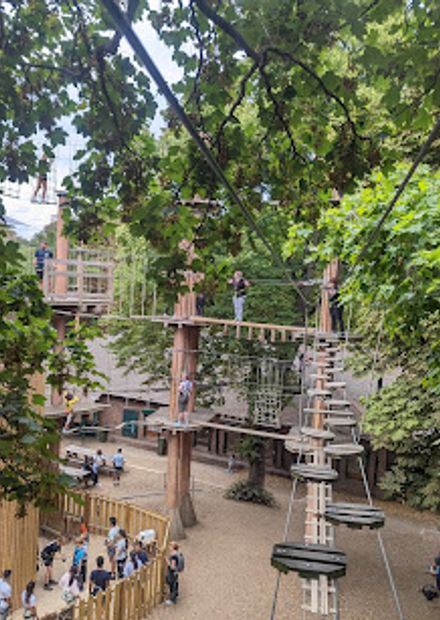
Go Ape Battersea travel guide
Experience London's ultimate treetop adventure with thrilling ziplines and high ropes courses set in scenic Battersea Park.
Tell me more about Go Ape BatterseaMore to explore near Go Ape Battersea

 Best experiences near Go Ape Battersea

 Best hotels near Go Ape Battersea

 Best attractions near Go Ape Battersea

 Best shops near Go Ape Battersea

 Best bars near Go Ape Battersea

 Best restaurants near Go Ape Battersea
Explore more
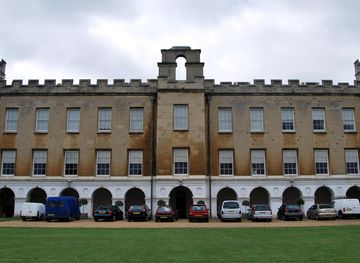
Explore more of Middlesex
Discover Middlesex: A blend of historic charm and modern excitement, offering scenic beauty, cultural events, and easy access to London.
Explore Middlesex
Getting your guide ready…
We are putting together a fresh copy of the Go Ape Battersea guide. This can take up to a minute.
This can take a few moments. If your browser asks, choose Allow so the download can start. You'll find the guide in your Downloads folder.
Nothing happened? Download it again
Sorry, the guide is taking longer than usual. Please try again in a minute, or get it by email instead.