

Trustom Pond National Wildlife Refuge Travel Guide - Free Web & App
Your ultimate guide to Trustom Pond National Wildlife Refuge. Discover top landmarks, proposed trips, and local tips. Free on the web or via the Evendo companion app.


Trustom Pond National Wildlife Refuge in Rhode Island offers coastal ponds, salt marshes, migratory birds, barrier beaches and quiet walking trails.
Coastal Landscape and Wildlife
Trustom Pond National Wildlife Refuge occupies a protected stretch of southern Rhode Island’s Atlantic coast, where a freshwater pond, salt marshes, wooded edges and a barrier beach form a varied coastal habitat. Managed by the U.S. Fish and Wildlife Service, the refuge covers roughly 800 acres and is particularly valued for its quiet, undeveloped character. Trustom Pond itself is separated from the ocean by a narrow barrier beach, creating a sheltered landscape that changes with weather, seasons and water levels.Read more about Trustom Pond National Wildlife Refuge
A Refuge for Migratory Birds
Walking and Nearby Gateways
When is the best time to visit Trustom Pond National Wildlife Refuge?
Best: June, August–September · 24–27°C| Month | High (°C) | Rainfall (mm) |
|---|---|---|
| January | 2 | 91 |
| February | 4 | 79 |
| March | 9 | 101 |
| April | 14 | 98 |
| May | 19 | 95 |
| June (best) | 24 | 86 |
| July | 28 | 95 |
| August (best) | 27 | 97 |
| September (best) | 24 | 98 |
| October | 17 | 102 |
| November | 11 | 106 |
| December | 4 | 102 |
Getting to and around Trustom Pond National Wildlife Refuge
How to get there
Transportation
Best attractions in Trustom Pond National Wildlife Refuge
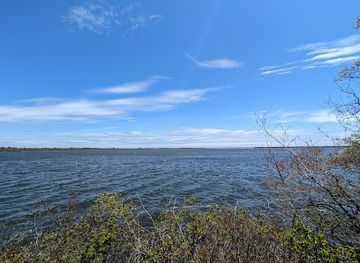
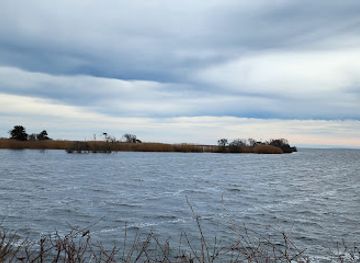
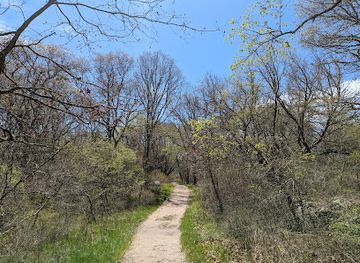
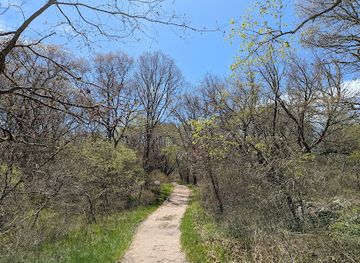
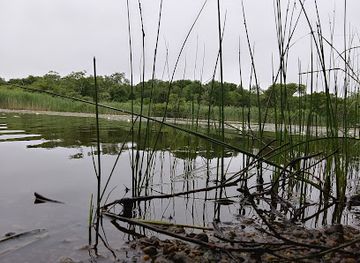
The principal attraction at Trustom Pond National Wildlife Refuge is the landscape itself: a sheltered freshwater pond behind a barrier beach, bordered by salt marsh, wetland vegetation, woodland and low coastal terrain. Refuge paths lead visitors towards views across Trustom Pond, where changing light, water levels and seasonal birdlife create much of the visual interest. The marshes and open water are valuable places for observing migratory waterfowl, shorebirds, wading birds and raptors, while the wooded margins support smaller birds and other wildlife. The barrier-beach environment gives the refuge its connection with the Atlantic, although access to particular shore areas may be controlled to protect habitat. Rather than a collection of buildings or formal attractions, Trustom offers a quiet sequence of habitats and viewpoints. Its proximity to other protected coastal areas and beaches in southern Rhode Island also makes it a useful stop on a wider exploration of the South County shoreline, provided nearby sites are understood as separate destinations.
-
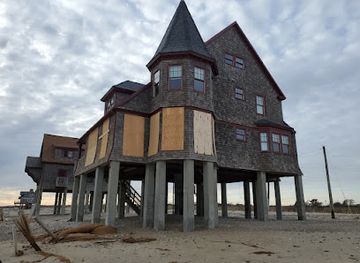
Beach pavillion
Moonstone Beach
Experience the tranquil beauty of Moonstone Beach in Rhode Island, a serene escape filled with soft sands, stunning sunsets, and lush surroundings.
-
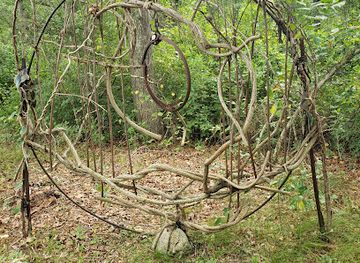
Nature preserve
SKLT Sculpture Trail
Explore the beautiful SKLT Sculpture Trail in South Kingstown, RI, where nature and art intertwine for a unique outdoor experience.
-
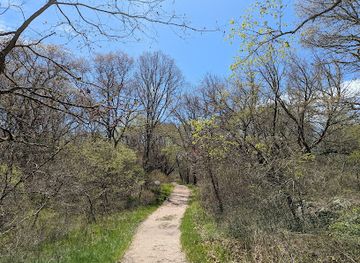
Nature preserve
Trustom Pond National Wildlife Refuge Visitor Contact Station
Explore the serene Trustom Pond National Wildlife Refuge, a top destination for nature lovers and wildlife enthusiasts in Rhode Island.
-
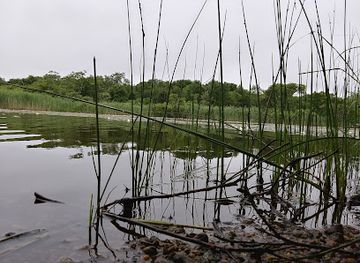
Lake
Trustom Pond
Experience the natural beauty and tranquility of Trustom Pond in South Kingstown, RI, a perfect escape for nature lovers and outdoor enthusiasts.
Best landmarks in Trustom Pond National Wildlife Refuge
Trustom Pond is the defining natural landmark, a coastal pond whose sheltered waters sit behind a narrow barrier beach and connect visually with the wider Atlantic shoreline. The surrounding salt marshes are equally important, illustrating the transition between open water, wetland and terrestrial habitat that gives the refuge its ecological character. The barrier beach is a dynamic landform shaped by waves, storms and shifting sediment rather than a fixed architectural feature. There are no major historic buildings or urban monuments within the refuge; its significance rests in protected coastal geography and wildlife habitat. Views from the established paths and overlooks allow visitors to appreciate the relationship between pond and marsh without crossing sensitive areas. Nearby South County villages, roads and working coastal landscapes provide the human context, but they should be regarded as adjoining communities rather than landmarks located inside Trustom Pond National Wildlife Refuge.
-
Nature preserve
Trustom Pond National Wildlife Refuge Visitor Contact Station
Explore Trustom Pond National Wildlife Refuge, a serene nature preserve in Rhode Island, perfect for birdwatching and enjoying diverse coastal ecosystems.
-
Lake
Trustom Pond
Discover the tranquil beauty of Trustom Pond in South Kingstown, Rhode Island, a perfect escape for nature lovers and outdoor enthusiasts.
Explore Trustom Pond National Wildlife Refuge on the map
Plan your trip on one map. See where the top attractions, landmarks, restaurants and hotels are, and book hotels and experiences in a few clicks.
Best hotels in Trustom Pond National Wildlife Refuge
Best bars in Trustom Pond National Wildlife Refuge
Trustom Pond National Wildlife Refuge has no nightlife infrastructure and closes into a quiet natural landscape rather than an evening entertainment district. After dark, the surrounding South County communities offer a modest regional social scene, with pubs, taverns, restaurant bars and seasonal hospitality concentrated in South Kingstown, Wakefield and nearby coastal settlements. Narragansett and Westerly, outside the refuge area, provide a wider choice of evening venues during the busier summer period, although availability varies by season. Evenings based near Trustom are more likely to involve a meal, a drink in a local pub or a walk in a settled coastal community than clubbing. Visitors should not enter refuge areas after hours or assume that informal nighttime wildlife watching is permitted; current refuge rules and posted access times take precedence.
-
Wildlife refuge
Trustom Pond National Wildlife Refuge
Explore Trustom Pond National Wildlife Refuge, a serene oasis in Rhode Island, where diverse wildlife and stunning landscapes await nature enthusiasts and families.
-
Nature preserve
Trustom Pond National Wildlife Refuge Visitor Contact Station
Explore the untouched beauty of Trustom Pond National Wildlife Refuge, a serene nature preserve in South Kingstown, Rhode Island, perfect for wildlife observation and nature walks.
Best shops in Trustom Pond National Wildlife Refuge
Shopping inside Trustom Pond National Wildlife Refuge is limited to the experience of the protected landscape itself, with no substantial retail area or cluster of permanent shops. Visitors should obtain food, drink, outdoor supplies and any specialist equipment in South Kingstown or other nearby South County settlements. Wakefield is a practical regional centre for everyday purchases, while surrounding coastal communities offer a mixture of small independent businesses, seasonal shops, galleries and food retailers, though the range varies through the year. Regional products may include New England seafood, locally made foods, artwork and coastal-themed crafts, but availability should not be assumed at any particular outlet. The refuge is therefore better paired with shopping in a gateway town than treated as a retail destination, and visitors should plan provisions before setting out on the trails.
-
Wildlife refuge
Trustom Pond National Wildlife Refuge
Experience the tranquility of Trustom Pond National Wildlife Refuge, a haven for wildlife and nature lovers in Rhode Island.
-
Nature preserve
Trustom Pond National Wildlife Refuge Visitor Contact Station
Discover Trustom Pond National Wildlife Refuge, a serene nature preserve in Rhode Island that offers breathtaking wildlife experiences and stunning natural beauty.
-
Lake
Trustom Pond
Discover the tranquil beauty of Trustom Pond in South Kingstown, Rhode Island, a perfect escape for nature lovers and photographers alike.

Get your free copy of our complete guide to Trustom Pond National Wildlife Refuge, delivered straight to you.
Everything on this page, from attractions and restaurants to essentials and local phrases, in one PDF you can read offline, print or share.
Already have an account? Sign in
Your Trustom Pond National Wildlife Refuge guide is ready.
We'll send it to · Not you? Sign out

Getting your guide ready…
We are putting together a fresh copy of the Trustom Pond National Wildlife Refuge guide. This can take up to a minute.
This can take a few moments. If your browser asks, choose Allow so the download can start. You'll find the guide in your Downloads folder.
Nothing happened? Download it again
Sorry, the guide is taking longer than usual. Please try again in a minute, or get it by email instead.
Trustom Pond National Wildlife Refuge essentials
Currency and Payment
Safety
Emergency Situations
Do's and Don'ts
Local Tips
From Eve
Local phrases worth knowing
You don't need to get them perfect. A few words go a long way, and locals appreciate the effort.
Basics
| English | Local | Say it |
|---|---|---|
| Hello | Hello | [huh-LOH] |
| Goodbye | Goodbye | [guud-BYE] |
| Yes | Yes | [YEH-s] |
| No | No | [NOH] |
| Please/You're welcome | Please/You're welcome | [pleez/YUR WEL-kum] |
| Thank you | Thank you | [thank yoo] |
| Excuse me/Sorry | Excuse me/Sorry | [ik-SKYOOZ mee/SOR-ee] |
| How are you? | How are you? | [how ar yoo] |
| Fine. And you? | Fine. And you? | [fyn. and yoo?] |
| Do you speak English? | Do you speak English? | [doo yoo speek ING-lish?] |
| I don't understand | I don't understand | [eye dohnt un-der-STAND] |
Eating & Drinking
| English | Local | Say it |
|---|---|---|
| I'd like to see the menu, please | I'd like to see the menu, please | [ahyd lyk too see thee MEH-nyoo, pleez] |
| I don't eat meat | I don't eat meat | [eye dohnt eet meet] |
| Cheers! | Cheers! | [cheerz] |
| I would like to pay, please | I would like to pay, please | [eye wood lyk too pay, pleez] |
Emergencies
| English | Local | Say it |
|---|---|---|
| Help! | Help! | [help] |
| Go away! | Go away! | [goh uh-WAY] |
| Call the Police! | Call the Police! | [kawl thee puh-LEES] |
| Call a doctor! | Call a doctor! | [kawl uh DOK-ter] |
| I'm lost | I'm lost | [eye'm lost] |
| I'm ill | I'm ill | [eye'm il] |
Shopping
| English | Local | Say it |
|---|---|---|
| I'd like to buy... | I'd like to buy... | [ahyd lyk too by] |
| I'm just looking | I'm just looking | [ahym jehst LOOK-ing] |
| How much is it? | How much is it? | [how much iz it?] |
| That's too expensive | That's too expensive | [thats too ek-SPEN-siv] |
| Can you lower the price? | Can you lower the price? | [kan yoo LOH-er the PRYS?] |
Time & Numbers
| English | Local | Say it |
|---|---|---|
| What time is it? | What time is it? | [wut tyem iz it?] |
| It's one o'clock | It's one o'clock | [its wun uh-KLOK] |
| Half past (10) | Half past (10) | [haf past (ten)] |
| Morning | Morning | [MAWR-ning] |
| Afternoon | Afternoon | [AF-ter-NOON] |
| Evening | Evening | [EE-ven-ing] |
| Yesterday | Yesterday | [YEST-er-day] |
| Today | Today | [toh-DAY] |
| Tomorrow | Tomorrow | [toh-MOR-oh] |
| 1 | 1 | [wun] |
| 2 | 2 | [too] |
| 3 | 3 | [tree] |
| 4 | 4 | [for] |
| 5 | 5 | [fahyv] |
| 6 | 6 | [siks] |
| 7 | 7 | [SEV-uhn] |
| 8 | 8 | [eyt] |
| 9 | 9 | [nyyn] |
| 10 | 10 | [ten] |
Transport & Directions
| English | Local | Say it |
|---|---|---|
| Where's a/the...? | Where's a/the...? | [wairz uh/thee] |
| What's the address? | What's the address? | [wuts thee uh-DRES] |
| Can you show me (on the map)? | Can you show me (on the map)? | [kan yoo shoh mee (on thee map)?] |
| When's the next (bus)? | When's the next (bus)? | [wenz thee nekst (buhs)?] |
| A ticket (to ....) | A ticket (to ....) | [uh TIH-ket (too ....)] |
History of Trustom Pond National Wildlife Refuge
Coastal Formation and Pond Landscape
Trustom Pond is part of a barrier-beach coastal system shaped by the interaction of ocean currents, storms, sediment and changing sea levels. The pond lies behind a narrow barrier beach, while marshes, wetlands and woodland occupy the low-lying land around it. These habitats are not static: inlets can open or close naturally, storms can shift sand, and changing water conditions influence the plants and animals that use the refuge. The landscape’s significance therefore lies not only in its appearance but also in the continuing coastal processes that connect freshwater, wetland and ocean environments.
Indigenous Coastal Heritage
The southern Rhode Island coast has long been associated with the Narragansett people, whose traditional homeland included shorelines, ponds, wetlands and inland forests. Coastal waters and adjacent lands supported seasonal movement, fishing, shellfishing, hunting and the gathering of plants, although the modern refuge boundary should not be treated as a complete record of historic Indigenous use. European colonisation altered land ownership and access across the region, while Indigenous communities continued to maintain cultural connections with southern Rhode Island. The refuge’s protected landscape remains part of a much older human geography than its modern conservation designation suggests.
Farming and Coastal Settlement
Before becoming protected wildlife habitat, the land around Trustom Pond formed part of a wider rural coastal landscape shaped by farms, pasture, woodland and small settlements. Southern Rhode Island communities used ponds and marshes alongside agriculture and maritime activities, while nearby roads connected inland farms with coastal villages and beaches. The relatively undeveloped character visible today reflects both the area’s rural history and the survival of wetland and barrier-beach habitats that were not transformed into dense settlement. Trustom Pond is best understood within this broader pattern of working coastal land rather than as an isolated wilderness untouched by people.
Creation of the Wildlife Refuge
Trustom Pond National Wildlife Refuge was established in 1974 as part of the United States’ expanding effort to protect nationally important wildlife habitat along the Atlantic coast. Acquisition and conservation management secured a landscape of pond, marsh, woodland and barrier beach at a time when coastal development was increasing elsewhere in Rhode Island. The refuge is managed by the U.S. Fish and Wildlife Service for habitat protection, wildlife observation and compatible public recreation. Its trails and viewpoints are consequently secondary to the protection of birds, wetlands and coastal processes.
Conservation in a Changing Coast
Modern management at Trustom Pond reflects the challenges faced by low-lying Atlantic coastal habitats. Migratory birds depend on functioning wetlands and undisturbed shoreline, while storms, erosion, shifting sands and gradual changes in sea level can alter the refuge’s physical form. Seasonal restrictions and carefully managed access help reduce disturbance during sensitive periods. The refuge also forms part of a wider protected coastal network in southern Rhode Island, where conservation aims to retain habitat and natural processes while allowing visitors to experience the landscape responsibly.
Trustom Pond National Wildlife Refuge in Photos
Browse through our photo collection highlighting the charm and character of the destination.
Neighbouring destination travel guides
The closest destinations to Trustom Pond National Wildlife Refuge, if you have time for more than one.
-

-

-

-

-


Swipe for more destinations
Explore more

Explore more of Washington County
Explore Washington County, Rhode Island, for Atlantic beaches, Block Island, wildlife refuges, historic villages, seafood and wooded inland roads.
Explore Washington County
Explore more of Rhode Island
Discover Rhode Island: Explore historic mansions, vibrant cities, serene islands, and culinary delights in the smallest state with a big heart.
Explore Rhode Island