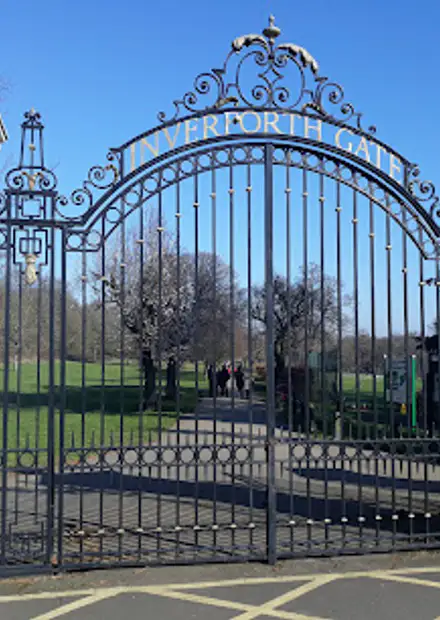
Best Landmarks Near Grovelands Park (Middlesex)
Planning a trip to Grovelands Park? Discover the best landmarks nearby with history, expert tips, and routes. Free on web or the Evendo app.


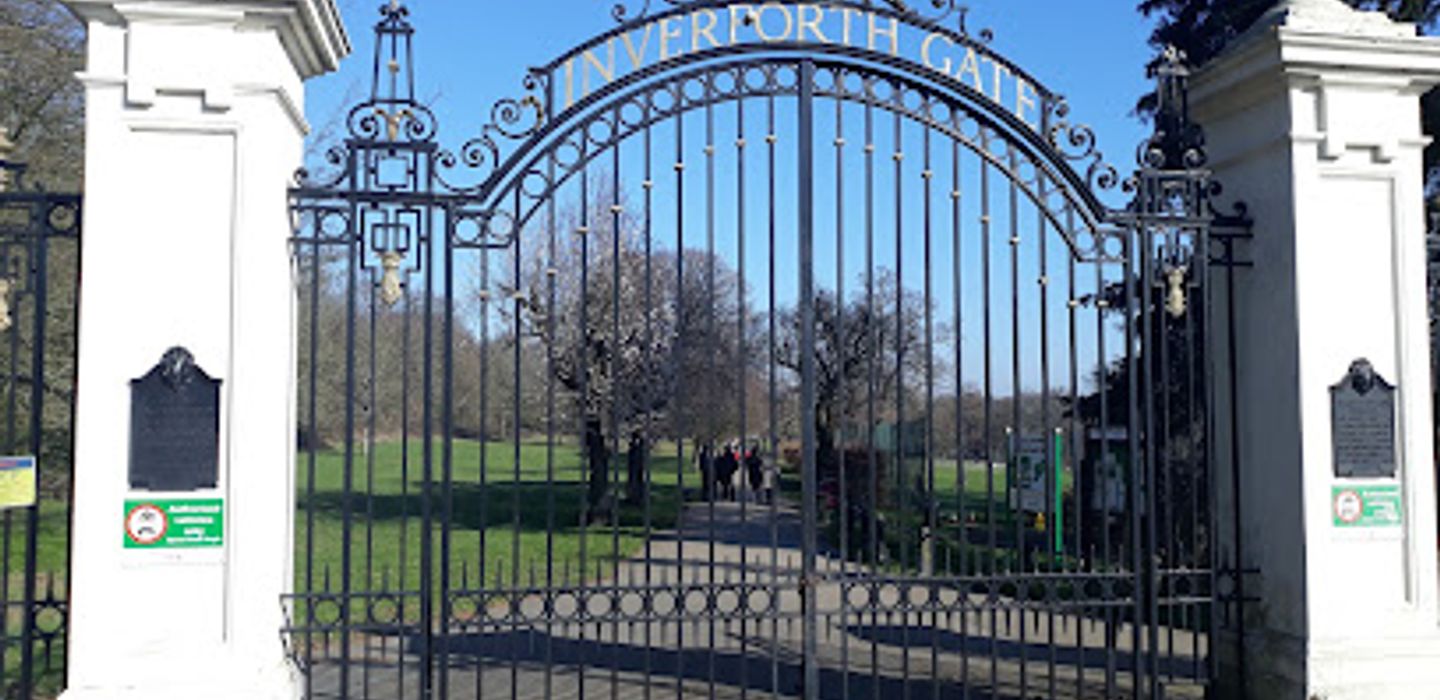
The best landmarks near Grovelands Park
- Top rated
- Closest to Grovelands Park
- Price level: low to high
- Time to spend: shortest first
- A–Z
78 landmarks
-
Market4.6★124,757 reviews
Camden Market
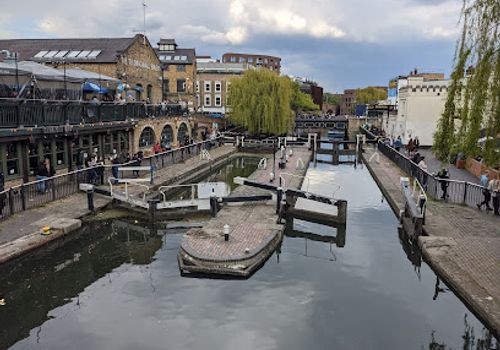
Camden Market in London is a vibrant, eclectic marketplace known for its unique blend of vintage fashion, handmade crafts, global street food, and lively atmosphere. Open daily from 10am to 6pm, it offers visitors a labyrinth of stalls, independent shops, and food halls spread across historic sites like Camden Lock and Stables Market. The market is a cultural melting pot, attracting locals and tourists alike with its rich diversity and constant buzz of activity.
Daily 10:00–18:00Price level $$Time to spend 2–5 hrs
-
Shopping Centre4.6★110,695 reviews
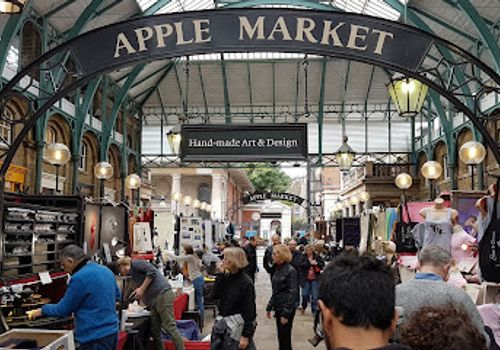
Covent Garden
Covent Garden is London's vibrant West End hub, centered around a historic piazza alive with street performers, bustling markets, luxury shops, and cultural gems like the Royal Opera House. Once a fruit and vegetable market, it now blends heritage with modern entertainment, dining, and festive magic, drawing visitors to its cobbled streets and lively atmosphere year-round.
Time to spend 1–3 hrs
-
Cathedral4.7★44,132 reviews
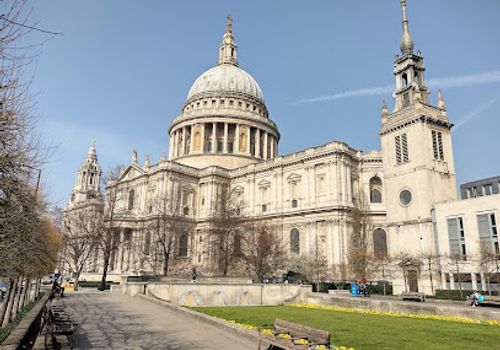
St. Paul's Cathedral
St. Paul's Cathedral, a stunning Baroque Anglican cathedral designed by Sir Christopher Wren, stands as one of London's most iconic landmarks. With a history spanning over 1400 years, its majestic dome dominates the London skyline. Visitors can explore its rich heritage, impressive architecture, and panoramic views from the Golden Gallery 85 meters above the floor. The cathedral remains an active place of worship and a symbol of resilience in the heart of London.
Price level $$Time to spend 1.5–2.5 hrs
-
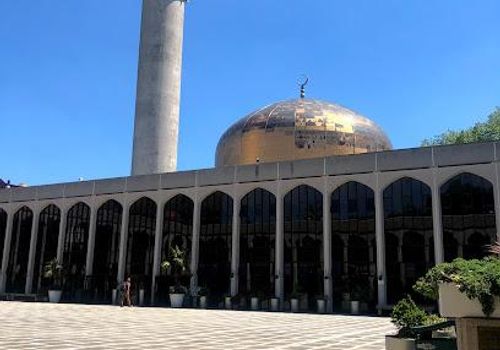
Mosque4.8★5,480 reviews
London Central Mosque
Established in 1977, the London Central Mosque stands as a prominent Islamic cultural and spiritual hub in the heart of London's St John's Wood neighbourhood. This architecturally distinctive mosque serves as the headquarters of the Islamic Cultural Centre and welcomes visitors of all backgrounds to explore Islamic heritage, attend prayers, and participate in educational programmes. With its elegant minaret and welcoming community atmosphere, it remains one of the UK's most significant Islamic institutions.
Daily 10:00–21:00Time to spend 1–3 hrs
-
Landmark4.6★5,071 reviews
30 St Mary Axe (The Gherkin)
Known as The Gherkin, 30 St Mary Axe is a 180-meter-tall, 41-floor commercial skyscraper in London’s financial district. Designed by Foster + Partners and completed in 2003, it stands on the site of the former Baltic Exchange. Its aerodynamic, egg-shaped design incorporates innovative natural ventilation and energy-saving features, making it a landmark of modern architecture and sustainability. While primarily office space, visitors can enjoy panoramic city views from its top-floor restaurant and bar.
Open 24 hoursPrice level $$Time to spend 0.5–2 hrs
-
Hotel3.6★1,356 reviews
Travelodge London Central Liverpool Street
Travelodge London Central Liverpool Street is a budget-friendly hotel located in the heart of East London, close to Liverpool Street station and iconic landmarks like Old Spitalfields Market and the Tower of London. Offering basic yet functional rooms with comfortable beds, an on-site bar and restaurant, and convenient transport links, it caters to travelers seeking affordable accommodation with easy access to London’s major attractions.
Price level $$Time to spend 1–3 hrs
-
Notable street4.6★924 reviews
Brick Ln
Brick Lane is a vibrant cultural artery in East London's Shoreditch, stretching from Bethnal Green to Whitechapel. Once a brick-making hub and textile centre, it has evolved into a dynamic neighbourhood celebrated for its ever-changing street art murals, diverse communities, and renowned Bengali curry houses. The street's layered history—from Huguenot silk weavers to Jewish immigrants to the thriving Bangladeshi community—is visible in its architecture, businesses, and public spaces. Today, Brick Lane pulses with creative energy, offering visitors an authentic East London experience blending heritage, contemporary art, and multicultural cuisine.
Time to spend 1.5–4 hrs
-
Mosque4.7★875 reviews
Brick Lane Mosque
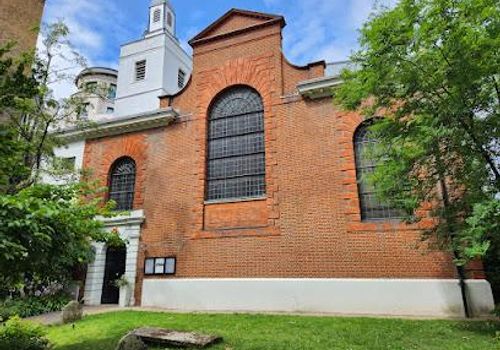
A remarkable mosque at the heart of London's East End, Brick Lane Jamme Masjid stands as a living chronicle of immigrant communities spanning nearly three centuries. Originally built in 1743 as a French Huguenot chapel, the building has served successive waves of religious communities—Protestant, Jewish, and now Muslim—making it an architectural embodiment of London's multicultural heritage. Today, it serves the Bangladeshi Muslim community and remains a vital spiritual and cultural hub in Spitalfields.
Time to spend 0.5–2 hrs
-
Historical landmark4.5★872 reviews
Guildhall
Guildhall, located at 71 Basinghall Street in London’s historic financial district, is a medieval civic building dating back to the early 15th century. It serves as the ceremonial and administrative center of the City of London Corporation, featuring the grand Great Hall, medieval crypts, and the Guildhall Art Gallery with a Roman amphitheatre beneath. Guildhall is a symbol of London's rich history, hosting state events, trials, and civic ceremonies for centuries.
Daily 10:30–16:00Price level $$Time to spend 1–2.5 hrs
-
Anglican church4.8★767 reviews
St Bartholomew the Great
London's oldest surviving parish church, founded in 1123 as an Augustinian priory by Rahere, a courtier of Henry I. Located in Smithfield, this medieval gem has witnessed nearly 900 years of English history, from royal patronage and miraculous healings to the Reformation and the Great Fire of London. Today, it remains an active parish church with stunning Norman and Gothic architecture, housing precious artifacts including a 1405 font and the tomb of its founder.
Mon–Sat 10:00–17:00 · Sun 8:30–18:30Time to spend 0.8–2.5 hrs
-
Sculpture4.6★784 reviews
Paddington Bear Statue
A beloved life-sized bronze sculpture of the famous literary character Paddington Bear stands on Platform 1 of Paddington Station in central London. Designed by sculptor Marcus Cornish and unveiled in February 2000 by author Michael Bond, this iconic statue commemorates the fictional bear's arrival at the station—the very location that inspired his name and story. Positioned beneath the station clock, the statue has become one of London's most cherished and photographed landmarks, drawing visitors from around the world.
Open 24 hoursTime to spend 0.2–1 hr
-
Hotel4.2★858 reviews
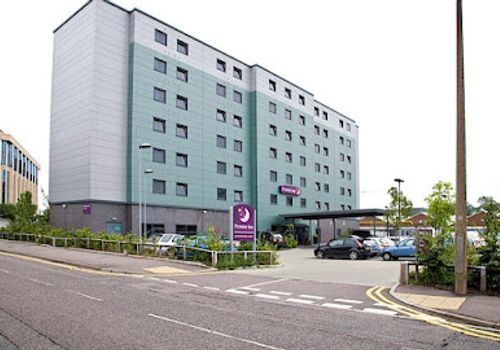
Premier Inn London Elstree / Borehamwood hotel
Premier Inn London Elstree / Borehamwood is a well-appointed 3-star hotel located on Warwick Road in Borehamwood, just north of London. Offering spacious, air-conditioned rooms with blackout curtains and powerful showers, it caters to both leisure and business travelers. The hotel features an on-site restaurant serving a variety of meals, free Wi-Fi, and accessible facilities. Its prime location provides easy access to Elstree Studios, Harry Potter Warner Bros. Studio Tour, and transport links to central London and nearby airports.
Price level $$Time to spend 1–2 hrs
-
Tourist attraction4.4★798 reviews
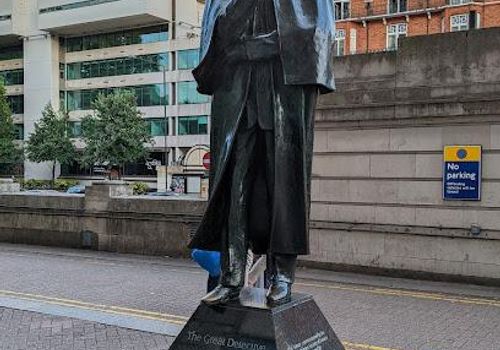
Sherlock Holmes Statue
Standing sentinel outside Baker Street Station on Marylebone Road, this bronze statue honours the world's most famous fictional detective. Unveiled in 1999 and sculpted by John Doubleday, the life-size figure captures Holmes in his iconic deerstalker and coat, pipe in hand. Commissioned by Abbey National Building Society—whose headquarters occupied the legendary 221B Baker Street address—the statue has become an essential pilgrimage point for literary enthusiasts and Sherlock devotees from around the globe. A perfect photo opportunity and starting point for exploring London's rich Sherlock Holmes heritage.
Mon–Sat open 24 hours · Sun 6:00–23:30Time to spend 0.2–1 hr
-
Corporate office4.5★697 reviews
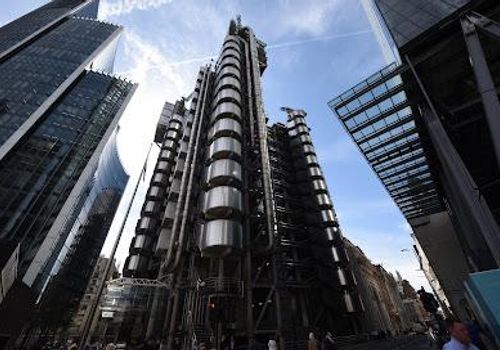
Lloyd's of London
Lloyd's of London, located at 1 Lime Street, is a pioneering example of high-tech architecture designed by Richard Rogers. Opened in 1986, this Grade I listed building showcases a radical 'inside-out' design with all services placed externally, creating a vast, flexible interior centered around a soaring 60-meter atrium. It combines cutting-edge engineering with historical elements, including the preserved 1928 façade and the iconic Lutine Bell in the Underwriting Room.
Mon–Fri 7:30–18:00Time to spend 0.5–2 hrs
-
Anglican church4.7★470 reviews
St Bride's Church, Fleet Street
St Bride's Church on Fleet Street in London is a historic Anglican church famously known as the 'Journalists' Church' and for its iconic tiered wedding cake–inspired spire. Originally founded in the 6th century and rebuilt by Sir Christopher Wren after the Great Fire of London in 1666, it has deep ties to the printing and newspaper industries. The church crypt reveals Roman remains and layers of London's history, while memorials honor journalists worldwide.
Time to spend 0.5–2 hrs
-
Anglican church4.6★458 reviews
St Clement Danes Church
St Clement Danes Church, located on the Strand in London, is a historic Anglican church designed by Sir Christopher Wren and rebuilt in 1682. It is famed as the Central Church of the Royal Air Force, serving as a memorial shrine to RAF personnel who died in service. The church’s iconic bells play the tune from the nursery rhyme 'Oranges and Lemons,' and its interior features over 1,000 RAF squadron badges carved in Welsh slate. The church was heavily damaged during WWII and restored by the RAF, reopening in 1958.
Mon–Fri 10:00–16:00 · Sat–Sun 10:00–15:00Time to spend 0.5–2 hrs
-
Evangelical church4.7★431 reviews
St Helen's Church, Bishopsgate
One of London's finest surviving medieval churches, St Helen's Bishopsgate stands as a testament to over 800 years of history in the heart of the City. Its distinctive dual-nave architecture reflects its unique past as both a parish church and adjacent Benedictine nunnery. Beautifully restored after IRA bomb damage in the 1990s, the church now welcomes visitors to explore its remarkable collection of funerary monuments and experience its vibrant evangelical ministry.
Time to spend 0.8–2 hrs
-
Catholic cathedral4.9★359 reviews
Ukrainian Catholic Cathedral
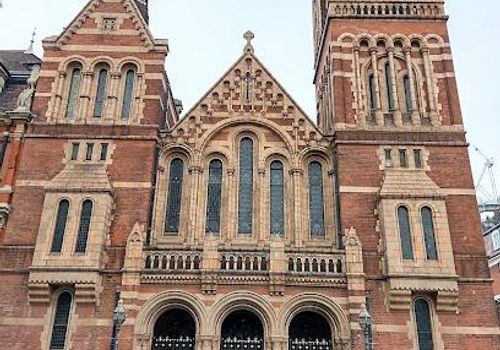
Located on Duke Street in London’s West End, the Ukrainian Catholic Cathedral of the Holy Family in Exile is a striking red brick and terracotta church designed by Alfred Waterhouse. Originally built in 1891 as the King’s Weigh House Congregational Church, it became the Ukrainian Catholic Cathedral in 1968, serving a growing Ukrainian community. The cathedral features an oval nave, an impressive iconostasis by a Ukrainian monk, and a rich history shaped by migration, war damage, and architectural heritage.
Time to spend 0.5–1.5 hrs
-
Church4.4★296 reviews
St Pancras New Church
St Pancras New Church, located on Euston Road in London, is a striking example of Greek Revival architecture built between 1819 and 1822. Inspired by ancient Athens, it features Ionic columns, terracotta caryatids modeled after the Erechtheum, and a tower influenced by the Tower of the Winds. This Grade I listed Anglican church offers rich historical significance, architectural grandeur, and serves as a vibrant cultural venue today.
Mon–Sat 11:00–14:00 · Sun 9:30–14:00Time to spend 0.5–2 hrs
-
Hostel4.2★290 reviews
St Christopher's Inn Liverpool Street
St Christopher's Inn Liverpool Street offers budget-friendly accommodation in the heart of London’s financial district, just steps from Liverpool Street Station. Set above the lively Flying Horse pub, this hostel blends a social atmosphere with practical amenities, including clean dorms, private rooms, and a continental breakfast option. Its central location provides easy access to Shoreditch’s creative scene and iconic city landmarks, making it ideal for young travelers, solo adventurers, and business visitors alike.
Price level $Time to spend 1–3 hrs
-
Anglican church4.5★241 reviews
Christ Church Spitalfields
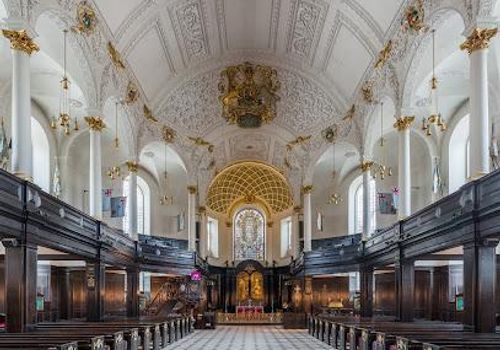
Christ Church Spitalfields is a masterpiece of English Baroque architecture designed by Nicholas Hawksmoor and completed in 1729. Built as part of the ambitious Fifty New Churches Act, this Grade I listed building features a striking 202-foot steeple, Portland stone façade, and a celebrated 1735 organ by Richard Bridge—once the largest in England. After extensive restoration completed in 2004 and crypt redevelopment in 2015, the church now functions as an active place of worship, concert venue, and cultural hub in London's East End.
Sun 9:00–10:00, 11:00–15:00, 17:00–18:30Time to spend 0.8–2.5 hrs
-
Anglican church4.4★226 reviews
Shoreditch Church
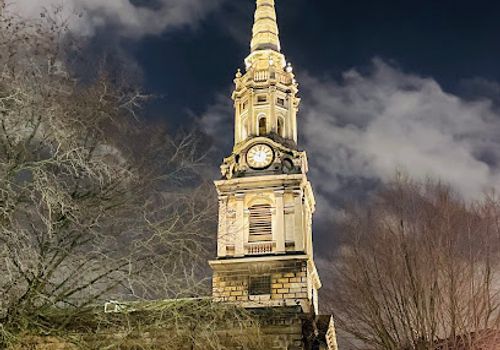
St Leonard's Church, commonly known as Shoreditch Church, is a Grade I listed Palladian-style Anglican church built between 1736 and 1740 by George Dance the Elder. It stands on one of England’s oldest continuous Christian worship sites, with deep ties to Shakespearean theatre history and London’s cultural heritage. Known as the 'actors’ church,' it features a rare 1756 Richard Bridge organ and a striking 192-foot steeple, symbolizing centuries of spiritual and artistic legacy in Shoreditch.
Mon–Fri 9:00–17:00Time to spend 0.5–2 hrs
-
Memorial4.5★200 reviews
Sir William Wallace Memorial
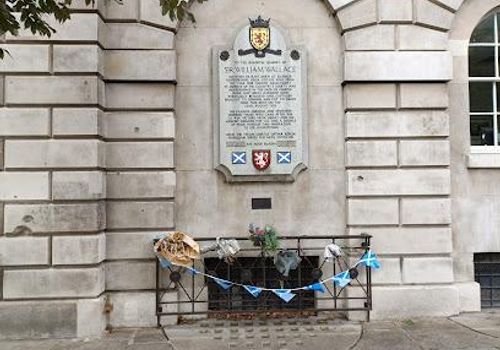
A dignified stone memorial on the wall of St Bartholomew's Hospital in Smithfield, honouring the Scottish patriot Sir William Wallace, who was executed nearby on 23 August 1305. Erected in 1956, this Grade II-listed shrine bears Latin and Gaelic inscriptions celebrating freedom and Scottish independence. The memorial receives flowers and tributes year-round, particularly around the anniversary of Wallace's death, making it a poignant reminder of medieval London's turbulent history and Scotland's struggle for liberty.
Open 24 hoursTime to spend 0.2–1 hr
-
Memorial4.6★164 reviews
Agatha Christie memorial
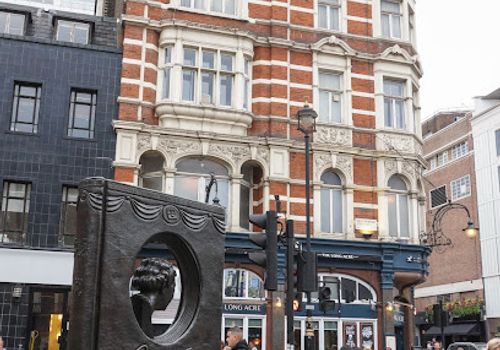
Situated in the heart of London's vibrant Covent Garden theatre district, the Agatha Christie Memorial honors the legendary British author known as the Queen of Crime. Unveiled in 2012, this striking bronze sculpture by Ben Twiston-Davies is shaped like a giant leather-bound book featuring a bust of Christie and motifs from her famous works, reflecting her immense contribution to literature and theatre.
Open 24 hoursTime to spend 0.2–1 hr
-
Church4.5★167 reviews
St Giles in the Fields
St Giles in the Fields is a historic Anglican parish church located at 60 St Giles High Street, London. Founded in 1101 as a chapel for a leper hospital established by Queen Matilda, it has evolved through centuries of religious, social, and architectural change. The current Palladian-style building, designed by Henry Flitcroft and completed in 1734, stands as a testament to the area's rich history, from medieval care for the sick to its role in London's urban development and cultural heritage.
Time to spend 0.5–2 hrs
-
Anglican church4.6★162 reviews
St George's Church, Hanover Square
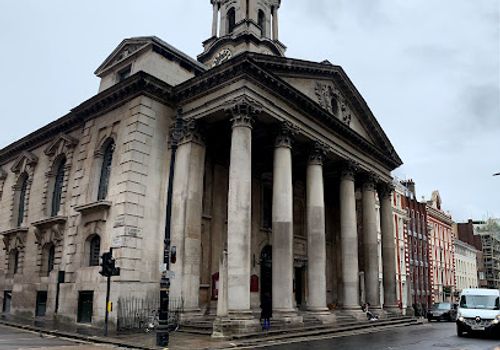
St George's Church, Hanover Square, built between 1721 and 1725 by architect John James, stands as a distinguished example of Georgian ecclesiastical architecture in London's West End. Serving the historic parish of Mayfair, it is renowned for its dignified worship, rich musical heritage linked to composer Handel, and its role as a fashionable wedding venue. Today, it continues as a spiritual sanctuary and cultural venue, hosting concerts and the annual London Handel Festival.
Time to spend 0.5–2 hrs
-
Notable street4.6★145 reviews
Strand
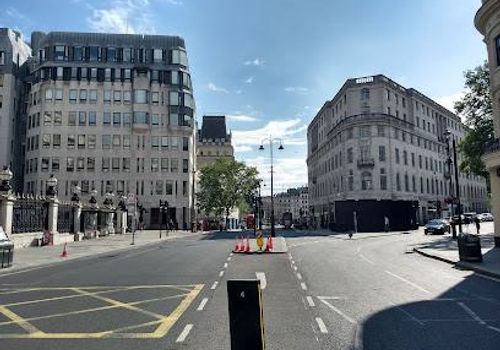
The Strand is a historic thoroughfare in central London's West End, stretching over three-quarters of a mile from Trafalgar Square to Temple Bar. This iconic street connects Westminster's political heart with the City's financial district, lined with world-class theatres, grand hotels, museums, and cultural institutions. Once home to celebrated writers and nobles, the Strand remains a vibrant hub of activity, offering theatre performances, fine dining, shopping, and centuries of layered history alongside contemporary London energy.
Price level $$Time to spend 1.5–4 hrs
-
Notable street4.6★144 reviews
Denmark St
Denmark Street is a historic 108-foot thoroughfare in London's West End, renowned as Britain's 'Tin Pan Alley' and the epicenter of the music industry for over a century. Built in the 1680s on the grounds of a medieval leper hospital and named after Prince George of Denmark, the street retains its original seventeenth-century facades beneath modern shopfronts. From 1911 onwards, it became home to legendary recording studios, music publishers, and guitar shops where The Rolling Stones, David Bowie, Jimi Hendrix, Elton John, and countless other iconic musicians recorded, composed, and collaborated. Today it remains a vital hub for music retail and live performance, though undergoing significant redevelopment.
Time to spend 0.8–3 hrs
-
Monument4.6★109 reviews
The National Firefighters Memorial
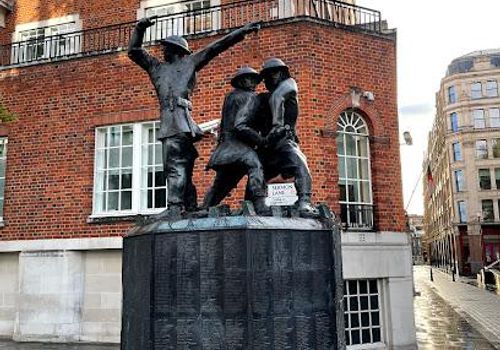
Located on Carter Lane near Peter's Hill in London, The National Firefighters Memorial honors the bravery and sacrifice of firefighters across the United Kingdom. Featuring three bronze statues depicting firefighters in action during the Blitz of World War II, the memorial commemorates those who lost their lives in both wartime and peacetime service. Unveiled in 1991 and rededicated in 2003, it stands as a solemn tribute to courage and resilience.
Open 24 hoursTime to spend 0.5–1.5 hrs
-
Historical landmark4.5★108 reviews
Queen Anne Statue
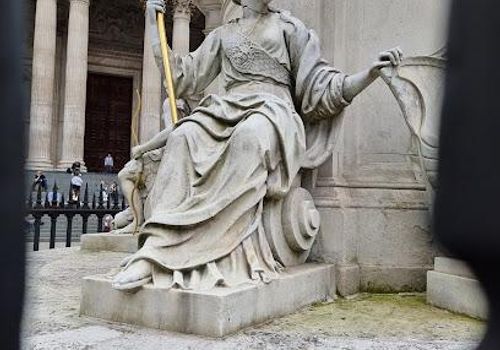
The Queen Anne Statue in St. Paul's Churchyard, London, is a historic landmark commemorating the completion of St. Paul's Cathedral after the Great Fire of London. Originally erected in 1712 by sculptor Francis Bird, the current statue is a faithful 1886 replica replacing the deteriorated original. The statue features Queen Anne adorned with regal symbols and four allegorical female figures representing Britannia, France, America, and Ireland at its base.
Open 24 hoursTime to spend 0.2–1.5 hrs
-
Historical landmark4.5★80 reviews
Temple Bar London
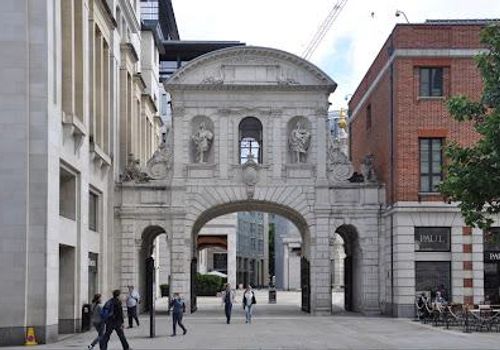
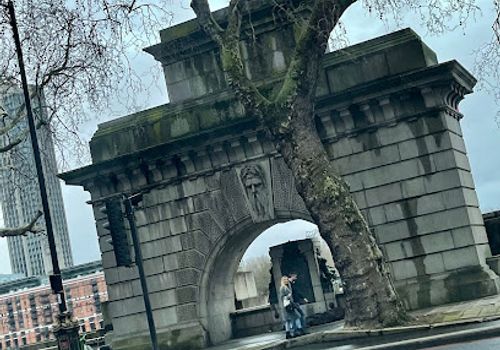
Temple Bar is the sole surviving historic gateway to the City of London, originally marking the boundary between the City and Westminster. Rebuilt by Sir Christopher Wren in 1672 from Portland stone, it has witnessed royal processions, grim displays of justice, and centuries of civic ceremony. After removal in 1878 to ease traffic, it was painstakingly restored and re-erected in Paternoster Square near St Paul's Cathedral in 2004, where it stands as a Grade I listed monument and venue for fine dining and events.
Price level $$Time to spend 0.5–2 hrs
-
Public Transport Stop4.4★80 reviews
Abbey Road crossing
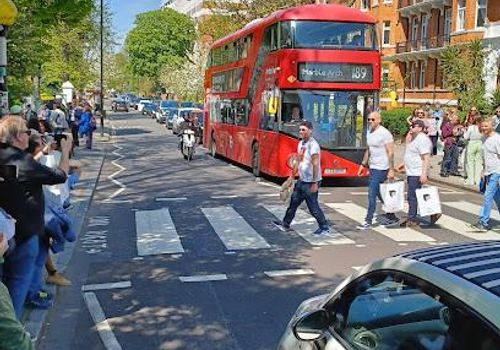
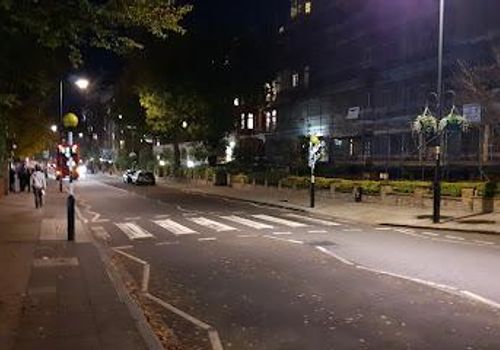
The zebra crossing on Abbey Road in St John’s Wood is the exact site of the 1969 photograph that became the cover of The Beatles’ album Abbey Road. Four band members walk in single file across the white stripes in one of the most reproduced images in popular music. Today the working crossing remains a public road where visitors recreate the pose amid the tree-lined residential street. The Grade II listed structure combines everyday British road infrastructure with global cultural significance. Fans arrive daily to stand on the stripes, photograph the scene, and visit the nearby studio wall and shop. The experience is brief, outdoor and shaped by passing traffic rather than any formal exhibition or guided tour.
Time to spend 10–45 hrs
-
Anglican church4.6★71 reviews
St Vedast alias Foster
A historic Anglican church in the City of London, St Vedast alias Foster stands as a testament to resilience and architectural heritage. Originally established in the 12th century and dedicated to a French saint, the church was rebuilt by Sir Christopher Wren following the Great Fire of 1666, then painstakingly restored after devastating bomb damage during World War II. Today, its striking baroque spire and carefully reconstructed interior offer visitors a profound connection to London's ecclesiastical past and wartime history.
Mon–Fri 10:00–15:00 · Sun 11:00–12:00Time to spend 0.5–1.5 hrs
-
Historical landmark4.6★54 reviews
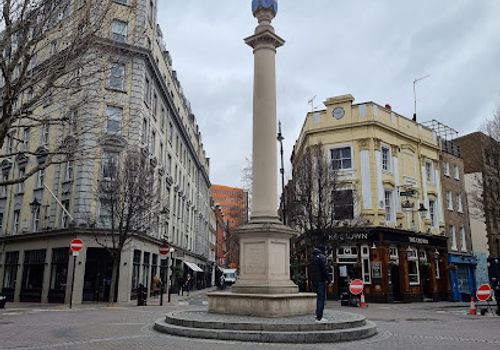
Historic Seven Dials
Seven Dials is a unique historic area in London's Covent Garden, where seven streets converge around a central sundial pillar with six dials. Designed in the 1690s by Thomas Neale, the star-shaped layout maximized housing frontage and rental income. Once a notorious slum, it has transformed into a vibrant cultural and shopping district, retaining much of its original architecture and charm.
Daily 7:00–23:00Price level $$Time to spend 1–3 hrs
-
Anglican church4.7★52 reviews
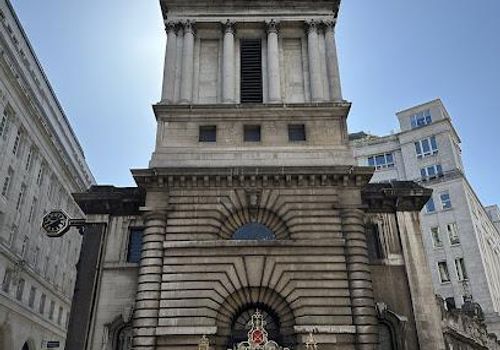
IMPRINT Church London: St Mary Woolnoth
St Mary Woolnoth stands at 10-13 Lombard Street as a striking English Baroque church designed by Nicholas Hawksmoor between 1716 and 1727. Built on a site with worship dating back to at least the 12th century, it survived the Great Fire of London and the Blitz. Its crypt was controversially converted into part of Bank Underground Station, making it a unique blend of sacred history and urban infrastructure. The church is renowned for its imposing twin-turret façade, rich abolitionist history, and its continuing role serving London’s German-speaking Swiss community.
Time to spend 0.5–1.5 hrs
-
Historical landmark4.4★45 reviews
St Bartholomew's Gatehouse
St Bartholomew's Gatehouse, located at 57A West Smithfield in London, is a rare surviving Tudor timber-framed building dating from 1595. Built atop a 13th-century stone arch, it once served as the southern entrance to the nave of St Bartholomew-the-Great church. Remarkably spared from the Great Fire of London and revealed after WWI bomb damage, the Grade II listed gatehouse showcases historic wood paneling and heraldic ironwork, standing as a testament to London's rich medieval and Tudor heritage.
Daily 8:00–22:00Time to spend 0.2–1 hr
-
Historical landmark4.7★39 reviews
Temple Bar Memorial
Temple Bar Memorial in London marks the historic boundary between the City of London and Westminster. Originally a medieval gateway rebuilt by Sir Christopher Wren in the 17th century, the memorial stands where the original Temple Bar once guarded entry to the City. Featuring sculptures of Queen Victoria and Edward VII, and crowned by a dragon symbolizing the City, it commemorates centuries of London’s civic and royal history.
Open 24 hoursTime to spend 0.2–1 hr
-
Notable street4.6★35 reviews
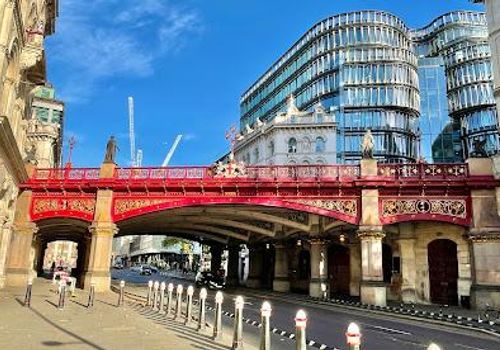
Holborn Viaduct
Holborn Viaduct is a historic Victorian-era road bridge in London, completed in 1869 to span the steep valley of the River Fleet. It connects Holborn with the City of London, easing traffic flow and symbolizing 19th-century urban innovation. Adorned with ornate ironwork and bronze statues representing Commerce, Agriculture, Science, and Fine Arts, the viaduct remains a vital and architecturally significant part of London's transport network.
Time to spend 0.5–1.5 hrs
-
Historical landmark4.4★36 reviews
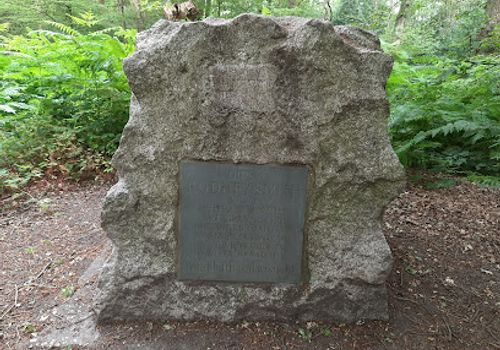
The Gypsy Stone
The Gypsy Stone in Woodford, London, is a striking historical landmark commemorating Rodney 'Gipsy' Smith, a renowned British evangelist born to Romani parents in Epping Forest. Marked by a large stone carved with a traditional vardo wagon, it stands as a cultural symbol amidst the tranquil forest setting, reflecting Smith’s remarkable life and heritage.
Open 24 hoursTime to spend 0.5–1.5 hrs
-
Historical landmark4.7★31 reviews
Stairway to Heaven, Bethnal Green Memorial
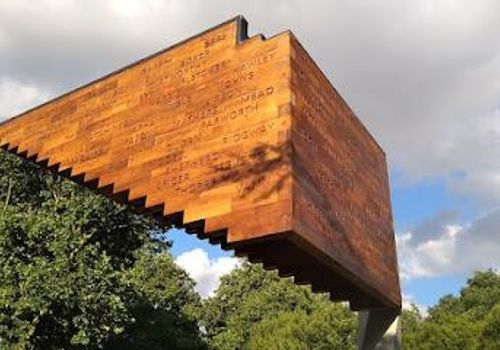
Located in Bethnal Green Gardens beside Bethnal Green Underground Station, the Stairway to Heaven Memorial commemorates the 173 civilians who died in the 1943 Bethnal Green tube shelter disaster, the worst civilian loss of life in Britain during WWII. The striking inverted staircase, made of sustainable teak and inscribed with victims’ surnames, stands above a concrete plinth engraved with names and personal accounts. Designed as a place of reflection, it marks a tragic moment of panic and overcrowding on the station’s steps during an air-raid alert, and has become a focal point for remembrance and community mourning in London’s East End.
Open 24 hoursTime to spend 0.5–1.5 hrs
-
Anglican church4.6★30 reviews
St Anne & St Agnes Church
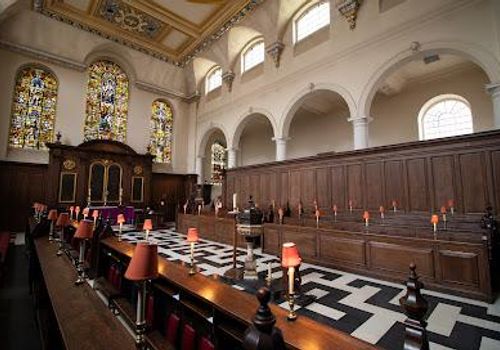
A remarkable Grade I listed Anglican church tucked away on Gresham Street in the City of London, St Anne & St Agnes stands as a testament to resilience and architectural innovation. First documented in 1137, this uniquely double-dedicated church survived the Great Fire of 1666, devastating World War II bombing, and multiple reconstructions. Rebuilt by Sir Christopher Wren in 1680 with its distinctive Greek cross design, the church now serves as the VOCES8 Centre, home to a world-renowned vocal ensemble and educational charity. Its intimate interior, featuring a harmonious square-within-square layout and superb acoustics, offers visitors a serene escape from the bustling City streets.
Time to spend 0.5–1.5 hrs
-
Historical landmark4.5★30 reviews
Roman London Wall (St Alphage Garden Section)
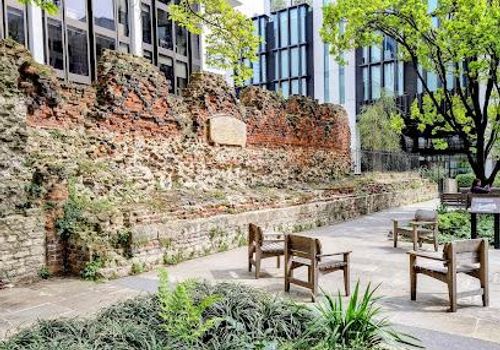
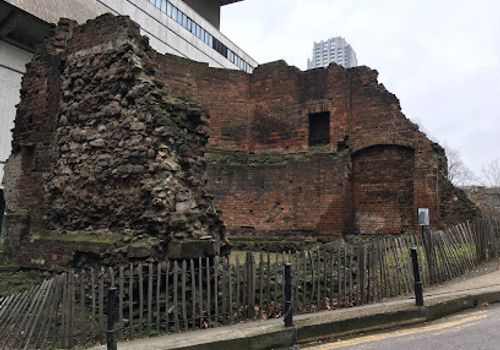
The Roman London Wall at St Alphage Garden is a remarkable surviving section of the ancient defensive wall built around Londinium circa AD 200. Nestled in the Barbican area of London, this historic site features layered Roman and medieval stonework, including a brick parapet added in the 15th century. The adjacent St Alphage Garden, once a churchyard, offers a tranquil green space revealing centuries of London's urban evolution and defensive history.
Open 24 hoursTime to spend 0.5–1.5 hrs
-
Memorial4.6★29 reviews
Euston War Memorial
The Euston War Memorial, located at 190 Euston Road in London, is a poignant First World War monument dedicated to the 3,719 employees of the London and North Western Railway who sacrificed their lives. Featuring a 13-meter Portland stone obelisk surrounded by four bronze statues representing different military branches, it stands as a solemn reminder of wartime sacrifice amidst the bustling city.
Open 24 hoursTime to spend 0.2–1 hr
-
Bridge4.6★27 reviews
Iron Footbridge over Regent’s Canal (Camden)
The Iron Footbridge over Regent’s Canal in Camden is a charming historic pedestrian bridge offering scenic views of the canal and vibrant urban surroundings. Nestled in the heart of Camden, it connects visitors to the lively markets and cultural scene, embodying the area's rich industrial heritage and artistic spirit.
Open 24 hoursTime to spend 0.5–2 hrs
-
Historical landmark4.3★28 reviews
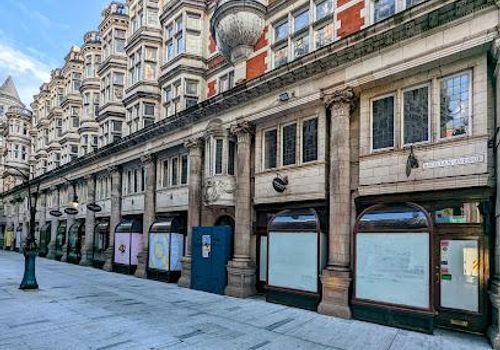
Sicilian Avenue
Sicilian Avenue is a Grade II listed Edwardian pedestrianized shopping street in Holborn, London, known for its distinctive neo-classical architecture featuring Ionic colonnades, terracotta dressings, and Italian marble accents. Designed by Robert Worley and completed in 1910, it offers a charming mix of shops and eateries tucked within historic red brick and white terracotta buildings, creating a serene Mediterranean-inspired retreat in the heart of the city.
Open 24 hoursPrice level $$Time to spend 0.5–2 hrs
-
Historical landmark3.4★31 reviews
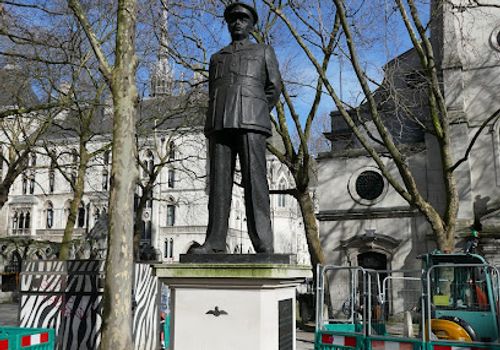
Bomber Harris Memorial
The Bomber Harris Memorial in London honors Air Chief Marshal Sir Arthur Harris and the brave crews of RAF Bomber Command during World War II. Located at St Clement Danes Church on the Strand, this bronze statue commemorates the sacrifices of over 55,000 airmen who lost their lives in the cause of freedom. Unveiled in 1992 by the Queen Mother, the memorial stands as a poignant reminder of the wartime history and complex legacy of strategic bombing campaigns. It is set within a historic church that serves as a shrine to the Allied air forces.
Open 24 hoursTime to spend 0.5–1.5 hrs
-
Historical landmark4.4★22 reviews
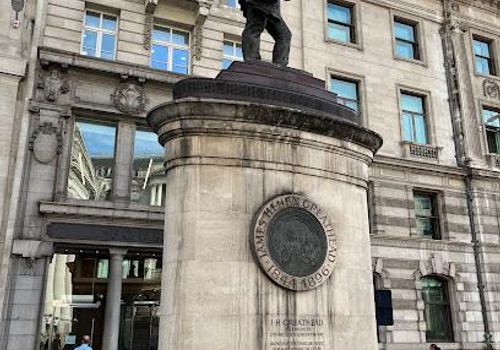
Statue of James Henry Greathead
The Statue of James Henry Greathead stands prominently on a traffic island in Cornhill, London, near Bank station and the Royal Exchange. Unveiled in 1994, it honors Greathead, the pioneering civil engineer who revolutionized tunnel construction for the London Underground with his invention of the travelling shield. The bronze statue also cleverly conceals a vital ventilation shaft for Bank station, blending engineering heritage with urban functionality in the heart of the City.
Mon–Fri 10:30–16:30Time to spend 0.2–1 hr
-
Historical landmark3.8★13 reviews
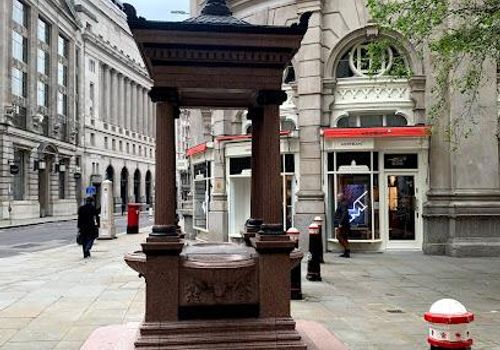
Cornhill Fountain
A striking cast-iron and bronze monument standing outside the Royal Exchange, the Cornhill Fountain represents two centuries of London's commitment to public welfare. Originally erected in 1911 to commemorate the jubilee of the Metropolitan Drinking Fountain and Cattle Trough Association, this Grade II listed structure replaced an earlier drinking fountain from 1859. The fountain's ornate design, crafted from polished granite and bronze, serves as a tangible reminder of Victorian philanthropy and the city's pioneering efforts to provide clean, accessible water to all residents.
Open 24 hoursTime to spend 0.2–1 hr
-
Historical landmark4.3★10 reviews
Victoria Embankment
Victoria Embankment is a historic road and riverside walkway along the north bank of the River Thames in central London. Built in the 1860s as part of a major Victorian engineering project led by Joseph Bazalgette, it transformed London’s sewage system while providing a scenic thoroughfare from Westminster to Blackfriars Bridge. Today, it features elegant gardens, iconic monuments like Cleopatra’s Needle, and stunning views of the Thames and landmarks such as the Houses of Parliament.
Time to spend 1–3 hrs
-
Historical landmark5.0★7 reviews
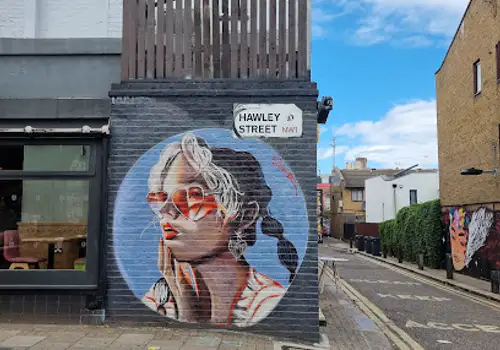
Hawley Street Art
Hawley Street Art in Camden, London, is a dynamic outdoor gallery of street art known for its ever-changing murals and iconic works, including tributes to Amy Winehouse. Located near Camden Market, this historical landmark showcases some of the best curated urban art in the city, blending cultural heritage with contemporary creativity in a lively, colorful setting.
Open 24 hoursTime to spend 1–2.5 hrs
-
Sculpture4.0★6 reviews
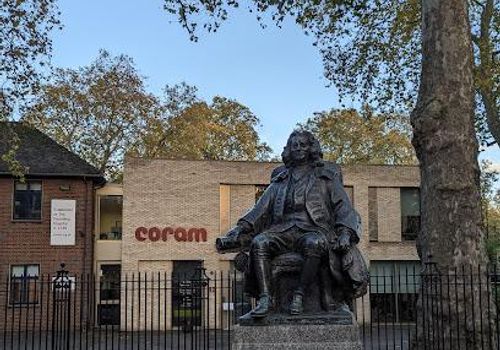
Statue of Thomas Coram
A seated bronze statue of Thomas Coram, the philanthropist who founded the Foundling Hospital, stands in Brunswick Square in Bloomsbury. Designed by sculptor William Macmillan and unveiled in 1963, the statue depicts Coram holding a scroll, based on a portrait by William Hogarth. The figure sits on a granite base inscribed with Coram's dates and his pioneering role in child welfare. Located near the Foundling Museum and Coram's Fields, this monument honours a man whose 17-year campaign transformed the lives of thousands of abandoned children in 18th-century London.
Open 24 hoursTime to spend 0.2–1 hr
-
Sculpture4.0★6 reviews
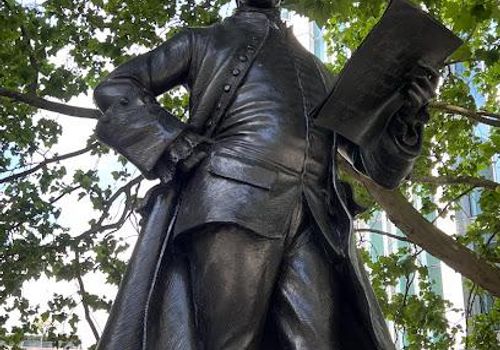
John Wilkes statue
Standing at the junction of Fetter Lane and New Fetter Lane in London, this 1988 bronze statue honours John Wilkes, the fiery 18th-century politician, MP, and Lord Mayor of London. Depicted in 18th-century dress as if delivering a speech, the statue captures Wilkes’s distinctive squint, a feature faithfully reproduced by sculptor James Butler. Located in the heart of the City, it’s a quiet but striking tribute to a controversial champion of liberty and press freedom, easily overlooked amid the surrounding legal and financial district.
Open 24 hoursTime to spend 15–30 min
-
Historical landmark3.8★4 reviews
King's Reach commemoration memorial
The King's Reach Commemoration Memorial in London honors the Silver Jubilee of King George V, marking 25 years of his reign in 1935. Situated on the Victoria Embankment near Temple Stairs, this historical landmark features a plaque and sculptural elements that celebrate the naming of this stretch of the River Thames as 'King's Reach' by the Port of London Authority. The memorial stands as a tribute to the king's legacy and the importance of the river in London's history.
Open 24 hoursTime to spend 0.5–1.5 hrs
-
Historical landmark4.7★3 reviews
Prince Henry's Room
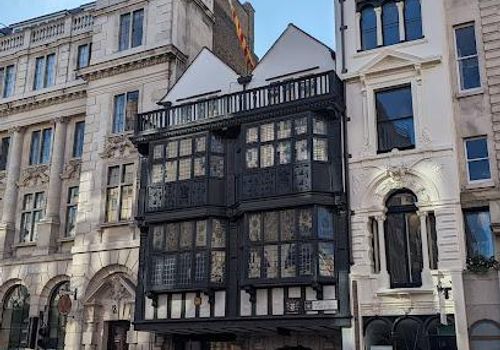
Prince Henry's Room at 17 Fleet Street is a rare surviving Jacobean timber-framed building in the City of London, dating back to 1610. Once a tavern named The Prince's Arms, it features a richly decorated plaster ceiling with the Prince of Wales's feathers and original oak panelling. Though closed to the public, its exquisite façade and historical significance as a pre-Great Fire survivor remain captivating.
Time to spend 0.5–1.5 hrs
-
Historical landmark5.0★2 reviews
Plaque: Tin Pan Alley & La Giaconda cafe
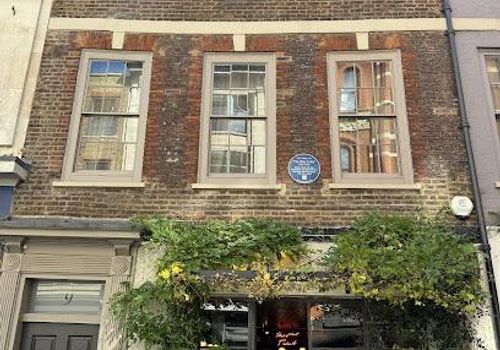
Located at 9 Denmark Street in London, the Plaque commemorates Tin Pan Alley and the iconic La Giaconda Cafe, a historic hub of British music culture. This small street, with its original 17th-century facades, was the heart of London's music publishing industry and a meeting place for legendary musicians like David Bowie, Elton John, and the Rolling Stones. The cafe was a vibrant social spot where musical ideas flourished, making it a landmark of cultural and musical heritage.
Time to spend 0.5–1.5 hrs
-
Historical landmark4.0★2 reviews
London City Wall - Bastion 14
Bastion 14 is a well-preserved medieval defensive structure built atop the Roman foundations of London’s ancient city wall. Located in the Barbican area, it reveals layers of London's history from Roman Londinium through medieval fortifications to 19th-century urban development. The bastion was partially excavated in 1949, conserved with lime mortar and stainless steel supports, and stands as a Scheduled Monument reflecting London's evolving city defenses.
Open 24 hoursTime to spend 0.5–1.5 hrs
-
Historical landmark1.7★3 reviews
The Old Watch House
The Old Watch House at 4 Strand, London, is a historic parish watch house dating back to at least the early 18th century. Originally used by local watchmen before the establishment of the Metropolitan Police in 1829, it served as a small lock-up and base for patrolling the area. Now part of King’s College London’s campus, this Grade II listed building retains its quaint façade and balcony, offering a glimpse into London’s early policing and community safety history.
Time to spend 0.5–1.5 hrs
-
Historical landmark5.0★1 review
London City wall
The London City Wall is a historic defensive structure originally built by the Romans between 190 and 225 AD to protect Londinium, the ancient Roman city that became London. Stretching about 2 miles and constructed from Kentish ragstone, the wall defined the city's boundaries for centuries. It was maintained and enhanced through the Anglo-Saxon and medieval periods, with surviving sections visible today near Barbican and other parts of the City of London.
Open 24 hoursTime to spend 0.5–2 hrs
-
Historical landmark5.0★1 review
Plaque: David Garrick
This historical plaque at 27 Southampton Street in London honors David Garrick, the influential 18th-century English actor, playwright, and theatre manager. Garrick revolutionized acting with his naturalistic style and managed the prestigious Drury Lane Theatre, shaping British theatre for decades. The plaque marks a site connected to his legacy in the heart of London’s theatre district.
Open 24 hoursTime to spend 15–30 min
-
Sightseeing tour agency
Trip Turkey
Trip Turkey offers an unforgettable sightseeing experience, showcasing the rich culture, stunning landscapes, and historical treasures of Turkey. Ideal for tourists seeking to explore this captivating country through expertly guided tours.
-
Woburn Walk
Woburn Walk is London's first purpose-built pedestrian shopping street, designed by Thomas Cubitt in 1822 in the heart of Bloomsbury. This Grade II* listed street features fourteen elegant stucco-fronted shops arranged in two symmetrical terraced rows, with residential accommodation on the upper floors. The street's ornate Greek Revival architecture, original gas lamps, and wooden shopfronts create a uniquely preserved snapshot of early 19th-century urban design. Home to W.B. Yeats from 1895–1919, Woburn Walk remains a charming retail enclave and architectural gem.
Time to spend 0.5–2 hrs
-
Building
3 Abbey Rd.
Abbey Road Studios, located at 3 Abbey Road in London’s St John’s Wood, is the world’s most iconic recording studio, established in 1931. Originally a Georgian townhouse, it was transformed into the first purpose-built recording studios, becoming the creative home to legendary artists like The Beatles, Pink Floyd, and Sir Edward Elgar. Renowned for pioneering recording innovations, Abbey Road remains a symbol of musical heritage and innovation.
Price level $$Time to spend 0.5–2 hrs
-
Arnold Circus
Arnold Circus, located in Shoreditch, London, is the historic centerpiece of the Boundary Estate, Britain's first council housing development. Built in the 1890s on the site of the notorious Old Nichol slum, the estate was designed to provide improved living conditions for the working class, featuring red-brick Arts and Crafts-style buildings arranged around a landscaped circular garden with a bandstand. Today, Arnold Circus stands as a symbol of social reform, urban planning innovation, and a vibrant multicultural community.
Time to spend 0.5–1.5 hrs
-
Shoreditch
Shoreditch is East London's creative powerhouse, a vibrant neighborhood where street art, independent boutiques, and cutting-edge restaurants define the character. Once the edge of the city, it has evolved into a cultural hub blending historic industrial architecture with contemporary design. Explore colorful murals in King John Court and along Brick Lane, browse vintage fashion at Spitalfields Market, and experience the area's legendary nightlife scene. The neighborhood seamlessly merges bohemian creativity with urban sophistication, making it essential for anyone seeking authentic London culture beyond the traditional tourist circuit.
Price level $$Time to spend 3–8 hrs
-
Building
190 High Holborn
A prominent 1970s office tower at a key junction in central London, designed by architect Richard Seifert and clad in dark red granite. Occupying a large corner site on High Holborn, it forms part of the city’s post-war commercial skyline and benefits from proximity to major transport links and central districts like Holborn, Covent Garden and Soho. While primarily a working office building, its scale and location make it a notable urban landmark in the area.
Time to spend 15–30 min
-
Building
182 Bishopsgate
182 Bishopsgate is a notable building located in London’s historic Bishopsgate area, a site steeped in centuries of history from Roman times through to the modern financial district. Situated on a street that once marked the eastern gate of the old London Wall, this location blends architectural heritage with contemporary urban vitality in the heart of the City of London.
Time to spend 0.5–2 hrs
-
Soho Square
Soho Square is a historic Georgian garden square in the heart of London's Soho district, originally laid out in 1681 as King's Square. The central garden features a distinctive mock-Tudor market cross building (1926) and a statue of Charles II carved by Danish sculptor Caius Gabriel Cibber in 1681. Once home to aristocrats, French Huguenot refugees, and notable scientists including botanist Sir Joseph Banks, the square has evolved into a vibrant cultural hub surrounded by Georgian townhouses, media offices, and creative businesses. The square was transferred to public ownership in 1954 and remains a peaceful green oasis amid the bustling Soho neighborhood.
Time to spend 0.5–2 hrs
-
Cultural landmark
Former EMI House (Beatles album cover photo)
The site of one of music history's most iconic photographs, the Former EMI House at 20 Manchester Square once served as the London headquarters of EMI Records. Though the modernist building was demolished in 1995, the location remains a pilgrimage site for Beatles fans and music enthusiasts. This Georgian square in Marylebone witnessed the creation of the famous Please Please Me album cover in 1963, when photographer Angus McBean captured The Beatles looking down a stairwell—an image that would define an era.
Time to spend 0.5–2 hrs
-
Montagu Square
Montagu Square is a prestigious Georgian garden square in Marylebone, London, built between 1810 and 1815 as part of the Portman Estate. Named after Elizabeth Montagu, an 18th-century literary patron and social reformer, the square features elegant red-brick townhouses arranged around a tranquil private garden dominated by plane trees planted in 1817. The square gained cultural prominence in the 1960s as home to several Beatles members and rock icons, most notably at No. 34, where John Lennon and Yoko Ono lived during the recording of The White Album. Today it remains one of London's most exclusive residential addresses and a significant landmark in both architectural and music history.
Time to spend 0.5–2 hrs
-
Hare Pl
Hare Place, nestled within the Temple district of London, is a historic and atmospheric enclave famed for its deep-rooted connections to the legal profession. Surrounded by iconic barristers' chambers such as Hare Court, this area combines centuries-old architecture with tranquil gardens and narrow lanes, offering a unique glimpse into London's legal heritage and the enduring legacy of the Knights Templar.
Time to spend 0.5–2 hrs
-
Ludgate Circus
Ludgate Circus is a major traffic junction in the City of London where Fleet Street meets Ludgate Hill, Farringdon Street and New Bridge Street. Though now a busy urban crossroads, it marks the site of Ludgate, one of the original gates in the Roman and medieval London Wall. The name recalls the mythical King Lud, said to have rebuilt London in ancient times. Today, the area is a historic hub near St Paul’s Cathedral, Fleet Street’s legal and media district, and the old Fleet River, with subtle reminders of its past embedded in architecture and sculpture.
Time to spend 0.2–1 hr
-
Bow St
Bow Street in London’s Covent Garden is a street steeped in history, known for its 17th-century origins, association with the pioneering Bow Street Runners police force, and its role in the theatrical life of the city. Once home to notable residents and infamous for its mix of markets, brothels, and theatres, Bow Street today reflects a rich cultural heritage amid modern urban life.
Time to spend 0.5–2 hrs
-
Historical landmark
St Mary’s, Whitechapel (The White Chapel)
St Mary’s, Whitechapel, also known as The White Chapel, was a historic church originally built in the 13th century on Adler Street, London. Famous for its bright white limewashed exterior, it gave its name to the surrounding district. The church underwent multiple rebuilds, notably in the 17th and 19th centuries, before being destroyed in the Second World War. Today, its site is commemorated as Altab Ali Park, reflecting the rich cultural and religious history of Whitechapel.
Time to spend 0.5–2 hrs
-
Watling St
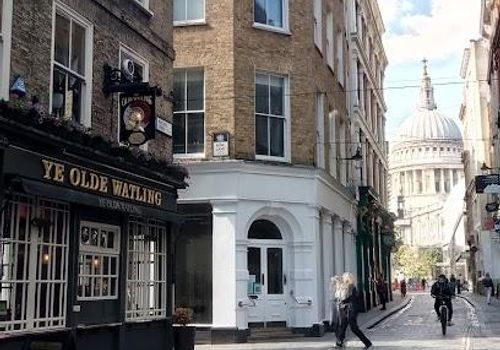
Watling Street in London is a historic route originally used by ancient Britons and extensively paved by the Romans after their invasion in AD 43. This road served as a vital military and trade artery, linking London with key Roman settlements and playing a pivotal role in events such as the Battle of Watling Street, where Roman forces defeated Queen Boudica’s rebellion. Today, parts of Watling Street remain integrated into modern roads, preserving its legacy as a foundational route through England’s history.
Time to spend 0.5–2 hrs
-
Building
30 Saint Mary Axe - Swiss Re
30 St Mary Axe, famously known as The Gherkin, is a 40-storey skyscraper in London’s financial district. Designed by Foster + Partners and completed in 2003, this distinctive, bullet-shaped tower is celebrated for its innovative sustainable design, natural ventilation system, and striking spiral glass façade. It stands 180 meters tall, offering panoramic city views from its upper floors and serving as a landmark symbolizing modern architecture and environmental responsibility in the heart of London.
Price level $$Time to spend 0.5–2 hrs
-
Mitre Square
Mitre Square, nestled in London’s historic financial district, is a tranquil square steeped in layered history. Known primarily as the site of Catherine Eddowes’ murder by Jack the Ripper in 1888, it also overlays the medieval Holy Trinity Priory grounds. Today, it offers a quiet urban retreat where visitors can reflect on its complex past, admire occasional contemporary art installations, and explore nearby hidden gems like the Ye Olde Mitre pub.
Time to spend 0.5–1.5 hrs
-
City of London
The City of London, often called the Square Mile, is the historic and financial core of the capital. It blends ancient landmarks like St. Paul's Cathedral and the Tower of London with cutting-edge architecture such as The Gherkin and the Barbican. This dynamic area offers a rich tapestry of history, culture, and commerce, making it a captivating destination for visitors seeking both heritage and modern urban energy.
Price level $$Time to spend 2–6 hrs
-
Lombard St
Lombard Street in the City of London is one of the world's most historically significant financial centers, where Italian Lombard merchants established banking in the 12th century. This narrow, atmospheric street has been the powerhouse of British finance for nearly 900 years, lined with historic banking institutions, elegant Georgian and Victorian architecture, and marked by iconic symbols like the famous Gresham Grasshopper. Today it remains a vibrant hub of commerce and heritage, offering visitors a tangible connection to centuries of financial innovation and London's mercantile past.
Time to spend 0.5–2 hrs
















Explore Grovelands Park on the map
A handpicked selection of must-see spots near Grovelands Park, mapped for you.
More about Grovelands Park

More to explore near Grovelands Park

 Best experiences near Grovelands Park
 Best hotels near Grovelands Park
 Best attractions near Grovelands Park
 Best shops near Grovelands Park
 Best bars near Grovelands Park
 Best restaurants near Grovelands Park
Explore more

Getting your guide ready…
We are putting together a fresh copy of the Grovelands Park guide. This can take up to a minute.
This can take a few moments. If your browser asks, choose Allow so the download can start. You'll find the guide in your Downloads folder.
Nothing happened? Download it again
Sorry, the guide is taking longer than usual. Please try again in a minute, or get it by email instead.