

Best Landmarks in Copenhagen
Planning a trip to Copenhagen? Discover the best landmarks in Copenhagen with history, expert tips, and routes. Free on web or the Evendo app.


The best landmarks in Copenhagen
- Top rated
- Closest to the centre
- Price level: low to high
- Time to spend: shortest first
- A–Z
54 landmarks
-
Castle4.5★27,772 reviews
Amalienborg Palace
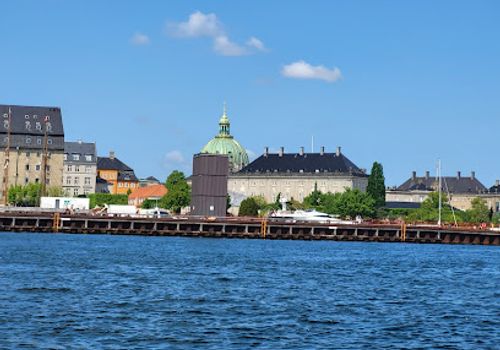
Amalienborg Palace is the official residence of the Danish Royal Family, comprising four identical Rococo palaces arranged around an octagonal square in central Copenhagen. Originally built in the 1750s for noble families, the royal family acquired the complex in 1794 after a fire destroyed Christiansborg Palace. Today, visitors can explore the Amalienborg Museum in Christian VIII's Palace, which showcases royal interiors, priceless artifacts, and 150 years of Danish monarchy history, while the daily changing of the guard at noon remains a beloved tradition.
Price level $Time to spend 1–2 hrs
-
Tourist attraction4.7★21,024 reviews
Nyhavn
Copenhagen's most iconic waterfront destination, Nyhavn is a 17th-century canal lined with brilliantly colored townhouses, historic wooden ships, and vibrant cafés. Once a bustling port frequented by sailors and home to Hans Christian Andersen, this picturesque harbor now offers outdoor dining, canal tours, live jazz, and a charming Christmas market in winter. Perfect for leisurely strolls, people-watching, and experiencing authentic Danish hygge.
Open 24 hoursPrice level $$Time to spend 1–3 hrs
-
Sculpture4.1★29,286 reviews
The Little Mermaid
Poised on a granite rock along Copenhagen’s Langelinie promenade, The Little Mermaid is a small bronze statue with a global reputation. Unveiled in 1913 and inspired by Hans Christian Andersen’s 1837 fairy tale, she gazes out over the harbour, half woman, half fish, capturing themes of longing and sacrifice. Despite being just 1.25 metres tall, this wistful figure has become one of Denmark’s defining symbols and a must-see waterfront stop for visitors exploring the city’s maritime edge.
Time to spend 0.5–1.5 hrs
-
Castle4.6★18,989 reviews
Rosenborg Castle
Rosenborg Castle is a spectacular Renaissance palace in central Copenhagen, famed for its elegant gardens, lavish interiors, and the Danish Crown Jewels. Built by King Christian IV in the early 17th century, its regal rooms, grand halls, and royal collections offer a captivating glimpse into Denmark’s royal heritage. The castle sits within the scenic King’s Garden, inviting travelers to step into history, marvel at ornate treasures, and explore beautifully preserved architecture.
Daily 10:00–17:00
-
Plaza4.4★20,141 reviews
City Hall Square
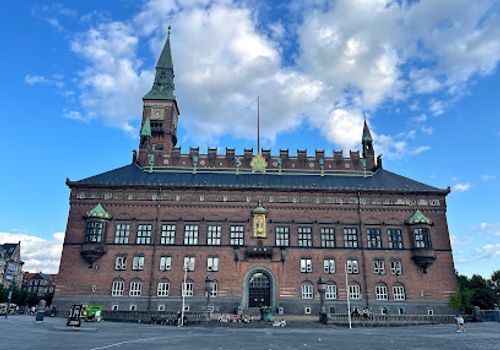
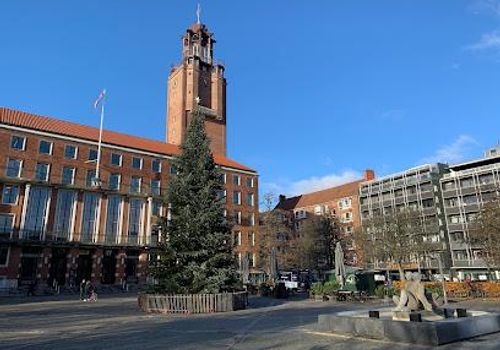
Copenhagen's grand civic plaza and vibrant urban heart, anchored by the iconic National Romantic City Hall with its 105.6-metre tower. This bustling square marks the gateway to Strøget, Europe's longest pedestrian shopping street, and hosts year-round celebrations, demonstrations, and cultural events. Surrounded by classical architecture, sculptures including the Dragon Fountain, and the famous Weather Girl, it remains a essential gathering place for locals and visitors alike.
Time to spend 0.5–3 hrs
-
Church4.6★8,107 reviews
Frederik's Church
Frederik's Church, known as the Marble Church, is Copenhagen's most iconic religious landmark, crowned by a massive copper-green dome measuring 31 meters in diameter—one of Europe's largest. Located in the elegant Frederiksstaden district, this Baroque-inspired masterpiece took 145 years to complete, finally opening in 1894. Visitors can admire intricate marble interiors, climb the dome for panoramic city views, and experience world-class architecture in a serene, working parish church.
Mon–Sat 10:00–17:00 · Sun 12:30–17:00Time to spend 1–3 hrs
-
Observation deck4.4★3,579 reviews
Ofelia Plads
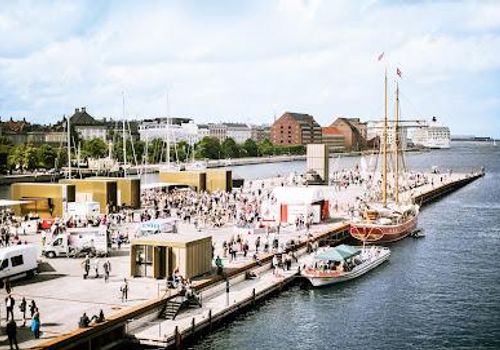
Ofelia Plads is Copenhagen's vibrant waterfront cultural square, a 13,000-square-meter public space built on a historic pier. Known for its iconic 'kissing stairs' descending to the harbor, the plaza hosts year-round concerts, theater performances, art installations, and sporting events. The square offers stunning harbor views, designated swimming areas, and serves as a gateway to canal tours and nearby attractions including Amalienborg Palace and the Royal Danish Playhouse.
Daily 6:00–22:30Time to spend 1–4 hrs
-
Cathedral4.5★3,282 reviews
Church of Our Lady
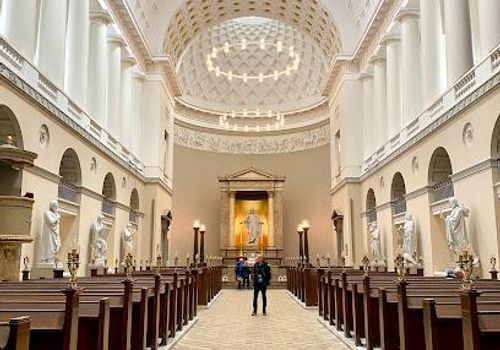
Rising above Copenhagen’s old town, the Church of Our Lady is Denmark’s national cathedral and a serene masterwork of neoclassical design. Rebuilt in 1829 after the British bombardment of 1807, its calm, white interior is dominated by Bertel Thorvaldsen’s celebrated statues of Christ and the apostles. Long a stage for royal coronations and weddings, this light-filled basilica combines over 800 years of history with a quietly contemplative atmosphere in the very heart of the city.
Time to spend 0.5–1.5 hrs
-
Fountain4.4★2,937 reviews
Stork Fountain
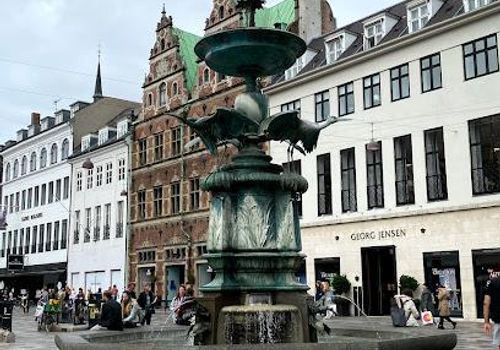
Anchoring the bustling square of Amagertorv in central Copenhagen, the Stork Fountain is one of the city’s most recognizable meeting points and decorative landmarks. Inaugurated in 1894 as a silver‑wedding gift to Crown Prince Frederik (later Frederik VIII) and Crown Princess Louise, its three elegant storks and playful water jets bring a touch of poetry to the heart of the Strøget pedestrian district, surrounded by historic façades and high‑end Danish design stores.
Open 24 hoursTime to spend 0.2–1 hr
-
Fountain4.6★2,182 reviews
Gefion Fountain
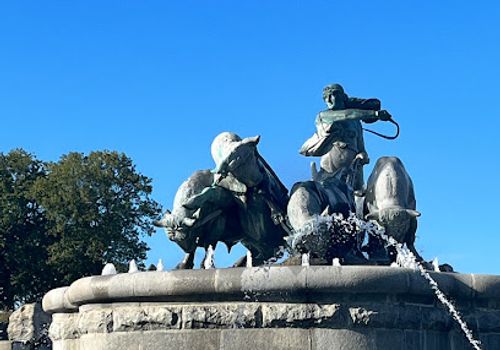
Set at the edge of Churchillparken overlooking Copenhagen’s harbor, the Gefion Fountain is a dramatic bronze and granite monument to Norse mythology. Designed by sculptor Anders Bundgaard and inaugurated in 1908, it shows the goddess Gefion urging four straining oxen through churning water, a visual retelling of the legend of Zealand’s creation. The fountain’s tumbling cascades, mythic symbolism and leafy park setting make it a compelling pause between Kastellet, St. Alban’s Church and the Langelinie waterfront.
Open 24 hoursTime to spend 0.5–1.5 hrs
-
Protestant church4.7★2,054 reviews
Grundtvig’s Church
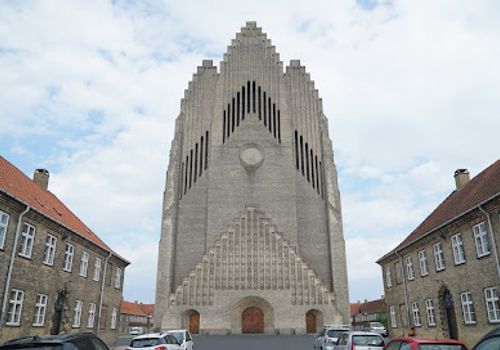
Rising from the Bispebjerg hillside in Copenhagen, Grundtvig’s Church is one of Denmark’s most remarkable architectural statements: a vast expressionist brick church built between 1921 and 1940 in memory of pastor, hymn writer and educator N.F.S. Grundtvig. Formed from around five million soft yellow bricks, its towering organ‑pipe façade, stepped gables and soaring, unadorned interior combine Gothic proportions with Nordic minimalism. Flooded with pale daylight and furnished with Kaare Klint’s iconic church chairs, it feels both monumental and deeply serene.
Tue–Sun 10:00–16:00Time to spend 0.5–2 hrs
-
City or town hall4.6★1,100 reviews
Copenhagen City Hall
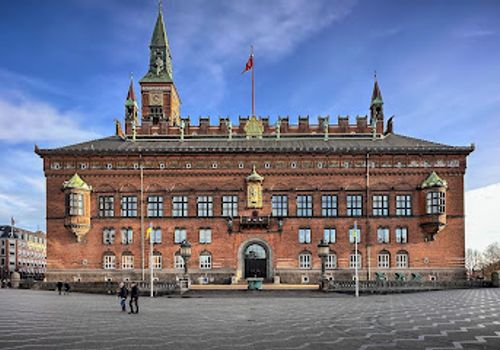
Copenhagen City Hall rises over Rådhuspladsen with its 106‑metre clock tower, red‑brick façade and richly detailed National Romantic architecture. Completed in 1905 and inspired by Italian town halls, it is still the working heart of the city’s democracy, yet welcomes visitors into its grand central hall, tranquil inner garden, ornate chambers and the famed Jens Olsen’s World Clock. Free public access, paid tower and guided tours make it both civic hub and must‑see landmark.
Mon–Fri 9:00–16:00 · Sat 9:30–13:00Time to spend 1–3 hrs
-
Tourist attraction4.6★961 reviews
Dragør havn
Dragør Havn is a picturesque working harbor at the heart of one of Denmark's best-preserved medieval fishing villages. Located just 30 minutes from Copenhagen, this active port showcases centuries of maritime heritage through its colorful 18th and 19th-century buildings, traditional wooden vessels, and charming waterfront atmosphere. The harbor remains a living center of maritime culture, home to fishermen, pilot services, sailing clubs, and museums that tell the story of Denmark's golden age of shipping.
Open 24 hoursTime to spend 2–4 hrs
-
Sculpture4.4★1,040 reviews
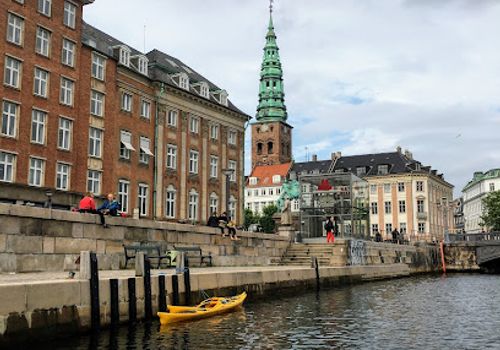
Bishop Absalon
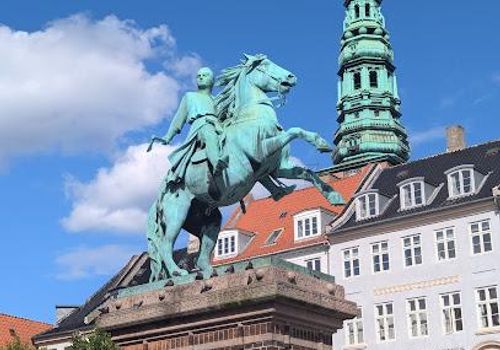
Rising above Copenhagen’s Højbro Plads, the equestrian statue of Bishop Absalon depicts the warrior-bishop credited as the city’s founder. Unveiled in 1902 to mark 700 years since his death, the bronze figure rears above a richly decorated plinth of brick and granite, adorned with herring and wave motifs that recall the medieval fishing village that became Copenhagen. Framed by neoclassical façades and close views of Christiansborg Palace and the canal, it’s a compact but symbolically powerful historic landmark.
Open 24 hoursTime to spend 0.2–1 hr
-
Castle4.5★885 reviews
Frederiksberg Palace
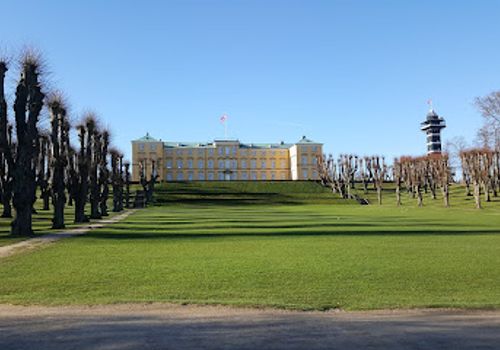
Perched on a gentle hill above leafy Frederiksberg Gardens, Frederiksberg Palace is a stately Baroque residence that once served as the summer retreat for Denmark’s kings. Its warm yellow facades, dark roofline and forest of chimneys form a striking backdrop to the surrounding lawns, lakes and winding paths. Today the building houses the Royal Danish Military Academy, so interior access is limited to guided tours, but the palace’s dramatic silhouette, royal stories and sweeping views make it a compelling stop in Copenhagen’s greenest corner.
Time to spend 1.5–3 hrs
-
Anglican church4.6★813 reviews
St Alban's Church
St. Alban's Church, locally known as the English Church, is Copenhagen's only Anglican place of worship. Built between 1885 and 1887 in Gothic Revival style by architect Arthur Blomfield, this elegant stone church with its distinctive spire stands in a peaceful park setting at the edge of Kastellet fortress. The church was established through the patronage of Princess Alexandra of Denmark, who later became Queen of England, and remains a remarkable symbol of Anglo-Danish cultural ties.
Mon–Sat 10:00–13:00 · Sun 13:00–16:00Time to spend 0.8–2 hrs
-
Notable street4.5★777 reviews
Strøget
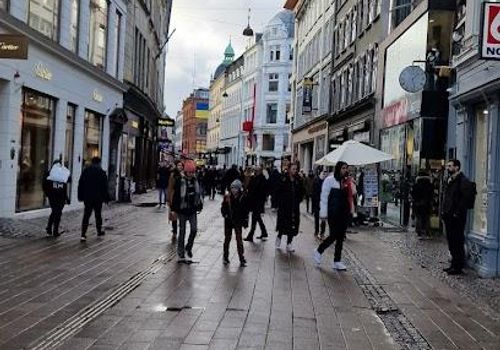
Strøget is one of Europe's longest pedestrian shopping streets, stretching 1.1 kilometers through the heart of Copenhagen. This iconic thoroughfare connects City Hall Square to Kongens Nytorv, offering an eclectic mix of luxury designer boutiques, high street chains, and local Danish shops. Beyond retail, the street pulses with street performers, historic architecture, and charming squares, making it a vibrant cultural hub where shopping, dining, and people-watching converge.
Price level $$Time to spend 1.5–4 hrs
-
Sculpture4.6★387 reviews
Statue of Andersen
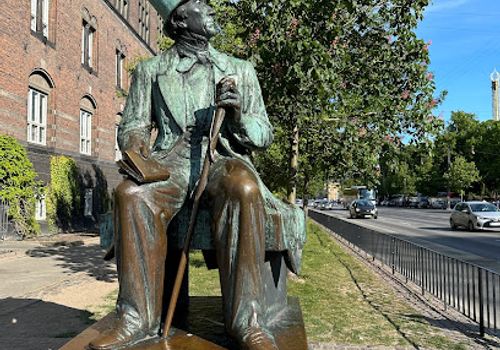
Set on bustling Rådhuspladsen beside Copenhagen City Hall, the bronze statue of Hans Christian Andersen shows Denmark’s beloved fairy‑tale writer seated with a book in his lap, gazing across H.C. Andersens Boulevard toward Tivoli Gardens. Created by sculptor Henry Luckow‑Nielsen and unveiled in 1965, it has become a central city landmark and a favourite photo stop, inviting visitors to pause amid the traffic and plazas and connect the modern capital with the imaginative worlds of Andersen’s stories.
Open 24 hoursTime to spend 0.5–1 hr
-
Bridge4.6★342 reviews
Circle Bridge
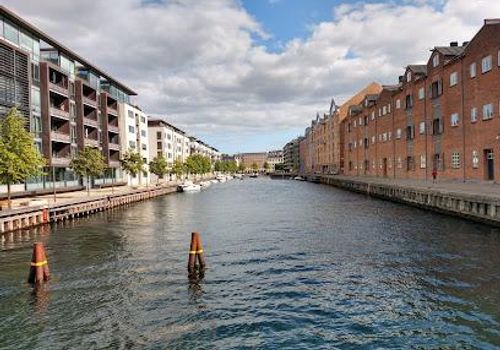
Cirkelbroen is a striking pedestrian and bicycle bridge spanning Christianshavn Canal in Copenhagen, designed by renowned Danish-Icelandic artist Olafur Eliasson. Opened in 2015, the 40-meter bridge features five circular platforms of varying sizes, each supported by steel masts resembling a fleet of sailing yachts. The innovative design references Copenhagen's maritime heritage while encouraging visitors to slow down and linger rather than rush across, creating a contemplative meeting place that connects Christiansbro to Applebys Plads.
Open 24 hoursTime to spend 0.5–2 hrs
-
Russian Orthodox church4.5★279 reviews
St. Alexander Nevsky Church
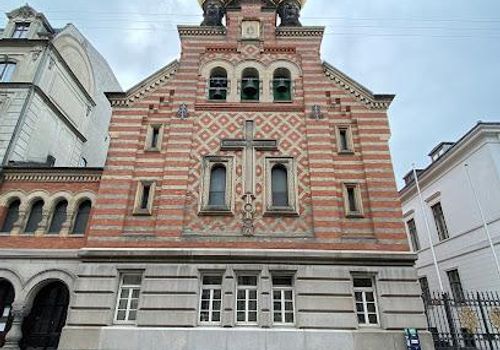
Copenhagen's only Russian Orthodox church, St. Alexander Nevsky Church is an ornate architectural masterpiece nestled in the heart of the city near Amalienborg Palace. Built between 1881 and 1883 as a gift from the Russian government to commemorate the wedding of Alexander Alexandrovich and Princess Dagmar of Denmark, this golden-domed sanctuary showcases imperial splendor with its distinctive Byzantine design. The church remains an active place of worship and a striking symbol of Russian cultural heritage in Scandinavia.
Time to spend 0.5–1.5 hrs
-
State parliament4.3★300 reviews
The Danish Parliament
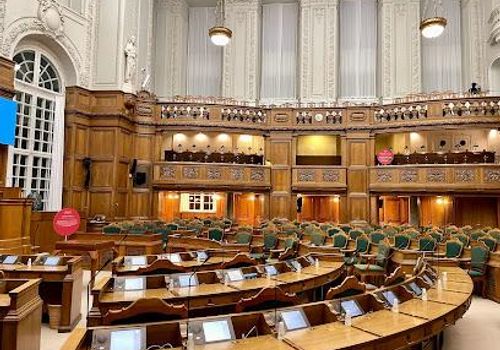
Set on the small islet of Slotsholmen in Copenhagen’s historic core, the Danish Parliament occupies part of Christiansborg Palace, a monumental neo‑Baroque complex that has been Denmark’s center of power for centuries. Within its granite walls, the Folketing (Parliament), Supreme Court and Prime Minister’s Office share space with royal reception rooms, palace chapel and underground ruins that trace the site’s story back to Bishop Absalon’s 12th‑century fortress, making this both a working seat of democracy and a richly layered historical landmark.
Open 24 hoursPrice level $$Time to spend 1–3 hrs
-
Historical landmark4.5★229 reviews
Rytterstatuen
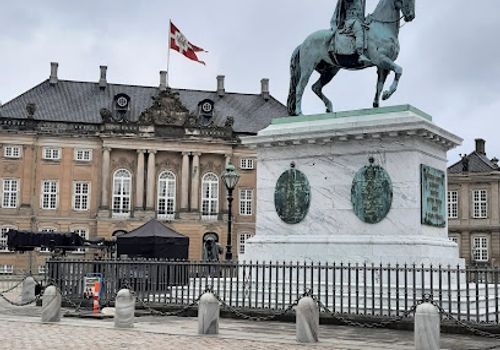
Rytterstatuen, the equestrian statue of King Frederik V, commands the centre of Amalienborg Slotsplads in Copenhagen, perfectly framed by the four rococo palaces of the royal residence. Cast in bronze in the 18th century by French sculptor Jacques-François-Joseph Saly, this 12m monument is a masterpiece of neoclassical art and royal propaganda, symbolising absolute monarchy and the birth of the Frederiksstaden district.
Time to spend 0.5–1.5 hrs
-
City or town hall4.3★253 reviews
Frederiksberg Town Hall
Rising over busy Smallegade with its 60-metre clock tower and warm brick façades, Frederiksberg Town Hall is the civic heart of this independent municipality within Copenhagen. Built between 1942 and 1953 to Henning Hansen’s functionalist design, it combines clean modern lines with subtle retro details, from wood-and-brass interiors to an old-school paternoster lift. The surrounding square, metro access and nearby shopping streets make it an easy and atmospheric stop between Frederiksberg’s parks, cafés and cultural venues.
Time to spend 0.5–1.5 hrs
-
Bridge4.5★210 reviews
Cykelslangen
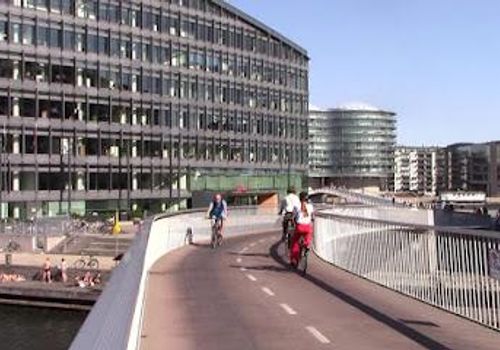
Cykelslangen, the bright orange "Bicycle Snake" in Copenhagen’s Vesterbro district, is an elegant elevated bridge created almost entirely for cyclists. Completed in 2014 by Dissing+Weitling, the 220m serpentine structure glides between glassy mall façades and the harborfront, lifting riders above traffic and pedestrians. As you curve over the water, the bridge doubles as an urban viewpoint, offering snapshots of Gasværkshavnen, Bryggebroen and the city’s evolving waterfront, while showcasing Copenhagen’s dedication to people-first, bike-centric design.
Open 24 hoursTime to spend 0.5–1.5 hrs
-
Church4.6★170 reviews
St. Anne's Church
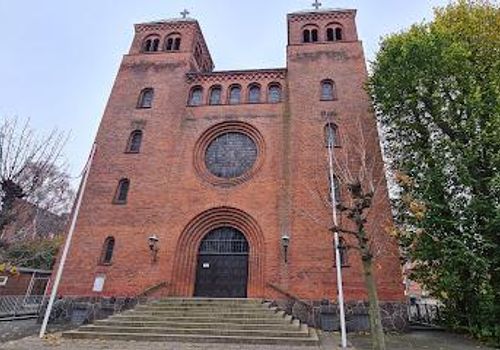
St. Anne’s Church in Copenhagen’s Amager district is a handsome Roman Catholic church with twin towers and a warm, quietly ornate interior. Completed in 1938 on Dronning Elisabeths Allé, it grew from a small turn‑of‑the‑century chapel into the heart of a diverse parish. Inside, Art Nouveau–era details, a side altar to Our Lady of Perpetual Help, and gilded panels depicting scenes from Christ’s life create a contemplative atmosphere that contrasts gently with the residential streets outside.
Time to spend 0.5–1.5 hrs
-
Lake4.5★124 reviews
The Lakes
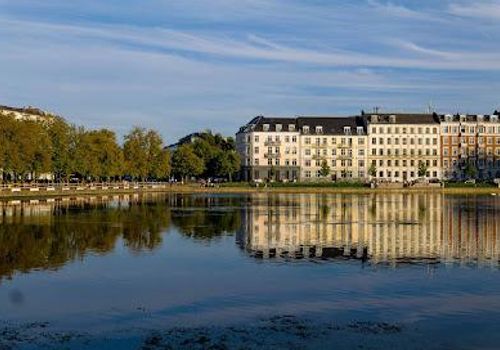
The Lakes, known locally as Søerne, form a captivating chain of three rectangular lakes curving around Copenhagen's western city center. This 6.35-kilometre recreational area features well-maintained walking and cycling paths, abundant birdlife, and seasonal activities from summer boat rentals to winter ice skating. Lined with cafés, restaurants, and abundant seating, the lakes offer a peaceful urban escape perfect for strolling, jogging, picnicking, and people-watching.
Time to spend 1–3 hrs
-
Tourist attraction4.4★101 reviews
Højbro Plads
A vibrant historic square in Copenhagen's heart, Højbro Plads centers on an iconic equestrian statue of Bishop Absalon, the city's legendary founder. Nestled between the Strøget shopping street and Slotsholmen island, this lively gathering spot offers canal views, the charming Stork Fountain, and transforms into a festive Christmas market during the holiday season. Perfect for people-watching with a local drink in hand.
Time to spend 0.5–2 hrs
-
Lutheran church4.5★95 reviews
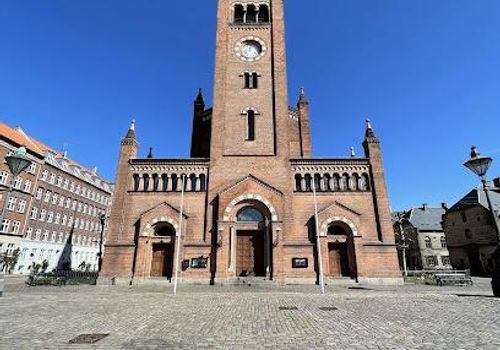
St. Paul's Church
St. Paul’s Church rises in red brick at the heart of Copenhagen’s historic Nyboder quarter, long associated with the Danish navy. Consecrated in 1877 and designed by architect Johannes Emil Gnudtzmann, the Neo‑Romanesque church acts as a visual full stop to the surrounding rows of ochre seamen’s houses. Inside, a calm, high‑vaulted nave, warm brickwork, and soft natural light create a quietly impressive space that feels both intimate and monumental, making it a rewarding detour in central Copenhagen.
Time to spend 0.5–1.5 hrs
-
Sculpture4.6★83 reviews
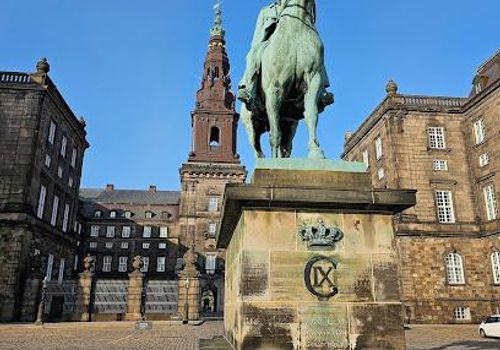
Equestrian statue of Christian IX
Set on the riding ground behind Christiansborg Palace, the bronze equestrian statue of King Christian IX honors the monarch who reigned from 1863 to 1906. Unveiled in 1927, it was created by sculptor Anne Marie Carl-Nielsen and is noted as the first equestrian monument of a monarch sculpted by a woman. Framed by the palace wings and stables, it is an atmospheric stop for history, photography and a quiet pause in Copenhagen’s political heart.
Open 24 hoursTime to spend 0.5–1 hr
-
Memorial4.4★91 reviews
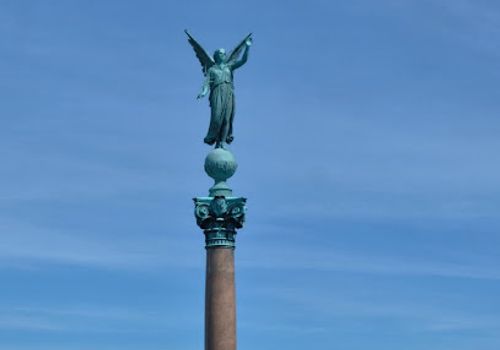
Iver Huitfeldt Memorial
A solemn 19-metre marble and granite monument standing on Copenhagen's Langelinie promenade, commemorating Admiral Ivar Huitfeldt and the 497 crew members who perished when their ship HDMS Dannebroge exploded during the Battle of Køge Bay in 1710. Designed by architect Vilhelm Dahlerup and completed in 1886, the column is crowned with a bronze statue of Victory and adorned with four bronze reliefs depicting the admiral's portrait, coat of arms, and maritime symbols salvaged from the wreck.
Open 24 hoursTime to spend 0.5–1.5 hrs
-
Park4.6★75 reviews
Havnegade Promenaden
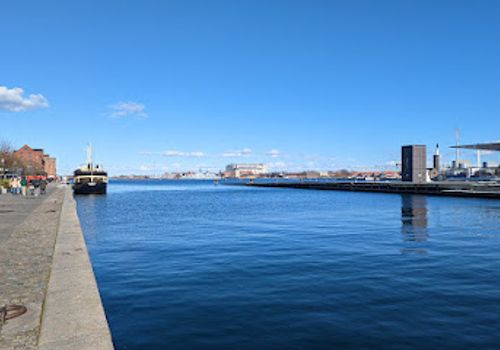
Havnegade Promenaden is a 750-meter waterfront promenade in central Copenhagen that stretches between Knippelsbro and the Nyhavn canal. This beautifully redesigned public space features historic 19th-century architecture, harbor views, and innovative recreational elements including built-in trampolines. Since its 2012 redesign by landscape architects Algren & Bruun, the former industrial harbourfront has transformed into a vibrant gathering place with year-round activities, making it one of Copenhagen's most attractive waterfront destinations.
Open 24 hoursTime to spend 0.8–2.5 hrs
-
Sculpture3.9★102 reviews
Agnete and the Merman Statue
Hidden beneath the waters of Copenhagen's Slotsholm Canal lies a haunting bronze sculpture group depicting a merman and his seven sons reaching desperately toward the surface. Created in 1992 by Danish sculptor Suste Bonnén, this underwater artwork brings to life a tragic Danish folklore tale of love, loss, and longing. Visible from Højbro Bridge on calm days and illuminated with ethereal lighting in the evenings, this poignant sculpture remains one of Copenhagen's most evocative yet overlooked artistic treasures.
Open 24 hoursTime to spend 0.5–2 hrs
-
Sculpture4.5★62 reviews
Our Fallen
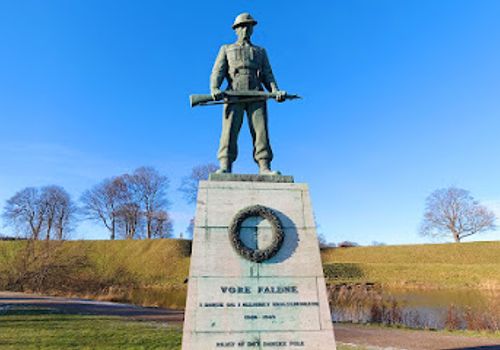
A solemn bronze monument at the entrance to Kastellet fortress in Copenhagen, honouring Danish and allied soldiers who died during World War II. Created by artist Svend Lindhart and erected in 1957, the statue stands on a limestone pedestal at the Zealand Gate, serving as a powerful tribute to those who sacrificed their lives in service. The memorial is part of Copenhagen's significant war remembrance sites and lies within the historic Citadel complex.
Open 24 hoursTime to spend 0.2–1 hr
-
Tourist attraction4.5★50 reviews
The Kissing Stairs
A vibrant waterfront gathering space nestled between Amalienborg Palace and Nyhavn, The Kissing Stairs serves as Copenhagen's beloved social hub where locals and visitors converge to relax, socialize, and enjoy panoramic harbour views. This contemporary public space features distinctive stepped seating that cascades toward the water, creating an inviting amphitheatre-like setting perfect for sunbathing, people-watching, and soaking in the city's maritime atmosphere. The location's proximity to iconic landmarks and its role as a cultural venue hosting everything from classical concerts to tango performances make it an essential Copenhagen experience.
Open 24 hoursTime to spend 0.5–3 hrs
-
Historical landmark4.8★41 reviews
Elefantporten
Guarding the historic Carlsberg brewery district in Copenhagen, Elefantporten is a striking granite gateway supported by four monumental elephants, completed in 1901 as part water tower, part grand entrance. Designed by architect Vilhelm Dahlerup for brewer Carl Jacobsen, the sculptural tower blends industrial function with whimsical symbolism, from Latin mottos to family references, making it one of Carlsberg Byen’s most distinctive landmarks and a magnet for architecture lovers and photographers.
Open 24 hoursTime to spend 0.5–1.5 hrs
-
Historical landmark4.2★42 reviews
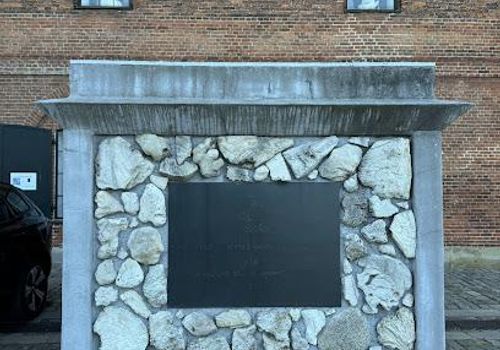
The Old Execution site in Copenhagen 1946-1950
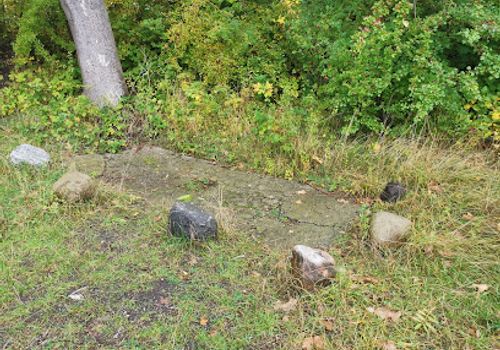
A stark concrete foundation and drain mark the location where 29 Nazi collaborators were executed by firing squad between 1947 and 1950. Situated on the outer ramparts of Christiania, this obscure historical site serves as a sobering reminder of Denmark's post-war purges and the controversial trials that followed the German occupation. The wooden execution shed has long since been dismantled, leaving only the concrete base visible among the grass and boulders.
Open 24 hoursTime to spend 0.5–1.5 hrs
-
Historical landmark4.4★36 reviews
Lur Blowers
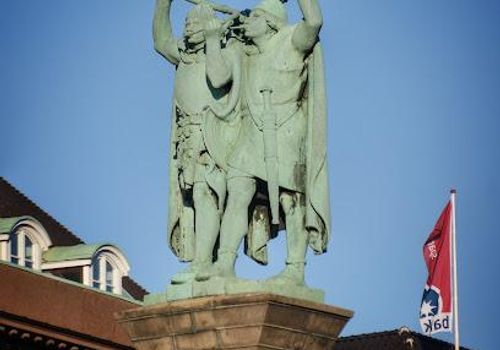
Rising above Copenhagen’s City Hall Square, the Lur Blowers monument is a striking bronze sculpture of two Viking-style figures sounding ancient lurs from atop a 20m terracotta column. Gifted to the city by the Carlsberg foundations in the early 1900s to honor brewery founder J.C. Jacobsen, it has become one of Rådhuspladsen’s most recognisable silhouettes. With its red-brick column, circular bench and views over the bustling square, it’s a quick but characterful stop between Tivoli, Strøget and City Hall.
Open 24 hoursTime to spend 15–45 min
-
Tourist attraction4.7★29 reviews
Frederiksholms Kanal
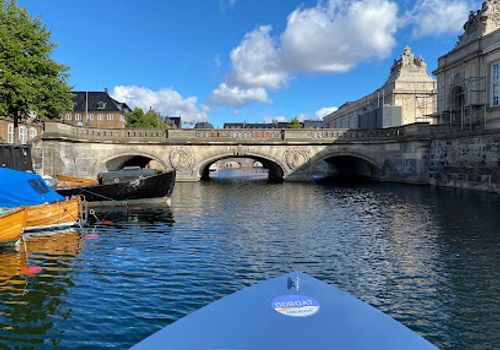
Frederiksholms Kanal is a serene historic waterway encircling Slotsholmen island in Copenhagen's heart, lined with iconic landmarks including Christiansborg Palace, the National Museum, and Thorvaldsens Museum. This elegant canal, created in the early 17th century under King Christian IV, offers picturesque bridges, waterfront promenades, and moored historical boats. Free to explore at any hour, it combines regal architecture with relaxed Nordic atmosphere, making it essential for experiencing Copenhagen's blend of political grandeur and everyday charm.
Open 24 hoursTime to spend 1–3 hrs
-
Night club5.0★7 reviews
Operaen
Operaen, the Copenhagen Opera House, rises on the harbourfront opposite Amalienborg as one of Denmark’s most striking contemporary landmarks. Completed in 2004 and inaugurated in 2005, this state-of-the-art venue is home to the Royal Danish Opera and ballet productions. Inside, warm maple wood, Sicilian marble and a ceiling gilded with thousands of sheets of gold frame a main auditorium renowned for its acoustics. Outside, broad plazas and water views make it as much a place for a scenic stroll as for a grand night at the opera.
Price level $$Time to spend 1–4 hrs
-
Historical landmark4.8★5 reviews
C.F. Tietgens Hus
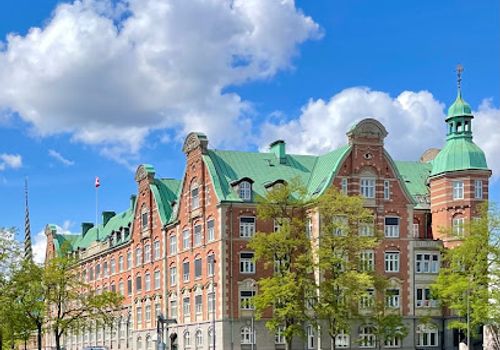
C.F. Tietgens Hus is a striking Neoclassical office building completed in 1904 on Slotsholmsgade in Copenhagen's historic center. Built as the headquarters of Privatbanken, Denmark's first major commercial bank, it stands as a monument to the vision and ambition of Carl Frederik Tietgen, one of Denmark's most influential industrialists and financiers. The building exemplifies early 20th-century architectural elegance and remains a symbol of Danish banking heritage.
Time to spend 0.2–1 hr
-
Historical landmark4.8★4 reviews
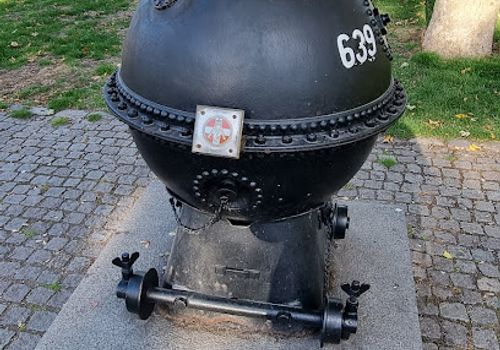
Horn mine
Tucked into Copenhagen’s leafy Churchill Park near Kastellet, the Horn Mine is a preserved World War II naval mine displayed on land. This steel sphere bristling with detonator horns recalls the underwater minefields once guarding Danish waters. Today it stands as a stark, sculptural reminder of maritime warfare, set against lawns, trees, and views of nearby historic fortifications, inviting a quiet moment of reflection during a stroll through central Copenhagen.
Open 24 hoursTime to spend 0.5–1 hr
-
Historical landmark3.7★3 reviews
The Stable Boy's House
Tucked along Copenhagen’s dignified Frederiksholms Kanal, The Stable Boy’s House is a small historic building linked to the royal stables of nearby Christiansborg Palace. Once part of the working service quarter that kept court horses groomed and ready, it now stands as a quiet architectural footnote to Denmark’s royal past. The modest brick façade, canal-side setting and proximity to Slotsholmen’s grand institutions make it a worthwhile pause for historically minded walkers exploring the heart of the city.
Time to spend 15–30 min
-
Historical landmark3.5★2 reviews
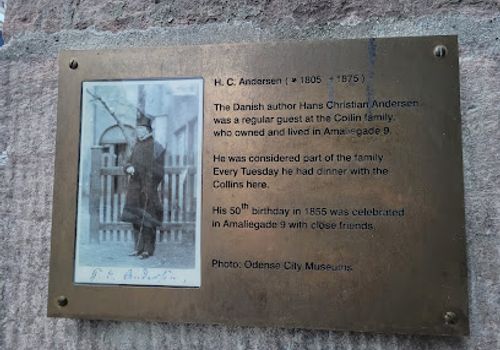
Hans Christian Andersen plaque
Set into the elegant façade of a townhouse on Amaliegade in Copenhagen’s Frederiksstaden district, the modest Hans Christian Andersen plaque at no. 7 quietly commemorates Denmark’s beloved storyteller amid grand Rococo streetscapes. Here, in one of the city’s most distinguished quarters, a simple memorial anchors Andersen’s life and work in the everyday fabric of Copenhagen. Surrounded by stately mansions, nearby palaces and formal architecture, this unobtrusive marker invites a brief but evocative pause, connecting passing pedestrians to the author whose fairy tales travel far beyond this refined residential street.
Open 24 hoursTime to spend 0.5–1 hr
-
Sculpture5.0★1 review
I am Queen Mary
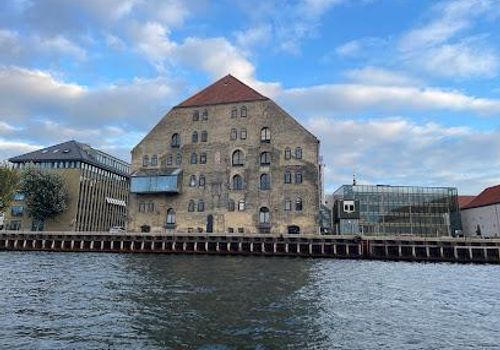
In front of the historic Vestindisk Pakhus warehouse on Copenhagen’s harbourfront, the powerful "I Am Queen Mary" sculpture confronts Denmark’s colonial past. The monumental seated figure of Mary Thomas – a leader of the 1878 St. Croix rebellion in the former Danish West Indies – fuses Caribbean and Danish references, turning a quiet quay into a stark memorial to slavery, resistance, and Black presence in Danish history. This is a contemplative, visually striking stop for thoughtful travellers.
Open 24 hoursTime to spend 0.5–1.5 hrs
-
Nytorv 2
Nytorv (New Square) is a historic public square in central Copenhagen, Denmark, forming a unified space with the adjoining Gammeltorv as part of the Strøget pedestrian zone. Created by Christian IV in 1610, the square is dominated by the imposing Neoclassical façade of the Copenhagen Court House, designed by Christian Frederik Hansen and completed in 1815. Once a bustling marketplace where butchers worked and executions took place, Nytorv has transformed into a vibrant cultural hub hosting jazz festivals and public gatherings. Today it stands as a lively centerpiece of Copenhagen's medieval old city.
Time to spend 0.5–2 hrs
-
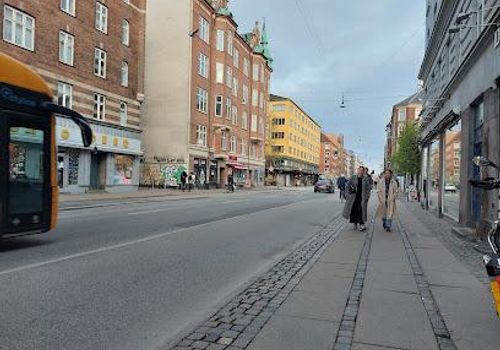
Nørrebrogade
Nørrebrogade is Copenhagen's principal shopping street and the beating heart of the vibrant Nørrebro district. Stretching approximately 2.15 kilometers from The Lakes to Nørrebro station, this dynamic thoroughfare showcases independent boutiques, vintage shops, international design brands, and eclectic cafés. The street passes Assistens Cemetery, Nørrebro Runddel, and the Superkilen linear park, offering an authentic, multicultural Copenhagen experience far removed from mainstream tourist zones.
Price level $$Time to spend 2–4 hrs
-
Gråbrødretorv
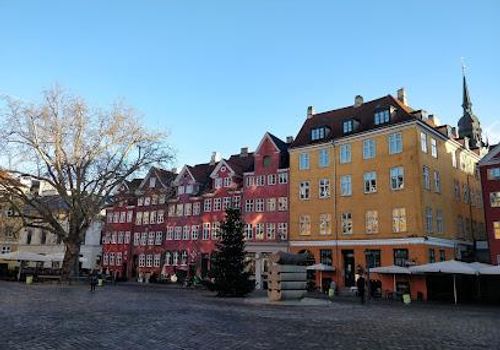
Gråbrødretorv is a charming medieval square nestled in Copenhagen's historic Latin Quarter, surrounded by colorful 17th-century townhouses and lively cafés. This pedestrian-friendly plaza serves as a vibrant social hub where locals and visitors gather to dine, shop, and soak in authentic Copenhagen atmosphere. The square's intimate layout, cobblestone streets, and tree-lined seating areas make it an ideal spot for leisurely meals and people-watching in the heart of the city's cultural district.
Price level $$Time to spend 1–4 hrs
-
Sankt Annæ Pl.
A beautifully renovated green square in central Copenhagen, located beside Amalienborg Palace and minutes from Nyhavn. This historic plaza, dating back to the 1700s, combines relaxation with innovative climate resilience design. Featuring benches, a playground, petanque field, and outdoor dining, it serves both locals and visitors seeking a peaceful urban escape with access to galleries, cafes, and cultural landmarks.
Time to spend 0.5–2 hrs
-
Højbro
Højbro is an elegant 19th‑century arch bridge in the heart of Copenhagen, linking the city centre at Højbro Plads with the island of Slotsholmen and Christiansborg Palace. Designed in 1878 by Vilhelm Dahlerup and later widened, its steel arches rest on granite plinths above the calm Slotsholmens Kanal. Today it carries a steady flow of cyclists, cars and pedestrians, and hides a haunting underwater sculpture, Agnete and the Merman, just below its railing.
Time to spend 0.2–1 hr
-
Building
Søtorvet 2
Søtorvet 2 is an elegant late 19th-century residential building in Copenhagen, Denmark, part of the prestigious Søtorvet development completed between 1873 and 1876. Located at the gateway between the city center and Nørrebro district, this architecturally significant structure exemplifies French historicist design and overlooks the serene Copenhagen Lakes. The building once housed the legendary Café de la Reine, a cultural hub that attracted poets and intellectuals during the early 20th century.
Time to spend 0.5–2 hrs
-
Building
Havneholmen 33
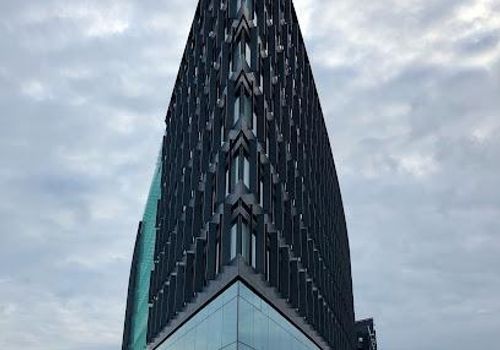
Anchoring the waterfront district of Havneholmen in Copenhagen’s Vesterbro/Kongens Enghave, Havneholmen 33 is best known as Aller House, the striking headquarters of Nordic media group Aller. The 28,000 m² office complex, designed by PLH Architects, rises directly on the harbour edge with dynamic, sweeping lines of glass and metal that mirror the water. Framed by the Fisketorvet shopping centre, Bryggebroen bridge and harbour promenades, it’s a contemporary architectural landmark in a fast-evolving canalside neighbourhood.
Time to spend 0.5–1.5 hrs
-
Historical landmark
CWGC Krigsgrave, CWGC Graves
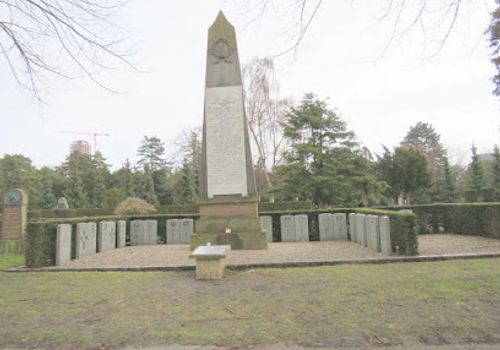
Vestre Cemetery (Vestre Kirkegård) is Scandinavia's largest cemetery, spanning 54 hectares in Copenhagen's Kongens Enghave district. Opened in 1870 to accommodate the city's growing population, this landscaped park serves as both a burial ground and public green space. The cemetery features distinctive architectural chapels, memorial gardens, and graves of notable Danish figures, alongside Commonwealth war graves and sections dedicated to various cultural and religious communities.
Time to spend 1.5–4 hrs
-
Holmens Bro
Holmens Bro is a low granite arch bridge spanning the inner harbour in central Copenhagen, linking the historic island of Slotsholmen with the city’s bustling core. Built in 1954 to replace an ornate 19th-century bridge, it sits amid a cluster of major sights, with views toward Christiansborg Palace, the former stock exchange, and the harbourfront. Today it is a busy crossing for cyclists, buses, and pedestrians, and a fine vantage point for appreciating the city’s blend of water, history, and architecture.
Time to spend 0.5–1 hr
-
Building
Bredgade 18
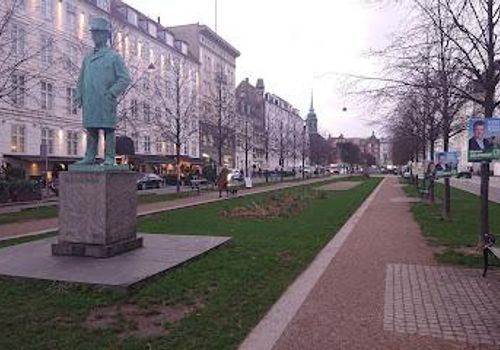
Set on one of Copenhagen’s most prestigious streets, Bredgade 18 sits among grand mansions, embassies, churches and galleries in the heart of Frederiksstaden. This elegant townhouse address is more about its setting than a single standout façade: step outside and you are moments from the Marble Church, Amalienborg and a dense cluster of design shops and antique dealers. It is an atmospheric urban stop for architecture fans, city flâneurs and curious walkers tracing the story of royal Copenhagen.
Time to spend 0.5–1.5 hrs












Explore Copenhagen on the map
A handpicked selection of must-see spots in Copenhagen, mapped for you.
More about Copenhagen

More to explore in Copenhagen

 Best attractions in Copenhagen
 Best shops in Copenhagen
 Best bars in Copenhagen
 Best restaurants in Copenhagen
 Best nightclubs in Copenhagen
 Best experiences in Copenhagen
 Best hotels in Copenhagen
 All neighbourhoods in Copenhagen
Explore more


Getting your guide ready…
We are putting together a fresh copy of the Copenhagen guide. This can take up to a minute.
This can take a few moments. If your browser asks, choose Allow so the download can start. You'll find the guide in your Downloads folder.
Nothing happened? Download it again
Sorry, the guide is taking longer than usual. Please try again in a minute, or get it by email instead.

