

Best Landmarks in Køge
Planning a trip to Køge? Discover the best landmarks in Køge with history, expert tips, and routes. Free on web or the Evendo app.


The best landmarks in Køge
Køge, a charming town in Denmark, offers visitors a unique blend of history, culture, and natural beauty. Explore the picturesque cobblestone streets lined with colorful half-timbered houses, visit the impressive Køge Church with its stunning frescoes, and immerse yourself in the vibrant atmosphere of the weekly market in the town square. Don't miss the opportunity to stroll along the scenic harbor, where you can admire the historic ships and enjoy fresh seafood from the local restaurants. For a dose of nature, head to the nearby Køge Bay Beach Park, a peaceful oasis perfect for relaxing and unwinding. With its rich heritage and welcoming ambiance, Køge is a must-visit destination for any traveler seeking an authentic Danish experience.
- Top rated
- Closest to the centre
- Price level: low to high
- Time to spend: shortest first
- A–Z
50 landmarks
-
Castle4.6★21,008 reviews
Rosenborg Castle
Rosenborg Castle is a magnificent Renaissance palace built by King Christian IV in the early 17th century, nestled in the heart of Copenhagen's King's Garden. This 400-year-old red-brick castle houses Denmark's Crown Jewels, royal regalia, and exquisitely preserved chambers that reveal the intimate lives of Danish monarchs. Visitors explore 24 rooms across three levels, discovering ornate halls, the iconic Knights' Hall with its narwhal-tusk throne and silver lions, and world-class collections of Venetian glass and ceramics. The castle's basement Treasury contains the glittering Danish crown jewels, embellished with diamonds, rubies, pearls, and emeralds.
Mon 10:00–16:00 · Thu–Sun 10:00–16:00Price level $$Time to spend 1.5–3 hrs
-
Sculpture4.1★29,286 reviews
The Little Mermaid
Perched on a low granite rock along Copenhagen’s Langelinie promenade, The Little Mermaid is a small bronze statue with outsized fame. Unveiled in 1913 and inspired by Hans Christian Andersen’s 1837 fairy tale, Edvard Eriksen’s 1.25 m figure gazes wistfully across the harbour, symbolising longing and transformation. Free to visit at any time, this iconic waterfront landmark anchors many travellers’ first impressions of Denmark’s capital, pairing literary heritage with classic harbour views.
Time to spend 0.5–1.5 hrs
-
Bridge4.6★6,922 reviews
Øresund Bridge
The Øresund Bridge is a 16-kilometre combined rail and road link connecting Copenhagen, Denmark, and Malmö, Sweden, across the Øresund Strait. Opened in 2000, this architectural marvel comprises an 8-kilometre cable-stayed bridge, a 4-kilometre underwater tunnel, and an artificial island. Over 60,000 people traverse it daily, making it Europe's longest combined road-rail bridge. The structure offers spectacular views of the Baltic Sea and serves as both a practical transport corridor and a symbol of Nordic cooperation.
Open 24 hoursPrice level $$Time to spend 0.2–1 hr
-
Opera house4.6★6,741 reviews
Copenhagen Opera House
A stunning modern architectural masterpiece designed by Henning Larsen, the Copenhagen Opera House sits on the island of Holmen in Copenhagen's inner harbor. Since its inauguration in 2005, this world-class venue has hosted exceptional opera, ballet, and symphonic performances in a 1,703-seat auditorium renowned for its impeccable acoustics. The building's iconic cantilevered roof, golden maple interior shell, and waterfront setting make it one of Denmark's most innovative structures and a symbol of contemporary Scandinavian design.
Price level $$Time to spend 1.5–4 hrs
-
Cathedral4.6★6,205 reviews
Roskilde Cathedral
Roskilde Cathedral is Denmark's most significant religious and historical monument, a UNESCO World Heritage Site housing the burial chapels of over 40 Danish monarchs spanning more than 800 years. Built beginning around 1170 as a Romanesque structure and completed circa 1200 in Gothic style using approximately 2.5 million red bricks, it stands as Scandinavia's earliest major brick Gothic cathedral and profoundly influenced ecclesiastical architecture throughout Northern Europe. The cathedral's successive chapels showcase eight centuries of European architectural evolution, from Gothic and Renaissance to Neoclassical and Byzantine Revival styles.
Price level $Time to spend 1–2 hrs
-
Cathedral4.5★3,282 reviews
Church of Our Lady
Rising above Copenhagen’s old town, the Church of Our Lady is Denmark’s national cathedral and a serene masterpiece of neoclassical design. Rebuilt in 1829 after the British bombardment of 1807, its calm white interior is dominated by Bertel Thorvaldsen’s celebrated sculptures of Christ and the apostles. Long a stage for royal weddings, coronations, and state ceremonies, this light-filled church offers a peaceful counterpoint to the busy streets around Nørregade.
Time to spend 0.5–1.5 hrs
-
Fountain4.6★2,421 reviews
Gefion Fountain
One of Copenhagen's most iconic monuments, the Gefion Fountain stands majestically in Langelinie Park, depicting the Norse goddess Gefion plowing the island of Zealand from Sweden with four oxen transformed from her sons. Completed in 1908 as a gift from the Carlsberg Foundation, this grand bronze sculpture captures a pivotal moment from Nordic mythology. Free to visit and accessible year-round, it's a powerful blend of artistry, legend, and maritime beauty.
Open 24 hoursTime to spend 0.5–2 hrs
-
Hotel4.1★1,551 reviews
Comwell Køge Strand
Leuchtturm Skagen, also known as Det Grå Fyr or the Grey Lighthouse, towers above Denmark’s northernmost tip. Operative since the 1850s, it’s a heritage beacon and a center for migrating bird observation. Visitors ascend the spiral staircase for stunning views of the meeting seas, explore an interactive bird migration center, and savor refreshments at the onsite café—all set amid wild coastal scenery that feels truly remote.
-
Tourist attraction4.5★1,292 reviews
Vallø Castle
Vallø Castle is a striking Renaissance fortress in Køge, Denmark, with roots reaching back to the 1300s. Originally constructed as a noble residence in 1580, it was transformed in 1737 into a royal foundation for unmarried women of aristocratic birth. After a devastating fire in 1893, the castle was meticulously rebuilt over a decade, preserving its iconic red-brick exterior while adapting its interior to serve its charitable mission. Today, the castle and its surrounding estate remain a living testament to Danish royal patronage and architectural resilience.
Open 24 hoursTime to spend 1.5–3 hrs
-
City or town hall4.6★1,224 reviews
Copenhagen City Hall
Copenhagen City Hall rises over Rådhuspladsen with a 105.6‑meter clock tower, red‑brick façades and ornate details that embody Denmark’s National Romantic style. Built between 1892 and 1905, it is both the city’s political heart and a richly decorated public building, with a grand central hall, peaceful inner garden, and the extraordinary Jens Olsen’s World Clock tucked just inside. Free to enter, it anchors one of Copenhagen’s liveliest squares, moments from Tivoli Gardens and Strøget.
Mon–Fri 9:00–16:00 · Sat 9:30–13:00Time to spend 1–2.5 hrs


Bishop Absalon
Rising above Copenhagen’s central Højbro Plads, the equestrian statue of Bishop Absalon honours the 12th‑century warrior‑bishop credited with founding the city. Unveiled in 1902 on the 700th anniversary of his death, the bronze figure rears on horseback facing Christiansborg, where Absalon’s fortress once stood. The richly decorated brick and granite pedestal, with friezes of herring and Viking motifs, links the monument to Copenhagen’s medieval fishing roots and maritime wealth.
Open 24 hoursTime to spend 0.5–1 hr

Thomas on the Mountain, The 6 Forgotten Giants
Thomas on the Mountain is a 15-meter wooden giant sculpture crafted from recycled scrap wood by Danish artist Thomas Dambo. Located atop a clearing in Albertslund, west of Copenhagen, this friendly figure reclines with outstretched legs, inviting visitors to sit and enjoy panoramic views of the surrounding landscape. Part of the Six Forgotten Giants project, Thomas was built in 2016 with help from local volunteers and named after Dambo's intern. The sculpture exemplifies the artist's mission to bring contemporary art into nature and encourage exploration of Copenhagen's overlooked suburban beauty.
Open 24 hoursTime to spend 1–3 hrs

Knippelsbro
Knippelsbro is Copenhagen’s iconic bascule bridge linking historic Slotsholmen with the canals and cobbles of Christianshavn. Opened in 1937 and crowned by its distinctive verdigris copper towers, it blends functionalist engineering with harbor views, busy bike lanes and a working drawbridge that still lifts for passing ships. More than a crossing, it is a living slice of the city’s maritime and architectural story.
Open 24 hoursTime to spend 0.5–1.5 hrs

Køge Nord
Køge Nord is far more than a commuter hub: it is a striking piece of contemporary Danish architecture where high‑speed rail, regional trains and the Copenhagen S‑train meet on the northern edge of Køge. Opened in 2019, the station is defined by its 225 m enclosed footbridge, a sinuous steel form that spans both tracks and motorway, lined inside with warm wooden slats and generous windows. It has quickly become a landmark for green mobility, park‑and‑ride travel and design‑minded photography just outside Copenhagen.
Time to spend 0.5–2 hrs

Circle Bridge
Circle Bridge, or Cirkelbroen, is a striking pedestrian and cycle bridge spanning the mouth of Christianshavn Canal in central Copenhagen. Designed by Danish‑Icelandic artist Olafur Eliasson and opened in 2015, it is composed of five overlapping circular platforms with ship‑like masts and rigging that echo the city’s maritime past. More than just a shortcut, the bridge invites you to pause, linger and enjoy harbour views between Christiansbro and Applebys Plads.
Open 24 hoursTime to spend 0.5–1.5 hrs

Køge Church
St. Nicholas Church stands as one of Denmark's most historically significant medieval structures, dominating Køge's skyline with its distinctive 43-meter tower. Originally constructed around 1324, the church evolved through centuries of expansion, featuring a three-aisled nave built after 1375 and a tower that once served as Denmark's first lighthouse. Today, visitors can climb the tower for panoramic views, admire intricate baroque woodcarvings and altarpieces, and explore a building that witnessed pivotal moments in Danish maritime and religious history.
Price level $Time to spend 1–3 hrs

St. Alexander Nevsky Church
St. Alexander Nevsky Church brings a striking touch of Russia to central Copenhagen, its golden onion domes rising above elegant Bredgade near Amalienborg Palace. Built in the early 1880s as a Russian Orthodox church linked to the Danish royal family, it is known for its richly decorated iconostasis, frescoes and candlelit interior. Visitors step from the orderly streets of Frederiksstaden into a world of incense, chanted liturgy and intricate Orthodox art, discovering one of the city’s most atmospheric sacred spaces.
Time to spend 0.5–1.5 hrs

The Danish Parliament
Set on the tiny islet of Slotsholmen in central Copenhagen, the Danish Parliament occupies part of Christiansborg Palace, a vast neo-baroque complex that has been the heart of Danish power for centuries. Here, under the palace’s copper-clad tower, Denmark’s modern democracy operates side by side with the Supreme Court, the Prime Minister’s offices and the royal reception rooms. Visitors can explore selected areas on guided tours, delve into the building’s dramatic history of fires and rebuilds, and glimpse how a constitutional monarchy and parliamentary system intersect in a single monumental seat of power.
Open 24 hoursPrice level $Time to spend 1–2.5 hrs

Frederiksberg Town Hall
Frederiksberg Town Hall is the striking brick-clad seat of Frederiksberg Municipality, an independent enclave within Copenhagen. Completed in the early 1950s to Henning Hansen’s functionalist design, the long, low main block and 60 m tower dominate Smallegade and frame a compact square used for civic ceremonies. Inside, retro mid‑century details, artworks and wood‑panelled halls reflect postwar Danish design, while regular guided visits and occasional tower access reveal expansive views over leafy Frederiksberg and the wider city.
Time to spend 0.5–2 hrs

Cykelslangen
Cykelslangen, or The Bicycle Snake, is a striking elevated cycle bridge snaking through Copenhagen’s harbourfront between Vesterbro and Islands Brygge. Opened in 2014 and painted a vivid orange, the 200‑plus‑metre structure glides between glassy facades and over the water, separating cyclists from pedestrians and traffic. It is both everyday infrastructure and urban sculpture, offering sweeping views of the harbour while embodying the city’s commitment to bike‑centric design and human‑scale planning.
Open 24 hoursTime to spend 0.5–1.5 hrs

Lille Langebro
Lille Langebro is an elegant 160-meter pedestrian and cycling bridge spanning Copenhagen's Inner Harbour, designed by the London-based architecture studio WilkinsonEyre. Completed in 2019, this award-winning structure features a distinctive curved form with sculptural steel wings that rise at midspan, creating a striking visual landmark. The bridge's innovative double-swing mechanism allows two central sections to rotate and open for maritime traffic, while its subtle integrated lighting transforms it into a glowing ribbon after dark. Connecting historic Christianshavn with the city center, it serves approximately 6,000 to 10,500 daily users and exemplifies Copenhagen's commitment to sustainable, cyclist-friendly urban design.
Open 24 hoursTime to spend 0.5–2 hrs

The Lakes
Copenhagen's beloved inner lakes form a serene 6.35-kilometre loop of three connected bodies of water—Sankt Jørgens Sø, Peblinge Sø, and Sortedams Sø—winding through the city's heart. Well-maintained walking and cycling paths encircle these peaceful waters, offering locals and visitors alike a tranquil escape filled with abundant birdlife, waterside cafés, and scenic vistas. Whether you're jogging, picnicking, or simply watching city life unfold, the lakes provide an authentic Copenhagen experience away from crowded tourist attractions.
Time to spend 1–4 hrs

St. Paul's Church
St. Paul’s Church rises in red brick at the heart of Copenhagen’s historic Nyboder district, long known for its regimented yellow naval housing. Completed in 1877 and designed by Johannes Emil Gnudtzmann, this Neo‑Romanesque Lutheran church blends Italian Renaissance inspirations with Danish brickwork, a tall spire and rounded arches. Step inside for calm light, sculptural details and an active parish life of services, organ music and cultural events just a short stroll from central city sights.
Time to spend 0.5–1.5 hrs

Equestrian statue of Christian IX
Set on the riding ground behind Christiansborg Palace, the equestrian statue of Christian IX is a quietly impressive bronze landmark in the historic heart of Copenhagen. Unveiled in 1927 and created by sculptor Anne Marie Carl-Nielsen, it was the first equestrian monument of a monarch made by a woman. The king, known as the “father-in-law of Europe,” sits in calm command above the formal gravel parade ground, framed by palace façades, stables and the distinctive Copenhagen skyline.
Open 24 hoursTime to spend 0.5–1 hr

Agnete and the Merman Statue
Half-hidden beneath the surface of Copenhagen’s Slotsholm Canal by Højbro Bridge, the bronze group "Agnete and the Merman" is one of the city’s most atmospheric sculptures. Created in 1992 by Danish artist Suste Bonnén, the underwater figures depict a merman and his seven sons reaching longingly toward the world above, inspired by a centuries-old folk ballad about love, faith, and abandonment. Subtle by day and theatrically lit after dark, it rewards those who pause on the bridge and really look into the water.
Open 24 hoursTime to spend 0.5–1 hr

ZinkGlobal by Kim Michael
Perched on Copenhagen’s Nordre Toldbod waterfront, **ZinkGlobal** is a striking 3‑meter scrap‑metal figure by Danish artist Kim “The Zinker” Michael. Assembled from old machine and car parts, the contemplative humanoid sits on a giant key, symbolising the “key to the future” and nodding to Rodin’s The Thinker. Since its 2012 debut, this raw, industrial sculpture has sparked debate amid the elegant harbor architecture, becoming a quirky urban landmark, photo stop, and informal meeting point just a short stroll from the Little Mermaid.
Open 24 hoursTime to spend 0.2–1 hr

Nyholm Central Guardhouse
Nyholm Central Guardhouse is a beautifully preserved 18th‑century Baroque guardhouse standing at the heart of Copenhagen’s former naval base on Holmen. Completed in 1745 and attributed to architect Philip de Lange, it once controlled access to the Nyholm dockyards, the strategic hub of the Danish navy. Today its yellow masonry, high hipped roof and oversized crown‑topped clock tower form an unmistakable silhouette, surrounded by lawns, water and historic naval buildings that together evoke centuries of maritime power.
Time to spend 0.5–1.5 hrs

Lur Blowers
Towering above Copenhagen’s busy City Hall Square, the Lur Blowers monument is a 20m‑high bronze-and-brick column topped by two caped figures playing ancient-style lurs, the curved Bronze Age horns of Scandinavia. Gifted by the Carlsberg foundations in 1914 to mark brewer J. C. Jacobsen’s centenary, it has become one of the city’s most recognisable silhouettes. Up close, the red-brick column, circular bench and finely modelled musicians reward a lingering look amid the urban bustle of Rådhuspladsen.
Open 24 hoursTime to spend 0.5–1 hr

Køge bølgebryder
Køge Bølgebryder is a striking coastal breakwater structure extending into the Danish sea near the historic port town of Køge. This engineering landmark offers panoramic views across the Køge Bay and serves as a popular vantage point for observing maritime activity, watching sunsets, and experiencing the raw beauty of Denmark's eastern coastline. The breakwater provides an accessible waterfront experience with dramatic perspectives of the open sea.
Time to spend 0.5–2 hrs

Vandkunsten Springvand
Tucked into the intimate cobbled square of Vandkunsten in Copenhagen’s Old Town, Vandkunsten Springvand is a compact 1910 fountain that quietly anchors centuries of urban history. Its granite stele, fish‑scale reliefs and bronze fish heads recall the square’s past as a fish market and as a vital water supply site connected to the royal castle. Today it offers a calm, atmospheric pause amid historic facades, inviting you to linger, watch the play of water and imagine medieval Copenhagen life flowing around this spot.
Open 24 hoursTime to spend 15–45 min

Mindesmærke for slagene i Køge Bugt
Set against the industrial quays and open water of Køge Harbour, the Mindesmærke for slagene i Køge Bugt is a striking coastal monument commemorating two decisive naval battles fought in the bay in 1677 and 1710. Dedicated to admirals Niels Juel and Ivar Huitfeldt, it blends sculptural stonework, maritime symbolism and poetic inscriptions to anchor Denmark’s seafaring history in a compact, contemplative corner of the harbourfront. A quiet pause point on a stroll by the water, it invites you to imagine cannon smoke over the bay where pleasure craft now glide.
Open 24 hoursTime to spend 0.5–1.5 hrs

I am Queen Mary
A powerful public monument at Vestindisk Pakhus commemorating Mary Thomas, a leader of the 1878 rebellion against Danish colonial rule in the Caribbean. Created by artists La Vaughn Belle and Jeannette Ehlers, this sculpture stands in front of a historic 18th-century warehouse that once stored goods from Denmark's colonial empire. The work challenges Denmark's narrative of benevolent colonialism and honors the resistance of enslaved and formerly enslaved people in the Danish West Indies.
Open 24 hoursTime to spend 0.5–2 hrs

Nyhavnsbroen & Nyhavn
Spanning Copenhagen’s most iconic canal, Nyhavnsbroen links the two flanks of colourful Nyhavn, where 17th‑century townhouses, historic wooden ships and buzzing cafés frame the water. This modest 1912 bascule bridge is a prime vantage point for classic harbour photos and people‑watching, set against a backdrop of jazz, canal tours and maritime history in the very heart of Indre By.
Time to spend 0.5–2 hrs

Indre By
Indre By, Copenhagen's inner city, is the historic heart of Denmark's capital and home to most of the city's major attractions. Bounded by lakes and the harbor, this medieval district features cobblestone streets, iconic landmarks like Christiansborg Palace and Amalienborg Palace, world-class museums, and Strøget—one of Europe's longest pedestrian shopping streets. The area blends centuries-old architecture with vibrant cafés, restaurants, and galleries, making it essential for any Copenhagen visit.
Price level $$Time to spend 4–8 hrs

Nørrebrogade
Nørrebrogade is Copenhagen's principal shopping street and the vibrant heart of the alternative Nørrebro neighbourhood. Stretching approximately 2.15 km from The Lakes to Nørrebro Station, this bustling thoroughfare blends international fashion chains with independent boutiques, vintage shops, and design galleries. The street pulses with multicultural energy, lined with cafés, restaurants, and bars that reflect the area's creative character. Side streets like Elmegade, Jægersborggade, and Blågårdsgade offer curated design finds, artisanal goods, and some of Copenhagen's best gastronomy. Once a gritty district, Nørrebro has transformed into one of Europe's coolest neighbourhoods, attracting visitors seeking authentic Copenhagen culture beyond mainstream tourist zones.
Price level $$Time to spend 2–5 hrs

Langelinie Park
Langelinie Park is Copenhagen's iconic waterfront destination stretching along the Øresund Strait in the Østerbro district. Home to the world-famous Little Mermaid statue, the magnificent Gefion Fountain, and the historic Kastellet fortress, this 1-kilometer promenade and park blend natural beauty with Danish cultural heritage. Originally a military area, it opened to the public in 1848 and now welcomes millions of visitors annually who come to stroll the scenic pier, admire public sculptures, and experience Copenhagen's vibrant harbor atmosphere.
Time to spend 1–3 hrs

Christianshavns Kanal
A picturesque 17th-century canal running through Copenhagen's historic Christianshavn district, lined with pastel-colored warehouses, houseboats, and the striking Circle Bridge. Founded by King Christian IV as a Dutch-inspired merchant quarter, the canal remains a living waterway where centuries of maritime heritage blend seamlessly with contemporary urban life, offering visitors an intimate glimpse into Copenhagen's creative soul.
Time to spend 1–3 hrs

Gråbrødretorv
Gråbrødretorv is a charming medieval square nestled in Copenhagen's historic Latin Quarter, surrounded by colorful 17th-century townhouses and lively cafés. This pedestrian-friendly plaza serves as a cultural hub where locals and visitors gather to dine, shop, and soak in authentic Danish atmosphere. The square's intimate setting, lined with independent boutiques and cozy eateries, makes it an ideal spot for leisurely exploration of one of Europe's most walkable cities.
Price level $$Time to spend 1–3 hrs

H. C. Andersens Blvd.
H. C. Andersens Boulevard is one of Copenhagen’s main arteries, cutting through the historic Indre By and skirting the lively City Hall Square and Tivoli Gardens. Named for Denmark’s beloved fairy-tale writer, the broad boulevard blends heavy city traffic with classic architecture, statues and monuments, including the famous seated bronze figure of Hans Christian Andersen gazing toward Tivoli. It is less a single sight than an urban corridor: a place you pass, cross and pause along while exploring central Copenhagen’s theatres, museums and squares.
Time to spend 0.5–2 hrs

Frederiksholms Kanal
Frederiksholms Kanal is a picturesque waterway encircling Slotsholmen, the royal island at the heart of Copenhagen's political and cultural life. This scenic canal connects to Copenhagen Harbor and is lined with historic buildings, including Christiansborg Palace (seat of the Danish Parliament), the National Museum, and the Royal Danish Library. The waterway features moored historical boats, charming bridges including the iconic three-arched Storm Bridge, and serves as one of Copenhagen's most photogenic spots for leisurely walks and canal tours.
Time to spend 0.8–3 hrs

Sankt Hans Torv
Sankt Hans Torv is a vibrant public square in Copenhagen's Nørrebro district, transformed through urban renewal into a lively gathering space. Once a cattle market and major traffic junction, the square now features a gently undulating granite plaza, contemporary public art, and a thriving café culture. Dominated by Jørgen Haugen Sørensen's sculptural water feature and surrounded by historic architecture including St. John's Church, it serves as the social and cultural heart of the neighborhood.
Time to spend 0.5–2 hrs

Køge Torv
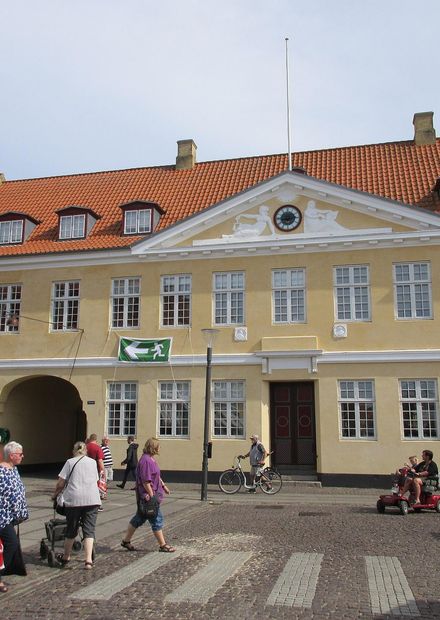
Køge Torv is Denmark's largest medieval town square, located in the historic coastal town of Køge, approximately 40 kilometers south of Copenhagen. This expansive cobblestone plaza serves as the heart of one of Denmark's best-preserved medieval town centers, surrounded by centuries-old half-timbered houses and significant historical landmarks. The square has been a focal point of civic life since the Middle Ages, hosting markets, gatherings, and community events for over 700 years.
Time to spend 1–3 hrs

Befrielsessten i Køge
A solemn memorial stone in central Køge commemorating Denmark's liberation from Nazi occupation on May 4–5, 1945. Located at Torvebyen in the heart of the historic market square, this modest but significant monument stands as a testament to the Danish resistance movement and the nation's freedom. The stone is freely accessible year-round in one of Denmark's largest town squares, making it an important stop for those interested in Danish wartime history.
Open 24 hoursTime to spend 0.2–1 hr

Højbro
Højbro is a graceful 19th-century arch bridge linking Copenhagen’s bustling Højbro Plads with the historic island of Slotsholmen and Christiansborg Palace. Built in 1878 to a design by architect Vilhelm Dahlerup, the steel bridge rests on granite plinths and carries cars, cyclists and pedestrians over Slotsholmen Canal. Its central location makes it both a practical crossing and a natural viewing platform for the city’s spires, canals and the haunting underwater sculpture “Agnete and the Merman” below.
Time to spend 0.5–1 hr

Havneholmen 33
Anchoring the redeveloped waterfront of Havneholmen in Copenhagen, Havneholmen 33 is a striking modern office building best known as the headquarters of media group Aller. Completed in 2009 and designed by PLH Architects, the glass-and-steel structure rises above the harbour with crisp lines and a distinct, almost ship-like profile. Surrounded by canals, promenades, bridges and views towards Fisketorvet and Islands Brygge, it offers a concise snapshot of contemporary Danish architecture and the city’s ongoing harbourfront transformation.
Time to spend 0.5–1.5 hrs

Mindesten for Træskoslaget
Mindesten for Træskoslaget is a modest yet historically potent memorial stone in central Køge, commemorating the 1807 Battle of Køge, also known as Træskoslaget – the “Clogs Battle.” Set along Nørregade, this small urban memorial marks where Danish militia, many in wooden clogs and poorly equipped, made a last stand against British forces during the Gunboat War. Today it offers a quiet pause amid the town’s streets, linking everyday life with a dramatic moment in Denmark’s past.
Open 24 hoursTime to spend 15–30 min

Bredgade 18
Bredgade 18 sits on one of Copenhagen’s most prestigious streets, a short stroll from the royal quarter of Frederiksstaden. Behind its classically proportioned facade, the building mirrors the grand architectural rhythm that defines Bredgade, a boulevard lined with mansions, churches and cultural institutions. While not a headline attraction itself, Bredgade 18 offers a quiet, authentic glimpse of Copenhagen’s urban fabric, ideal for architecture fans exploring the street’s elegant streetscape on foot.
Time to spend 0.5–1 hr
Holmens Bro
Holmens Bro is a low granite arch bridge in the historic heart of Copenhagen, linking the island of Slotsholmen with the inner city at Indre By. Completed in 1954 as a single-span closed-spandrel arch, it replaced an earlier 19th‑century bridge designed by Vilhelm Dahlerup and today carries a constant flow of cyclists, buses, and pedestrians. Framed by views of Christiansborg Palace and the old financial district, it is a subtle but strategic vantage point on the city’s political and maritime core.
Time to spend 0.5–1 hr

Søtorvet 2
Søtorvet 2 occupies one of the prime corners of the historic Søtorvet ensemble, a late‑19th‑century residential complex fronting the Copenhagen Lakes at the city‑side end of Queen Louise Bridge. Raised between 1873 and 1876 in an ornate neo‑Renaissance style inspired by French historicism, the building combines corner towers, mansard roofs and richly detailed façades. Today it forms part of a photogenic urban gateway between the inner city and lively Nørrebro, with café life, water views and constant city bustle on its doorstep.
Time to spend 0.5–1.5 hrs

“Slaget i Køge Bugt”
Down by Køge Harbour, the “Slaget i Køge Bugt” monument marks Denmark’s dramatic naval battles fought in the waters off the bay, particularly the decisive 1677 victory over Sweden and later clashes in 1710 and 1807. Set by the quay at Havnen 23, this sculptural memorial connects the quiet modern harbour with centuries of maritime warfare, inviting you to pause, look out over the water and imagine lines of warships where ferries, fishing boats and yachts now glide.
Open 24 hoursTime to spend 0.5–1 hr
Explore Køge on the map
A handpicked selection of must-see spots in Køge, mapped for you.
More about Køge
Køge travel guide
Køge, Denmark, pairs medieval streets and market-square history with harbour walks, museums, beaches and easy rail access from Copenhagen for relaxed sightseeing.
Tell me more about KøgeMore to explore in Køge

 Best attractions in Køge
 Best shops in Køge
 Best bars in Køge
 Best restaurants in Køge
 Best nightclubs in Køge
 Best experiences in Køge
 Best hotels in Køge
 All neighbourhoods in Køge
Explore more

Explore more of Denmark
Discover Denmark: A perfect blend of history, modern design, and the cozy concept of hygge. Explore vibrant cities, serene landscapes, and world-class cuisine.
Explore Denmark
Getting your guide ready…
We are putting together a fresh copy of the Køge guide. This can take up to a minute.
This can take a few moments. If your browser asks, choose Allow so the download can start. You'll find the guide in your Downloads folder.
Nothing happened? Download it again
Sorry, the guide is taking longer than usual. Please try again in a minute, or get it by email instead.

