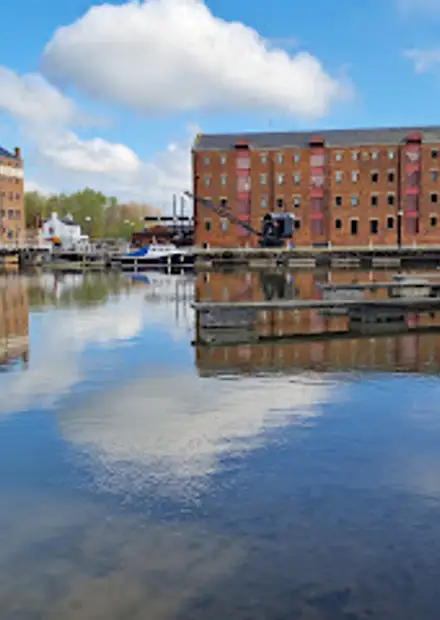
Best Landmarks Near Gloucester Docks (Gloucestershire)
Planning a trip to Gloucester Docks? Discover the best landmarks nearby with history, expert tips, and routes. Free on web or the Evendo app.


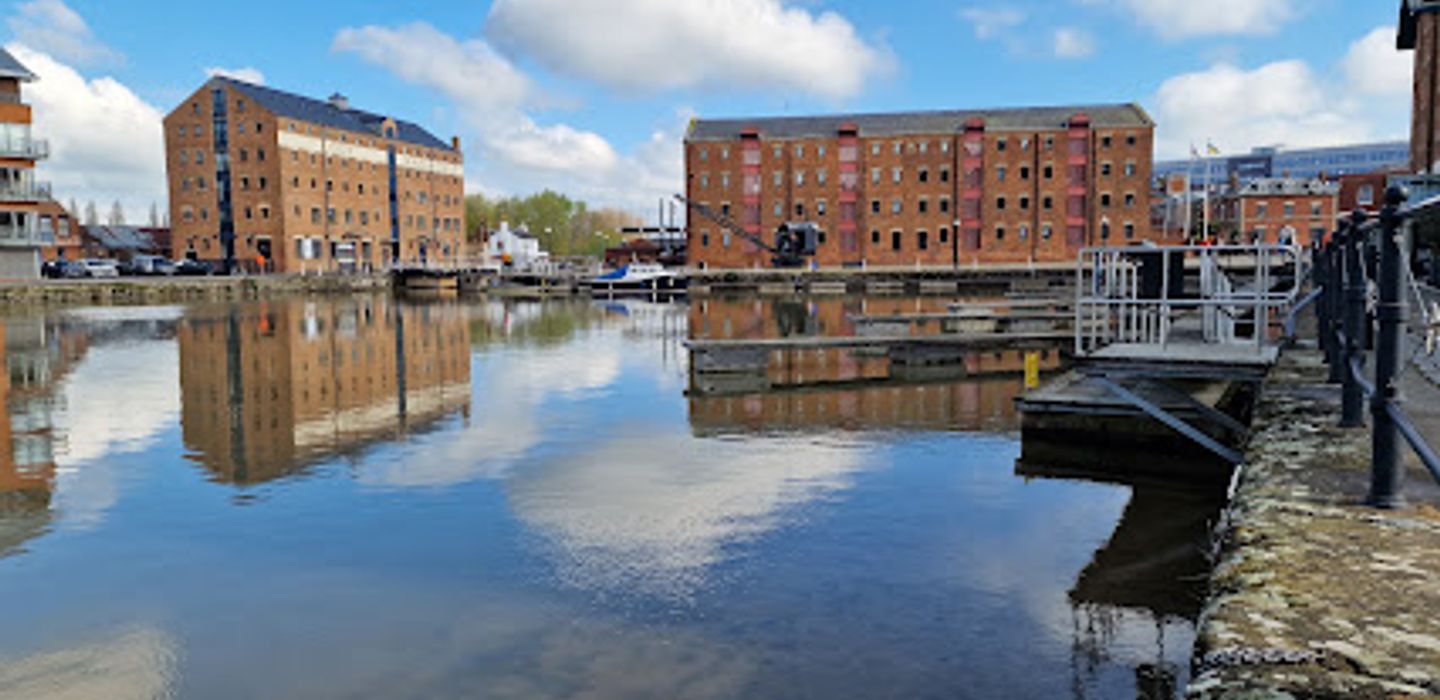
The best landmarks near Gloucester Docks
- Top rated
- Closest to Gloucester Docks
- Price level: low to high
- Time to spend: shortest first
- A–Z
80 landmarks
-
Bridge4.6★8,336 reviews
Pulteney Bridge
Pulteney Bridge in Bath, England, is a stunning 18th-century Palladian-style bridge spanning the River Avon. Completed in 1774 and designed by Robert Adam, it uniquely features shops lining both sides across its full span—one of only four such bridges worldwide. Connecting Bath’s city center to the historic Bathwick estate, it offers picturesque views, rich history, and elegant Georgian architecture, making it a must-see cultural and architectural treasure.
Open 24 hoursTime to spend 0.5–2 hrs
-
Abbey4.6★6,031 reviews
Tintern Abbey
Tintern Abbey stands as one of Britain's most iconic medieval ruins, a breathtaking Cistercian monastery founded in 1131 on the banks of the River Wye in Monmouthshire, Wales. Built from local Old Red Sandstone, its soaring Gothic arches and magnificent west front with a seven-light window showcase exceptional medieval architecture. Though roofless and partially scaffolded for ongoing conservation work, the abbey remains the best-preserved medieval abbey in Wales. Dissolved in 1536, it later inspired Romantic-era poets and artists including Wordsworth and Turner, who were captivated by its sublime beauty. Today managed by Cadw, it welcomes approximately 17,000 visitors annually seeking to experience its unique blend of spiritual tranquility, architectural grandeur, and natural riverside setting.
Daily 10:00–16:00Price level $Time to spend 1–2 hrs
-
Historical landmark4.4★5,533 reviews
Broadway Tower
Broadway Tower is an iconic 18th-century Gothic folly perched atop Broadway Hill, the second-highest point in the Cotswolds, Worcestershire. Designed by James Wyatt and inspired by Capability Brown, this hexagonal limestone tower features turrets, battlements, and gargoyles. It houses a museum across three floors and offers panoramic views from its rooftop platform, visible across up to 16 English counties. The tower has a rich history as a beacon, printing press, artists’ retreat, and wartime lookout.
Daily 10:00–17:00Price level $$Time to spend 1–3 hrs
-
Historical landmark4.6★3,719 reviews
Castell Cas-gwent / Chepstow Castle
Perched dramatically on a limestone cliff above the River Wye, Chepstow Castle is Britain’s oldest surviving stone fortress, showcasing nearly 900 years of architectural evolution and medieval history. This well-preserved Norman stronghold reveals the changing art of defense and the lavish lives of its medieval and Tudor inhabitants. Visitors can explore its towers, halls, and the oldest castle doors in Europe, all while enjoying sweeping river views and immersive historical displays.
Daily 9:30–18:00Price level $$Time to spend 1–3 hrs
-
Cathedral4.7★3,323 reviews
Bristol Cathedral
Bristol Cathedral, founded as an Augustinian Abbey in 1140, is a stunning medieval cathedral renowned for its unique hall church design, exquisite Gothic and Romanesque architecture, and rich history. Located on College Green in central Bristol, it offers visitors a serene place of worship, captivating stained glass windows, historic chapels, and engaging guided tours, all with free admission and a welcoming atmosphere.
Mon–Sat 8:00–17:00 · Sun 8:00–15:00Time to spend 1–2 hrs
-
Historical landmark4.5★2,251 reviews
The Circus
The Circus in Bath is a stunning Georgian architectural landmark designed by John Wood the Elder and completed by his son in 1768. This unique circular ensemble of 33 townhouses, adorned with intricate stone carvings and symbolic motifs, forms a perfect ring with three entrances. It reflects Bath’s rich heritage and Druidic inspirations, offering visitors a captivating glimpse into 18th-century design and history in the heart of the city.
Open 24 hoursTime to spend 0.5–2 hrs
-
Pub4.4★2,067 reviews
Garrick
The Garrick Inn, located at 25 High Street in Stratford-upon-Avon, is reputedly the town's oldest pub, with origins dating back to the 14th century. This Grade II* listed Elizabethan half-timbered building offers a warm, historic atmosphere with traditional hearty pub fare and a fine selection of cask ales. Steeped in history and local lore, including tales of plague and hauntings, the Garrick Inn blends centuries-old charm with friendly service in a cozy, atmospheric setting.
Price level $$Time to spend 1–3 hrs
-
Historical landmark4.7★1,932 reviews
Cabot Tower
Perched atop Brandon Hill, Cabot Tower is a striking 105-foot red sandstone landmark built in 1897 to honor John Cabot’s historic 1497 voyage from Bristol to North America. Visitors can climb its narrow spiral staircase to enjoy breathtaking 360-degree panoramic views of Bristol’s skyline, including Clifton Suspension Bridge, Bristol Harbour, and the surrounding countryside. Set within the oldest park in Bristol, Brandon Hill, the tower offers a serene green space for relaxation and exploration, with free admission and daily opening hours from early morning until dusk.
Daily 8:00–19:15Time to spend 0.5–2 hrs
-
Residents association4.6★1,421 reviews
National Trust - Bibury
Bibury is a picturesque Cotswold village in Gloucestershire, England, renowned for Arlington Row—a stunning row of 17th-century weavers' cottages built of honey-colored stone that appear on British passports. Nestled on the banks of the River Coln, this charming settlement combines medieval heritage, working trout farms, and quintessential English countryside charm. William Morris famously called it 'the most beautiful village in England,' and it remains one of the Cotswolds' most visited and photographed destinations.
Open 24 hoursTime to spend 1.5–4 hrs
-
Church4.7★1,338 reviews
St Mary Redcliffe Church
St Mary Redcliffe is one of England's finest parish churches and a masterpiece of Gothic architecture, standing prominently in Bristol's Redcliffe district. With origins dating back over 800 years, this Grade I listed building rises 89 metres and features spectacular medieval stonework, intricate carved bosses, and stained glass windows. The church's rich history intertwines with Bristol's maritime heritage and notable figures including John Cabot, William Penn, and William Canynges. Today it remains an active place of worship and a major cultural landmark.
Daily 8:00–17:00Time to spend 0.8–2.5 hrs


Y Castell Gwyn / White Castle
White Castle, known in Welsh as Y Castell Gwyn, is the best preserved and most imposing of the ‘Three Castles’ in Monmouthshire, Wales. Originally built in the late 11th century as an earth and timber fortification, it evolved through stone renovations into a formidable medieval fortress with a deep water-filled moat, massive curtain walls, and twin gatehouse towers. Set in tranquil countryside near Abergavenny, this castle offers a glimpse into Norman military architecture and Welsh border history.
Daily 10:00–16:00Time to spend 0.5–1.5 hrs

William Tyndale Monument
The William Tyndale Monument is a striking 111-foot tower perched atop Nibley Knoll near Dursley, Gloucestershire. Erected in 1866, it honors William Tyndale, the pioneering translator of the English Bible, who was born nearby and martyred for his work. Visitors can climb 121 steps to a viewing gallery offering panoramic views over the Vale of Berkeley, the River Severn, and the distant Black Mountains of Wales. The monument stands as a testament to Tyndale’s courage and lasting influence on English religious history.
Open 24 hoursTime to spend 1–2.5 hrs

Painswick Beacon
Painswick Beacon, an Iron Age hillfort summit near Painswick in Gloucestershire, offers spectacular 360-degree views across the Cotswold Hills. Rising to 283 meters, this grassy ridge is a popular scenic spot along the Cotswold Way, featuring tranquil walking paths, nearby woodland, and a golf course. Visitors can enjoy sweeping vistas stretching to the Malvern Hills, Forest of Dean, and Brecon Beacons on clear days, making it a cherished natural landmark rich in history and natural beauty.
Open 24 hoursTime to spend 1–3 hrs

Belas Knap Long Barrow
A remarkably preserved Neolithic chambered long barrow dating to around 3000 BCE, situated on Cleeve Hill near Winchcombe in the Cotswolds. This outstanding example of a Cotswold-Severn cairn features an intriguing false entrance and four burial chambers, offering visitors a tangible connection to 5,000 years of human history. The site combines archaeological significance with scenic countryside walks and panoramic views across the rolling Cotswolds landscape.
Open 24 hoursTime to spend 1–1.5 hrs

Cascade Steps
The Cascade Steps in Bristol are a historic landmark located on Anchor Road, offering a scenic and tranquil waterfront setting. This striking architectural feature consists of a series of stepped terraces that descend gracefully towards the harbour, providing panoramic views of Bristol’s bustling harbour area. The steps are a popular spot for relaxation, photography, and enjoying the vibrant atmosphere of the city’s waterfront.
Open 24 hoursTime to spend 0.5–2 hrs

Pero's Bridge
Pero's Bridge is a striking pedestrian footbridge spanning Bristol's floating harbour, completed in 1999 and named in commemoration of Pero Jones, an enslaved African who lived in 18th-century Bristol. Designed by Irish artist Eilis O'Connell and engineers Ove Arup & Partners, the bridge is instantly recognizable by its distinctive horn-shaped sculptures that serve as counterweights for its central lifting section. The bridge connects Queen Square with Millennium Square and stands as a powerful symbol of Bristol's acknowledgment of its complex history with the transatlantic slave trade.
Open 24 hoursTime to spend 0.5–2 hrs

St Peter's Church
St Peter's Church in Castle Park, Bristol, is a haunting medieval ruin and memorial to the Bristol Blitz victims. Dating back to the 12th century with significant 14th- and 15th-century Gothic architecture, it stands as Bristol’s oldest church site, reflecting centuries of religious, social, and wartime history. The roofless shell and leaning tower evoke the city's resilience and rich heritage amid urban renewal.
Open 24 hoursTime to spend 0.5–1.5 hrs

Church of St Peter and St Paul, Northleach
A magnificent 15th-century perpendicular Gothic church in the heart of Northleach, this architectural masterpiece stands as a testament to the town's medieval wool-trading wealth. Built by prosperous merchants who poured their riches into its construction, the church features soaring arcades, intricate stonework, and remarkable brass memorials depicting wool traders in their finest furred gowns. Known unofficially as the 'Cathedral of the Cotswolds,' it remains one of the finest parish churches in England and the most striking reminder of Northleach's golden age.
Daily 9:00–17:00Time to spend 0.8–2 hrs

The Georgian House Museum
The Georgian House Museum in Bristol is a beautifully restored late 18th-century townhouse that offers an intimate glimpse into the life of a wealthy sugar merchant and his household. Situated at 7 Great George Street, this historic six-storey residence showcases eleven rooms filled with period furnishings and decor, revealing life both above and below stairs. It highlights the story of John Pinney, a plantation owner, and Pero, an enslaved African who lived and served in the house, connecting visitors to Bristol’s complex history.
Mon–Tue 11:00–16:00 · Sat–Sun 11:00–16:00Time to spend 1–2 hrs

Black and White House Museum
The Black and White House Museum in Hereford is a beautifully preserved 17th-century timber-framed building dating back to 1621. Originally a butcher’s home and shop, it now serves as a museum showcasing Jacobean life with an internationally important collection of English oak furniture, rare wall paintings, and interactive exhibits. Open Tuesday to Saturday 10am–5pm and Sundays 11am–4pm, it offers a fascinating glimpse into Hereford’s history and culture.
Tue–Sat 10:00–16:00 · Sun 11:30–14:30Price level $$Time to spend 1–2.5 hrs

Over Bridge
Over Bridge, also known as Telford's Bridge, is a historic single-span stone arch bridge spanning the canalised West Channel of the River Severn near Gloucester. Designed by the renowned engineer Thomas Telford and opened in 1830, it was the lowest road crossing of the Severn until the 1960s. Now pedestrian-only, it offers scenic views and a glimpse into early 19th-century engineering innovation.
Open 24 hoursTime to spend 0.5–2 hrs

Wills Memorial Building Tower
A magnificent Neo-Gothic landmark at the University of Bristol, the Wills Memorial Building stands as one of Britain's most striking university structures. Officially opened by King George V and Queen Mary in 1925, this architectural masterpiece survived the Blitz and now welcomes visitors to explore its grand interiors and climb the iconic 68-metre tower for panoramic views across Bristol. Guided tours reveal the splendid Great Hall, ornate libraries, and the famous Great George bell, making it an essential stop for architecture enthusiasts and history buffs.
Daily 8:00–22:00Price level $Time to spend 1–1.5 hrs

Uley Long Barrow (Hetty Pegler's Tump)
Uley Long Barrow, locally known as Hetty Pegler’s Tump, is a 5,000-year-old Neolithic chambered tomb near Uley in Gloucestershire. This impressive long barrow, part of the Cotswold–Severn group, features a cruciform layout with a central passage and burial chambers you can enter. Partially reconstructed in the 19th century, it offers a rare, atmospheric glimpse into prehistoric burial practices, set in a peaceful field with views over the Severn Valley. Entry is free and open during daylight hours, making it a compelling stop for history lovers and walkers exploring the Cotswolds.
Open 24 hoursTime to spend 0.5–1.5 hrs

Temple Church
Temple Church in Bristol, originally built in the 12th century by the Knights Templar, is a striking medieval ruin known for its leaning tower and historical significance. Though damaged during World War II, the site preserves the footprint of the original round church and offers tranquil gardens, medieval stonework, and a vivid connection to Bristol’s Crusader past.
Time to spend 0.5–2 hrs

Haresfield Topograph
Perched on the Cotswold escarpment near Stroud, Haresfield Topograph is a distinctive three-dimensional map landmark offering sweeping views across the Severn estuary toward the Forest of Dean and Brecon Beacons. This Grade II listed structure serves as both a viewpoint and educational tool, helping visitors identify prominent features in the surrounding landscape. Set within mixed woodland and open grassland, the site combines natural beauty with historical significance, having been a location of Iron Age and Roman settlements.
Time to spend 1–4 hrs

The Guild Chapel
One of England's most significant medieval chapels, the Guild Chapel stands on Chapel Lane in Stratford-upon-Avon as a testament to 13th-century religious life. Founded by the Guild of the Holy Cross in 1269, this Grade I listed building showcases rare surviving wall paintings from the early 1500s—a remarkable cycle of medieval religious imagery that was hidden under limewash during the Reformation and rediscovered in the 19th century. Extensively rebuilt by Hugh Clopton in the 1490s, the chapel remains an essential stop for understanding both medieval Stratford and the town's connection to the Shakespeare family.
Daily 10:00–16:00Time to spend 0.8–2 hrs

Dr Jenner's House
Discover the birthplace of vaccination at Dr Jenner's House in Berkeley, Gloucestershire. This Queen Anne house was home to Edward Jenner, the pioneering scientist who developed the smallpox vaccine. Visitors can explore Jenner’s study, the historic Vinery, the modern Physic Garden, and the Temple of Vaccinia where Jenner vaccinated locals free of charge. Open Sundays to Wednesdays from 11am to 4pm, this museum offers a unique glimpse into medical history and Jenner’s diverse interests beyond science.
Mon–Wed 11:00–16:00 · Sun 11:00–16:00Price level $$Time to spend 1–2 hrs

Stratford Waterside Market
Stratford Waterside Market, also known as the Waterside Upmarket, is a vibrant Sunday market located along the picturesque riverbank in Stratford-upon-Avon. It features over 90 stalls offering a diverse range of high-quality products including handcrafted items, designer jewellery, vintage finds, street food, and artwork. The market is renowned for its unique and artisan products, set in a charming waterside setting near the Royal Shakespeare Theatre.
Price level $Time to spend 1–3 hrs

Greyfriars
Greyfriars in Gloucester is the evocative ruin of a Franciscan friary founded around 1231. The site features the remains of its 16th-century church, a blend of medieval architecture and later adaptations. Once a thriving religious community, the friary was dissolved in the 16th century and later repurposed. Today, Greyfriars offers a tranquil historic atmosphere amid the city, with its elegant arches and stonework telling stories of centuries past.
Daily 9:00–17:00Time to spend 0.5–2 hrs

The Shakespeare Memorial Fountain
The Shakespeare Memorial Fountain, also known as the American Fountain, is a striking Victorian Gothic monument located in Stratford-upon-Avon's marketplace. Gifted by American philanthropist George Childs in 1887, it commemorates Queen Victoria’s Golden Jubilee, celebrates William Shakespeare, and symbolizes the friendship between the USA and England. Adorned with Shakespearean quotes and sculptural details, it originally served as a drinking fountain and horse trough, reflecting local temperance sentiments.
Open 24 hoursTime to spend 15–45 min

Sir Edward Elgar
The Sir Edward Elgar statue in Worcester commemorates one of England’s most celebrated composers, born near the city. This sculpture honors Elgar’s lasting impact on classical music, notably his Enigma Variations and Pomp and Circumstance Marches. Situated in Worcester, the statue offers a cultural landmark celebrating Elgar’s legacy in his native Worcestershire.
Open 24 hoursTime to spend 0.5–1.5 hrs

Nympsfield Long Barrow
A 5,000-year-old Neolithic burial mound perched on a spectacular Cotswold hilltop, Nympsfield Long Barrow stands as one of Britain's most significant prehistoric monuments. This chambered tomb, part of the Cotswold-Severn group, reveals the burial practices and ritual beliefs of early farming communities through its partly exposed chambers and archaeological finds. Free to visit year-round, it offers breathtaking countryside views and a tangible connection to Britain's ancient past.
Open 24 hoursTime to spend 0.8–2.5 hrs

Harold's Stones
Three Bronze Age megaliths standing in alignment near Trellech, Monmouthshire, these ancient pudding stone monuments date back 3,500 years. Rising 9, 12, and 15 feet high, they remain shrouded in mystery—local legends attribute them to Saxon king Harold, a giant named Jack O'Kent, or ancient religious ceremonies. The nearby village of Trellech takes its name from the Welsh words for 'three' and 'stone,' reflecting the site's deep historical significance.
Open 24 hoursTime to spend 0.5–2 hrs

Prince Street Bridge
Prince Street Bridge is a historic iron swing bridge spanning Bristol’s Floating Harbour, connecting the city centre with the Cumberland Road area. Built in 1879 on the site of an ancient ferry, it replaced an earlier drawbridge and remains a working swing bridge, operated regularly during the summer months. The bridge offers views of the bustling harbour, passing boats, and the surrounding historic quays, making it a quiet but evocative landmark in Bristol’s harbourside landscape.
Open 24 hoursTime to spend 0.2–1 hr

Somerset Monument
The Somerset Monument is a striking 100-foot tall stone tower erected in 1846 near Hawkesbury Upton in Gloucestershire, England. It commemorates Lord Robert Edward Somerset, a distinguished general in the Napoleonic Wars, especially noted for his role at the Battle of Waterloo. Set atop the Cotswold escarpment, the monument offers commanding views over the surrounding Vale and stands as a prominent historic landmark within a rich rural landscape.
Time to spend 0.5–2 hrs

Bristol Castle
Bristol Castle was a medieval fortress located in the heart of Bristol, England, now commemorated by Castle Park. Though the original castle was largely destroyed in the 17th century, the park preserves its historic footprint and offers a tranquil green space with views over the city’s Welsh Back and waterfront. Castle Park serves as a cultural and recreational hub, blending history with urban nature in Bristol’s city center.
Open 24 hoursTime to spend 0.5–2 hrs

Statue of Ram Mohan Roy
The Statue of Ram Mohan Roy in Bristol is a life-size bronze monument honoring the Indian social reformer known as the 'Father of the Indian Renaissance.' Situated at the end of Deanery Road near Bristol Cathedral, the statue captures Roy’s dignified stance and thoughtful expression, symbolizing his pioneering efforts in education, women's rights, and social reform in the 19th century. The site offers a serene environment blending Bristol’s historic architecture with a tribute to progressive change.
Open 24 hoursTime to spend 0.5–1.5 hrs

The Bee Shelter, Hartpury
The Bee Shelter in Hartpury, Gloucestershire, is a rare and ornate 19th-century stone structure built to protect bee skeps. Originally crafted by stonemason Paul Tuffley in the mid-1800s, it showcases exquisite Cotswold stone masonry with Doric columns and gabled plinths. Relocated and restored multiple times, it now stands in the churchyard of St Mary the Virgin, symbolizing the region's rich beekeeping heritage and Victorian agricultural traditions.
Open 24 hoursTime to spend 0.5–1.5 hrs

Bristol Bridge
Bristol Bridge is a historic stone bridge spanning the Floating Harbour in central Bristol, England. First built in the 13th century and rebuilt in Georgian times, it connects the Old City with Redcliffe and has long served as a vital crossing and social hub. Today it’s a pedestrian- and cycle-friendly route, lined with views of the harbour, Castle Park, and the city’s modern skyline, blending centuries of Bristol’s story into one elegant span.
Mon–Fri open 24 hours · Sun open 24 hoursTime to spend 0.2–1 hr

Statue of Cary Grant
The Statue of Cary Grant in Bristol’s Millennium Square is a striking bronze tribute to the city’s most famous Hollywood star. Unveiled in 2001 to mark the 70th anniversary of Grant’s move to Hollywood, the 7-foot statue captures his suave elegance in a lifelike pose. Situated on the vibrant Harbourside promenade, it celebrates Grant’s Bristol origins and enduring legacy as a global film icon.
Open 24 hoursTime to spend 0.5–1.5 hrs

Medieval Vaults
Beneath Bristol’s bustling High Street lies the Medieval Vaults, a remarkable network of rib-vaulted cellars dating back to the 12th century. These underground chambers, built to endure centuries of history including wartime bombings, showcase exquisite Gothic architecture rarely seen outside cathedrals. Though currently closed to the public, the vaults offer a mysterious glimpse into medieval urban life and the city’s resilient past.
Time to spend 0.5–1.5 hrs

Great Days Out UK
Located at Laburnum House, Oakle Street in Churcham near Gloucester, Great Days Out UK serves as a dedicated tourist information centre and online directory hub. It specializes in providing accessible and detailed information on family-friendly days out across the UK, with a strong focus on wheelchair-friendly and accessible attractions. Open weekdays from 9am to 5pm, it supports visitors in planning enjoyable and inclusive outings.
Mon–Fri 9:00–17:00Time to spend 0.5–2 hrs

Statue of Queen Victoria
The Statue of Queen Victoria in Bristol stands prominently on College Green as a distinguished tribute to one of Britain's longest-reigning monarchs. Sculpted by Joseph Edgar Boehm and unveiled in 1888 by her grandson Prince Albert Victor, this Grade II listed marble statue features intricate bronze reliefs on its base and commemorates Queen Victoria’s Golden Jubilee. Its historic significance and artistic detail make it a key landmark in Bristol’s cityscape.
Open 24 hoursTime to spend 0.5–1.5 hrs

Statue Of Shakespeare Stratford-upon-Avon
Standing proudly on Henley Street in Stratford-upon-Avon, the bronze statue of William Shakespeare is one of the town’s most iconic landmarks. Erected in 1888, it depicts the Bard seated with quill in hand, surrounded by figures from his plays. Easily accessible and free to visit, it’s a popular photo spot and a natural starting point for exploring Shakespeare’s hometown. The statue sits near Shakespeare’s Birthplace and other key attractions, making it a central, symbolic heart of Stratford’s literary heritage.
Open 24 hoursTime to spend 15–30 min

Museum of Bath Architecture
The Museum of Bath Architecture, housed in the historic Countess of Huntingdon’s Chapel in Bath, offers a detailed exploration of the city’s rich architectural heritage. It showcases Bath’s transformation through medieval times to Georgian Palladianism and beyond, featuring exhibits like a detailed scale model of the Georgian city centre. The museum is a compact, information-rich venue ideal for architecture and history enthusiasts, open Wednesday to Saturday from 10 am to 4 pm.
Wed–Sat 10:00–16:00Price level $$Time to spend 1–2 hrs

Stratford-upon-Avon Town Hall
Stratford-upon-Avon Town Hall, completed in 1767 and opened in 1769, is a Grade II* listed Palladian-style building located on Sheep Street. Renowned for its elegant architecture and cultural significance, it features a statue of William Shakespeare and has served various civic roles, including council meetings and a World War I auxiliary hospital. The building’s richly decorated courtroom and ballroom reflect its historical social and judicial functions.
Daily 10:00–16:30Time to spend 0.5–1.5 hrs

Hailes Church
Hailes Church, dating back to 1175, stands near the evocative ruins of Hailes Abbey, a former Cistercian monastery founded in 1246 by Richard, Earl of Cornwall. The abbey became a renowned medieval pilgrimage site after acquiring a relic believed to be the Holy Blood of Christ. Though the abbey was dissolved in 1539, the church remains a Grade I listed building, preserving medieval religious heritage amid the tranquil Cotswold countryside.
Open 24 hoursPrice level $Time to spend 1–3 hrs

St Mary Le Port Church
St Mary le Port Church in Bristol is a historic site with origins dating back to Saxon times. Mostly destroyed during a 1940 Luftwaffe air raid, its surviving tower stands within Castle Park, bearing witness to centuries of Bristol’s medieval and wartime history. The ruins sit amidst plans for regeneration, aiming to revive the surrounding Mary le Port Street as a vibrant pedestrian area linking key city landmarks.
Open 24 hoursTime to spend 0.5–1.5 hrs

The Lookout Lectern
Perched on Sion Hill in Clifton, The Lookout Lectern is a historic vantage point offering panoramic views of Bristol's iconic Clifton Suspension Bridge and the surrounding landscape. This modest but significant landmark features an informational plaque that narrates the city's rich history and geographical significance. Easily accessible from the bridge itself, it serves as a perfect pause point for visitors seeking to absorb the vista and learn about Bristol's past.
Open 24 hoursTime to spend 0.2–1 hr

Tramway Bridge
The Tramway Bridge in Stratford-upon-Avon is a historic pedestrian bridge built in 1826 with nine elegant red brick arches. Originally part of the Stratford and Moreton Tramway, it offers serene views over the River Avon and remains a cherished landmark for locals and visitors exploring the town’s industrial heritage alongside its literary fame.
Time to spend 0.5–1.5 hrs

Edgar Tower
Edgar Tower is a striking 14th-century medieval gatehouse located in Worcester, England, adjacent to Worcester Cathedral. Originally built as a fortified entrance to the cathedral’s great court, this two-storey stone structure features arrow loops, murder holes, and octagonal turrets. Restored in the 19th century, it stands as a Grade I listed building and Scheduled Monument, offering visitors a glimpse into medieval architecture and history in a tranquil city setting.
Time to spend 0.5–1.5 hrs

Bliss Tweed Mill
Bliss Tweed Mill, a striking Grade II* listed Victorian building on the edge of Chipping Norton, Oxfordshire, was built in 1872 to produce fine tweed from local wool. Designed by George Woodhouse, its mansion-like limestone façade and iconic domed chimney make it a distinctive landmark. Once a thriving industrial hub supplying military uniforms in WWI, the mill closed in 1980 and has since been converted into luxury apartments, preserving its historic character amidst scenic Cotswold countryside.
Price level $$Time to spend 0.5–1.5 hrs

Statue of Edmund Burke
Standing on Broad Quay in Bristol, this 1894 bronze statue honours Edmund Burke, the 18th-century philosopher and politician who represented Bristol in Parliament from 1774 to 1780. Crafted by James Havard Thomas, the Grade II listed monument bears a powerful inscription from Burke’s 1780 speech: his wish to be an MP to do good and resist evil. Located near the waterfront, it offers a quiet moment of reflection on political ideals amid the city’s historic streets and harbour views.
Open 24 hoursTime to spend 0.2–1 hr

The Nails
Located at 55 Corn Street in Bristol, The Nails is a historic landmark famed for its role in medieval trade. This distinctive stone block features four large iron nails embedded in its surface, once used by merchants to seal deals and agreements. A symbol of Bristol’s rich mercantile past, The Nails stands as a unique reminder of the city’s commercial heritage and traditions.
Open 24 hoursTime to spend 0.2–1 hr

King George V Memorial Fountain
A Grade II-listed memorial fountain on Narrow Quay in Bristol's city centre, honouring King George V with elegant sculptural figures. Designed by renowned architect Sir Edwin Lutyens and completed in 1982, this striking public artwork features monumental figures sourced from a former building and stands as a testament to early 20th-century commemorative design. The fountain occupies a prominent position overlooking the waterfront and remains a notable landmark in Bristol's civic landscape.
Open 24 hoursTime to spend 0.2–1 hr

Stratford Upon Avon Bandstand
Situated on the Recreation Ground off Swan Nest Lane in Stratford-upon-Avon, the Stratford Upon Avon Bandstand is a cherished historic landmark that serves as a vibrant live music venue. Known for its free summer concert series, it offers locals and visitors alike a welcoming space to enjoy diverse musical performances amidst a picturesque outdoor setting. This bandstand blends heritage charm with lively cultural experiences, making it a focal point for community events and seasonal celebrations.
Open 24 hoursTime to spend 1–3 hrs

Somerset Place
Somerset Place is a distinguished Georgian Grade I listed crescent located in Bath, England. Designed by architect John Eveleigh, it features classic Georgian architecture with elegant facades forming a serpentine line. Though not open to the public inside, visitors can admire its historic exterior and the refined charm of this hidden architectural gem in Bath’s Lansdown area.
Time to spend 0.5–1.5 hrs

Southmead Round Barrow
The Southmead Round Barrow is a Scheduled Ancient Monument dating from the early Bronze Age, located within Badock's Wood Local Nature Reserve in Bristol. Measuring 18 meters in diameter and 2 meters high, this tumulus was first excavated in 1873, revealing burial remains and construction details. Historically known as 'Milltut Field,' it likely served as a burial site for a Bronze Age warrior and later as a windmill base, blending prehistoric significance with local heritage.
Open 24 hoursTime to spend 0.5–1.5 hrs

West Banqueting House
West Banqueting House is a remarkable Jacobean building in Chipping Campden, Gloucestershire, part of the historic Old Campden House estate. Built in the early 17th century by Sir Baptist Hicks, it served as a dedicated venue for elegant banquets and private retreats. Today, it stands as a beautifully preserved example of Jacobean architecture, offering visitors a glimpse into the lavish lifestyle of the English gentry before the Civil War. The house features richly decorated interiors, vaulted chambers, and underfloor heating, blending historic charm with modern comforts.
Price level $$Time to spend 1–3 hrs

Sim's Clock
Sim's Clock is a cherished historical landmark located on George Street in the heart of Stroud, Gloucestershire. Erected where a horse drinking trough and underground public conveniences once stood, this iconic clock symbolizes the town’s heritage and community spirit. Surrounded by vintage shops and local businesses, it serves as a popular meeting point and a reminder of Stroud’s rich past.
Open 24 hoursTime to spend 0.2–1 hr

Templar Stone
Temple Church in Bristol, originally founded by the Knights Templar in the 12th century, stands as a haunting yet evocative ruin following destruction in World War II. Its distinctive leaning tower and remnants of the original round church mark a site rich in medieval history and spiritual significance. Now maintained by English Heritage, the site offers visitors a glimpse into Bristol’s Templar past and the church’s evolution through centuries of religious and civic change.
Open 24 hoursTime to spend 0.5–2 hrs

The Hereford Labyrinth
The Hereford Labyrinth is a permanent, 20-metre diameter labyrinth located on Bishop's Meadow in Hereford, UK. This outdoor landmark offers a peaceful, contemplative space opposite the city's historic castle and cathedral, inviting visitors to walk its winding path for reflection and spiritual connection. Surrounded by a circular earth mound, it blends natural elements with ancient labyrinth traditions in a tranquil riverside setting.
Open 24 hoursTime to spend 0.5–1.5 hrs

Old Post Office
The Old Post Office at 48 Corn Street, Bristol, is a historic 18th-century building originally constructed in 1746. This landmark blends rich heritage with its role as a vibrant community space in the heart of Bristol’s city centre, offering visitors a glimpse into the city's postal history and Georgian architecture.
Open 24 hoursTime to spend 0.5–1.5 hrs

Fermentation Buildings
Once the fermenting rooms of Courage Brewery, the Fermentation Buildings in Bristol’s Finzels Reach are now a striking example of industrial heritage reborn. These Grade II-listed brick warehouses line the Floating Harbour, housing creative offices, Channel 4’s Bristol base, and lively ground-floor bars. The site blends exposed brick arches, roof lanterns and modern design into a vibrant waterfront hub where Bristol’s brewing past meets contemporary work and culture. It’s a place to admire architecture, grab a drink by the water, or simply soak up the energy of a regenerated dockside.
Price level $$Time to spend 0.5–2 hrs

Memorial Arch
The Memorial Arch at Clifton College in Bristol is a Grade II listed historical landmark commemorating teachers and pupils who lost their lives in the First and Second World Wars. Designed by Charles Holden and completed in 1922, this striking limestone and sandstone archway stands as a solemn tribute amid the college’s scenic grounds, embodying both remembrance and architectural significance.
Time to spend 0.5–1.5 hrs

William Draper Memorial
The William Draper Memorial in Clifton, Bristol, is reputed to be the oldest war memorial in Britain. Erected in 1767 by Sir William Draper, it commemorates the soldiers of the 79th Regiment who fought in the Seven Years’ War, notably capturing Manila in 1762. Originally located in Draper’s garden at Manilla Hall, the monument was moved to its present site on Clifton Down in 1883, standing as a classical limestone sarcophagus topped with an urn.
Open 24 hoursTime to spend 0.5–1.5 hrs

Stratford upon Avon
Stratford-upon-Avon is a historic market town in Warwickshire, England, renowned as the birthplace and burial site of William Shakespeare. Nestled on the River Avon and surrounded by picturesque countryside, it offers a rich blend of Tudor heritage, vibrant cultural experiences, and scenic riverside charm. Visitors can explore Shakespeare’s Birthplace, the Royal Shakespeare Theatre, and enjoy the town’s lively markets, quaint streets, and riverside gardens.
Price level $$Time to spend 2–6 hrs

Eastgate viewing chamber
The Eastgate Viewing Chamber in Gloucester offers a fascinating glimpse into the city's ancient Roman and medieval past. Located beneath Eastgate Street, this underground chamber reveals well-preserved remains of Gloucester's historic city defenses and the East Gate, dating back to around AD 68. Visitors can view these ruins through glass panels in the pavement, making it a unique and accessible historical landmark in the city center.
Price level $Time to spend 0.5–1.5 hrs
Cotswold Journeys
Cotswold Journeys is a family-run walking tour company based in Cheltenham, offering bespoke self-guided and guided walking holidays across the scenic Cotswolds. With over 35 years of experience, they provide meticulously planned itineraries, charming local accommodations, and seamless luggage transfers, allowing you to explore historic villages, rolling hills, and tranquil countryside at your own pace.
Price level $$Time to spend 4–8 hrs

Old Campden House
Old Campden House, built in 1612 by the wealthy mercer Sir Baptist Hicks, was once a magnificent Jacobean mansion in Chipping Campden, Gloucestershire. Although largely destroyed by fire in 1645 during the English Civil War, remnants including banqueting houses, lodges with distinctive ogee domes, and garden terraces survive, offering a glimpse into its former splendor and historical significance.
Time to spend 0.5–2 hrs

Cheese Lane Shot Tower
A striking 43-meter brutalist concrete tower standing on Bristol's Floating Harbour, built in 1969 as a replacement for the world's first shot tower. Once used to manufacture lead shot through an ingenious gravity-drop process, it now serves as a preserved industrial monument and boardroom within the Vertigo office development. One of only three shot towers remaining in England and a testament to Bristol's industrial heritage.
Time to spend 0.5–1.5 hrs

Old City Walls
The Old City Walls of Bristol mark the medieval boundaries of this historic English city, tracing its Norman and Saxon roots. Though much of the original fortification has vanished, the walls’ route shapes the Old City's street pattern and heritage sites, including the iconic St John’s Gate. Exploring this area reveals centuries of Bristol’s mercantile, architectural, and wartime history, blending medieval remnants with Georgian and Victorian influences.
Open 24 hoursTime to spend 1–2 hrs

Bristol Bridge
Spanning the River Avon in the heart of Bristol, Bristol Bridge is a historic stone crossing that has linked the city’s north and south for centuries. Originally a fortified medieval bridge lined with houses and a chapel, it was rebuilt in the 18th century and widened in the Victorian era. Today it carries modern traffic across the river, standing as a quiet monument to Bristol’s maritime past and urban evolution, with layers of history visible in its stonework and iron railings.
Time to spend 0.2–1 hr

Victoria Square
Victoria Square is a prestigious Victorian residential square in Clifton, Bristol, built between 1837 and 1874 across four distinct architectural phases. Named to honour Queen Victoria's accession in 1837, the square features elegant Georgian and Victorian terraces with distinctive carved stone balconies, arched ground-floor windows, and period railings. The central pleasure gardens, planted with some trees dating to the 1840s, provide a tranquil green space surrounded by Grade II listed buildings. Once home to notable residents including cricketer W.G. Grace, the square exemplifies Bristol's transformation into a prestigious Victorian suburb and remains one of the city's most architecturally significant residential spaces.
Time to spend 0.8–2 hrs

Almshouses
The Almshouses on Church Street in Stratford-upon-Avon are a remarkable row of early 15th-century charitable homes built by the medieval Guild of the Holy Cross. This Grade I listed terrace, dating from 1427-8, provided shelter for the poor and elderly of the parish and remains one of the town’s oldest surviving domestic buildings, showcasing distinctive half-timbered medieval architecture with jettied upper floors.
Time to spend 0.5–1.5 hrs

The Paragon
The Paragon in Bristol is a distinguished Georgian terrace located in the Clifton area, renowned for its elegant architecture and exclusive communal gardens. This prestigious address offers a blend of historic charm and proximity to Clifton Village’s boutiques and eateries, set against the backdrop of iconic views including the Clifton Suspension Bridge. The Paragon’s private and residents’ gardens provide tranquil green spaces, making it a serene urban retreat.
Price level $$$Time to spend 0.5–2 hrs

Royal Cres
The Royal Crescent in Bath is a sweeping crescent of 30 terraced Georgian houses designed by John Wood the Younger between 1767 and 1774. This Grade I listed architectural masterpiece features a uniform façade with 114 Ionic columns and Palladian embellishments, exemplifying 18th-century urban design. Beyond its classical frontage, the crescent’s rear reveals diverse layouts, reflecting individual owners’ tastes. Today, it remains a symbol of Bath’s heritage, featuring a museum, luxury hotel, and expansive lawns overlooking the city.
Price level $$Time to spend 1–3 hrs

Marlborough Buildings
Marlborough Buildings in Bath is a distinguished late 18th-century Georgian terrace known for its elegant classical architecture and historical significance. Situated near the iconic Royal Crescent, this Grade II listed row of townhouses showcases Bath’s characteristic creamy Bath stone façades, sash windows, and harmonious design, reflecting the city’s development as a fashionable spa resort. The terrace offers a glimpse into Bath’s architectural heritage and urban planning during the Georgian era.
Price level $$Time to spend 0.5–2 hrs
The Royal Crescent
The Royal Crescent is a sweeping arc of 30 Grade I listed Georgian townhouses in Bath, England, designed by John Wood the Younger and built between 1767 and 1774. Stretching 150 metres with 114 Ionic columns, it stands as one of Britain's finest examples of 18th-century urban design. The uniform honey-coloured stone facade conceals remarkably varied interiors, reflecting the creative freedom given to original builders. Today, No. 1 operates as a museum showcasing Georgian life, while the central houses form the luxurious Royal Crescent Hotel & Spa. The crescent overlooks Royal Victoria Park and remains a UNESCO World Heritage landmark.
Time to spend 0.8–3 hrs

Argyle St & Pulteney Bridge
Pulteney Bridge in Bath is one of the world’s rare shop-lined bridges, designed by Robert Adam in the 1770s in elegant Palladian style. Spanning the River Avon, it connects Bath’s historic centre with Bathwick and is lined with small shops and eateries. Its graceful arches, classical façade, and picturesque views of the weir and surrounding gardens make it one of Bath’s most iconic and photographed landmarks, blending Georgian architecture with everyday life.
Time to spend 0.5–2 hrs
Explore Gloucester Docks on the map
A handpicked selection of must-see spots near Gloucester Docks, mapped for you.
More about Gloucester Docks
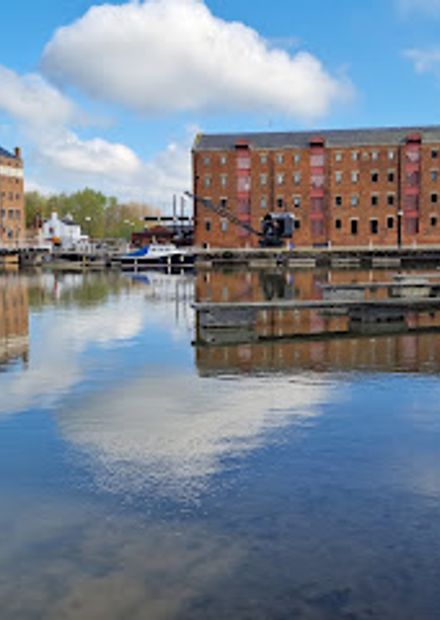
Gloucester Docks travel guide
Explore Gloucester Docks, a vibrant Victorian waterfront blending rich maritime history, museums, shopping, dining, and scenic canal views.
Tell me more about Gloucester DocksMore to explore near Gloucester Docks

 Best experiences near Gloucester Docks
 Best hotels near Gloucester Docks
 Best attractions near Gloucester Docks
 Best shops near Gloucester Docks
 Best bars near Gloucester Docks
 Best restaurants near Gloucester Docks
Explore more

Explore more of Gloucestershire
Discover the charm of Gloucestershire, where rolling hills, historic towns, and vibrant festivals create an unforgettable English countryside experience.
Explore Gloucestershire
Getting your guide ready…
We are putting together a fresh copy of the Gloucester Docks guide. This can take up to a minute.
This can take a few moments. If your browser asks, choose Allow so the download can start. You'll find the guide in your Downloads folder.
Nothing happened? Download it again
Sorry, the guide is taking longer than usual. Please try again in a minute, or get it by email instead.